In May 1999, New Delhi discovered that Pakistani intruders had seized Himalayan posts in Kargil, part of Indian-controlled Kashmir. Initially, the Indian government believed that these infiltrators were scruffy mujahideen when in fact they were paramilitary soldiers, officered by Pakistan’s army. Curiously, India publicly maintained the fiction that they were militants well after their identity was discovered. Counterintuitively, the falsehood facilitated a de-escalation of a conflict that had already become a limited war.The Profession of Arms: A Guide for Young Army Officers
It takes courage, especially for a young officer, to check a man met on the road for not saluting properly or for slovenly appearance, but, every time he does, it adds to his stock of moral courage, and whatever the soldier may say, he has respect for the officer who does pull him up.
Read Document →The Dragon's Teeth: Assessing China's Military Modernization
PLA has focused on modernising its capabilities across all warfare domains to achieve these goals. This includes land, air, and maritime operations, nuclear, space, counter-space, electronic warfare and cyberspace operations, aiming to become a fully integrated joint force.
Read Document →Transforming the PLA: A Decade of reorganisation from SSF to ISF
PRC has engaged in a sustained and broad effort to transform the PLA from an infantry-heavy, low-technology, ground forces-centric military into a high-technology, networked force with an increasing emphasis on joint operations and naval and air power projection.
Read Document →Eyes without Borders: Exploring the World of Open Source Intelligence (OSINT) in the Digital Age
Open Source Intelligence (OSINT) is gaining prominence with the rise of social media, the digital society and the vast growth of publicly and commercially available information (PAI and CAI).
Read Document →
The PLA’s Developing Cyber Warfare Capabilities and India's Options
Informationised warfare blurs the lines between peacetime and wartime. A nation in the information age cannot wait for the hostilities to break out to collect intelligence, carryout influence operations, develop antisatellite systems or design computer software weapons.
Read Document →
Galwan and After
Why did China did this when he is under tremendous pressure in all fronts, is this China's salami slice tactics being progressed rigorously, what will be new Rules of Engagement, what will be escalatory control mechanism, who has taken this decision, will there be some pressure put by China in India's North-East through insurgency.
Read Document →
India’s Joint Doctrine for Cyberspace Operations: A Critical Review
Chief of Defence Staff (CDS) General Anil Chauhan and Secretary, Department of Military Affairs, formally released declassified versions of the Joint Doctrines for Cyberspace Operations during the Chiefs of Staff Committee meeting in New Delhi.
Read Document →
Know your Enemy General(now Field Marshal) Syed Aseem Munir
Gen SA Munir's position in the hierarchy of Pakistan was not very comfortable. The state of economy, insurgency in Pakhtoonistan and Balochistan, attack on the Jaffar Express, constant protests by supporters of Imran Khan's supporters inside and outside of parliament.
Read Document →
Decoding Operation SINDOOR: Key Aspects and Implications
Precision strikes were carried out on nine sites—four in Pakistan and five in PoK—linked to anti-India terrorist groups such as the LeT, JeM and the Hizbul Mujahideen. The targeted sites included Muridke (LeT headquarters) and Bahawalpur (JeM headquarters).
Read Document →
Chinese Cyber Exploitation in India's Power Grid - Is There a linkage to Mumbai Power Outage?
The New York Times (NYT), based on analysis by a U.S. based private intelligence firm Recorded Future, reported that a Chinese entity penetrated India’s power grid at multiple load dispatch points. Chinese malware intruded into the control systems that manage electric supply across India, along with a high-voltage transmission substation and a coal-fired power plant
Read Document →15 March 2019
India’s and Pakistan’s Lies Thwarted a War—For Now
In May 1999, New Delhi discovered that Pakistani intruders had seized Himalayan posts in Kargil, part of Indian-controlled Kashmir. Initially, the Indian government believed that these infiltrators were scruffy mujahideen when in fact they were paramilitary soldiers, officered by Pakistan’s army. Curiously, India publicly maintained the fiction that they were militants well after their identity was discovered. Counterintuitively, the falsehood facilitated a de-escalation of a conflict that had already become a limited war.Coal is king in India—and will likely remain so
Trump Is on the Cusp of Opening Another Trade War—With India
In its early days, the international trade regime that the United States and its allies created after World War II counted relatively few less-developed countries as members. For the first few decades, developing country members of the General Agreement on Tariffs and Trade, the precursor to the World Trade Organization, remained mostly small in economic size, unimportant in trade and participated little in multilateral trade negotiations. In the 1960s and 1970s, developed countries unilaterally extended preferential market access to poorer countries to spur economic growth and development. As the “newly industrializing countries” of Asia, followed by Brazil, India, Mexico, South Africa and others, succeeded in growing faster and becoming bigger exporters, conflicts grew over the appropriate scope of “preferential and different treatment” for developing countries. Pakistan: Brutal Assimilation In Gilgit Baltistan
According to a February 13, 2019, report, the health of political leader Baba Jan, one of the most popular leaders in the region, who is serving a life sentence in prison for his alleged role in inciting violence in the region in 2010, is deteriorating. Protests have been organized across Gilgit Baltistan to demand for proper medical facilities to Baba Jan. A woman protestor argued that “since there is no facility available for angiography in Gilgit Baltistan, he should be shifted to Islamabad or to any other city where he can receive better medical attention”. A more shocking, but expected disclosure, was made by another protestor,Could Pakistan Provoke a Nuclear War?
Time for the US to Stop Ignoring Bangladesh
Bangladesh is one of those countries that should receive attention from Washington but typically do not. The general elections late last year that installed Sheikh Hasina, one of the most influential female leaders in the world, into power for a record third straight term went largely unnoticed in Washington. Bangladesh may not be a major destination for U.S. exports and hasn’t caught President Donald Trump’s eye for “stealing” American jobs. But Bangladesh’s success in striding toward economic prosperity, containing the spread of terrorism, and protecting Rohingya refugees from untold atrocities should inspire U.S. policymakers to recalibrate their Bangladesh policy.China's Economy: Not So Big After All
China’s economy isn’t what it used to be (at least as recently as last week). Four intrepid economists—Wei Chen, Xilu Chen and Michael Song of the Chinese University of Hong Kong, along with Chang-Tai Hsieh of the University of Chicago—have taken a fine-toothed comb to Chinese economic data to try to tease out China's true rate of economic growth since 2008. Not surprisingly, they found that China has been over-reporting its growth rate by an average of 1.7 percentage points every year.China’s ‘Debt Diplomacy’ Is a Misnomer. Call It ‘Crony Diplomacy.’
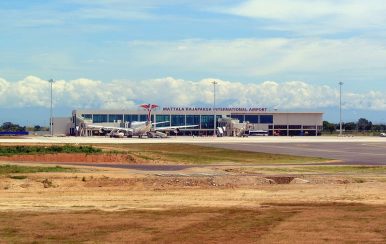
In the summer of 2018, Sri Lanka saw the last remaining airline pull out of its second international airport. As soon as the Middle Eastern low-budget carrier flydubai left Mattala Rajapaksa International Airport (MRIA), a project wholly financed by Chinese loans, the $210 million transit hub transformed into the world’s loneliest airport. Pundits branded Sri Lanka as the latest victim of China’s “debt diplomacy.”In the Gulf, China plays to win but US has upper hand
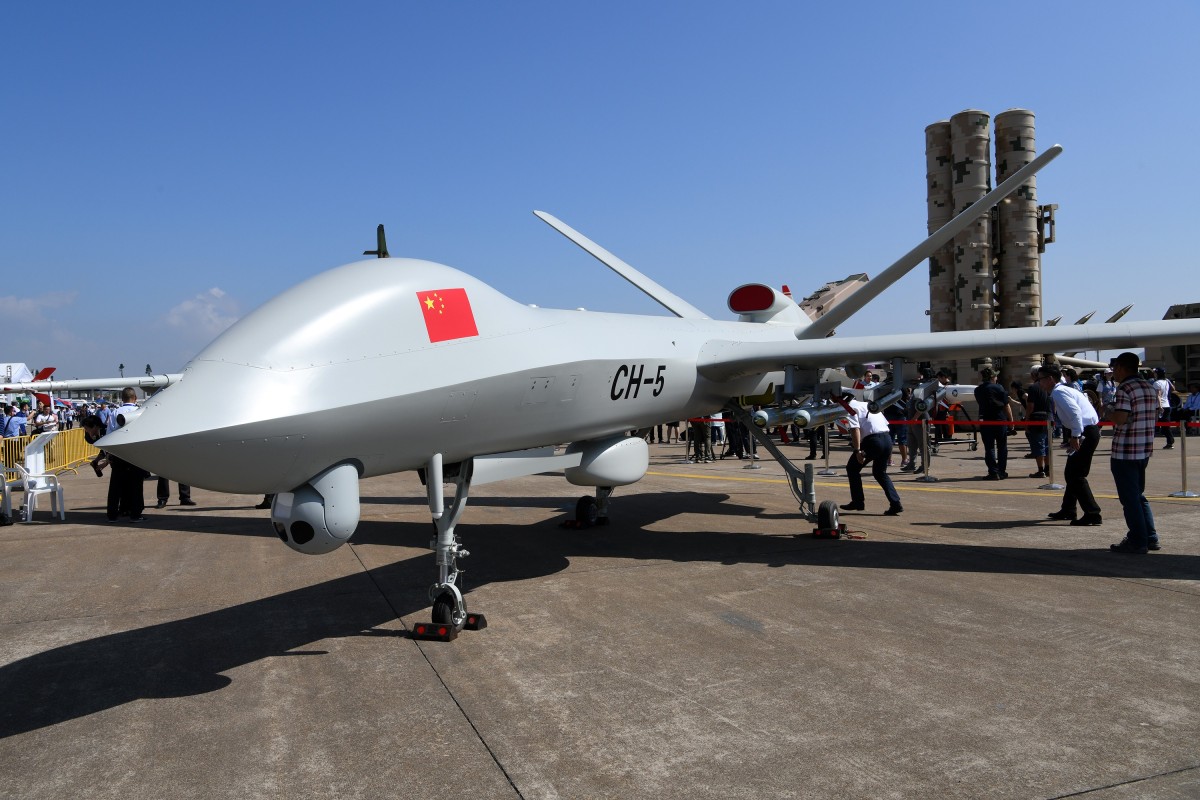
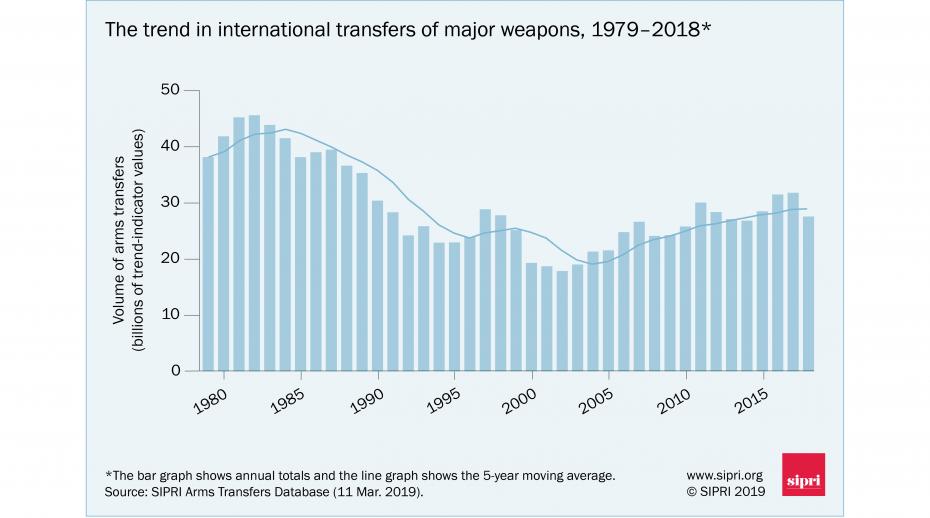
China sells arms to more countries and is world’s biggest exporter of armed drones, says Swedish think tank SIPRI
China Revives Oil And Gas Reform Plan
After previous predictions have gone by the boards, China’s government has confirmed plans for major steps to reform the oil and gas sector this year.China Opens New Military Base In Tajikistan
Western media outlets recently announced China has built military facilities on the Tajik side of the Tajik-Chinese border. The move is significant as it is first confirmation (built upon earlier unconfirmed reports) of the Chinese military/semi military presence in the Central Asia region.It’s Sun Tzu’s Time in the Barrel
Combating China's Information Operations
THE HUAWEI CASE SIGNALS THE NEW US–CHINA COLD WAR OVER TECH
THE DEEPENING SAGA of the US government’s campaign against Chinese tech company Huawei intensified this week, with Huawei filing a lawsuit in Texas alleging that the government’s ban of Huawei equipment is “illegal” and based on propaganda, not facts. The case may not have much of a chance legally, but it underscores how this contest has become a microcosm of the larger competition between the US and China over who will define—and control—the technology of the 21st century.Donald Trump's Defense Budget Masks a Problem
A $743 billion annual military budget is a lot of money. Characterizing it as lacking in any way understandably raises eyebrows. But bipartisan agreementabout what the Pentagon minimally needs for the year ahead should signal that President Donald Trump’s latest budget merely keeps the military treading water.America’s Golden Opportunity to Demonstrate Its Support for ‘International Order ‘
Should The US Step Up Its Military Presence In The South China Sea?
A recent article in The National Interest posed the question “Are [US] Freedom of Navigation Operations in East Asia enough? The article’s implied answer is “no”. https://nationalinterest.org/feature/are-freedom-navigation-operations-east-asia-enough-45257 But the answer to this question depends on the objective. If—as the article suggests—freedom of navigation operations |(FONOPs) are to demonstrate non-acquiescence to what the U.S. views as a violation of international law, they may be unnecessary.An American National Information Security Strategy
In today’s Digital Age, information is a potent weapon. American adversaries such as Russia and China understand the power of information and seek to manipulate it to their advantage. From injecting or magnifying divisive messages in social media to penetrating government networks to steal employee information, they understand the information domain as a contested battlespace, an arena to influence and undermine U.S. social cohesion at home and soft power influence abroad.[i] In the face of today’s foreign information warfare activities, the United States needs a whole-of-government information security strategy to more effectively secure the American information environment—the physical infrastructure, networks through which information flows, and humans who transmit and respond to messages.[ii] This strategy should expand the understanding of information security while firmly adhering to the freedoms central to American values.Russian Military Chief Outlines Aggressive Anti-U.S. War Strategy
Table-Top Attack Simulations: Cyber Resilience's Swiss Army Knife
Tackling Hypersonic Threats: Offense Or Missile Defense?
The great majority of the chatter one hears from the US military about hypersonic missiles is how to spot them, track them, and shoot them down. But at the Hudson Institute today, a gathering of experts on hypersonic weaponry and missile defense all agreed that, if the US invests solely in defense, we’ll be falling for what military theorists call a cost-imposition strategy: I spend x on a weapon in hope of scaring you into spending many times x to counter it.White House ups DoD cyber budget request
An American National Information Security Strategy
In today’s Digital Age, information is a potent weapon. American adversaries such as Russia and China understand the power of information and seek to manipulate it to their advantage. From injecting or magnifying divisive messages in social media to penetrating government networks to steal employee information, they understand the information domain as a contested battlespace, an arena to influence and undermine U.S. social cohesion at home and soft power influence abroad.[i] In the face of today’s foreign information warfare activities, the United States needs a whole-of-government information security strategy to more effectively secure the American information environment—the physical infrastructure, networks through which information flows, and humans who transmit and respond to messages.[ii] This strategy should expand the understanding of information security while firmly adhering to the freedoms central to American values.Can DoD’s cyber teams overcome readiness issues?
A Cyber Soldier assigned to the 780th Military Intelligence Brigade prepares his equipment inside a Stryker vehicle during an integrated cyber exercise at Joint Base Lewis-McChord, Washington Oct. 21, 2015. The training integrates infantry ground units with cyber, signal and human intelligence collection capabilities, which gives units on the modern battlefield a broader capacity to search out and isolate their enemies in real time. (Capt. Meredith Mathis) Does USS Truman’s Early Retirement Herald a New War on Carriers?
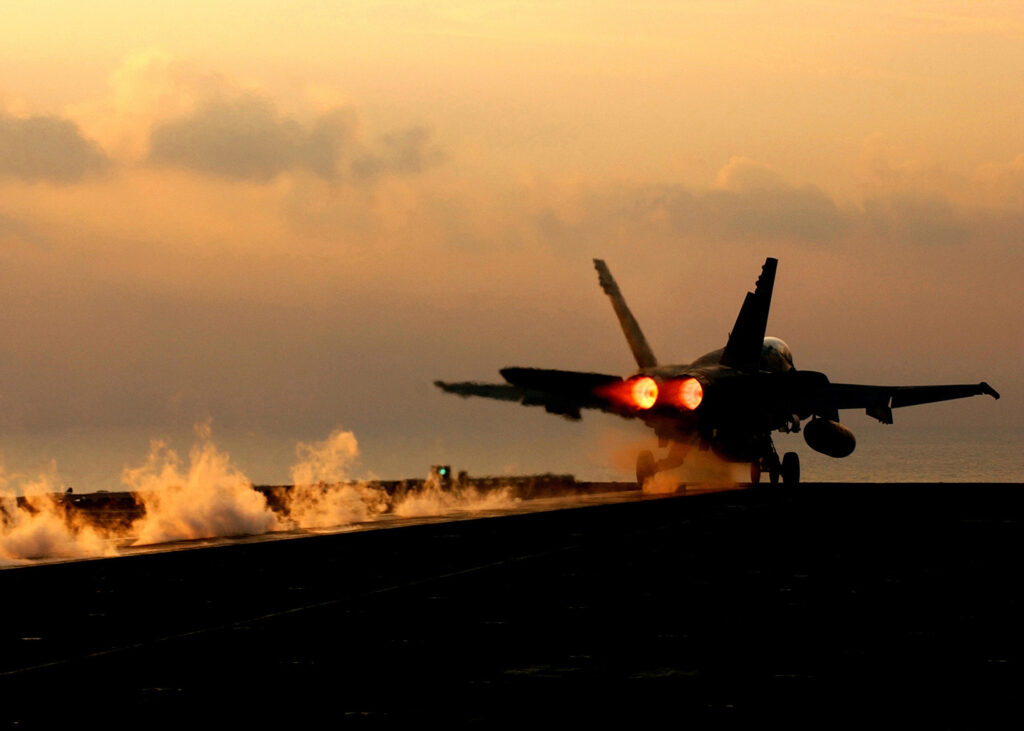
Whatever the promise of emerging technologies, combatant commanders still want more floating mobile airfields. The Pentagon reportedly wants to cancel the mid-life refueling for the aircraft carrier USS Truman, an unexpected move that would save $1.5 billion in fiscal years 2021-23, but only $16.9 million in 2020. More than a desire for cost-savings seems to be at work here.Army Reboots Cruise Missile Defense: IFPC & Iron Dome
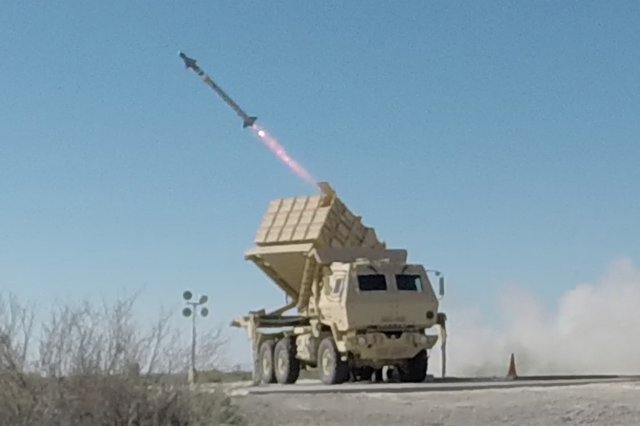
WASHINGTON: The Army is effectively rebooting a key air and missile defense program, IFPC, to refocus it on higher-end threats like cruise missiles. This is just one of the sweeping changes in the service’s $190 billion budget request for 2020, as the service urgently pivots from fighting terrorists to focus on high-tech “strategic competitors,” Russia and China. The Army had planned to spend $517 million on IFPC through 2023, but that’s likely to change when the new numbers come out tomorrow.Why DoD Cut A Carrier in 2020 Budget: Survivable Robots & Missiles Vs. China
WASHINGTON: Acting Defense Secretary Patrick Shanahan made the hard call to retire the USS Truman decades early — cutting the Navy’s carrier fleet by nine percent — to free up funding for new weapons more likely to survive a war with China, a senior defense official told Breaking Defense.Global arms trade: USA increases dominance; arms flows to the Middle East surge, says SIPRI

Does USS Truman’s Early Retirement Herald a New War on Carriers?
Whatever the promise of emerging technologies, combatant commanders still want more floating mobile airfields.