The Profession of Arms: A Guide for Young Army Officers
It takes courage, especially for a young officer, to check a man met on the road for not saluting properly or for slovenly appearance, but, every time he does, it adds to his stock of moral courage, and whatever the soldier may say, he has respect for the officer who does pull him up.
Read Document →The Dragon's Teeth: Assessing China's Military Modernization
PLA has focused on modernising its capabilities across all warfare domains to achieve these goals. This includes land, air, and maritime operations, nuclear, space, counter-space, electronic warfare and cyberspace operations, aiming to become a fully integrated joint force.
Read Document →Transforming the PLA: A Decade of reorganisation from SSF to ISF
PRC has engaged in a sustained and broad effort to transform the PLA from an infantry-heavy, low-technology, ground forces-centric military into a high-technology, networked force with an increasing emphasis on joint operations and naval and air power projection.
Read Document →Eyes without Borders: Exploring the World of Open Source Intelligence (OSINT) in the Digital Age
Open Source Intelligence (OSINT) is gaining prominence with the rise of social media, the digital society and the vast growth of publicly and commercially available information (PAI and CAI).
Read Document →
The PLA’s Developing Cyber Warfare Capabilities and India's Options
Informationised warfare blurs the lines between peacetime and wartime. A nation in the information age cannot wait for the hostilities to break out to collect intelligence, carryout influence operations, develop antisatellite systems or design computer software weapons.
Read Document →
Galwan and After
Why did China did this when he is under tremendous pressure in all fronts, is this China's salami slice tactics being progressed rigorously, what will be new Rules of Engagement, what will be escalatory control mechanism, who has taken this decision, will there be some pressure put by China in India's North-East through insurgency.
Read Document →
India’s Joint Doctrine for Cyberspace Operations: A Critical Review
Chief of Defence Staff (CDS) General Anil Chauhan and Secretary, Department of Military Affairs, formally released declassified versions of the Joint Doctrines for Cyberspace Operations during the Chiefs of Staff Committee meeting in New Delhi.
Read Document →
Know your Enemy General(now Field Marshal) Syed Aseem Munir
Gen SA Munir's position in the hierarchy of Pakistan was not very comfortable. The state of economy, insurgency in Pakhtoonistan and Balochistan, attack on the Jaffar Express, constant protests by supporters of Imran Khan's supporters inside and outside of parliament.
Read Document →
Decoding Operation SINDOOR: Key Aspects and Implications
Precision strikes were carried out on nine sites—four in Pakistan and five in PoK—linked to anti-India terrorist groups such as the LeT, JeM and the Hizbul Mujahideen. The targeted sites included Muridke (LeT headquarters) and Bahawalpur (JeM headquarters).
Read Document →
Chinese Cyber Exploitation in India's Power Grid - Is There a linkage to Mumbai Power Outage?
The New York Times (NYT), based on analysis by a U.S. based private intelligence firm Recorded Future, reported that a Chinese entity penetrated India’s power grid at multiple load dispatch points. Chinese malware intruded into the control systems that manage electric supply across India, along with a high-voltage transmission substation and a coal-fired power plant
Read Document →9 August 2014
THE OTHER ILLITERACY - The Indian road to unsustainability
Touching foot in Pakistan
Khaled Ahmed | August 9, 2014
http://indianexpress.com/article/opinion/columns/touching-foot-in-pakistan/99/
Who would have thought he would fail to communicate his thoughts, his ideas of reform, his vision for a new India?
An Indian-Gujarati friend of mine, with whom I share my enthusiasm for the Gujarati community of Karachi, has written something about me that needs only marginal correction. Writing in the Hindustan Times of May 12, 2014, Aakar Patel observed: “In a profile of his by a Western writer, I was alarmed to see that the columnist Khaled Ahmed, one of my heroes, actually paid one of the groups to keep them off his back. Such, then, is the lot of the writer of opinion in Pakistan.”
Off my back? The best way I could do that was not write at all. I have, in fact, done much worse to ruin my image. I have gone and touched the feet of my prospective killers, as unfortunately recorded by Karima Bennoune in her book Your Fatwa Does Not Apply Here: Untold Stories from the Fight Against Muslim Fundamentalism (2013). She recounts how I went to Samanabad in Lahore and — it goes without saying — went for the foot of a now-terrorist organisation member offended by what my paper, The Frontier Post, had printed: an FIR saying the organisation’s founder used to molest madrasa children. The now-terrorist organisation was then in the Punjab government coalition and doing terrorism on the side.
It worked. So I got used to touching foot. It is like apologising abjectly to the judge after committing contempt of court: don’t argue. Many years later, I misread the signs and wrote something in The Friday Times that provoked a once-terrorist organisation to send me a legal notice for defamation. I was immediately grateful on receiving a notice and not a bullet in my head. After looking for a lawyer who would defend me in court and not finding a single one — all were either in sympathy with the said organisation or scared of it — I decided to do what had become habit: touch foot.
Creating a new Medina
HISTORIC MEETING: The only solution to India’s problem, Jinnah asserted, was ‘to partition India so that both Hindus and Muslims could develop freely and fully according to their own genius.’ (From left) Picture shows Jawaharlal Nehru, the Adviser to the Viceroy, Lord Ismay, Lord Mountbatten, and Muhammad Ali Jinnah at the historic conference in New Delhi in 1947 in which Lord Mountbatten disclosed Britain’s partition plan for India.
In his forthcoming book on the idea of Pakistan, the historian Venkat Dhulipala argues that Pakistan was not simply a vague idea that serendipitously emerged as a nation-state, but was popularly imagined as a sovereign Islamic state, a new Medina, as some called it. In this regard, it was envisaged as the harbinger of Islam’s revival and rise in the twentieth century, the new leader and protector of the global community of Muslims, and a worthy successor to the defunct Turkish Caliphate. The following article has been excerpted from the book
The basic reasoning behind the assumption that Pakistan was Jinnah’s bargaining counter and not a demand for a separate sovereign state is that such a state would have been disastrous for the Muslim minority in Hindu India. As the argument goes, Jinnah as the Qaid of all of the Indian Muslims was hardly going to abandon the ‘minority provinces’ Muslims. However, his own public utterances on the matter seem to point to a different idea regarding the place of minorities. Never the abstract theoretician, the meticulous constitutional lawyer gave concrete examples to clarify what he meant by nations, sub-national groups or minorities. For Jinnah, Muslims in the ‘majority provinces’ were a nation with concomitant rights to self-determination and statehood since they constituted a numerical majority in a contiguous piece of territory. On the other hand, Sikhs, though distinct enough to be a nation, did not fulfill either of these criteria and hence were a sub-national group with no option but to seek minority safeguards in Pakistan. Jinnah specifically compared the position of Sikhs to that of U.P. Muslims. The U.P. Muslims, though constituting 14 per cent of the province’s population, could not be granted a separate state because
“Muslims in the United Provinces are not a national group; they are scattered. Therefore, in constitutional language, they are characterized as a sub-national group who cannot expect anything more than what is due from any civilized government to a minority. I hope I have made the position clear.”
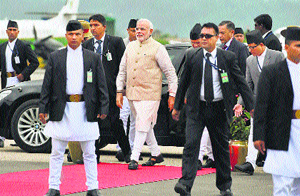
Nepal: Promises to keep Modi visit has improved the atmospherics in bilateral relations
http://www.tribuneindia.com/2014/20140809/edit.htm#4
Modi did well in not mentioning China or India's security concerns in Nepal publicly in his addresses
In his well-articulated addresses and wide ranging political and cultural engagements, he highlighted the civilizational bonds that exist between the Indian and Nepali people for centuries; he tickled Nepal's developmental aspirations and promised that India will stand by Nepal in harnessing its potential to reach the Himalayan heights of prosperity; he hailed Nepal's unique example of mainstreaming its Maoist insurgency into a peaceful democratic process, he urged Nepali lawmakers to frame a "federal, democratic and republican constitution" on time as not only India but the whole world is looking towards Nepal's efforts in this respect; and while underlining India's commitment to Nepal's sovereignty, he promised that India would never interfere in Nepal's affairs.
Most Indian leaders have always been doing so earlier but Modi's eloquent oratory and poetic presentation touched Nepali hearts and minds. Only mild murmurs could be felt from two sections; first, the Madhes groups, as he did not speak against their felt discrimination and instead asked them to work with the hill people for building a strong and united Nepal; and secondly the religious minorities who did not relish Modi's omission of the word "secular" in identifying the broad contours of Nepal's expected Constitution. Minorities might have found Modi's loud personal projection of Hindu identity a bit jarring. Recall Sushma Swaraj's crisp response to a Hindutva query in Nepal two weeks earlier in which she claimed her constitutional loyalty to a Secular Indian State.
Support: The Enemy Below In Gaza
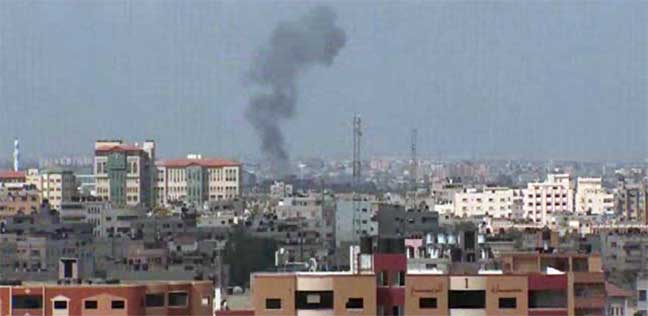
When Hamas took control of Gaza in 2007 by defeating (militarily, and at the ballot box) the more moderate Fatah, they turned Gaza into a police state. Then they took charge of the economy by controlling what went through smuggling tunnels, and what people paid for it. While Hamas complains about the Israeli blockade, which is in place because Hamas refuses to stop demanding that Israel be destroyed, and bringing weapons (especially long range rockets) into Gaza to make that happen, they would go bankrupt if the blockade were lifted and the tunnel income disappeared.
These smuggling operations are so lucrative that Hamas deems them legal enterprises, and charges a large (several thousand dollars) fee for anyone who wants to build and operate a tunnel. In addition, armed Hamas revenue collectors stand at the Gaza entrance for each tunnel, demanding a payment for everything coming out of Egypt, or going there. Exactly how many tunnels there are is something of a mystery. Given that the Gaza border under Egyptian control is only about 14 kilometers long, it would appear that the actual number of operating tunnels is rarely more than a hundred. Israeli sources frequently say there are 300 or more. In the last year Egypt has destroyed most of the tunnels into Egypt because Gaza has become a sanctuary for a growing number of anti-Egypt Islamic terrorists.
India’s economic strength and business environment are of strategic importance to the US
Jul 30, 2014
By John Kerry & Penny Pritzker
The long-standing partnership between the US and India is on the cusp of an historic transformation. Working together, the world's oldest democracy and the world's largest democracy can forge a new era of shared prosperity and security for hundreds of millions of people in India, across Asia and the world.
India's rise will help the Indo-Pacific region become more stable, more prosperous and more free. The strategic choices India makes on how to grow its economy and promote regional security will directly impact Asia's growth and US interests. As President Barack Obama has observed, America's economy and security will increasingly be influenced by events in Asia. India's economic strength and business environment are, therefore, of strategic importance to both our countries.
We are coming to India to deliver a single message: the US is prepared to be a full partner in this effort. We will work hand in hand with Prime Minister Narendra Modi and his government to promote open and liberal trade and investment, job training and closer strategic ties.
Burgeoning Business
We are not starting from scratch. Since 2000, trade between our countries has increased nearly fivefold to more than $96 billion, Indian investment in the US has grown from just over $300 million to $9 billion, and US investment in India has risen from $2.4 billion to $28 billion. Ford is spending $1 billion to turn its new auto plant in Gujarat into a regional manufacturing hub. US subsidiaries of Indian-owned companies employ 45,000 people in the US. Citizens of both countries recognise the importance of our relationship. Half of all Indians see the US as their country's "most dependable future ally", according to a recent Pew poll. Similarly, a recent Gallup poll found that more Americans than ever have a favourable view of India.
Israel-Gaza: Why India should sit on the fence?
Armor: Israeli Tech Torments Hamas
Competitive politics over illegal migration from Bangladesh
Anand Kumar
August 08, 2014
The issue of illegal migration from Bangladesh to India has been the most vexing issue in the bilateral relations of the two countries. This issue has been around for a long time but no solution was found because it gets communalised the moment it is raised. Thereon the two leading political parties in India – the Congress and the Bharatiya Janata Party – indulge in blame game which stops any rational debate from taking place over the issue. This important issue was raised to the great electoral effect by the BJP in the run up to the parliamentary elections. It helped them to show their best ever performance in Assam, in particular, and the northeast India in general. Realising the electoral significance of the issue, the Congress has now changed its stand and seems to be engaging in a competitive politics with its rival BJP. It is now talking of giving citizenship to even those migrants who came to India after 1971 but were persecuted in Bangladesh.
It is quite interesting to see the Congress take a stand similar to the BJP. In fact, the Congress has now tried to outdo the BJP over the issue of illegal migration. When Indian foreign minister Sushma Swaraj sometime back visited Bangladesh on her first standalone foreign visit, the government was contemplating giving visa on arrival to those Bangladeshis who are less than 10 years of age and older than 65 years. But this was criticised by the Tarun Gogoi government in Assam who stated that it would further encourage illegal migration from Bangladesh.
The Assam government also tried to create confusion by saying that the new central government was considering ‘visa free’ entry of Bangladeshis. The fact of the matter is that the visa free entry of Bangladeshis was never under consideration. What government ever considered was visa on arrival for certain sections of Bangladeshi population. Even this decision was probably taken by the earlier government which could not be implemented because of the elections. Gogoi was also critical of government’s decision to give this section multiple entry visa. Gogoi accused BJP of having a dual approach over the issue. He blamed them for following one policy while in opposition and quite another when in power. Actually duality was visible within Congress itself where Gogoi was criticising centre for giving travel facilities to Bangladeshis, on the other hand, at the Central level Congress leader Anand Sharma was critical of the BJP government for having no consensus over the issue.
The Dangerous Nexus Between Radicalism in Britain and Syria’s Foreign Fighters
Chinese PLA Modernisation: Perspectives and Issues
Lt Gen (Retd) JS Bajwa
“Build strong National Defence and powerful Armed Forces that are commensurate with China’s international standing and meet the need of its security and development interests is a strategic task of China’s modernisation drive.
-President Hu Jintao At the 18th National Congress of CPC March 2013.
Armed forces of a nation constitute an element of National Power in synergy with diplomacy, economic development, education, technological base and Research and Development (R&D), industry and others. A distinguishing feature of China’s modernisation mission has been the national pursuit of “Comprehensive Power”. They wisely learnt that one key lesson from studying the experience of other previous powers - genuine global powers possess multidimensional strengths.
Chinese scholars and officials have used the term “Peaceful Rise” to describe China’s foreign policy to counter fears about its growing economic and political might. However, the ‘Rise’ has proved controversial as it has fuelled a perception that China is a threat to the existing established world order. Also, ‘Rise’ implies that others will decline in a relative sense. In the 2004 session of BFA (Boao Forum for Asia), President Hu Jintao used the phrase “Peaceful Development” which since has been the preferred term. ‘Development’ suggests that China’s advance can bring others along. The normative aspect of power being equally important as it is about projecting ‘soft power’ and relies primarily on resources of non-military nature. Recently Joseph Nye and Ernest Wilson developed the concept of ‘Smart Power’ which combines elements of soft and hard power to achieve foreign policy goals.
The past three decades of China’s economic rise has witnessed a similar and parallel rise of the Defence Budget translating into a phenomenal modernisation of the Armed Forces. The Defence Budget has risen at par and over a period at a higher rate than the economic growth rate. It has also remained steady at over five percent of total Central Government spending. The 2014 Government released data on Defence Budget indicates a 12.2 percent rise over the previous year (2014 - $131.6 billion; 2013 - $112.2 billion). There, thus, remains a concern of China’s potential for violent conflict with other states especially over territory.
In this context, it may be worthwhile to historically understand the circumstances when governments have exercised the option of war as an instrument of its foreign policy:-
(a) War is chosen even though no specific conflict of interest with another state or cacus belli may exist, only uncertainty about the future.
(b) Preventive Wars: Such a war is defined as ‘a war fought in order to avoid the risks of war under worsening circumstances later’.
(c) Territorial conflicts are dynamic contests. States actively compete to strengthen their claims in a dispute usually by improving their position in the local military balance.
(d) In territorial disputes, states will be able to match each other’s moves and maintain their relative balance and positions. Inaction could be more costly in the long run than using force in the short run.
Iraq: A Time to Act
By Anthony H. Cordesman
AUG 6, 2014
On June 10, 2014, the Iraqi city of Mosul fell to what is now called the Islamic State (formerly the Islamic State of Iraq and al-Sham or ISIS). Since that time, the Islamic State has shown a surprising ability to mix religious extremism with effective strategy and military action. It has not made the mistake of rushing into further military action in areas where it might take substantial losses, like a Shi’ite-dominated Baghdad or key Shrine cities like Karbala. It has not abandoned gains in Syria for gains in Iraq. It has not focused on Shi’ite “heretics” at the cost of failing to score gains against the Kurds. And it has done all too competent a job of capitalizing on its gains to win broad support from jihadist fighters and other violent Sunni extremist groups—much of it from al Qaeda affiliates like the al Nusra Front.
The Growing Dangers and Costs of Letting the Islamic State Go Unchallenged
It is still unclear what the overall strategies of the Islamic State are in Syria and Iraq. Also unclear is whether it can consolidate a lasting hold on power in the face of the Sunni backlash against its extremism and the challenges it faces in dealing with problems of economics and governance, as well as from other Sunni factions. So far, however, the regime of Bashar al-Assad in Syria has largely been pushed on the defensive, and other Syrian Sunni rebel factions have steadily lost ground.
As for Iraq, the Islamic State has shown that it can do an excellent job of focusing on pragmatic key infrastructure targets like refineries and dams, economic targets like some of the oilfields the Kurds had occupied, and move toward surrounding Baghdad and pushing down to the border with Jordan and Saudi Arabia. It is still far from clear how well it can secure the divided loyalties of the Sunni tribes or deal with competing armed Islamist factions and the former elite that surrounded Saddam—which are often called Baathists but are largely military and political figures displaced from power.
The United States has had some reasons to wait. It did need to examine its military options in view of the weakness of the Iraqi security forces and the authoritarian, self-seeking sectarian corruption of Prime Minister Nouri al-Maliki and those around him. It is often far easier to talk about using U.S. military strength that create real world intelligence and targeting capabilities than to use U.S. air and missile power, kill key ISIS leaders and fighting cadres, and avoid killing Sunni civilians and collateral damage.
Sunni Extremists in Iraq Seize 3 Towns From Kurds and Threaten Major Dam
A Chechnya in the making
Information Warfare: Chinese Hackers Are So Damn Useful
Nigerian Army Trying to Recapture Two Towns in Northeastern Nigeria Held by Boko Haram
Reuters, August 8, 2014
MAIDUGURI Nigeria (Reuters) - Nigeria’s military fought gun battles with Boko Haram Islamists in two key northeastern towns on Friday, after the militants killed dozens of people and drove soldiers out of Gwoza town two days ago, security sources and the military said.
On Friday the military launched strikes to push the rebels out of Gwoza, the security sources said, and the garrison town of Damboa, which the militants sacked a month ago.
Both towns lie on roads linking Nigeria to Cameroon and Chad.
The military has struggled to stamp out the highly mobile, combat-hardened fighters of Boko Haram, which wants to carve an Islamic state out of religiously mixed Nigeria. The group is seen as the main security threat to Africa’s biggest economy and leading energy producer.
"The special operation which began early in the week is meant to restore law and order to the area and apprehend all terrorists who have been operating in the locality," police spokesman Frank Mba announced on his website.
"The remnants of insurgents are being cleared from the communities. The mop up phase will ascertain the casualties."
Large sections of remote northeastern Borno state are under siege by the militants, who have killed more than 2,000 people this year - mostly civilians - and displaced hundreds of thousands more, rights groups say.
Witnesses and two security sources said heavily armed Boko Haram fighters stormed Gwoza, which lies in a rugged hilly area seen as a Boko Haram stronghold, on Wednesday.
Resident Abdullahi Abubakar said the insurgents sprayed the town with automatic gunfire, burning houses and overrunning the palace of its traditional ruler, the Emir of Gwoza. A security source said at least 30 bodies had been counted, with many more in the bush. He put the death toll at “several dozen.”
"I could see the Boko Haram boys roaming the streets of Gwoza on motorbikes shouting ‘Allahu Akbar’ (God is Great), trying to shoot at us as we fled to the hill," Abubakar said by telephone. "Some of them were distributing food stuffs to the women and children left behind."
Iran: Dealing With America As The Hated Defender of Shia Islam
August 8, 2014: ISIL (Islamic State in Iraq and the Levant) continues to threaten Iranian influence (via the elected government in a country that is 60 percent Shia) in Iraq. In the last few weeks ISIL has shifted from threatening Baghdad, which is now largely a Shia city. ISIL has noted that Baghdad also has many Shia militias armed and trained by Iran and obviously determined to defend the capital of Shia controlled Iraq. So now ISIL is going after the Kurds who, while largely Sunni have been on good terms with Iran since the 1990s. ISIL sees the Kurds as a threat to their rear if they got tied down battling for Baghdad. ISIL may now regret its decision to go after the Kurds, who are on even better terms with the Americans, who announced today that they will begin providing air support for the Kurds, and the Iraqi forces, against ISIL. This air support, many experienced Islamic terrorists will tell ISIL leaders who have not experienced it, can be devastating to the kind of open military-type operations ISIL has been using for the last few years.
In Iraq the militias have replaced the army as the most reliable military force. But the militias lack offensive ability and that is being taken care of by hundreds of American and Iranian military advisors now working with the Iraqi Army and the militias. The Iranians are more effective because they speak Arabic and take direct control of Iraqi Army units and militias. The American Special Forces troops also speak Arabic but are not allowed to directly control units and must advise and persuade the many Iraqi officers who got their jobs because of their loyalty to Shia politicians, not their military skills or leadership ability. With better leadership the Iraqi troops are quite effective. As the old truism goes, “there are no bad troops, just bad officers.” Most Iraqi troops are Shia and, like all Iraqis, they don’t like being ordered around by foreigners. But in addition to speaking the same language the Iranian officers are Shia and, like their American counterparts, experienced and recognized as more competent than the Iraqi officers they replaced. The problem with the Iranian and American advisors is that they may be too few in number to quickly turn the situation around. The crises in Iraq also means that the Saudis and Iranians have to pause their growing Sunni-Shia feud because both countries have more to fear from ISIL Sunni Islamic terrorism than from each other. Western nations know they are already on the ISIL radar and are cracking down on ISIL fund raising and recruiting in the West. But in Arabia many, if not most, prominent Arabs firmly believe that Iran remains a long-term threat to Arabs and must be stopped.
Iran has admitted that three of its military personnel have died in Iraq since June. So far Iran has refrained from committing large numbers of combat troops to actually fighting ISIL. This is apparently something the Americans, Sunni Arabs and even many Iraqi Shia Arabs strongly oppose. Those Iranians killed so far have been trainers and advisors who accompanied those they trained into a combat area, something that is necessary to assess how effective the training is.
Iraq: Blood Feuds And Genocide In The North
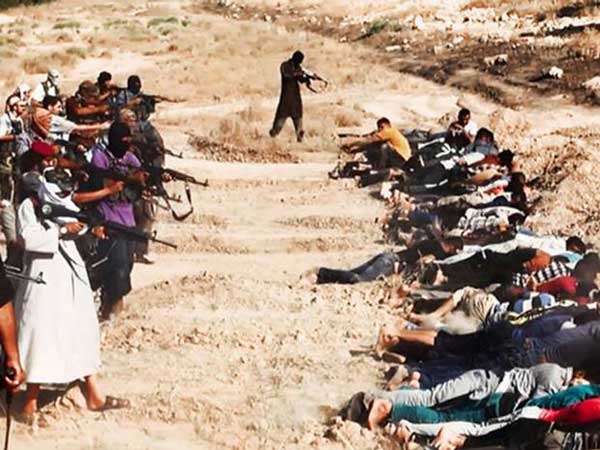
August 7, 2014: ISIL (al Qaeda in Iraq and the Levant) made a surprising move into northeastern Iraq in June, seizing control of Mosul. At first it was believed that ISIL would then move south against Baghdad. But ISIL instead turned to confront the Kurds, who had quickly taken control of Kirkuk and nearby oilfields. In the last week ISIL has taken advantage of this temporary disorder of Kurdish border security to advance into Kurdish territory and seize several towns and a hydroelectric and flood-control dam. The ISIL move north is also meant to kill or expel religious minorities like the Yazidis and Christians. The Yazidis are a particular target because many Moslems, and some Christians, consider the Yazidi pagans and devil worshipers. The Yazidi are Kurds who practice a pre-Christian religion related to the pre-Islamic Zoroastrian religion common in Iran (and now only found in India). The Yazidis are considered pagans by ISIL and to Moslems pagans must either renounce their beliefs or die. This resulted in over 30,000 Yazidis finding themselves trapped and surrounded on Mount Sinjar, which is basically a ridge providing good defensive positions for the few armed Yazidis but little water or shelter. Over a hundred Yazidis are dying each day from thirst and exposure. ISIL is content to let most of them die like this and the Kurds are making slow progress as they fight to open an escape route. The Kurds have always gotten along better with Yazidis, Christians and other minorities and many of those people have already fled to the Kurdish north.
The move into Kirkuk required the Kurds to adjust their borders and that required building new border defenses along hundreds of kilometers of new frontiers. This was essential because the Kurdish north has always been so peaceful that Western journalists, and just about anyone else, could move about freely, without fear of attack. This was mainly because the Kurds have tight controls on their borders and any Arabs entering are checked carefully. Arab Iraqis are welcome to visit, and many do, for vacations from the violence in the south or to do business (sometimes to meet with foreigners uneasy about coming to Baghdad).
When asked, Kurds attribute their peaceful neighborhood to the fact that Kurds are not Arabs. But this is not the main reason, for the Kurds have, in the past, been as factious and violent as the Iraqi Arabs are now. It was during the 1990s, when the U.S. and Britain agreed to keep Saddam's forces out of the north (to prevent another large scale massacre of Kurds), that the Kurds sensed a rare opportunity and sorted out their differences and learned the benefits of cooperation, rule of law and civil order. In effect, the Kurds had a ten year head start on the rest of Iraq in the "how to create peace and democracy" department. The Iraqi Arabs, Sunni and Shia, who come north on business, or for a vacation, note this. The Arabs believe they are superior to the Kurds ("a bunch of hillbillies," to most Arabs), and find it irritating that the Kurds have made things work, while down south, especially in central Iraq, things are still a mess. Given time the Iraqi Arabs will probably catch up. But this is not a popular solution to the "Iraq problem," and no career-conscious journalist is going to talk about what the Kurds have done and why the Arab’s haven’t.
The Re-Emergence of Fundamentalist Forces
By Maj Gen Afsir Karim
IssueCourtesy: Aakrosh| Date : 08 Aug , 2014
Capture of large parts of Iraq by the Islamic State of Iraq and the Levant (ISIL) and declaration of establishing a Caliphate signals the start of a new phase of expansion of a powerful Sunni Islamic group in its well declared aim of establishing an Islamic empire encompassing the entire globe. The phenomenon of extremism and sectarian violence unleashed in Pakistan by the so-called strategic assets of the Pakistan army is not under anyone’s control now, and south and central Asian nations should be highly concerned about the shape of things to come after the ISAF’s withdrawal from Afghanistan.
Illegal immigrants from Bangladesh have been a cause for concern for India since a very long time, but recently, the problem of illegal immigrants from Bangladesh once again came into limelight because of a major communal clash between the settlers and ethnic Bodo militants in the backdrop of the general elections in Assam. Time has come to find an amicable solution to this problem.
After their ouster from Afghanistan, al-Qaeda retreated into Pakistan, went underground and decentralised. But it soon resurfaced in various countries of west Asia and Africa.
Declaration of Jihad against the West
In the 1990s, Osama bin Laden and associated militant groups shifted focus toward the West – the Far Enemy – calling them oppressors of Muslims worldwide. Osama called for a ‘global jihad’ against Western interests around the world to counter the enemies of Islam.
In 1996, Osama bin Laden issued a declaration of war against the United States and called on Muslims to drive out Americans and their allies from the Arabian Peninsula. In 1998, he widened the arena of war in a declaration made in the name of the World Islamic Front against the Crusaders and the Jews. He declared, ‘The ruling to kill Americans and their allies—whether civilians or military—is incumbent upon every Muslim who is able and in whichever country is easiest for him. . . . We also call upon Muslim ulema, leaders, youth, and soldiers to attack the American devil and those allies of Satan who have aligned themselves with [America].’1
US Airstrikes in Iraq: A Win-Win Situation for China
China is pessimistic that airstrikes will help, but stands to benefit if U.S. intervention stabilizes Iraq.
By Shannon Tiezzi
August 09, 2014
U.S. President Barack Obama announced late Thursday night that he was authorizing targeted air strikes in Iraq. The decision sparked discussions around the world, including in China. Beijing has major interests in Iraq, and could potentially benefit should the airstrikes help halt or even roll back advances by the self-proclaimed Islamic State (IS). On the other hand, China generally disapproves of U.S. intervention in other countries’ affairs, particularly when such intervention involves the use of military force.
Officially, China’s response has been neutral. According to China Daily, a spokesperson from China’s Foreign Ministry said that Beijing “takes an open attitude toward any actions that facilitates ensuring security and stability in Iraq on the precondition of putting respect in place for Iraq’s sovereignty.” In other words, China reserves judgment on the airstrikes until it becomes clearer whether the strikes provide a net positive for China’s two main goals: preserving Iraqi sovereignty and improving the general security situation.
Unofficially, state media are extremely doubtful that U.S. airstrikes will be able to achieve those goals. An analysis in Xinhua warns that IS may in fact become emboldened by U.S. military involvement, leading to even more violence. Xinhua predicts that Obama will be forced to choose between breaking his promise not to send in U.S. ground forces or watching as IS further destabilizes Iraq.
Chinese media outlets also point out that military attacks cannot address the root problem of the Iraq crisis. Only a political solution, one that unifies Iraq’s government and Iraqi Sunnis, can end the violence, Xinhua writes. On this point, at least, Chinese media and Obama are in agreement. In his remarks on the Iraq situation, Obama acknowledged that “there’s no American military solution to the larger crisis in Iraq. The only lasting solution is reconciliation among Iraqi communities and stronger Iraqi security forces.”
Did Anyone Win the Latest Gaza Strip War? Despite What the Israeli PR People Say, Not Really.
Aaron David Miller
Foreign Policy, August 6, 2014
When elephants fight, the old African proverb intones, it is the grass that suffers.
I think we can pretty well determine now who the big loser was in the third Gaza war: the 1.8 million Palestinians of Gaza (53 percent of whom are under the age of 18). It will take years to rebuild the ruined landscape of the Gaza Strip. Factor in the 1,800 innocents and combatants killed, the thousands wounded, the tens of thousands displaced, and the damage to homes and infrastructure, and I think it’s a safe bet to conclude that Gazans lost.
But who won? The answer to that will only become clear in the weeks ahead. Will there be a durable peace agreement that brings greater economic prosperity to Gaza; creates greater security for Israel, even some form of limited demilitarization; and restores some measure of authority in Gaza to Mahmoud Abbas’s Palestinian Authority (PA) — real or imagined?
It’s still too early to say, but for now, here’s how I’d score the performance of the five major parties to this crisis: Israel, Hamas, the PA, Egypt, and the United States.
Israel: B+
On a tactical level, the Israelis mowed the grass (again). And this time they cut it pretty sharply. The Israel Defense Forces (IDF) estimates that in addition to the 900 Hamas fighters killed in action, it destroyed 3,000 rockets. Hamas launched 3,300 without great effect; and 3,000 remain. Thirty-two knowntunnels were destroyed, although the IDF admits that nine of the 12 exit shafts leading into Israel were not picked up by intelligence at the time the conflict started. Iron Dome worked to an extraordinary degree; there were only three Israeli civilian casualties, minimal economic damage, and a home front that remained resilient and energized. Moreover, Egypt remained a constant companion, while the rest of the Arab world basically held Israel’s coat while it rolled up its sleeves and pummeled Hamas. Finally, there is a growing support for the idea of “demilitarizing” the Gaza Strip, an action that two months ago would have never been taken seriously.