The Profession of Arms: A Guide for Young Army Officers
It takes courage, especially for a young officer, to check a man met on the road for not saluting properly or for slovenly appearance, but, every time he does, it adds to his stock of moral courage, and whatever the soldier may say, he has respect for the officer who does pull him up.
Read Document →The Dragon's Teeth: Assessing China's Military Modernization
PLA has focused on modernising its capabilities across all warfare domains to achieve these goals. This includes land, air, and maritime operations, nuclear, space, counter-space, electronic warfare and cyberspace operations, aiming to become a fully integrated joint force.
Read Document →Transforming the PLA: A Decade of reorganisation from SSF to ISF
PRC has engaged in a sustained and broad effort to transform the PLA from an infantry-heavy, low-technology, ground forces-centric military into a high-technology, networked force with an increasing emphasis on joint operations and naval and air power projection.
Read Document →Eyes without Borders: Exploring the World of Open Source Intelligence (OSINT) in the Digital Age
Open Source Intelligence (OSINT) is gaining prominence with the rise of social media, the digital society and the vast growth of publicly and commercially available information (PAI and CAI).
Read Document →
The PLA’s Developing Cyber Warfare Capabilities and India's Options
Informationised warfare blurs the lines between peacetime and wartime. A nation in the information age cannot wait for the hostilities to break out to collect intelligence, carryout influence operations, develop antisatellite systems or design computer software weapons.
Read Document →
Galwan and After
Why did China did this when he is under tremendous pressure in all fronts, is this China's salami slice tactics being progressed rigorously, what will be new Rules of Engagement, what will be escalatory control mechanism, who has taken this decision, will there be some pressure put by China in India's North-East through insurgency.
Read Document →
India’s Joint Doctrine for Cyberspace Operations: A Critical Review
Chief of Defence Staff (CDS) General Anil Chauhan and Secretary, Department of Military Affairs, formally released declassified versions of the Joint Doctrines for Cyberspace Operations during the Chiefs of Staff Committee meeting in New Delhi.
Read Document →
Know your Enemy General(now Field Marshal) Syed Aseem Munir
Gen SA Munir's position in the hierarchy of Pakistan was not very comfortable. The state of economy, insurgency in Pakhtoonistan and Balochistan, attack on the Jaffar Express, constant protests by supporters of Imran Khan's supporters inside and outside of parliament.
Read Document →
Decoding Operation SINDOOR: Key Aspects and Implications
Precision strikes were carried out on nine sites—four in Pakistan and five in PoK—linked to anti-India terrorist groups such as the LeT, JeM and the Hizbul Mujahideen. The targeted sites included Muridke (LeT headquarters) and Bahawalpur (JeM headquarters).
Read Document →
Chinese Cyber Exploitation in India's Power Grid - Is There a linkage to Mumbai Power Outage?
The New York Times (NYT), based on analysis by a U.S. based private intelligence firm Recorded Future, reported that a Chinese entity penetrated India’s power grid at multiple load dispatch points. Chinese malware intruded into the control systems that manage electric supply across India, along with a high-voltage transmission substation and a coal-fired power plant
Read Document →26 May 2016
Team India is at work
*** India’s Nuclear Options and Escalation Dominance
Paper May 19, 2016
The growing prominence of nuclear weapons in Pakistan’s national security strategy casts a shadow of nuclear use over any potential military strategy India might consider to strike this balance. However, augmenting its nuclear options with tactical nuclear weapons is unlikely to bolster Indian deterrence in convincing ways.
Since the early 2000s, Indian strategists have wrestled with the challenge of motivating Pakistan to demobilize anti-India terrorist groups while managing the potential for conflict escalation during a crisis. The growing prominence of nuclear weapons in Pakistan’s national security strategy casts a shadow of nuclear use over any potential military strategy India might consider to strike this balance. However, augmenting its nuclear options with tactical nuclear weapons is unlikely to bolster Indian deterrence in convincing ways.
Deterrence and Escalation in South Asia
India continues to develop offensive conventional military options to respond to future terrorist attacks emanating from Pakistan, but these options do not mesh well with India’s restrained nuclear doctrine and arsenal.
Pakistan’s adoption of tactical nuclear weapons lowers the threshold for nuclear use, further complicating India’s conventional and nuclear options to deter and, if conflict cannot be avoided, defeat its neighbor.
Some Indian and American strategists advocate India’s development of tactical nuclear weapons to counter Pakistan’s. This could give India sufficient perceived advantage in an escalating conflict to motivate Pakistan to stop cross-border terrorism.
The prospect of employing limited nuclear options raises unresolvable questions about whether nuclear war can be limited and about India’s capabilities to acquire and manage forces to prosecute limited nuclear war.
Implications for Indian Strategy
*** INDIA'S TIBET OPTIONS.
** The Citizen-Soldier Moral Risk and the Modern Military
**My Son The ISIS Executioner
When El Shafee Elsheikh was a little boy, after his father had left, his mother would find him at the workbench by the summerhouse at the bottom of the garden in White City, west London, tinkering endlessly with engine motors, bicycle parts, and old computers. Elsheikh was slight and elfin-featured, with wide almond eyes and pointed ears under a cloud of dark curls. He cut a sombre figure, intently turning the parts over in his small hands, finding out what made things work, how to fix them when they got broken. On warm nights, his mother says, he liked to sleep alone down here, in the makeshift old wooden summerhouse with a sheet drawn over the door.
Years later, in 2011, when Elsheikh had a grown into a striking young man in his early twenties, his mother found him here skulking with his CD player, listening to a torrent of hate. The words streaming out of his headphones, when she snatched them from him, were those of the notorious al-Qaeda-affiliated west London preacher Hani al-Sibai. By now Elsheikh had qualified as a mechanical engineer and was earning his living fixing cars and fairground rides. He was quiet, studious, and devoted to his family, and he made his mother proud. But on that day in the garden, she says, she feared for the first time that she was losing him to an ideology she did not understand.*NSA Places Online 9 Volume History of Axis SIGINT Operations During World War II
- Volume 1: Synopsis
- Volume 2: Notes on German High Level Cryptography and Cryptanalysis
- Volume 3: The Signal Intelligence Agency of the Supreme Command, Armed Forces
- Volume 4: The Signal Intelligence Service of the Army High Command
- Volume 5: The German Air Force Signal Intelligence Service
- Volume 6: The Foreign Office Cryptanalytic Section
- Volume 7: Goering’s “Research” Bureau
- Volume 8: Miscellaneous
- Volume 9: German Traffic Analysis of Russian Communications
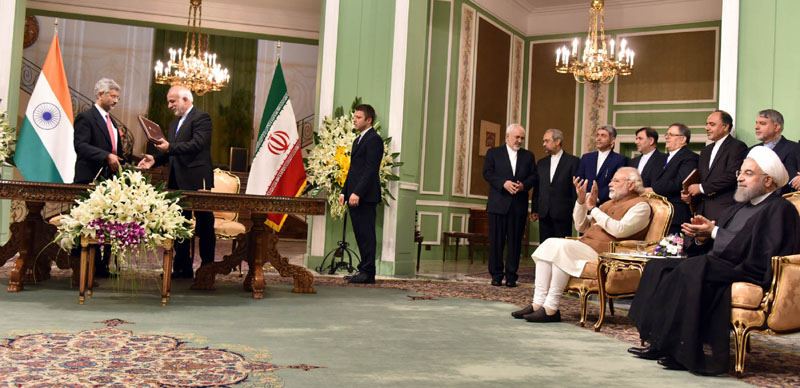
The geopolitics of Indian PM Modi’s Iran visit
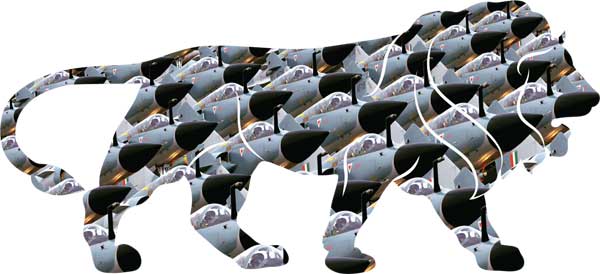
Make In India: Indian Defence Industry – The Road Ahead
The Pakistan factor in India-Iran ties
India’s New Fighters Have Serious Engine Problems
How significant is India's $500 million deal with Iran?
US General in Afghanistan: Mansour Was an Obstacle to Peace
U.S. Strike on Taliban Leader Is Seen as a Message to Pakistan
Obama’s ‘Pakistan Care’: Are The Days Over? – Analysis
New Strategy: U.S. Circumvented Pakistani Obstructionism When It Killed Taliban Leader Inside Pakistan
The Never-ending War in Afghanistan and Pakistan’s Role In It
Pakistan Army Chief’s Dash to China May 2016 Analysed
http://www.southasiaanalysis.org/node/1994
Pakistan Army Chief General Raheel Sharif’s hurried dash to Beijing on May 15 2016 for a two day visit is a pointer to Pakistan’s growing strategic insecurities and re-seeking Chinese security assurances for Pakistan and Pakistan Army
Scouring the Pakistani media one failed to find any advance references to the visit of Pak Army Chief’s visit to China. The first sentences of the visit were visible on Tweets and Facebook by ISPR Chief, Lt. Gen. Asim Bajwa on May 16 2016 evening which was the day after Pak Chief’s arrival in Beijing and after he had met top Chinese political leaders and Chinese military hierarchy. No information available that he met the Chinese President.
The follow-up Tweets by ISPR Chief on conclusion of Pak Army Chief’s visit reflected that the Vice Chairman of the Central Military Commission stressed that “the security of the China Pakistan Economic Corridor was the unshirkable responsibility of the two militaries”. Notice the stress by China on the “two militaries” and not that of China and Pakistan.
Summing-up his ‘Impressions” on the China visit, the ISPR Chief tweeted that the visit was “Very intense, highly formal visit, strategic relationship manifested in talks and interactions.” The stress on “intense” should be read as signifying the serious discussions on Pak Army –centric strategic concerns.
It should be evident that China’s strategic investments in Pakistan including the latest flagship project, the China Pakistan Economic Corridor, do merit re-assuring each other’s firm intentions to stand by each other. The China-Pakistan Army Axis is a vivid example of how China and Pakistan use and exploit each other’s strategic uncertainties.
Will Killing Mullah Mansour Work?
Drone Blowback in Pakistan is a Myth. Here’s Why.
Drone warfare in the Federally Administered Tribal Region of Pakistan has many problems. Blowback is not one of them. In fact, data show the opposite: Most respondents support drone strikes.
Since 2001, the United States has used armed drones (or unmanned aerial vehicles, UAVs) against Islamist militants in Afghanistan, Iraq, Syria, Somalia, Yemen and Pakistan. Obama administration officials and other proponents believe drones work because they deny terrorists sanctuaries and degrade their ability to plan attacks.
However, human rights organizations and even some former U.S. military commanders argue that drone strikes inadvertently increase terrorism by exerting a “blowback” effect. Their logic is simple. Drone strikes kill more innocent civilians than terrorists, which radicalizes affected populations and motivates them to join terrorist groups to retaliate against the United States. Prominent American counterinsurgency expert David Kilcullen and co-author Andrew Exum wrote that “every one of these dead noncombatants represents an alienated family, a new desire for revenge, and more recruits for a militant movement that has grown exponentially even as drone strikes have increased.”
The perfect case for testing the blowback effect is Pakistan, where, since 2004, the CIA has launched an estimated 423 strikes, constituting 75 percent of the agency’s drone strikes worldwide. While the drone campaign in Pakistan began under the Bush administration, President Obama sharply escalated it with 128 strikes in 2010 alone. Since 2012, when Obama signaled a shift in counterterrorism away from targeted killings, the drone war has been winding down with sporadic strikes. Secretly endorsed by Pakistani authorities, these strikes were carried out in the country’s Federally Administered Tribal Areas (FATA) bordering Afghanistan, where al-Qaeda and Taliban militants found a safe haven after the U.S. invasion of Afghanistan in 2001. Inhabited by Pashtuns, FATA consists of seven agencies (districts) and six Frontier Regions (FRs). Pakistan still governs FATA under the colonial-era Frontier Crimes Regulation, 1901, which deprives locals of their basic legal and political rights but has allowed the military to use the area as a covert staging ground for jihad in Afghanistan.
Drones and public opinion