The Profession of Arms: A Guide for Young Army Officers
It takes courage, especially for a young officer, to check a man met on the road for not saluting properly or for slovenly appearance, but, every time he does, it adds to his stock of moral courage, and whatever the soldier may say, he has respect for the officer who does pull him up.
Read Document →The Dragon's Teeth: Assessing China's Military Modernization
PLA has focused on modernising its capabilities across all warfare domains to achieve these goals. This includes land, air, and maritime operations, nuclear, space, counter-space, electronic warfare and cyberspace operations, aiming to become a fully integrated joint force.
Read Document →Transforming the PLA: A Decade of reorganisation from SSF to ISF
PRC has engaged in a sustained and broad effort to transform the PLA from an infantry-heavy, low-technology, ground forces-centric military into a high-technology, networked force with an increasing emphasis on joint operations and naval and air power projection.
Read Document →Eyes without Borders: Exploring the World of Open Source Intelligence (OSINT) in the Digital Age
Open Source Intelligence (OSINT) is gaining prominence with the rise of social media, the digital society and the vast growth of publicly and commercially available information (PAI and CAI).
Read Document →
The PLA’s Developing Cyber Warfare Capabilities and India's Options
Informationised warfare blurs the lines between peacetime and wartime. A nation in the information age cannot wait for the hostilities to break out to collect intelligence, carryout influence operations, develop antisatellite systems or design computer software weapons.
Read Document →
Galwan and After
Why did China did this when he is under tremendous pressure in all fronts, is this China's salami slice tactics being progressed rigorously, what will be new Rules of Engagement, what will be escalatory control mechanism, who has taken this decision, will there be some pressure put by China in India's North-East through insurgency.
Read Document →
India’s Joint Doctrine for Cyberspace Operations: A Critical Review
Chief of Defence Staff (CDS) General Anil Chauhan and Secretary, Department of Military Affairs, formally released declassified versions of the Joint Doctrines for Cyberspace Operations during the Chiefs of Staff Committee meeting in New Delhi.
Read Document →
Know your Enemy General(now Field Marshal) Syed Aseem Munir
Gen SA Munir's position in the hierarchy of Pakistan was not very comfortable. The state of economy, insurgency in Pakhtoonistan and Balochistan, attack on the Jaffar Express, constant protests by supporters of Imran Khan's supporters inside and outside of parliament.
Read Document →
Decoding Operation SINDOOR: Key Aspects and Implications
Precision strikes were carried out on nine sites—four in Pakistan and five in PoK—linked to anti-India terrorist groups such as the LeT, JeM and the Hizbul Mujahideen. The targeted sites included Muridke (LeT headquarters) and Bahawalpur (JeM headquarters).
Read Document →
Chinese Cyber Exploitation in India's Power Grid - Is There a linkage to Mumbai Power Outage?
The New York Times (NYT), based on analysis by a U.S. based private intelligence firm Recorded Future, reported that a Chinese entity penetrated India’s power grid at multiple load dispatch points. Chinese malware intruded into the control systems that manage electric supply across India, along with a high-voltage transmission substation and a coal-fired power plant
Read Document →21 February 2017
*** India's Real Military Problem (And It's Not Pakistan or China)
*** Surgical strike a copybook execution of precise planning
*** India’s Trade Policy Dilemma and the Role of Domestic Reform
** A Glimpse Of Warfare’s Future, Today
** The case against weaponising water
Why Kashmir’s Mainstream Parties And Separatists Are Uniting Against General Bipin Rawat
By taking a stand in support of stone-pelters, the “mainstream Kashmiri leaders have only added fuel to the fire and further aggravated the situation”.Giving shape to Modi's dream of 'electricity for all'
On the precipice
2 Maps That Show The US’ Strategy In Asia-Pacific
The War That Made Asia: How the Opium War Crushed China
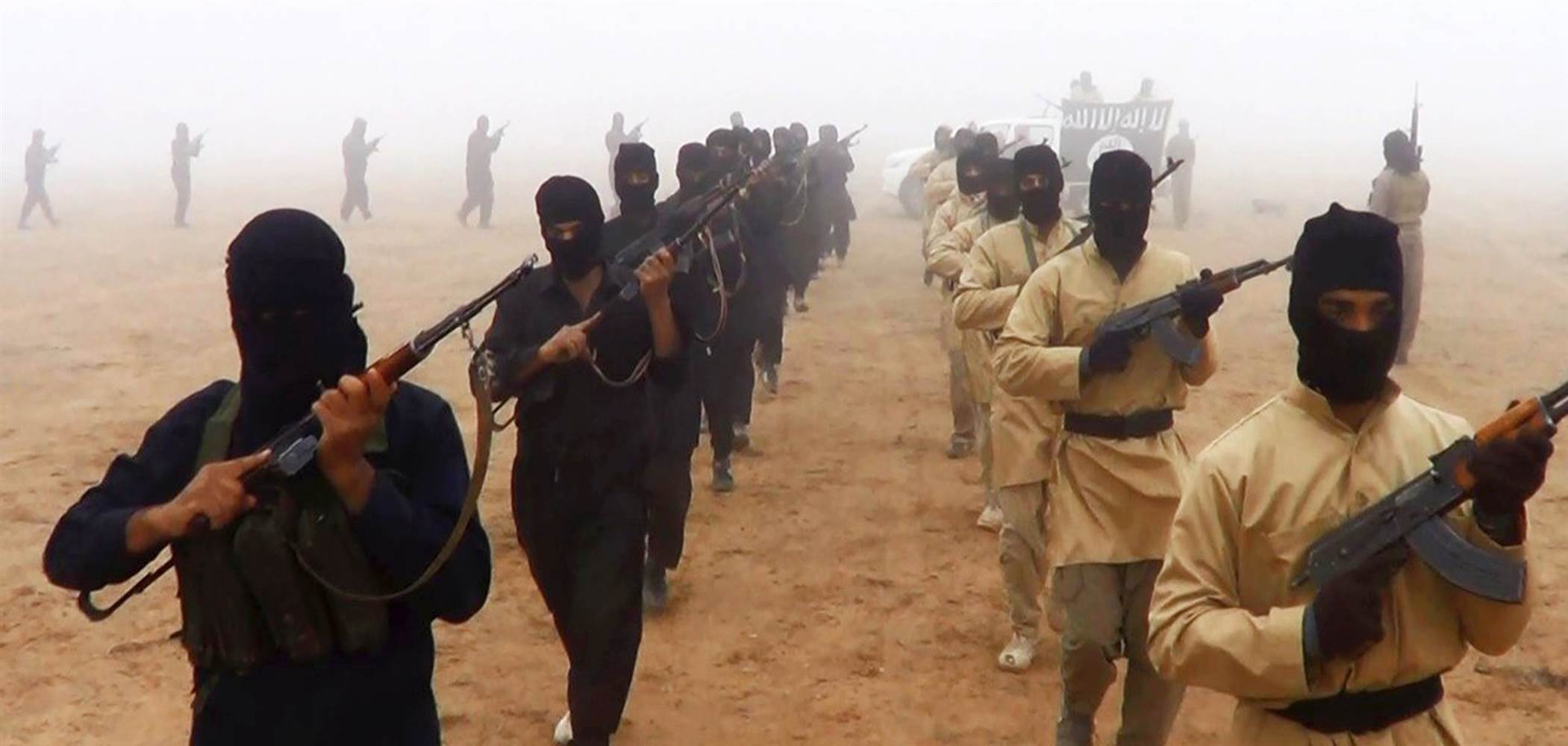
Panel to HASC: Fighting Islamic State, Al Qaeda Could Take 15 More Years
Al Qaeda and the Islamic State could reconcile their differences to present a different but persistent security challenge to the United States for the foreseeable future, three experts in counterterrorism told theHOUSE ARMED SERVICES Committee Tuesday.Syria is a world war without a solution Seth J Frantzman
A Strategy to Counter ISIL as a Transregional Threat
Israel's Walls Do They Work?
BRING EUROPEAN FINANCE MINISTRIES KICKING AND SCREAMING INTO GEOPOLITICS
The issue of burden-sharing will be a hot topic at the Munich Security Conference, a major annual event that kicks off this week. Surely, many attendees will have the recent words of Secretary of Defense James Mattis ringing in their heads. At this week’s NATO defense ministerial, he warned that if European NATO countries do not, this year, present concrete plans for increasing their defense budgets, the United States will moderate its commitment to the alliance. Burden-sharing is back with a vengeance in the transatlantic relationship. More allied contributions to the common defense is at the heart of President Donald Trump’s most poignant critique of America’s traditional role in the world. In the simplest way, it is about money: They do not pay what they have promised, but they are getting American protection anyway. While the president has held these views for a long time, he is not the first U.S. leader to voice strong concerns over allied free-riding and burden-sharing. These critiques are as old as the alliance and were voiced not long ago by former President Barack Obama. But Trump is the first to openly call the current arrangement obsolete, leading to Mattis’ characteristically direct warning in Brussels.Why a Travel Restriction Won't Stop Terrorism at Home
A lesson on UN peacekeeping – from Haiti
2017 Global Forecast
Rethinking Civil-Military Relations
A Glimpse Of Warfare’s Future, Today
Investigating A Cyberwar
Pentagon Cyber Spies Seek Better Tools to Sort Intelligence Data
Pentagon spies trying to get ahead of mounting cyberthreats from North Korea to Russia are seeking new technologies to help winnow down the flood of data they receive, according to a senior Defense Department intelligence official.How can nation states win the unfolding cyberwar?
Norms aren’t substitute for international law in cyberspace
A Chip Flaw Strips Away Hacking Protections for Millions of Devices
FOR THE LAST decade or so, hackers have faced a daunting challenge when they try to break into a computer: Even when they get malicious code running on a victim’s machine, they have to figure out where in the computer’s memory that code has ended up. That’s because a security protection used in Windows, Android, and every other modern operating system randomizes where programs run in a device’s memory. It turns the process of digital intrusion into something like an attempt to burglarize a house in total darkness.