The news we are waiting for is whether the UAV crashed on its own or more worryingly, was brought down by the Chinese.The Profession of Arms: A Guide for Young Army Officers
It takes courage, especially for a young officer, to check a man met on the road for not saluting properly or for slovenly appearance, but, every time he does, it adds to his stock of moral courage, and whatever the soldier may say, he has respect for the officer who does pull him up.
Read Document →The Dragon's Teeth: Assessing China's Military Modernization
PLA has focused on modernising its capabilities across all warfare domains to achieve these goals. This includes land, air, and maritime operations, nuclear, space, counter-space, electronic warfare and cyberspace operations, aiming to become a fully integrated joint force.
Read Document →Transforming the PLA: A Decade of reorganisation from SSF to ISF
PRC has engaged in a sustained and broad effort to transform the PLA from an infantry-heavy, low-technology, ground forces-centric military into a high-technology, networked force with an increasing emphasis on joint operations and naval and air power projection.
Read Document →Eyes without Borders: Exploring the World of Open Source Intelligence (OSINT) in the Digital Age
Open Source Intelligence (OSINT) is gaining prominence with the rise of social media, the digital society and the vast growth of publicly and commercially available information (PAI and CAI).
Read Document →
The PLA’s Developing Cyber Warfare Capabilities and India's Options
Informationised warfare blurs the lines between peacetime and wartime. A nation in the information age cannot wait for the hostilities to break out to collect intelligence, carryout influence operations, develop antisatellite systems or design computer software weapons.
Read Document →
Galwan and After
Why did China did this when he is under tremendous pressure in all fronts, is this China's salami slice tactics being progressed rigorously, what will be new Rules of Engagement, what will be escalatory control mechanism, who has taken this decision, will there be some pressure put by China in India's North-East through insurgency.
Read Document →
India’s Joint Doctrine for Cyberspace Operations: A Critical Review
Chief of Defence Staff (CDS) General Anil Chauhan and Secretary, Department of Military Affairs, formally released declassified versions of the Joint Doctrines for Cyberspace Operations during the Chiefs of Staff Committee meeting in New Delhi.
Read Document →
Know your Enemy General(now Field Marshal) Syed Aseem Munir
Gen SA Munir's position in the hierarchy of Pakistan was not very comfortable. The state of economy, insurgency in Pakhtoonistan and Balochistan, attack on the Jaffar Express, constant protests by supporters of Imran Khan's supporters inside and outside of parliament.
Read Document →
Decoding Operation SINDOOR: Key Aspects and Implications
Precision strikes were carried out on nine sites—four in Pakistan and five in PoK—linked to anti-India terrorist groups such as the LeT, JeM and the Hizbul Mujahideen. The targeted sites included Muridke (LeT headquarters) and Bahawalpur (JeM headquarters).
Read Document →
Chinese Cyber Exploitation in India's Power Grid - Is There a linkage to Mumbai Power Outage?
The New York Times (NYT), based on analysis by a U.S. based private intelligence firm Recorded Future, reported that a Chinese entity penetrated India’s power grid at multiple load dispatch points. Chinese malware intruded into the control systems that manage electric supply across India, along with a high-voltage transmission substation and a coal-fired power plant
Read Document →10 December 2017
The Indian drone that crashed in China could be a goldmine for Chinese weapons engineers
The news we are waiting for is whether the UAV crashed on its own or more worryingly, was brought down by the Chinese.The Civil Half of the Afghan War Dealing with the Political, Governance, Economics, Corruption, and Drug Threats
Kabul's Plan to Realize Afghanistan’s Geographic Dividend
Back in 1776, Adam Smith observed that “all the inland parts” of Africa and Asia were the world’s least developed areas. Even today, well over two centuries later, most of these landlocked countries are still trapped in poverty. Countries without direct coastal access to the sea and to maritime trade face many challenges from the outset that limit their potential gains from trade in this globalized world compared to their coastal neighboring countries. The Human Development Index is a stark indication of how poorly landlocked countries are performing: low standards of living, high child mortality, high levels of poverty, low health care quality, and crippled education systems. In the Human Development Report of 2016, 10 out of the 32 countries with the lowest HDI scores are landlocked.China warns of imminent attacks by "terrorists" in Pakistan
Chinese Hacker Groups To Shift Focus To India In 2018: FireEye
Chinese advanced persistent threat (APT) groups that have allegedly been creating cyber havoc internationally will shift their focus in 2018 to countries like India and Hong Kong and groups seen as a threat to Beijing’s influence over global markets, enterprise cybersecurity company FireEye said on Thursday. Hacker groups backed by nation-states are termed as APTs.Beijing’s Heavy-Handed Solution to Urbanization
The Implications of Iran´s Expanding Shi`a Foreign Fighter Network
According to Colin Clarke and Phillip Smyth, Iran’s Revolutionary Guard Corps is transforming Shi’a foreign fighters from Lebanon, Iraq, Afghanistan and Pakistan into transnational proxy forces capable of fighting asymmetric and conventional wars. While they suggest that these forces have already participated in conflicts throughout the region, they warn that the continued formalization and expansion of these networks could 1) further Iran’s strategy for regional hegemony; 2) exacerbate geopolitical and sectarian tensions in the Middle East; and 3) threaten US interests in the region and beyond.OPEC and Strategic Questions in the Oil Market
In late November, OPEC and a Russia-led group of big oil producers agreed to maintain limits on oil supplies. So, what factors shaped this decision? The massive expansion of shale oil in the US, and its impact on petroleum markets, was surly one. However, Severin Fischer contends that there are actually many factors increasing the pressure on OPEC and other oil producers. He also suggests that while it’s always difficult to make serious predictions about the oil market’s future, two key development trends are emerging.What's Ahead for Yemen Now That Saleh's Gone?
The Origins of America's Jihadists
Before Deciding Who Rules Jerusalem, Decide What Jerusalem Is
Are Turkey and Europe seeking a new kind of relationship?
Turkey’s EU membership bid has reached an impasse, but cooperation between Ankara and Brussels continues in key areas of mutual interest.The Hwasong-15: The Anatomy of North Korea's New ICBM
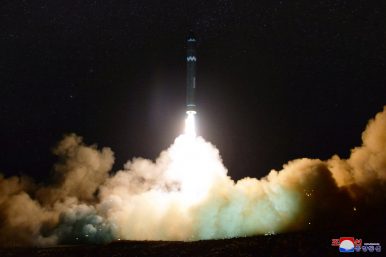
On November 29, at 2:47 a.m. local time, North Korea carried out the first-ever launch of what is to date its largest and most powerful ballistic missile, the Hwasong-15. The launch ended a more than two-month pause in North Korean ballistic missile testing and refocused attention on the country’s rapid advances in ballistic missile technology in 2017.How to win the Long War
Pentagon Building Wish List for New Technology Spending
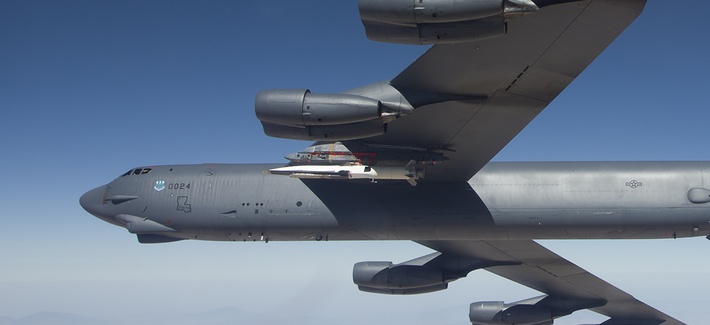
SIMI VALLEY, CALIF. — The Pentagon’s top weapons buyer is drafting a list of desired technologies as part of a new effort to coordinate the Defense Department’s research and development, including at U.S. laboratories and government-funded research centers.The Weapon Wizards: How Israel Became a High-Tech Military Superpower
Okay, Say Someone Hacks into the USPower Grid. Then What?
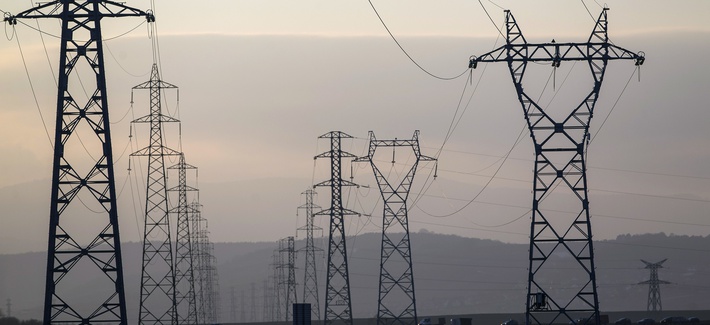
A joint research project between the Department of Energy and a geographic analytics company is mapping just how far the repercussions could spread.Outing Spooks: “Doxing” in the Cyber-Hack Era
Revealing the identities of intelligence officials – a practice known as doxing – could become more common among nation-states, directed in particular at the clandestine cyber-spies who operate overseas. Doing so undermines an unspoken norm of confidentiality among even adversarial intelligence services – where they allow each other to operate intelligence networks in their country, within limits. It also opens individuals and their families up to violent acts by non-state actors such as terrorists and criminal groups as well as retribution by on-looking governments.