The Profession of Arms: A Guide for Young Army Officers
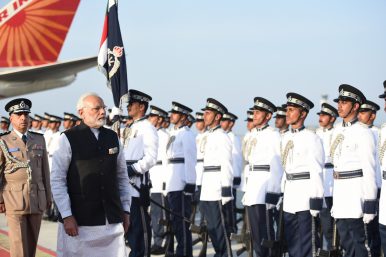
It takes courage, especially for a young officer, to check a man met on the road for not saluting properly or for slovenly appearance, but, every time he does, it adds to his stock of moral courage, and whatever the soldier may say, he has respect for the officer who does pull him up.
Read Document →The Dragon's Teeth: Assessing China's Military Modernization
PLA has focused on modernising its capabilities across all warfare domains to achieve these goals. This includes land, air, and maritime operations, nuclear, space, counter-space, electronic warfare and cyberspace operations, aiming to become a fully integrated joint force.
Read Document →Transforming the PLA: A Decade of reorganisation from SSF to ISF
PRC has engaged in a sustained and broad effort to transform the PLA from an infantry-heavy, low-technology, ground forces-centric military into a high-technology, networked force with an increasing emphasis on joint operations and naval and air power projection.
Read Document →Eyes without Borders: Exploring the World of Open Source Intelligence (OSINT) in the Digital Age
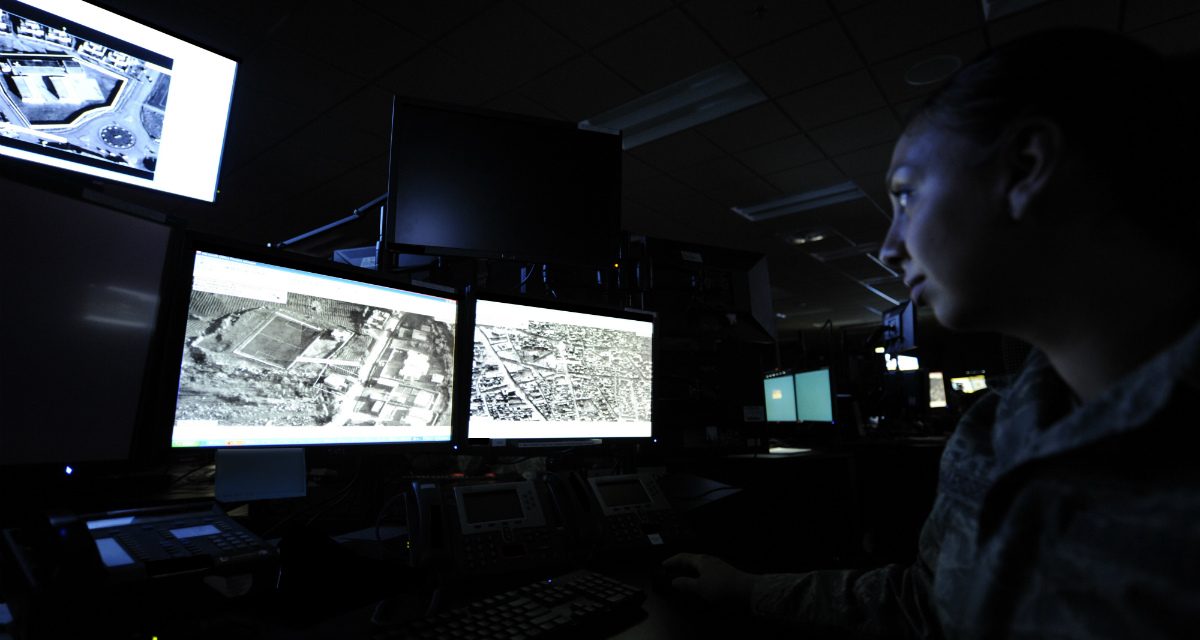
Open Source Intelligence (OSINT) is gaining prominence with the rise of social media, the digital society and the vast growth of publicly and commercially available information (PAI and CAI).
Read Document →
The PLA’s Developing Cyber Warfare Capabilities and India's Options
Informationised warfare blurs the lines between peacetime and wartime. A nation in the information age cannot wait for the hostilities to break out to collect intelligence, carryout influence operations, develop antisatellite systems or design computer software weapons.
Read Document →
Galwan and After
Why did China did this when he is under tremendous pressure in all fronts, is this China's salami slice tactics being progressed rigorously, what will be new Rules of Engagement, what will be escalatory control mechanism, who has taken this decision, will there be some pressure put by China in India's North-East through insurgency.
Read Document →
India’s Joint Doctrine for Cyberspace Operations: A Critical Review
Chief of Defence Staff (CDS) General Anil Chauhan and Secretary, Department of Military Affairs, formally released declassified versions of the Joint Doctrines for Cyberspace Operations during the Chiefs of Staff Committee meeting in New Delhi.
Read Document →
Know your Enemy General(now Field Marshal) Syed Aseem Munir
Gen SA Munir's position in the hierarchy of Pakistan was not very comfortable. The state of economy, insurgency in Pakhtoonistan and Balochistan, attack on the Jaffar Express, constant protests by supporters of Imran Khan's supporters inside and outside of parliament.
Read Document →
Decoding Operation SINDOOR: Key Aspects and Implications
Precision strikes were carried out on nine sites—four in Pakistan and five in PoK—linked to anti-India terrorist groups such as the LeT, JeM and the Hizbul Mujahideen. The targeted sites included Muridke (LeT headquarters) and Bahawalpur (JeM headquarters).
Read Document →
Chinese Cyber Exploitation in India's Power Grid - Is There a linkage to Mumbai Power Outage?
The New York Times (NYT), based on analysis by a U.S. based private intelligence firm Recorded Future, reported that a Chinese entity penetrated India’s power grid at multiple load dispatch points. Chinese malware intruded into the control systems that manage electric supply across India, along with a high-voltage transmission substation and a coal-fired power plant
Read Document →7 March 2018
India’s stance on Dalai Lama reveals dynamics with China
Indian Ocean Update: The Crisis in the Maldives and India's Play at Duqm
The Diplomat‘s Ankit Panda (@nktpnd) and Prashanth Parameswaran (@TheAsianist) discuss recent developments in the Indian Ocean region, including the political crisis in the Maldives and the India-Oman agreement on Duqm port. Click the arrow to the right to listen. If you’re an iOS or Mac user, you can also subscribe to The Diplomat’s Asia Geopolitics podcast on iTunes here. If you use Android, you can subscribe on TuneIn or on Google Play Music. If you like the podcast and have suggestions for content, please leave a review and rating on iTunes and TuneIn.36 glacial lakes in Gilgit-Baltistan turns dangerous due to CPEC: Survey
How Will Being on the FATF Grey-List Actually Impact Pakistan?
After much debate and speculation following the February Financial Action Task Force (FATF) plenary, the dust has finally settled: Pakistan will be placed on the FATF grey-list in June. It is now worth exploring what this means for Pakistan, particularly its economy, and the potential of this event to cause a shift in the country’s security and strategic calculus. Some analysts have argued that the grey-listing will squeeze Pakistan’s economy and make it harder for the country to meet its mounting foreign financing needs, including potential future borrowings from the International Monetary Fund. They have also argued that the grey-listing could lead to a downgrade in Pakistan’s debt ratings, making it more difficult to tap into the international bond markets.Why Are We Surprised When Buddhists Are Violent?
Xi Jinping Is Now China's President for Life. What Would Machiavelli Think?
Sizing up Chinese Investments in Europe
Chinese investments in the European Union have surged in recent years, giving rise to both great expectations and growing concerns. Foreign direct investment (FDI) in Europe traced back to mainland China hit a record 65 billion euros ($79 billion) in 2017, compared with less than 2 billion euros ($2.5 billion) in 2010, according to data gathered by Baker McKenzie. As China continues to grow, develop, and integrate into the global economy, its overseas investments increasingly reflect the growing sophistication of the Chinese economy and the broader commercial and policy goals being set in Beijing.Blockchain goes East: opportunities in China
As cryptocurrencies dominate global headlines, China is consistently quashing the hype within its borders. But as Beijing ratchets up its pressure on bitcoin, this time targeting mining, Chinese investors are exploring the potential of the technology central to it all – blockchain. In 2017, cryptocurrencies took the world by storm, led by their torchbearer, Bitcoin. Bitcoin took on manic appeal in a matter of months. Billionaire venture capitalists and your average tech-savvy private individuals all reached into their pockets to invest in Bitcoin and its kind – the likes of dreamily named Ethereum and Ripple.RUSSIA AND CHINA ARE SEDUCING U.S. ALLIES WITH CHEAP WEAPONS, WARNS GENERAL JOSEPH VOTEL
China’s Stability Myth Is Dead
The announcement on Sunday that China would abolish the two-term limit for the presidency, effectively foreshadowing current leader Xi Jinping’s likely status as president for life, had been predicted ever since Xi failed to nominate a clear successor at last October’s Communist Party Congress. But it still came as a shock in a country where the collective leadership established under Deng Xiaoping in the 1980s was once considered inviolable. Xi, like every leader since Deng, combines a trinity of roles that embody the three pillars of power in China: party chairman, president, and head of the Central Military Commission. But like every leader since Deng, he was once expected to hand these over after his appointed decade, letting one generation of leadership pass smoothly on to the next.What Xi Jinping’s Longer-term Rule Will Mean for China’s Economy
STRATEGIC COUNTERTERRORISM FAILURE? WHY WE CONTINUE DOING THE SAME THING AND EXPECTING DIFFERENT RESULTS
“Today, we struck back,” the president said after the United States conducted a military strike against terrorists and their sanctuary. But which president? George W. Bush, who declared war on terrorism after the 9/11 attacks? Barack Obama, who subsequently took charge of that war? Or Donald J. Trump, who carries the mantle today? Really, it could have been any of the three—but it was none of them. President Bill Clinton uttered those words on August 20, 1998.Clinton made the statement after ordering a military strike against al-Qaeda training camps in Afghanistan and the al-Shifa pharmaceutical manufacturing facility in Sudan in response to two, nearly simultaneous terrorist attacks perpetrated by al-Qaeda against the US embassies in Kenya and Tanzania that killed twelve Americans (and more than two hundred others). With a foreshadowing of the future to come, Operation Infinite Reach could be seen as the counterterrorism strike that started it all.Three Flashpoints in the Syrian Civil War
Since the start of the year, three prominent regions in the Syrian civil war have emerged as its current flashpoints: Afrin, Idlib and Damascus. These hotbeds of military activity represent the intersection of the various proxy battles underway in Syria. Turkey, Russia, Iran, the Syrian government, and the many loyalist and rebel militant groups active throughout the country all have unique goals. In the flashpoint regions, however, their objectives are overlapping to move the Syrian conflict into a new, more static phase. As these three remaining major offensives wane in the coming months, they will give way to constant deadly skirmishes and attacks along the front lines, with few significant changes in territorial control.The Middle of an Era
Russia’s General Staff Draws Lessons Learned in Syria
Shale 2.0 – Is There a Geopolitical Dark Side?
4 Years After the Revolution, Ukraine Still Battles Corruption and Russian Aggression
Judy Asks: Is Central Europe Damaging EU Enlargement?
War by Other Means – Integrating Modern Technology
DoD is migrating to Windows 10 and it will probably stick around forever
A laptop computer running Windows 10 Secure Host Baseline version 5.3 sits on the 436th Communications Squadron consolidated work bench waiting to be checked by client service technicians Sept. 21, 2017, on Dover Air Force Base, Del. The upgrade from Windows 7 to Windows 10 and the use of a single operating system across the Department of Defense will help improve cybersecurity and help reduce information technology costs. (Roland Balik / U.S. Air Force)The ‘real strength’ in Cyber Command’s recent work
Adm. Michael Rogers, the head of U.S. Cyber Command who will step down this spring, said one of the highlights of his tenure has been cyber’s integration into other organizations.Senators: Cyber Command should disrupt Russian influence campaigns
Since the Russian influence campaign in the 2016 presidential election, members of Congress have been at pains to get a singular answer from the executive branch agencies: how can the United States combat future efforts. Senators tried to get an answer again Tuesday during a hearing of the Senate Armed Services Committee that focused on U.S. Cyber Command. Cyber Command primarily protects DoD networks and generates cyber effects for military commanders around the world.WHEN WILL 5G ARRIVE? FIRST CITIES IN THE U.S. TO GET THE NETWORK REVEALED
How New Technologies Will Radically Reshape India’s Workforce
Microsoft CEO Satya Nadella: How Empathy Sparks Innovation
Multilateral Peace Operations and the Challenges of Organized Crime
Jaรฏr van der Lijn argues there is a growing consensus that peace operations have a role to play in preventing and combating organized crime, particularly in weak or collapsed states. So what potential opportunities are there for the further involvement of peace operations in combating organized crime? What negative consequences could such engagement have for the regular actives of peace operations? And how can peace operations ensure effective cooperation and coordination in their efforts to address organized crime. In this article, van der Lijn tackles these questions and more.