With all the focus on Russian meddling in the 2016 election, the damage done by China’s vigorous and continuing espionage against the United States has taken a back seat. The preoccupation with Russia, in fact, has obscured the significant inroads made by Chinese intelligence and cyberspies. In some cases, China has proved more skillful than Russia in infiltrating American intelligence. A case involving a former C.I.A. officer named Jerry Chun Shing Lee is a perfect example. Beginning in 2010, C.I.A. sources in China began disappearing; a dozen were reported executed and several more imprisoned. What had seemed a major success in establishing a network of C.I.A. spies inside China had been turned into a devastating intelligence failure. The C.I.A. and F.B.I., suspecting a mole, went on a secret hunt.The Profession of Arms: A Guide for Young Army Officers
It takes courage, especially for a young officer, to check a man met on the road for not saluting properly or for slovenly appearance, but, every time he does, it adds to his stock of moral courage, and whatever the soldier may say, he has respect for the officer who does pull him up.
Read Document →The Dragon's Teeth: Assessing China's Military Modernization
PLA has focused on modernising its capabilities across all warfare domains to achieve these goals. This includes land, air, and maritime operations, nuclear, space, counter-space, electronic warfare and cyberspace operations, aiming to become a fully integrated joint force.
Read Document →Transforming the PLA: A Decade of reorganisation from SSF to ISF
PRC has engaged in a sustained and broad effort to transform the PLA from an infantry-heavy, low-technology, ground forces-centric military into a high-technology, networked force with an increasing emphasis on joint operations and naval and air power projection.
Read Document →Eyes without Borders: Exploring the World of Open Source Intelligence (OSINT) in the Digital Age
Open Source Intelligence (OSINT) is gaining prominence with the rise of social media, the digital society and the vast growth of publicly and commercially available information (PAI and CAI).
Read Document →
The PLA’s Developing Cyber Warfare Capabilities and India's Options
Informationised warfare blurs the lines between peacetime and wartime. A nation in the information age cannot wait for the hostilities to break out to collect intelligence, carryout influence operations, develop antisatellite systems or design computer software weapons.
Read Document →
Galwan and After
Why did China did this when he is under tremendous pressure in all fronts, is this China's salami slice tactics being progressed rigorously, what will be new Rules of Engagement, what will be escalatory control mechanism, who has taken this decision, will there be some pressure put by China in India's North-East through insurgency.
Read Document →
India’s Joint Doctrine for Cyberspace Operations: A Critical Review
Chief of Defence Staff (CDS) General Anil Chauhan and Secretary, Department of Military Affairs, formally released declassified versions of the Joint Doctrines for Cyberspace Operations during the Chiefs of Staff Committee meeting in New Delhi.
Read Document →
Know your Enemy General(now Field Marshal) Syed Aseem Munir
Gen SA Munir's position in the hierarchy of Pakistan was not very comfortable. The state of economy, insurgency in Pakhtoonistan and Balochistan, attack on the Jaffar Express, constant protests by supporters of Imran Khan's supporters inside and outside of parliament.
Read Document →
Decoding Operation SINDOOR: Key Aspects and Implications
Precision strikes were carried out on nine sites—four in Pakistan and five in PoK—linked to anti-India terrorist groups such as the LeT, JeM and the Hizbul Mujahideen. The targeted sites included Muridke (LeT headquarters) and Bahawalpur (JeM headquarters).
Read Document →
Chinese Cyber Exploitation in India's Power Grid - Is There a linkage to Mumbai Power Outage?
The New York Times (NYT), based on analysis by a U.S. based private intelligence firm Recorded Future, reported that a Chinese entity penetrated India’s power grid at multiple load dispatch points. Chinese malware intruded into the control systems that manage electric supply across India, along with a high-voltage transmission substation and a coal-fired power plant
Read Document →11 March 2018
America’s Other Espionage Challenge: China
With all the focus on Russian meddling in the 2016 election, the damage done by China’s vigorous and continuing espionage against the United States has taken a back seat. The preoccupation with Russia, in fact, has obscured the significant inroads made by Chinese intelligence and cyberspies. In some cases, China has proved more skillful than Russia in infiltrating American intelligence. A case involving a former C.I.A. officer named Jerry Chun Shing Lee is a perfect example. Beginning in 2010, C.I.A. sources in China began disappearing; a dozen were reported executed and several more imprisoned. What had seemed a major success in establishing a network of C.I.A. spies inside China had been turned into a devastating intelligence failure. The C.I.A. and F.B.I., suspecting a mole, went on a secret hunt.China Belt-Road Plan May Create Debt Problems From Djibouti to Laos
The hidden risks of China's war on debt
HONG KONG -- When the Bank of Jinzhou, based in China's northeastern rust belt, went public on the Hong Kong stock exchange two years ago, its finances were a wreck. It had issued 34 billion yuan ($5.36 billion) worth of "wealth management products" that are hallmarks of China's sprawling "shadow" banking sector, and it was owed 9 billion yuan by an unnamed borrower who was under investigation by Hong Kong regulators. The bank, like many others across China, was loaded with risky debt -- the kind that China's leadership in Beijing is now determined to stamp out.US tailors forces to deter growing Chinese nuclear threat
China's Thrift, And What To Do About It
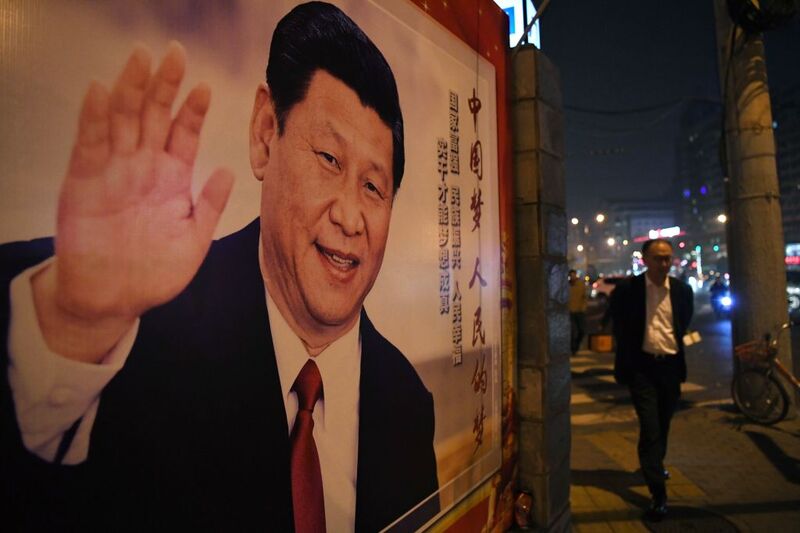
There's Nothing Shocking About Xi's Rise
In a season of political shocks, President Xi Jinping’s assumption of supreme power has still managed to startle many longstanding observers of China. The Economist magazine dramatically declared, “The West’s 25-year bet on China has failed.” Instead of moving towards democracy, these voices suggest, China is sliding further into authoritarianism. It’s worth asking, if for no reason than to avoid more such shocks in the near future, why the “West” placed this bet on China at all.Selected Chinese AI Companies, Projects and Cooperations
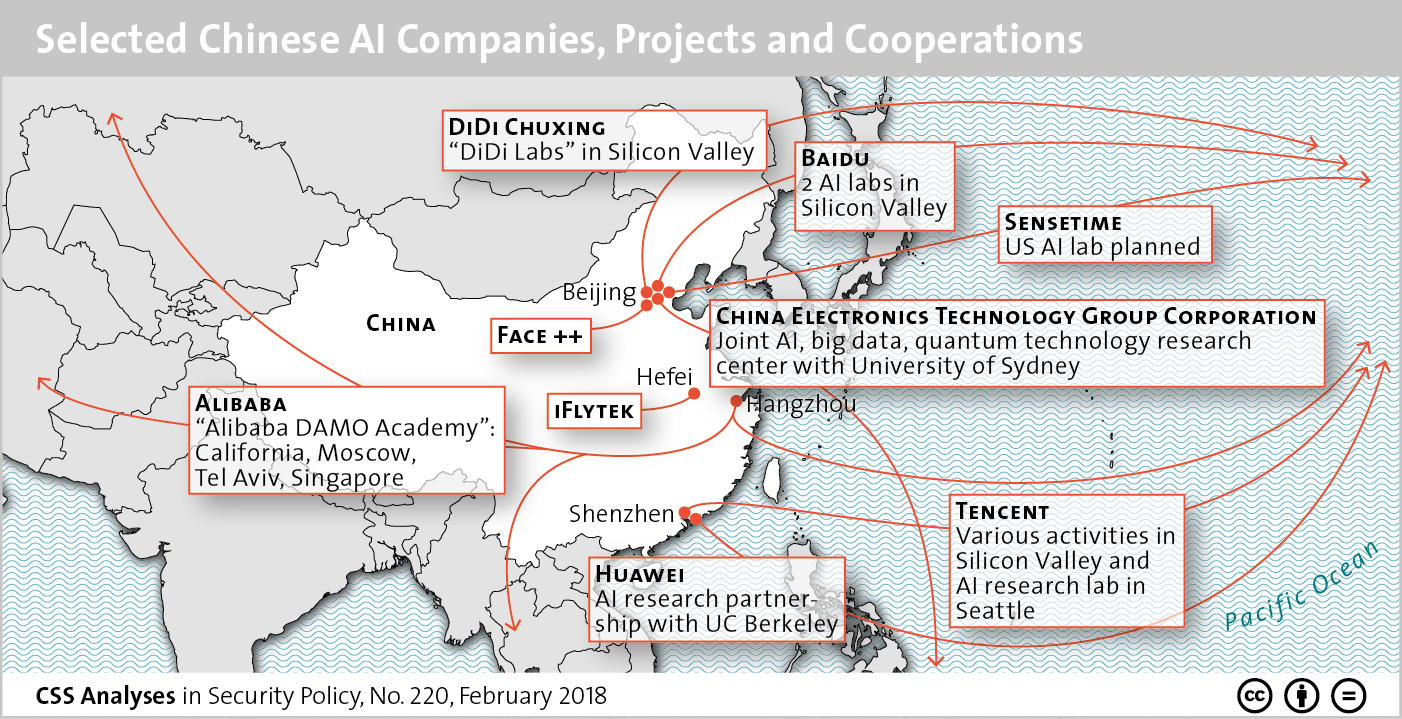
This graphic maps out a selection of Chinese AI companies and provides an overview of their current projects and collaborative efforts. To find out more about China’s ambitions to become a world leader in artificial intelligence, see Sophie-Charlotte Fischer’s recent addition to our CSS Analyses in Security Policy series here. For more graphics on economics, see the CSS’ collection of graphs and charts on the subject here.War between China and the United States isn't inevitable, but it's likely: An excerpt from Graham Allison's Destined for War
Will Presidents Trump and Xi, or their successors, follow in the tragic footsteps of the leaders of Athens and Sparta or Britain and Germany? In his new Gelber Prize-nominated book, Allison says the omens are not good. In the run-up to the awarding of the Lionel Gelber Prize, the National Post presents excerpts from all five nominated books. The winner will be announced on March 13 and give a free public lecture on April 17, 2018 at the Munk School of Global Affairs. Today: Graham Allison on the historical signs that war between the United States and China is likely in the years to come.The Rise of Islamist Groups in Malaysia and Indonesia
Malaysia and Indonesia, important U.S. partners and leaders in Southeast Asia, have been touted over the past two decades as model countries where Islam coexists with civil law. Malaysia’s prime minister, Najib Razak, founded the Global Movement of Moderates in 2010, an organization that seeks to unite countries to combat extremism and proffers Muslim-majority Malaysia as a tolerant nation. Indonesia, home to the world’s largest Muslim population, has been held up as a leading global example of democratization. (I echoed this view in a 2013 CFR book, Pathways to Freedom: Political and Economic Lessons from Democratic Transitions.)Made in America, But Lost in Iraq
The U.S. company that repairs Iraq’s American-made M1A1 Abrams tanks has pulled many of its people from Iraq after at least nine of the armored vehicles ended up in the hands of pro-Iran militias. Now, many of Iraq’s tanks are immobilized for want of maintenance, potentially jeopardizing the country’s ongoing campaign against Islamic State militants. While the Islamic State has retreated from large swaths of Iraq it once controlled, mobile groups of militants continue to stage attacks on Iraqi troops and their allies. An Islamic State attack near the city of Hawija in mid-February reportedly killed 27 militiamen fighting for Baghdad.Why is the world at war?
We live in a world of trouble. Conflicts today may be much less lethal than those that scarred the last century, but this brings little comfort. We remain deeply anxious. We can blame terrorism and the fear it inspires despite the statistically unimportant number of casualties it inflicts, or the contemporary media and the breathless cycle of “breaking news”, but the truth remains that the wars that seem to inspire the fanatics or have produced so many headlines in recent years prompt deep anxiety. One reason is that these wars appear to have no end in sight.Russia Has Made Cyberwarfare, Disinformation and Internet Trolling Integral Parts of Its Military Strike Forces
The Rise of China-Europe Railways
Time For a Trade War?
Putin on the nukes
The Differences Between Busy and Productive People
Here are some valuable insights into what productive unicorns do during their work week, and how they are way different from busy donkeys, inspired by Conor Neill. Busy people are hell-bent on fitting in more things into their day. Productive people cut their to-do list thoughtfully by 50 percent. Busy people think that getting more things done in the sanctioned eight or nine hours at work is the way to go. They fit in too many tasks in their to-do list only to end up moving most of their tasks the next day. Productive people know too well that they do not need 40 tasks in their to-do list. They take a less-is-more approach when it comes to planning their work day by only accomplishing those that are important.America’s Military Is Choking on Old Technology
In a seminal 1958 article, Edward Katzenbach wrote about how militaries had been determined to maintain large horse cavalry formations well into the 20th century — “a capacity for survival that border[ed] on the miraculous” — despite overwhelming evidence from World War I that a cavalry charge on the modern battlefield was ludicrous. In the words of the last U.S. Army chief of cavalry, who insisted on maintaining tactical horses in the face of armored vehicles, “When better roller skates are made, Cavalry horses will wear them.”Meet Russia's trolls: From standup comic to a Siberian Jay Z
ST. PETERSBURG, Russia — One tried his hand at standup comedy. Another wrote a psychological dissertation about loneliness among the elderly. A third, from eastern Siberia, studied economics and wildlife management, and was known to his work colleagues by the unlikely nickname of “Jay Z.” They are among the 13 Russians indicted by a grand jury in Washington in a sweeping conspiracy to defraud the United States and its political system, including the 2016 presidential election, via bogus social media posts and other “information warfare.” The indictment said they sought to support the campaign of Donald Trump and disparaged Hillary Clinton.Why is America letting Russia get away with meddling in our democracy?
Europe Wants American Support for a Common Security Policy
The arrival of post-Putin Russia
Information warfare
There is no doubt that information warfare plays a fundamental role in today’s economy and society. Furthermore, its importance has led to the emergence of a new form of conflict and therefore led to a change in reasoning. Our highly-digitalized economies and society obviously present significant windows of vulnerability linked to the fact that the modern economic system cannot but be open and fluid. At any rate, the concept of information warfare – as is widely known – emerges primarily from American publications and emerges in the moment in which the legitimacy of information has been placed under discussion in the American context. Required to deal with significant budget cuts, the leading US federal intelligence agencies have attempted to justify the preservation of their budget by emphasizing the importance of protecting the nation’s economic security; and yet as early as the 90s, it had become clear that the logics of conflict present in the geopolitical sphere have been transferred to the context of the economic sphere in which nations must be capable of implementing strategies of dominance based on the control of both the information infrastructure and the flows of technological and economic knowledge.The Flat Mind of Thomas Friedman
Blockchain is a pipe dream despite the hype
Danish defense minister: Deterring Russia on the cyber battlefield
The fact that Russia’s aggressive cyberattacks are primarily meant to undermine the cohesion of Western societies and our partners — and above anything else create division and a rift within both NATO and the European Union — clearly stands out as a concern from this year’s Munich Security Conference. The Russians are masters of distorting reality. One of the more bizarre episodes occurred when U.S. national security adviser H.R. McMaster was asked by a Russian expert if it was time to restart dialogue on cyber with reference to the high number of cyberattacks targeting Russia that allegedly originated in the United States, saying that only a few cyberattacks targeting the U.S. originated in Russia.Hypervisibility: Mission Command’s Unseen Adversary
False Flags in Cyberspace: Targeting Public Opinion and Political Will
Bottom Line: In the digital age, determining the origins of cyberattacks is already difficult, but cyber actors can further muddy attribution by diverting blame for attacks to others. The intention is not necessarily to trick intelligence services – who are able to access information beyond technical forensics of the hack – but rather undermine public confidence in attribution and therefore undercut political will to respond to belligerent activity in cyberspace. This appears to be the motivation behind Russian hackers imitating North Korean hackers when attempting to disrupt the opening ceremony of the Winter Olympics in Pyeongchang, according to the Washington Post.Goodbye James Bond, Hello Big Data
Army Studies 30 Cities For Futures Command
“It’s not going to be an 800-person command,” Army undersecretary Ryan McCarthytold reporters. The plan is to “lease….a couple floors in a high-rise, as opposed to a massive building that we own.” As technology and the economy changes, he added, the command may well need to move “10 to 15 years from now.” The new HQ, he emphasized, needs to be small, unbureaucratic, and able to blend in to the hoodies-and-sneakers culture of civilian innovators from both the private sector and academe.What the Gulf War Teaches About the Future of War
The Gulf War, codenamed Desert Storm, ended on February 28 1991 with the overwhelming victory of a coalition of states, spearheaded by the United States, against Iraq. In a Blitzkrieg-like ground assault, preceded by an extensive aerial bombing campaign, the United States and its allies expelled Iraqi forces from Kuwait, killing 25,000-50,000 Iraqi soldiers and wounding over 75,000, while losing 292 killed and 467 wounded in action. It remains one of the most one-sided military victories in history. Rather than a modern battle between roughly evenly matched opponents, the Gulf War shares more in common in its outcome with, for example, the British defeat of the Mahdist forces at Omdurman, Sudan in 1898 during the heydays of European Imperialism, where the British killed and wounded over 25,000 against 48 dead and 382 wounded of their own.