


During his election campaign in 2013–14, Indian Prime Minister Narendra Modi showed scant interest in foreign policy, focusing instead on economic growth, corruption, and governance. In office, however, Modi has made 35 foreign trips and visited as many as 53 countries. Since the time of Jawaharlal Nehru, no Indian prime minister has been so peripatetic. In fact, this extraordinary emphasis has led some commentators, such as the writer C. Raja Mohan, to suggest that Modi’s foreign policy has been so revolutionary as to mark the beginning of an Indian “third republic.”
12 March 2018
Has Economy Turned The Corner? Don’t Bet On It. 2018-19 May Yet Be Choppy
by R Jagannathan
 The Indian economy is entering a period of uncertainty and volatility. So be prepared for a bumpy ride. Despite the good gross domestic product (GDP) numbers for the third quarter of 2017-18 (October-December 2017), we need to be prepared for a bumpy ride in the coming fiscal year.This is not to deny the revival of economic activity after the demonetisation and goods and service tax (GST) speed breakers. The third quarter GDP figure of 7.2 per cent is encouraging, and the recovery has been broad based. The Central Statistics Office’s second advance estimate of GDP for the year is now up from the earlier projection of 6.5 per cent to 6.6 per cent.
Nepal: Madhesi Groups Splitting Again? – Analysis
By Dr. S. Chandrasekharan
Ever since the General election results were known, both the Madhesi groups have been in talks with the UML leaders for joining the government provided their basic bottom line demand of amending the constitution is accepted. We had also in the updates said that it is in the interest of the Madhesis and in the larger interest of stability of the country that the two groups join the government. The final results of the elections in the Parliament showed that though the UML- Maoist Centre had a comfortable majority, it did not have the magic number for a two third majority to make suitable amendments to the constitution.
Progressive And Regressive Issues Of Nepali Constitution: Study In Light Of Constitution Of India
By Dr Vijay Srivastava and Jivesh Jha*
A painful decade of bloody Maoist insurgency and then years of failed attempts later, Nepal on September 20, 2015 got a new Constitutional document, a development that led to celebrations in Hills but 135 days long protests in southern plains that claimed more than 40 lives. There was celebration in Kathmandu and the Hill regions by lighting lamps and firing crackers. But, the Madheshis and Tharus of Nepal, the half of the national population, observed a Black Day to mourn the deaths of their community members who had been gunned down by security forces while protesting against certain discriminatory provisions of the Constitution.
Xi Jinping: China's All-Powerful—and Possibly Last—Communist Ruler
Gordon G. Chang
 The Party in the post–Mao era has been able to manage its “miraculous” rise in large part because of an extraordinarily benign and supportive international environment. For more than four decades, for example, U.S. presidents have believed it was in America’s interests to support the integration of China into the international system. Other countries have even longer histories of “engagement” of Beijing. Engagement was premised on the notion that China’s political system and economy would evolve in positive directions, and Americans and others acted accordingly.
China’s Military Revolution: Smarter, Better, Faster, Smaller
GARRETT-GLASER
 Bottom Line: With the stated national goal of achieving ‘great power status,’ China’s military modernization efforts have contributed to rising tension in the Asia-Pacific region, as well as between China and the United States. China’s growing ability to project military force – buttressed by the opening of its first overseas naval base in Djibouti, its artificial islands in the South China Sea and rapid naval advancements – is a worrying development from the perspective of the U.S. and its allies, as China seeks to reshape the existing international order.
The Difference Between Xi and Mao
By Jacob L. Shapiro
Editor’s note: As you may have noticed, an earlier version of today’s GPF Weekly was delivered with the filler text we use in our email templates. We regret the technical error. Please accept this corrected version – and our sincere apologies. This week will be an auspicious one in China’s long and storied history. Chinese lawmakers are expected to rubber stamp a proposal by top Chinese Communist Party officials to abolish term limits on the presidency. It is a major break with more than 40 years of Chinese political norms, and it puts an inordinately large amount of power in the hands of a single person: President Xi Jinping, who is already a peerless figure of authority in China and who, after all, presumably initiated the abolition of term limits in the first place.
Turkish military seizes control of Jinderes town in Syria's Afrin region: Anadolu
ISTANBUL (Reuters) - Turkish forces and their Syrian rebel allies seized control of the town of Jinderes on Thursday, the state-run Anadolu news agency reported, giving them control of one of the largest settlements in Syria’s northwest Afrin region. A Turkish-backed Free Syrian Army fighter gestures after Free Syrian Army forces took control of Kafr Jana village, north of Afrin, Syria. The Turkish army and its allies from Free Syrian Army (FSA) factions pushed fighters from the Syrian Kurdish YPG out of the town center on Thursday following intense clashes, it said, adding that operations to secure the area were continuing.
Three Flashpoints in the Syrian Civil War
 Since the start of the year, three prominent regions in the Syrian civil war have emerged as its current flashpoints: Afrin, Idlib and Damascus. These hotbeds of military activity represent the intersection of the various proxy battles underway in Syria. Turkey, Russia, Iran, the Syrian government, and the many loyalist and rebel militant groups active throughout the country all have unique goals. In the flashpoint regions, however, their objectives are overlapping to move the Syrian conflict into a new, more static phase. As these three remaining major offensives wane in the coming months, they will give way to constant deadly skirmishes and attacks along the front lines, with few significant changes in territorial control.
The Turks in Afrin
Israeli Ground Units Building Drone Air Force
By ARIE EGOZI
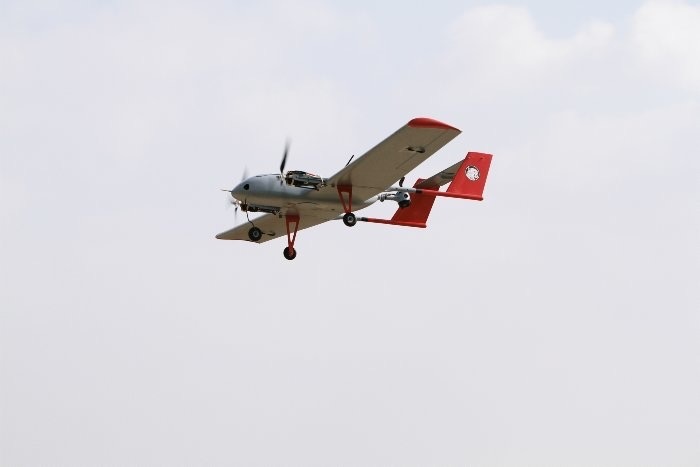 A visit to Israel's increasingly tense border with Syria makes clear that the ground units of the Israeli Defense Forces (IDF) are building their own "air force." The clear benefits of tactical drones have driven the ground forces to deploy more and more aircraft and this has reached the status of a real revolution. TEL AVIV: When visiting the increasingly tense border with Syria, one with trained eyes cannot miss the signs — the ground units of the Israeli Defense Forces (IDF) are building their own “air force.” The Israeli army’s air force started as “private” initiatives of senior commanders on a “initial test” basis, but the clear benefits of tactical drones have driven the ground forces to deploy more and more aircraft and this has reached the status of a real revolution.
Europe Sails Into Uncharted Waters
By Louis Golino
Italy’s March 5 parliamentary election, in which anti-establishment parties won half of the vote, has caused a political earthquake with the potential to reshape Italy, Europe’s future, and even how populism impacts democracy. Traditional political forces on the left and center are foundering. What will take their place remains to be seen both within Italy and in Europe as a whole, which remains split between its “Franco-German liberal democratic core” and illiberal democratic regimes in Hungary, Poland, and now potentially Italy. As expected, the Italian vote resulted in a hung parliament with no party or bloc receiving enough votes to govern by itself. Most experts doubt that a new government will be in sight when the upper and lower chambers of parliament meet on March 23 to elect their respective speakers. As a consequence, there will be possibly months of political haggling, as has been the case following almost every major European election in the past year except for the one in France last May.
The Need for Non-Strategic Nuclear Weapon Systems: The NPR Got It Right
The Nuclear Posture Review (NPR) released last month called for the development of a new low yield warhead and new delivery systems to address shortfalls in existing deterrent capabilities. It proposed that a present capability, dual-capable aircraft, to deliver low-yield nuclear weapons be augmented by the development of a low-yield ballistic missile. For sea-based weapons, the NPR called for using existing D-5s to carry a modified, lower-yield W-76 nuclear warhead within the next few years, and a new sea-launched cruise missile added in the 2030 timeframe. These capabilities are sought to address current limitations in the U.S. non-strategic force posture in the face of potential Russian aggression against NATO.
LEAKED FILES SHOW HOW NSA TRACKS OTHER COUNTRIES’ HACKERS
Kim Zetter
WHEN THE MYSTERIOUS entity known as “Shadow Brokers” released a tranche of stolen NSA hacking tools to the internet a year ago, most experts who studied the material honed in on the most potent tools, so-called “zero-day” exploits that could be used to install malware and take over machines. But a group of Hungarian security researchers spotted something else in the data, a collection of scripts and scanning tools the NSA uses to detect other nation-state hackers on the machines it infects.
Russia Has Made Cyberwarfare, Disinformation and Internet Trolling Integral Parts of Its Military Strike Forces
Information Warfare: Fake News Is Old News
Since late 2016 there have been frequent accusations of Russia interfering in American elections. This was accomplished by using government directed messages to be posted, on a massive scale, in social media and other online sites. One aspect of this that didn’t attract much media attention was that this technique, and its use by foreign governments in the United States, was nothing new. This sort of thing has been widely used on the Internet for over a decade and for generations before that there was “astroturfing” (creating fake “grass roots” support with a variety pre-Internet techniques) and more lavishly funded Soviet efforts called dezinformatsiya (disinformation) operations.
A Trade War on the Poor How a Collapse of the WTO Would Hurt the Worst Off
By Amrita Narlikar
Last week, President Donald Trump’s announcement that he would be slapping steep tariffs on imported steel and aluminum set off fears of a global trade war. But in reality, the international trading system has been unraveling for some time. After taking a quick glance at the World Trade Organization today, one might be excused for believing that it is a dead man walking.
Crafting a US Response to Turkish Intransigence
by Gregg Roman
In a rare public policy speech in mid-December, National Security Advisor H.R. McMaster singled out Turkey as one of the two leading state sponsors (alongside Qatar) of "radical Islamist ideology." The Turkish government protested the statement as "astonishing, baseless and unacceptable," which means it was a pretty good start. McMaster's speech highlighted an emerging recognition among Trump administration officials that Recep Tayyip Erdoğan's Turkey poses a pernicious threat to US interests in the Near East. Since McMaster's speech, Erdoğan has invaded Afrin, Syria (a city then controlled by America's Kurdish allies), massacring women, children and the elderly; promoted the use of child soldiers in his fight against the Kurds; and undermined U.S. sanctions against Iran. A Manhattan Federal District Court's guilty verdict against a Turkish banker accused of helping Iran evade sanctions speaks volumes about the growing threat posed by Erdoğan's Turkey. Although Erdoğan was not charged in the case, "testimony suggested he had approved the [defendant's] sanctions-busting scheme" to launder billions of dollars for Iran beginning in 2012, according to the New York Times.
United States nuclear forces, 2018
Hans M. Kristensen, Robert S. Norris
The US nuclear arsenal remained roughly unchanged in the last year, with the Defense Department maintaining an estimated stockpile of some 4,000 warheads to be delivered via ballistic missiles and aircraft. Most of these warheads are not deployed but stored, and many are destined to be retired. Of the approximately 1,800 warheads that are deployed, roughly 1,650 are on ballistic missiles or at bomber bases in the United States, with another 150 tactical bombs deployed at European bases.
The View From Olympus: The Greatest Strategic Danger
William S. Lind
Director of National Intelligence and former U.S. Senator Dan Coates recently told Congress that the greatest threat our country faces is our own vast and growing national debt. During the 2016 Presidential campaign JCS Chairman General Joseph Dunford gave the same message to both candidates. No one, it seems, is listening. When I served on Capitol Hill as a staffer in the 1970s and 1980s, the two parties fought fiercely over whether to fund more domestic programs and cut defense spending or do the opposite. Now, that fight is over. Both parties in Congress agree that we will just give everyone whatever they want and borrow the money to pay for it. The latest budget deal is merely one example.
Cooperation and Competition: Russia and China in Central Asia, the Russian Far East, and the Arcti
PAUL STRONSKI, NICOLE NG
Since the collapse of Russia’s relationship with the West over Ukraine, the Sino-Russian strategic partnership has become more of a reality. Russia and China share a common desire to challenge principles of the Western-dominated international system. But their relationship is complex, with lingering mistrust on both sides. The balance of competition and cooperation is most evident in Central Asia, the Russian Far East, and the Arctic. Engagement in these theaters has tested Russia’s and China’s abilities to manage their differences and translate the rhetoric of partnership into tangible gains.
The West’s Confusion over Russia’s Cyberwars
JOHN R. DENI
The West’s approach to Russian cyberwarfare is foundering. Many Western governments appear immobilized by the fear of escalatory counterattacks, but this is surrendering to Moscow. The West is in the middle of an undeclared cyberwar with Russia. The problem is, few Western leaders want to publicly acknowledge this or, apparently, do much about it. If Washington hopes to get European allies on board with its new, more competitive approach to Russia, it will have to start by leading the West in a clear-eyed assessment of the situation at hand and taking concrete steps to turn the tide through offensive cyber operations.
New electronic warfare program tops Army intel wishlist
By: Mark Pomerleau
/arc-anglerfish-arc2-prod-mco.s3.amazonaws.com/public/SZKPEF65RFFCXEDYDKE2UN2Q34.jpg) The Department of Defense under Secretary of Defense James Mattis has begun to prioritize great power competition over terrorism for the first time in nearly 20 years. This has had reverberations in capability needs and funding requests. As such, one of the top needs for the Army’s highest intelligence officer is the development of a new platform that combines offensive electronic warfare capabilities with intelligence.
The Department of Defense under Secretary of Defense James Mattis has begun to prioritize great power competition over terrorism for the first time in nearly 20 years. This has had reverberations in capability needs and funding requests. As such, one of the top needs for the Army’s highest intelligence officer is the development of a new platform that combines offensive electronic warfare capabilities with intelligence.The Army’s other network challenge is hiding in plain sight
By: Mark Pomerleau
/arc-anglerfish-arc2-prod-mco.s3.amazonaws.com/public/HQIQQCLODJANPOQ3342QYTV7IA.jpg) Following several months of intense focus to modernize the Army’s tactical network, the service is now turning its attention toward the enterprise, strategic network. While work is still ongoing to fix issues related to the tactical network the Army’s chief information officer said an in-depth mission analysis of the enterprise network has begun. “That work has started. Initial mission analysis is done,” Lt. Gen. Bruce Crawford, said at the Army Signal Conference hosted by AFCEA in Springfield, Virginia March 3. “Our goal is to write the strategy by the fall, the overarching strategy.”
Following several months of intense focus to modernize the Army’s tactical network, the service is now turning its attention toward the enterprise, strategic network. While work is still ongoing to fix issues related to the tactical network the Army’s chief information officer said an in-depth mission analysis of the enterprise network has begun. “That work has started. Initial mission analysis is done,” Lt. Gen. Bruce Crawford, said at the Army Signal Conference hosted by AFCEA in Springfield, Virginia March 3. “Our goal is to write the strategy by the fall, the overarching strategy.”New electronic warfare program tops Army intel wishlist
By: Mark Pomerleau
The Department of Defense under Secretary of Defense James Mattis has begun to prioritize great power competition over terrorism for the first time in nearly 20 years. This has had reverberations in capability needs and funding requests. As such, one of the top needs for the Army’s highest intelligence officer is the development of a new platform that combines offensive electronic warfare capabilities with intelligence. Aside from fixing the Distributed Common Ground System, “The No. 1 priority I have … is really getting some meat behind this thing we’re calling the TLIS, which is the Terrestrial Layer Intelligence System,” Lt. Gen. Scott Berrier, the Army’s director of intelligence, told C4ISRNET following a keynote presentation at the Army Signal Conference hosted by AFCEA in Springfield, VA March 3.Who’s In Control? Balance and Power of Cyber Partnership
JASON HEALEY
For over 20 years, these initiatives have been critical to a range of cybersecurity solutions. Perhaps 85 percent of the critical infrastructure (the number varies depending on who is doing the guessing) is owned by the private sector, so government cannot do it on its own. The first White House cyber strategy of 2003, for example, said the “cornerstone of America’s cyberspace security strategy is and will remain a public-private partnership” and used the word “partner” or “partnership” over 60 times. But while there have been various frameworks and analogies for successful PPPs, there have been few which compare the fundamental relationship of control between the public and private sectors. This ignores key questions: Which sector has the presumptive legitimacy to deal with the issue? Which sector holds the key decision makers? Which sector has the most relative strength to fix the problem?
America the Meek: The Dysfunction in U.S. Cyber Command
 According to the article, the directive authorized a DDoSing campaign against “hackers in North Korea’s Reconnaissance General Bureau, DPRK’s military spy agency, by barraging their computer servers with traffic that choked off Internet access.” The article goes on to stress that the actions “were temporary and not destructive.” Finally, there was a note of self-congratulations with “North Korean hackers griped that lack of access to the Internet was interfering with their work.”
Disruptive by Design: Invigorating Government Open Source Contributions
By Lt. Cmdr. Jonathan White
The U.S. government is likely the largest combined producer and consumer of software in the world. The code to build that software is volatile, expensive and oftentimes completely hidden from view. Most people only see the end result: the compiled and packaged application or website. However, a massive worldwide community, the Open Source Initiative, centers on the exact opposite. Open source enables a development method for software that harnesses the power of distributed peer review and transparency of process. Although open source technology is not new, its effects can still be disruptive in many ways. The government has only recently been serious about contributing to this initiative, a nonprofit formed in 1998 as an educational, advocacy and stewardship organization. The Department of Defense has traditionally treated the majority of source code as sensitive, nonexportable information. This attitude has placed most open projects behind heavy use restrictions and government-access-only barriers.
Strategic Communication in Contemporary War - A Failure of US PSYOPS
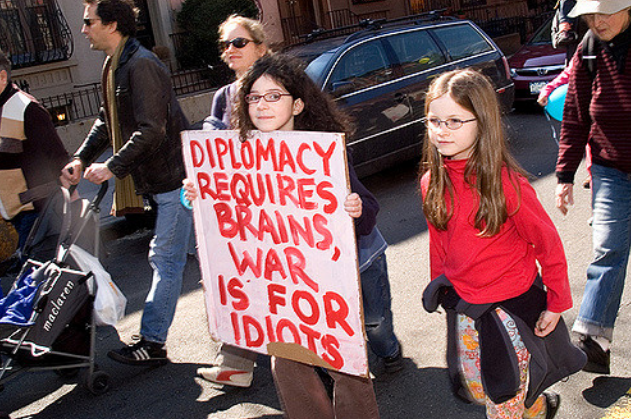 Strategic communication is an important aspect of foreign policy that seeks to communicate messages to a target audience. The term has been used rather ambiguously, but can be summed up as the coordinated actions, messages, images and other forms of signaling or engagement intended to inform, influence, or persuade selected audiences in support of national objectives (Paul, 2011). Key aspects of the concept that pave the way for success include effectively informing, influencing, and persuading audiences, having clear objectives, coordination of individuals involved within the communication apparatus, and backing up words with actions. (Paul, 2011). One notable instance where the U.S. employed strategic communication has been during the last two decades in trying to communicate their interests and ideas to the Muslim populations within the Middle East with the ultimate goal of defeating the driving forces behind terrorism. The U.S. efforts of strategic communication have been largely seen as a failure and it is imperative that military and political experts find ways to improve the effort if future success is desired.
How To Recruit Young Cyber Warriors When There Aren’t Enough
By COLIN CLARK
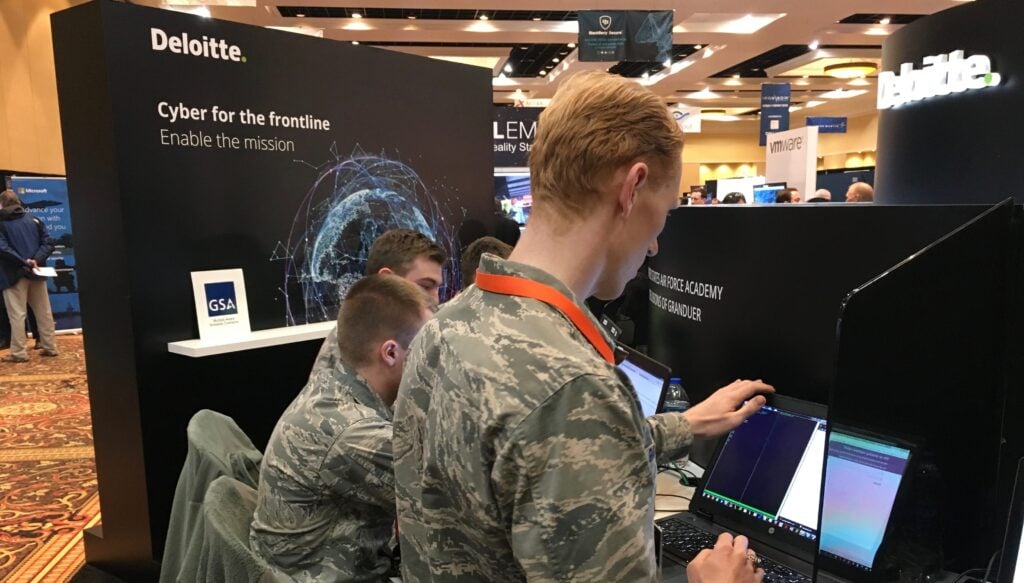 Deloitte, which is building a substantial cyber warfare portfolio, put on a Capture the Flag game where five teams of college hackers had to find code clues and evade traps. The real prize: recognition at one of the military’s biggest cyber conferences and exposure to hundreds of cyber companies.
Cognitive Warfare: Aspects Of New Strategic Thinking – Analysis
By Gagliano Giuseppe
 Combining the strategic observations on revolutionary war – those made by Colonel Trinquier during the war in Algeria, in particular–with US strategy regarding information warfare, the authors Harbulot and Lucas, leading experts at the French École de guerre économique, and Moinet, Director of the DESS (Intelligence économique et développement des Entreprises) – place their emphasis on the profoundly innovative and strategic role played by information warfare and on its implications for companies. Naturally enough, it emerges with clarity that the authors’ intention is to utilize cognitive warfare in defense of the interests of French companies against their US competitors.
The Army Needs to Buy Capability Today to Be Modern Tomorrow
By Daniel Gouré
Processes are no substitute for production. The U.S. Army’s effort to reform the processes associated with its acquisition system, from requirements definition through investments in technology to engineering development and production, is moving forward. Army leaders, particularly Under Secretary Ryan McCarthy and the Vice Chief of Staff, General James McConville, appear to be working full time on the reform project. However, it is not clear that the Army has the luxury of time to first reorganize the acquisition system and then develop an array of new platforms and systems. As General McConville recently observed: “We are at an inflection point where we can no longer afford to defer modernizing our capabilities and developing new ones without eroding competitive advantages of our technology and weapon systems.”
Subscribe to:
Posts (Atom)