From rifles to combat aircraft and warships, China has become the dominant supplier of weapons to Pakistan, Bangladesh and Myanmar, according to the latest report by the Stockholm International Peace Research Institute (SIPRI). Titled "Trends in International Arms Transfer, 2017" the report reflects on the major change in the geopolitical sphere of South Asia. Weapons sales to Pakistan by the United States have dropped by 76 percent in the past five years, according to the report. China has become the biggest supplier of arms to India's archrival neighbor, providing 35 percent of its arms to Pakistan from 2013 to 2017.The Profession of Arms: A Guide for Young Army Officers
It takes courage, especially for a young officer, to check a man met on the road for not saluting properly or for slovenly appearance, but, every time he does, it adds to his stock of moral courage, and whatever the soldier may say, he has respect for the officer who does pull him up.
Read Document →The Dragon's Teeth: Assessing China's Military Modernization
PLA has focused on modernising its capabilities across all warfare domains to achieve these goals. This includes land, air, and maritime operations, nuclear, space, counter-space, electronic warfare and cyberspace operations, aiming to become a fully integrated joint force.
Read Document →Transforming the PLA: A Decade of reorganisation from SSF to ISF
PRC has engaged in a sustained and broad effort to transform the PLA from an infantry-heavy, low-technology, ground forces-centric military into a high-technology, networked force with an increasing emphasis on joint operations and naval and air power projection.
Read Document →Eyes without Borders: Exploring the World of Open Source Intelligence (OSINT) in the Digital Age
Open Source Intelligence (OSINT) is gaining prominence with the rise of social media, the digital society and the vast growth of publicly and commercially available information (PAI and CAI).
Read Document →
The PLA’s Developing Cyber Warfare Capabilities and India's Options
Informationised warfare blurs the lines between peacetime and wartime. A nation in the information age cannot wait for the hostilities to break out to collect intelligence, carryout influence operations, develop antisatellite systems or design computer software weapons.
Read Document →
Galwan and After
Why did China did this when he is under tremendous pressure in all fronts, is this China's salami slice tactics being progressed rigorously, what will be new Rules of Engagement, what will be escalatory control mechanism, who has taken this decision, will there be some pressure put by China in India's North-East through insurgency.
Read Document →
India’s Joint Doctrine for Cyberspace Operations: A Critical Review
Chief of Defence Staff (CDS) General Anil Chauhan and Secretary, Department of Military Affairs, formally released declassified versions of the Joint Doctrines for Cyberspace Operations during the Chiefs of Staff Committee meeting in New Delhi.
Read Document →
Know your Enemy General(now Field Marshal) Syed Aseem Munir
Gen SA Munir's position in the hierarchy of Pakistan was not very comfortable. The state of economy, insurgency in Pakhtoonistan and Balochistan, attack on the Jaffar Express, constant protests by supporters of Imran Khan's supporters inside and outside of parliament.
Read Document →
Decoding Operation SINDOOR: Key Aspects and Implications
Precision strikes were carried out on nine sites—four in Pakistan and five in PoK—linked to anti-India terrorist groups such as the LeT, JeM and the Hizbul Mujahideen. The targeted sites included Muridke (LeT headquarters) and Bahawalpur (JeM headquarters).
Read Document →
Chinese Cyber Exploitation in India's Power Grid - Is There a linkage to Mumbai Power Outage?
The New York Times (NYT), based on analysis by a U.S. based private intelligence firm Recorded Future, reported that a Chinese entity penetrated India’s power grid at multiple load dispatch points. Chinese malware intruded into the control systems that manage electric supply across India, along with a high-voltage transmission substation and a coal-fired power plant
Read Document →17 March 2018
China Outpaces US in Arms Supply to Pakistan
From rifles to combat aircraft and warships, China has become the dominant supplier of weapons to Pakistan, Bangladesh and Myanmar, according to the latest report by the Stockholm International Peace Research Institute (SIPRI). Titled "Trends in International Arms Transfer, 2017" the report reflects on the major change in the geopolitical sphere of South Asia. Weapons sales to Pakistan by the United States have dropped by 76 percent in the past five years, according to the report. China has become the biggest supplier of arms to India's archrival neighbor, providing 35 percent of its arms to Pakistan from 2013 to 2017.Why the Taliban Isn't Winning in Afghanistan
Mattis arrives in Afghanistan, says some in Taliban may be willing to pursue peace
KABUL — Defense Secretary Jim Mattis visited Afghanistan on Tuesday to meet senior U.S. and Afghan officials and discuss both the military campaign and “peeling off” some members of the Taliban to pursue a peace deal with the Afghan government. The unannounced visit comes two weeks after Afghan President Ashraf Ghani made what many observers consider an unprecedented offer, inviting the Taliban to begin peace talks without preconditions to end the 16-year war. The Taliban said last month that it is open to reaching a political settlement and negotiating, but it has not responded to Ghani’s offer. The Future of U.S.-China Relations Begins at Home
Kori Schake’s essay (and the book from which it is adapted) provides a serious, penetrating, and provocative invitation to debate the overriding geostrategic challenge of our time: what to do about the rise of China. Safe Passage is an outstanding example of the sort of work we champion at the Harvard Belfer Center’s Applied History Project. It illuminates current challenges by careful analysis of the historical record. And the case she examines in which the United States rose to rival and eventually surpass the British global hegemony is among the most instructive of the 16 cases in the Harvard Thucydides’ Trap case file for policymakers seeking to cope with the current U.S.-China competition.Trump Condemns Chinese Factories. China Is Already Closing Some.
Ms. Li works at a Chinese aluminum factory, the sort of hulking industrial installation that has helped set off a global trade fight. President Trump imposed steep new tariffs on steel and aluminum imports last week, amid complaints from American companies that the Chinese government props up too many wasteful factories. But here in the small Chinese town of Chengkouzhen, officials last year let the factory go idle. That cut off the steam that once heated the apartments where its workers live.Fact: In 2017, the U.S. and China Traded $711 Billion Worth of Goods and Services
US risks irrelevance in Syria with reconstruction taboos
After seven years of war, Syria’s reconstruction needs are truly daunting. More than half of the country’s hospitals and two out of three schools have been damaged or destroyed and more than a quarter of all homes are in need of repairs. The price tag to rebuild the country, according to United Nations Special Envoy for Syria Staffan de Mistura, is a hefty $250 billion. While these costs have mounted, Syria has seen its economy dwindle by an equivalent amount since the start of the conflict.It’s time for the UK to take a stand on Russia – the world is watching
Brexit aside, we are suddenly facing the biggest foreign policy crisis since the Falklands. Attempted murder in Salisbury constitutes a warlike act says Tom Tugendhat, respected chairman of the Commons foreign affairs committee. The Daily Telegraph quotes this in its leader headline: “Warlike act to which NATO must respond”, and political, public and media opinion broadly agree. So, how bad could this get? What must we do now? What should we be prepared to do if things get even worse? What is Putin likely to do next? How will he respond? What unintended consequences might follow?I Knew the Cold War. This Is No Cold War.
The End of the Concept of ‘the West’?
‘You, Europeans, come to this town to preach to us, to complain and accuse, and then expect us to protect you,’ an American colleague told me on a recent trip to Washington. His bitterness, nothing new in substance and form, however surprised me, as I had known him for almost twenty years, from the times of NATO’s expansion to Central Europe. He was quite unwaveringly optimistic back then, in the spirit of the time, and, to expand the term ‘transatlantic’, very ‘western’. The optimism of the early 2000s had been an ideal fit to the concept of the West as a concept of the future (‘Zukunftsbegriff’), in opposition to the fallen Soviet empire, the final victory of liberal democracy and, in short, the End of History. The harsh reality: Donald Trump does mean Europe harm
COFFEE HOUSE Brexit Britain: confused and alone
Hello David, My name is Juliia Popova. I represent Russian state TV channel. Would appreciate it if Matt Singh or any other political analist [sic] could give us a short comment on the matter of the following. We will be happy to know why the British government tries to blame Russian government for the attempted murder of ex-Russian spy, why is it happening right now when even USA on behalf of White House press secretary Sarah Sanders says that so far there is no evidence to accuse Russia of that. The interview wouldn’t take much time, usually it is 5-10 min via Skype. We need it today,Most of America’s Fruit Is Now Imported. Is That a Bad Thing?
More than half of the fresh fruit and almost a third of the fresh vegetables Americans buy now come from other countries. CreditJens Mortensen for The New York Times; Styled by Mariana Vera It’s obvious to anyone who visits an American supermarket in winter — past displays brimming with Chilean grapes, Mexican berries and Vietnamese dragon fruit — that foreign farms supply much of our produce. Imports have increased steadily for decades, but the extent of the change may be surprising: More than half of the fresh fruit and almost a third of the fresh vegetables Americans buy now come from other countries.North Korea May Engage in Cyberattacks Despite Nuke, Missile-Test Moratorium, States Report
Putin Says Russia’s New Weapons Can’t Be Beat. With AI and Robotics, They Can.
Instead of single interceptors rising to meet an enemy missile, think about swarms of sub-launched UAVs armed with explosives, sensors, and brains.Russia’s next generation of strategic weaponry may be a bit more distant and a bit less fearsome than Vladimir Putin recently claimed. But his March 1 speech about titanic ballistic missiles and nuclear-powered undersea drones should spur American defense and technology communities to move faster — indeed, uncomfortably so — to embrace similarly disruptive ideas such as artificial intelligence and robotics.How AI is reshaping the logistics and transportation industry…
Could AI-Driven Info Warfare Be Democracy’s Achilles Heel?
The web is under threat. Join us and fight for it.
Before I Go: A Stanford neurosurgeon’s parting wisdom about life and time
In residency, there’s a saying: The days are long, but the years are short. In neurosurgical training, the day usually began a little before 6 a.m., and lasted until the operating was done, which depended, in part, on how quick you were in the OR.A resident’s surgical skill is judged by his technique and his speed. You can’t be sloppy and you can’t be slow. From your first wound closure onward, spend too much time being precise and the scrub tech will announce, “Looks like we’ve got a plastic surgeon on our hands!” Or say: “I get your strategy War by Other Means – Integrating Modern Technology
The Cyber Party of God: How Hezbollah Could Transform Cyberterrorism
Who Cares About Cybersecurity?
Infographic Of The Day: Internet Giants: Who Owns Who On The Web
New Cybersecurity Norms Develop?
In 2013, cybersecurity was named the biggest threat facing the US. But, as UN Secretary-General Antรณnio Guterres argued last month, minimizing the risks will require a global effort to establish shared rules and norms. CAMBRIDGE – Last month, United Nations Secretary-General Antรณnio Guterrescalled for global action to minimize the risk posed by electronic warfare to civilians. Guterres lamented that “there is no regulatory scheme for that type of warfare,” noting that “it is not clear how the Geneva Convention or international humanitarian law applies to it.”Salyukov Confirms Corrections to Armed Forces’ Structure
Top Gun For Grunts: Mattis May Revolutionize Infantry
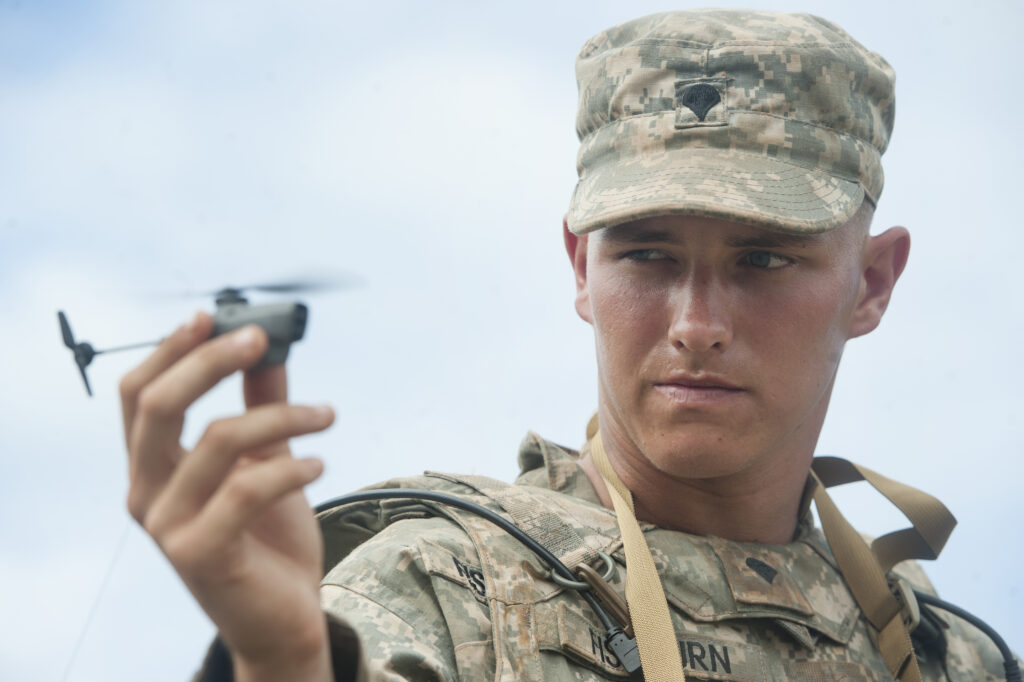
"To get a quantum increase in the quality of close combat forces, we can do it in the next two years, (and) the cost compared to the rest of the DoD budget is very small," said retired Maj. Gen. Robert Scales, who chairs the advisory board for Secretary Mattis's Close Combat Lethality Task Foce. Forget the old-school grunt. Imagine a future American infantrymantrained as intensively as a fighter pilot through hundreds of virtual and real-world drills, culminating in a “small unit Top Gun.” Imagine infantry going into battle with swarms of drones serving as scouts and fire support. Imagine Army and Marine infantry exempted from the Pentagon’s bureaucratic personnel policies so they can build teams of experienced soldiers in their late 20s and early 30s, much like Special Forces.