The Profession of Arms: A Guide for Young Army Officers
It takes courage, especially for a young officer, to check a man met on the road for not saluting properly or for slovenly appearance, but, every time he does, it adds to his stock of moral courage, and whatever the soldier may say, he has respect for the officer who does pull him up.
Read Document →The Dragon's Teeth: Assessing China's Military Modernization
PLA has focused on modernising its capabilities across all warfare domains to achieve these goals. This includes land, air, and maritime operations, nuclear, space, counter-space, electronic warfare and cyberspace operations, aiming to become a fully integrated joint force.
Read Document →Transforming the PLA: A Decade of reorganisation from SSF to ISF
PRC has engaged in a sustained and broad effort to transform the PLA from an infantry-heavy, low-technology, ground forces-centric military into a high-technology, networked force with an increasing emphasis on joint operations and naval and air power projection.
Read Document →Eyes without Borders: Exploring the World of Open Source Intelligence (OSINT) in the Digital Age
Open Source Intelligence (OSINT) is gaining prominence with the rise of social media, the digital society and the vast growth of publicly and commercially available information (PAI and CAI).
Read Document →
The PLA’s Developing Cyber Warfare Capabilities and India's Options
Informationised warfare blurs the lines between peacetime and wartime. A nation in the information age cannot wait for the hostilities to break out to collect intelligence, carryout influence operations, develop antisatellite systems or design computer software weapons.
Read Document →
Galwan and After
Why did China did this when he is under tremendous pressure in all fronts, is this China's salami slice tactics being progressed rigorously, what will be new Rules of Engagement, what will be escalatory control mechanism, who has taken this decision, will there be some pressure put by China in India's North-East through insurgency.
Read Document →
India’s Joint Doctrine for Cyberspace Operations: A Critical Review
Chief of Defence Staff (CDS) General Anil Chauhan and Secretary, Department of Military Affairs, formally released declassified versions of the Joint Doctrines for Cyberspace Operations during the Chiefs of Staff Committee meeting in New Delhi.
Read Document →
Know your Enemy General(now Field Marshal) Syed Aseem Munir
Gen SA Munir's position in the hierarchy of Pakistan was not very comfortable. The state of economy, insurgency in Pakhtoonistan and Balochistan, attack on the Jaffar Express, constant protests by supporters of Imran Khan's supporters inside and outside of parliament.
Read Document →
Decoding Operation SINDOOR: Key Aspects and Implications
Precision strikes were carried out on nine sites—four in Pakistan and five in PoK—linked to anti-India terrorist groups such as the LeT, JeM and the Hizbul Mujahideen. The targeted sites included Muridke (LeT headquarters) and Bahawalpur (JeM headquarters).
Read Document →
Chinese Cyber Exploitation in India's Power Grid - Is There a linkage to Mumbai Power Outage?
The New York Times (NYT), based on analysis by a U.S. based private intelligence firm Recorded Future, reported that a Chinese entity penetrated India’s power grid at multiple load dispatch points. Chinese malware intruded into the control systems that manage electric supply across India, along with a high-voltage transmission substation and a coal-fired power plant
Read Document →18 March 2018
Why This Is The Right Time For India To Restore Close Ties With Nepal
India and Pakistan: Inching Toward Their Final War?
CENTCOM Confirms That Pakistan Is Still Covertly Supporting the Taliban in Afghanistan
The War in Afghanistan Is Now Being Fought on the Streets of Previously Safe Kabul
Eight countries in danger of falling into China’s “debt trap”
Last year, with more than $1 billion in debt to China, Sri Lanka handed over a port to companies owned by the Chinese government. Now Djibouti, home to the US military’s main base in Africa, looks about tocede control of another key port to a Beijing-linked company, and the US is not happy about it. Beijing “encourages dependency using opaque contracts, predatory loan practices, and corrupt deals that mire nations in debt and undercut their sovereignty, denying them their long-term, self-sustaining growth,” said US Secretary of State Rex Tillerson on March 6. “Chinese investment does have the potential to address Africa’s infrastructure gap, but its approach has led to mounting debt and few, if any, jobs in most countries,” he added.Is China Reverting To A Mao-Style Dictatorship?
News that the Chinese government was preparing to remove constitutional term limits on President Xi Jinping shocked most Chinese. Many worry that an unlimited term of office will lead to unlimited power and increased restrictions on individual liberty. Will President Xi become a Chinese version of Russia’s President Putin? Will Xi become another Mao Zedong-style dictator? Or is it even possible that Xi would proclaim himself emperor?Eight countries in danger of falling into China’s “debt trap”
Last year, with more than $1 billion in debt to China, Sri Lanka handed over a port to companies owned by the Chinese government. Now Djibouti, home to the US military’s main base in Africa, looks about tocede control of another key port to a Beijing-linked company, and the US is not happy about it. Beijing “encourages dependency using opaque contracts, predatory loan practices, and corrupt deals that mire nations in debt and undercut their sovereignty, denying them their long-term, self-sustaining growth,” said US Secretary of State Rex Tillerson on March 6. “Chinese investment does have the potential to address Africa’s infrastructure gap, but its approach has led to mounting debt and few, if any, jobs in most countries,” he added.Is China Reverting To A Mao-Style Dictatorship? – OpEd
News that the Chinese government was preparing to remove constitutional term limits on President Xi Jinping shocked most Chinese. Many worry that an unlimited term of office will lead to unlimited power and increased restrictions on individual liberty. Will President Xi become a Chinese version of Russia’s President Putin? Will Xi become another Mao Zedong-style dictator? Or is it even possible that Xi would proclaim himself emperor? Due to internet censorship in China, people cannot express their opposition publicly so they still use insinuations and sarcasm to voice their opinions. Some of them even use the story of the failed monarchy restoration of the first President of the Republic of China, Yuan Shikai, in 1916.The Chinese Communist Party
The Chinese Communist Party (CCP) is the founding and ruling political party of modern China, boasting nearly ninety million members. In 2017, the CCP exalted President Xi Jinping and elevated new officials to support Xi in setting the agenda for the second-largest economy in the world. The party has maintained a political monopoly since its founding, despite the effects of China’s rapid economic growth, increasing social unrest, and political destabilization that challenge the country’s rise as a global power. A spate of political and corruption scandals has also exposed deep power struggles inside the infamously opaque organization. Nevertheless, through the course of Xi’s first term in power, he has taken drastic action to not only consolidate his hold on power via party levers, but experts say he has also positioned himself to become the most influential Chinese leader since Mao Zedong.More than 200 nabbed in Malaysia on suspicion of recruiting terrorists via social media
How the U.S. Can Help End the Syrian Civil War
Putin Says Russia’s New Weapons Can’t Be Beat. With AI and Robotics,
Russia’s next generation of strategic weaponry may be a bit more distant and a bit less fearsome than Vladimir Putin recently claimed. But his March 1 speech about titanic ballistic missiles and nuclear-powered undersea drones should spur American defense and technology communities to move faster — indeed, uncomfortably so — to embrace similarly disruptive ideas such as artificial intelligence and robotics.William Astore, The Fog of War in America
Tillerson’s Ouster Could Kill the Iran Nuclear Deal
The Geopolitics of Britain
After a year of gripes, Trump’s hands now free to reshape CIA, NSA
State Department employees have one main reaction to Rex Tillerson’s ouster as secretary of state: “Good riddance.”
Who do I call if I want to call the US?
ROME — Henry Kissinger, the quintessential realist, once provocatively asked “Who do I call if I want to call Europe?” Last week, Federica Mogherini, the EU’s foreign policy chief, reassured the world that Europe’s number — hers — is up and running. Then, she threw the question back across the Atlantic: “Who do I call if I want to talk to the U.S.?” Mogherini posed the question with a touch of irony, but it acquired a sober taste on Tuesday, as U.S. Secretary of State Rex Tillerson was fired and replaced by CIA Director Mike Pompeo in what is starting look like an incessant game of musical chairs in the chaotic Trump administration.Donald Trump’s Diplomatic Turn to N Korea Deserves Acclaim
Russia Has a Long History of Eliminating 'Enemies of the State'
Cyberthreats: The Vexing New Front in Modern Warfare
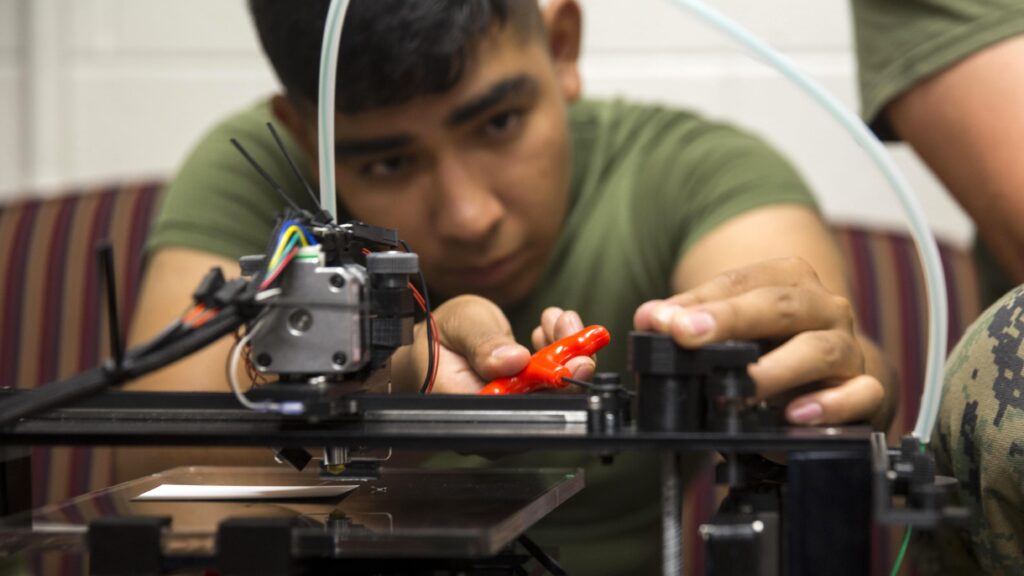
Marines’ Love Affair With 3D Printing: Small Is Cheap, & Beautiful
WASHINGTON: Why are the Marines in love with 3D printing? Like most romances, it starts with the small things, things too small for the conventional supply system to manage, like a two-cent plastic button that preempts a $11,000 repair. Big defense contractors, take notice. “There’s an intercom in most helicopters,” said Gen. Robert Neller, commandant of the Marine Corps. Ground-pounders like him tend to hit the buttons too hard and break them. But the Pentagon supply system doesn’t deal in replacing individual buttons. “You’ve got to buy the whole faceplate of the intercom,” Neller said. “It costs $11,000.”The Army’s next question: should battlefield commanders have cyber capabilities?
The Department of Defense has complicated relationship when it comes to authorities and cyberspace operations. Traditionally, the authority to conduct offensive and defensive remote cyber operations abroad has triggered an approval process that rests with the president and can be delegated to lower levels. However, despite the fact the military is maturing its cadre of cyber warriors within U.S. Cyber Command, Army leaders say tactical commanders want to control cyber capabilities on the battlefield given the nature of the trajectory of future wars.The science of fake news
The rise of fake news highlights the erosion of long-standing institutional bulwarks against misinformation in the internet age. Concern over the problem is global. However, much remains unknown regarding the vulnerabilities of individuals, institutions, and society to manipulations by malicious actors. A new system of safeguards is needed. Below, we discuss extant social and computer science research regarding belief in fake news and the mechanisms by which it spreads. Fake news has a long history, but we focus on unanswered scientific questions raised by the proliferation of its most recent, politically oriented incarnation. Beyond selected references in the text, suggested further reading can be found in the supplementary materials.Batteries, Bullets, & Drones: Commandant’s Wishlist For Infantry Task Force
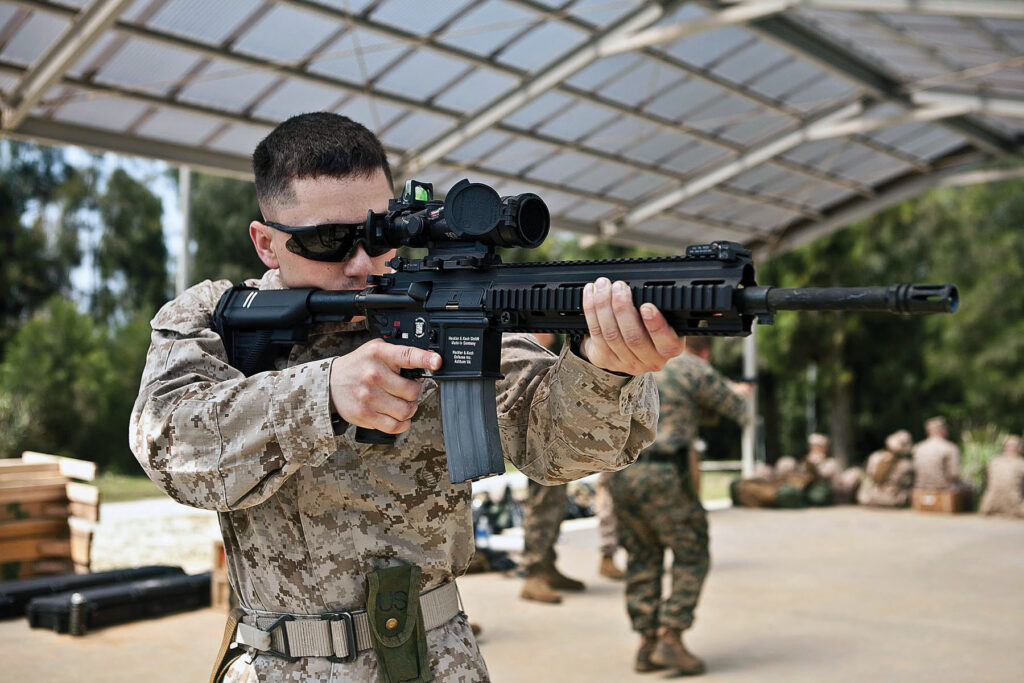
What's the one technology the Marine Corps Commandant wants more than any other for his riflemen? It wasn't an amphibious vehicle, more JLTVs, a new rifle or friggin' lasers. It is "a smart way to recharge batteries," Gen. Robert Neller told reporters. Neller had a long wishlist for the contractors assembled here for a National Defense Industrial Associationluncheon. “One of the top three,” he said, is MUX, a large scout/attack drone that can fly off an amphibious warship — i.e. not needing an aircraft carrier — to conduct Intelligence, Surveillance, & Reconnaissance (ISR), Electronic Warfare (EW), and precision strike. Some critics have worried about the size and cost of what will be, in Pentagon terms, a Group 4 or Group 5 Unmanned Aerial Vehicle, but Neller seemed willing to consider a big drone if that’s what it took to get long range: The V-22 Osprey tiltrotors taking Marine infantry ashore can fly 500 miles without refueling, he told reporters afterwards, and he wants MUX to match that.