On April 18, 2018, the Government of India constituted a new high-level Defence Planning Committee (DPC) to recommend policy measures to improve India’s defence preparedness and national security. Several committees in the past – like the Kargil Review Committee (1999), Arun Singh Task Force (2001), Naresh Chandra Committee (2011) – have made recommendations to successive governments to look into the issue of India’s defence management and preparedness. The CAG report of July 2017 and the latest report of the Parliamentary Standing Committee on Defence, raise serious concerns about India’s defence capabilities and point out lacunae with regard to budget deficits and critical shortages. The Profession of Arms: A Guide for Young Army Officers
It takes courage, especially for a young officer, to check a man met on the road for not saluting properly or for slovenly appearance, but, every time he does, it adds to his stock of moral courage, and whatever the soldier may say, he has respect for the officer who does pull him up.
Read Document →The Dragon's Teeth: Assessing China's Military Modernization
PLA has focused on modernising its capabilities across all warfare domains to achieve these goals. This includes land, air, and maritime operations, nuclear, space, counter-space, electronic warfare and cyberspace operations, aiming to become a fully integrated joint force.
Read Document →Transforming the PLA: A Decade of reorganisation from SSF to ISF
PRC has engaged in a sustained and broad effort to transform the PLA from an infantry-heavy, low-technology, ground forces-centric military into a high-technology, networked force with an increasing emphasis on joint operations and naval and air power projection.
Read Document →Eyes without Borders: Exploring the World of Open Source Intelligence (OSINT) in the Digital Age
Open Source Intelligence (OSINT) is gaining prominence with the rise of social media, the digital society and the vast growth of publicly and commercially available information (PAI and CAI).
Read Document →
The PLA’s Developing Cyber Warfare Capabilities and India's Options
Informationised warfare blurs the lines between peacetime and wartime. A nation in the information age cannot wait for the hostilities to break out to collect intelligence, carryout influence operations, develop antisatellite systems or design computer software weapons.
Read Document →
Galwan and After
Why did China did this when he is under tremendous pressure in all fronts, is this China's salami slice tactics being progressed rigorously, what will be new Rules of Engagement, what will be escalatory control mechanism, who has taken this decision, will there be some pressure put by China in India's North-East through insurgency.
Read Document →
India’s Joint Doctrine for Cyberspace Operations: A Critical Review
Chief of Defence Staff (CDS) General Anil Chauhan and Secretary, Department of Military Affairs, formally released declassified versions of the Joint Doctrines for Cyberspace Operations during the Chiefs of Staff Committee meeting in New Delhi.
Read Document →
Know your Enemy General(now Field Marshal) Syed Aseem Munir
Gen SA Munir's position in the hierarchy of Pakistan was not very comfortable. The state of economy, insurgency in Pakhtoonistan and Balochistan, attack on the Jaffar Express, constant protests by supporters of Imran Khan's supporters inside and outside of parliament.
Read Document →
Decoding Operation SINDOOR: Key Aspects and Implications
Precision strikes were carried out on nine sites—four in Pakistan and five in PoK—linked to anti-India terrorist groups such as the LeT, JeM and the Hizbul Mujahideen. The targeted sites included Muridke (LeT headquarters) and Bahawalpur (JeM headquarters).
Read Document →
Chinese Cyber Exploitation in India's Power Grid - Is There a linkage to Mumbai Power Outage?
The New York Times (NYT), based on analysis by a U.S. based private intelligence firm Recorded Future, reported that a Chinese entity penetrated India’s power grid at multiple load dispatch points. Chinese malware intruded into the control systems that manage electric supply across India, along with a high-voltage transmission substation and a coal-fired power plant
Read Document →9 June 2018
Watch | Does the Absence of Defence Reforms Endanger India’s National Security?
On April 18, 2018, the Government of India constituted a new high-level Defence Planning Committee (DPC) to recommend policy measures to improve India’s defence preparedness and national security. Several committees in the past – like the Kargil Review Committee (1999), Arun Singh Task Force (2001), Naresh Chandra Committee (2011) – have made recommendations to successive governments to look into the issue of India’s defence management and preparedness. The CAG report of July 2017 and the latest report of the Parliamentary Standing Committee on Defence, raise serious concerns about India’s defence capabilities and point out lacunae with regard to budget deficits and critical shortages. Can There Be Anything More Daft Than Merging Four Loss-Making PSU Banks?
India and the Indo-Pacific balance at Shangri-La
It was not lost on many observers that Modi’s language closely mirrored that used by the US and Japan. His veiled message was directed at China, and reflected a more widespread concern about how Beijing is wielding its economic and military muscle. Each year, the Shangri-La Dialogue in Singapore convenes defence ministers and military commanders from across Asia, Europe, and North America, along with representatives of defence companies and assorted academic experts and journalists. Over the past two decades, it has evolved into Asia’s premier security conference, where matters such as tensions on the Korean peninsula, terrorism, and nuclear proliferation are deliberated. Keynote speakers in recent years have included the prime ministers of Japan, Singapore, Thailand, and Australia. This year’s keynote address by Prime Minister Narendra Modi, therefore, proved an important opportunity to highlight India’s perspectives on regional security dynamics.World Bank asks Pakistan to stop pursuing water dispute with India at ICA
The Generals and the Art of Undermining Democracy in Pakistan
Vanishing Borders in the South China Sea
Is China’s emerging strategic culture a global threat?
U.S. Tariffs Put China's Economy to a New Test
Significant U.S. tariffs on trade goods and restrictions on tech investment will complicate China's ongoing economic rebalancing process. High national debt levels will constrain Beijing's ability to pump investment funds into the economy in the case of a significant trade blow, which will affect companies and industries that rely on U.S. markets and are already operating on thin profit margins. The acute pressure China is facing is only going to harden Beijing's resolve to rapidly develop self-sufficiency in sensitive technological supply chains. A decade after the global financial crisis prompted China to pursue a different economic path, the country continues to push toward a more sustainable model for growth. And now, it's facing a new challenge in the form of massive U.S. tariffs and investment restrictions. But the lessons China has learned over the past decade will come in handy in its current efforts, and the government in Beijing may be able to manage the Chinese economy better than it did in 2008.Abandoned at sea
What Does China’s Belt and Road Initiative Mean for US Grand Strategy?
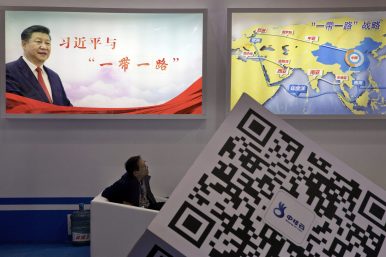
The United States’ response to a rising China has largely focused on bolstering military capabilities, doctrines, and partnerships in the Asia-Pacific (or, more recently, the Indo-Pacific). This approach misconstrues the problem: it overstates the security threat and understates (or ignores) the economic challenge. To maintain its dominant position globally in the long-term, the United States must reckon with the ambitious geoeconomic endeavor Beijing has launched to project strategic influence across the Eurasian continent, which hosts most of the world’s economic centers and natural resources.Vanishing Borders in the South China Sea
China Eyes Its Next Prize – the Mekong
Prison: A Training Ground for Terrorists
Hundreds of convicted jihadists are scheduled to be released from prison in the next few years, and their numbers will be bolstered by those prisoners who have embraced extremism while behind bars. Prisons can serve as universities of crime for grassroots jihadists who lack terrorist tradecraft, and career criminals who convert will already possess skills useful in attacks. The released extremists will add to the caseload for overburdened government forces working to counter the jihadist threat.Belarus, the Borderlands and the U.S.-Russia Standoff

The Korean Peninsula
This perspective summarizes detailed analytical work on the implications of a large, survivable North Korean nuclear force; the challenges of North Korean artillery that can threaten Seoul from the Kaesong Heights; and the issues attendant to a potential mission to secure loose nuclear weapons after a North Korean collapse. We analyze the risks of each contingency on its own as well as how they might interact with one another to create exceptionally dangerous, operationally demanding scenarios. Our work suggests that these three major challenges are complicated by two others—the logistical burden and local chaos of a noncombatant evaluation operation and the potential for third-party intervention, especially by China. Our most important finding is that the United States must develop and work with regional allies to shape a wider range of potential diplomatic and military options to deal with North Korea. Spain’s Uneven Success Story
What’s the frequency, Putin? 5 questions about Russia’s EW capability
Electronic warfare is the art of the invisible. Or at least, the invisible parts of the electromagnetic spectrum, and the signals sent through it and detected by machines. Given the reliance of modern war fighting by the United States and its NATO allies on successful mastery of the electromagnetic spectrum, it’s worth taking a close look at exactly what they might encounter in a near-peer adversary. To get that closer look, we asked Samuel Bendett, a research analyst at the Center for Naval Analyses, to give us the run-down on Russia’s electronic warfare capabilities. What unique threat does Russian electronic warfare pose to U.S. and NATO forces in Europe?George Soros’ radical plan to save the EU from its next financial crisis
After a Major Cyber Attack, Does the Public Deserve an Explanation?
Cyberwarriors need a training platform, and fast
Bringing (solar) power to the people
How free software tools fit into the modern cyber theater
When Boston was inundated with ransomware attacks in 2016, the local FBI office was at a loss for solutions when business owners called in a panic. The FBI already had their hands full with terrorism investigations and lacked the manpower to track down the culprits. Federal agents basically told the business owners to give in. Joseph Bonavolonta, a then-assistant special agent in charge at FBI’s cyber and counterintelligence program in Boston, told attendees at a 2015 cybersecurity summit that his office was overwhelmed with ransomware reports. “To be honest, we often advise people just to pay the ransom,” he said at the conference, according to SecurityLedger.com. After the panic, the FBI approached the commercial industry for help, said Bill Keeler, a spokesman for Cybereason. What, federal agents asked, could the private sector offer for small businesses to avoid ransomware attacks in the future?Sharing Classified Cyber Threat Information With the Private Sector
The U.S. government and private industry have been stuck at an impasse concerning cybersecurity information sharing for over a decade. While the Barack Obama administration rolled out executive and legislative efforts to increase information sharing, many U.S. companies still argue that the federal government should do more to provide them with useful intelligence on cyber threats. But the U.S. intelligence community argues that greater declassification and sharing of information with private companies could put technical sources and methods at risk.Apple's new privacy rules put Google and Facebook in a 'precarious place,' says ad industry exec
Why Are We Buying The Army’s Big Six? What Will They Do?
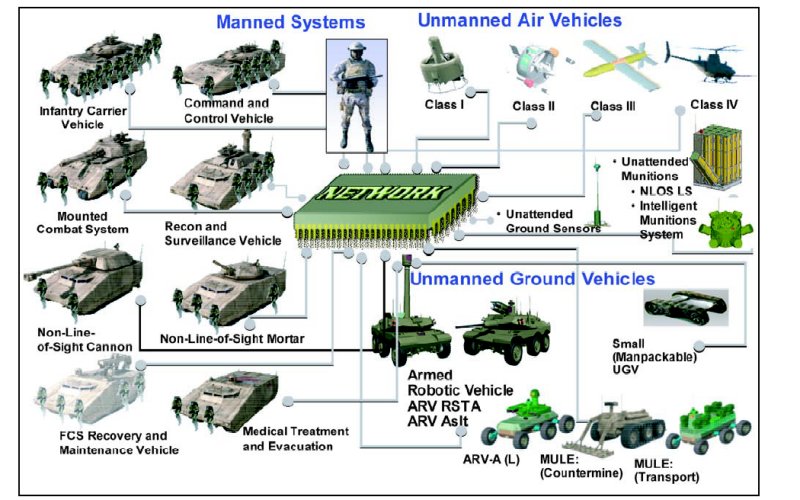
Rep. Mick Mulvaney held a 2011 meeting in his office to discuss defense spending after learning that the U.S. Army’s Future Combat System (FCS) modernization program had cost American taxpayers more than $20 billion and produced nothing for the Army. The irate freshman lawmaker (now head of the White House’s Office of Management and Budget) asked, “What came out at the hearings?” Rep. Mulvaney received his answer: There were no hearings. The money was spent and, most important, the money went where it was supposed to go: to defense industries in states and districts across the country where jobs tied to the FCS program were funded. In gratitude for the redistribution of cash to grateful shareholders, re-election campaign contributions poured in. Meanwhile, James Terry, the one-star in charge of FCS until Defense Secretary Bob Gates cancelled the failed program, was rewarded for the $20 billion failure with a second star and command of the 10th Mountain Division. (He was replaced by a certain Mark Milley, now Army Chief of Staff.) Eventually, Terry was promoted to three stars and given command of a corps — so much for accountability.