The Profession of Arms: A Guide for Young Army Officers
It takes courage, especially for a young officer, to check a man met on the road for not saluting properly or for slovenly appearance, but, every time he does, it adds to his stock of moral courage, and whatever the soldier may say, he has respect for the officer who does pull him up.
Read Document →The Dragon's Teeth: Assessing China's Military Modernization
PLA has focused on modernising its capabilities across all warfare domains to achieve these goals. This includes land, air, and maritime operations, nuclear, space, counter-space, electronic warfare and cyberspace operations, aiming to become a fully integrated joint force.
Read Document →Transforming the PLA: A Decade of reorganisation from SSF to ISF
PRC has engaged in a sustained and broad effort to transform the PLA from an infantry-heavy, low-technology, ground forces-centric military into a high-technology, networked force with an increasing emphasis on joint operations and naval and air power projection.
Read Document →Eyes without Borders: Exploring the World of Open Source Intelligence (OSINT) in the Digital Age
Open Source Intelligence (OSINT) is gaining prominence with the rise of social media, the digital society and the vast growth of publicly and commercially available information (PAI and CAI).
Read Document →
The PLA’s Developing Cyber Warfare Capabilities and India's Options
Informationised warfare blurs the lines between peacetime and wartime. A nation in the information age cannot wait for the hostilities to break out to collect intelligence, carryout influence operations, develop antisatellite systems or design computer software weapons.
Read Document →
Galwan and After
Why did China did this when he is under tremendous pressure in all fronts, is this China's salami slice tactics being progressed rigorously, what will be new Rules of Engagement, what will be escalatory control mechanism, who has taken this decision, will there be some pressure put by China in India's North-East through insurgency.
Read Document →
India’s Joint Doctrine for Cyberspace Operations: A Critical Review
Chief of Defence Staff (CDS) General Anil Chauhan and Secretary, Department of Military Affairs, formally released declassified versions of the Joint Doctrines for Cyberspace Operations during the Chiefs of Staff Committee meeting in New Delhi.
Read Document →
Know your Enemy General(now Field Marshal) Syed Aseem Munir
Gen SA Munir's position in the hierarchy of Pakistan was not very comfortable. The state of economy, insurgency in Pakhtoonistan and Balochistan, attack on the Jaffar Express, constant protests by supporters of Imran Khan's supporters inside and outside of parliament.
Read Document →
Decoding Operation SINDOOR: Key Aspects and Implications
Precision strikes were carried out on nine sites—four in Pakistan and five in PoK—linked to anti-India terrorist groups such as the LeT, JeM and the Hizbul Mujahideen. The targeted sites included Muridke (LeT headquarters) and Bahawalpur (JeM headquarters).
Read Document →
Chinese Cyber Exploitation in India's Power Grid - Is There a linkage to Mumbai Power Outage?
The New York Times (NYT), based on analysis by a U.S. based private intelligence firm Recorded Future, reported that a Chinese entity penetrated India’s power grid at multiple load dispatch points. Chinese malware intruded into the control systems that manage electric supply across India, along with a high-voltage transmission substation and a coal-fired power plant
Read Document →28 June 2018
My Blogsite https://strategicstudyindia.blogspot.in
The Lessons China Taught Itself: Why the Shanghai Cooperation Organization Matters
No Surprise: The Bomb Has Made a Bad Situation Worse in South Asia
Stabilizing Sino-Indian Security Relations: Managing the Strategic Rivalry After Doklam
Why China Has An Edge In the A.I. Arms Race
It Looks like Afghanistan and the Taliban May Try to End to 17 Years of War
Nepal-China: Reality Sets In
As the bilateral relationship with India warms up, Nepal’s Prime Minister K.P. Sharma Oli has slowed down the implementation of some key agreements reached with China during his previous visit as a prime minister in 2016. These agreements, which were termed as “historic” and” game-changing” two years ago, failed to make any headway during Oli’s second visit to China as prime minister this week. Some new agreements have been signed, with a particular focus on boosting Chinese investment in Nepal, but very little progress has been made to implement past deals.A tale of 19 mega-cities China is trying to turn itself into a country of 19 super-regions
CHINA’S urbanisation is a marvel. The population of its cities has quintupled over the past 40 years, reaching 813m. By 2030 roughly one in five of the world’s city-dwellers will be Chinese. But this mushrooming is not without its flaws. Rules restricting migrants’ access to public services mean that some 250m people living in cities are second-class citizens (see chart), who could in theory be sent back to their home districts. That, in turn, has crimped the growth of China’s cities, which would otherwise be even bigger.Amid Tensions With US, China Holds An Unusually High-Level Meeting on Diplomacy
On June 22 and 23, the Chinese Communist Party (CCP) leadership held an extremely high level meeting on China’s foreign policy — the Central Conference on Work Relating to Foreign Affairs — in Beijing. According to China’s state news agency, Xinhua, Xi Jinping presided over the meeting in the name of his three top posts: general secretary of the CCP, chairman of the Central Military Commission, and president of the nation. Accordingly, the attendees at this meeting included all the top leaders in the Party, the military, and the state, including the entire Politburo Standing Committee of the CCP, the top officials of all state departments, military high officials, and nearly all Chinese ambassadors.China-based hackers target satellite and telecommunication firms
A Chinese group has launched a wave of cyberattacks in the last 18 months and has specifically targeted a satellite operator, a telecommunication company, a geospatial imaging company and a defense contractor, the security company Symantec announced June 19. A Chinese group called Thrip has launched a wave of cyberattacks in the last 18 months and has specifically targeted a satellite operator, a telecommunication company, a geospatial imaging company and a defense contractor, the security company Symantec announced June 19. The news marks yet another allegation of digital espionage from the Asian giant.Can the Belt and Road Initiative Offer New Hope for China’s Rust Belt?
2018 will be a symbolic year for Dongbei, the collective name given to China’s struggling Northeastern provinces of Jilin, Liaoning, and Heilongjiang, which are home to over 100 million people. After battling through funding constraints, coordination problems, and temperature of -40 degrees Celsius, workers will finally complete the flagship Amur Bridge project that connects China with Russia. Labelled as part of the Belt and Road Initiative (BRI), the bridge is one of several projects seeking to revitalize Dongbei through improved connectivity and trade with Russia’s Far East (RFE) and Northeast Asia more broadly.Indonesia poised to benefit as China's Belt and Road turns green
The Belt and Road Initiative (BRI), unveiled by Chinese President Xi Jinping in September 2013 to reawaken and extend the old Silk Road for enhanced international trade, development and cooperation, will account for 30 percent of global gross domestic product. But the BRI will require up to US$6 trillion of investment by 2030. Funds are being strategically invested in transport, energy and infrastructure projects along several economic corridors, from China into Central Asia, the Middle East, Europe, Southeast Asia and Africa. While Chinese public capital is being used as an initial stimulus, investment on this scale cannot be driven by this source alone, private capital is needed to fund BRI projects as well.The Lessons China Taught Itself: Why the Shanghai Cooperation Organization Matters
Turkey's Elections Give Erdogan Even More Control
President Recep Tayyip Erdogan and his Justice and Development Party (AKP) will use a clear popular mandate and constitutional amendments that expand presidential power to broaden Turkey's regional and global reach. Abroad, the AKP will pursue a security-focused agenda buoyed by the electoral victories of hyper-nationalists. The party will maintain its hard-line Kurdish policy, undermine its rivals in the Gulen movement and assert Turkey's influence throughout the Middle East. Just as the AKP-led government has struggled to stabilize the country's currency and invite sustainable foreign investment in the past, external factors will continue to stymie the government's ability to manage the economy.What the world’s nationalists can learn from Turkey and Erdogan
Now, Erdogan Faces Turkey’s Troubled Economy. And He’s Part of the Trouble.
With his victory in Sunday’s elections, President Recep Tayyip Erdogan has taken his place among the world’s emerging class of strongman rulers, nailing down the sweeping powers he has insisted he needs to address Turkey’s numerous challenges, at home and abroad. Now, all he needs to do is deliver. “He won on a knife-edge,” said Ugur Gurses, a former banker who writes for the daily newspaper Hurriyet. “But now he has in his lap all the problems.” Mr. Erdogan is contending with an array of economic troubles, an increasingly disgruntled populace and deteriorating relations with Turkey’s Western allies. Among the many problems Mr. Erdogan faces is one fundamental roadblock: His foreign policy is fighting with his economic needs.Russia’s Allies Do Not Want to Take Part in Syrian Operation
The Revival of Russian Energy Projects in Bulgaria
Russia’s Armed Forces Exploit Robotic Technology to Transform Operational Capability
Russia’s Allies Do Not Want to Take Part in Syrian Operation
Bringing (solar) power to the peopleBy Adam Kendall and Gillian Pais
Rosneft in Kurdistan: A Neglected but Critical Aspect of Russian Regional Strategy
Is the UN Security Council Losing Legitimacy?
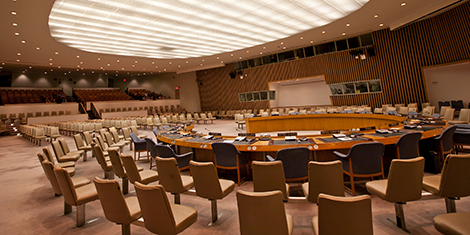
The UN Security Council (UNSC) is at a precipice. The Trump administration’s recent announcement that the US would no longer abide by the Joint Comprehensive Plan of Action (JCPOA) – the multilateral agreement to restrict Iran’s ability to acquire and develop nuclear weapons – breaks both a UNSC agreement and UNSC procedure. Breaking the JCPOA has the potential to undermine the UNSC’s legitimacy and the important functions it serves; the value the permanent five members of the UNSC (P5) place on the UNSC as a deliberative, policy-producing body in international politics is unlikely to persist amidst repeated, major violations of UNSC agreements and procedures by the P5, with downstream consequences for a broad swathe of international peace and security outcomes.How America Can Counter Russia and Iran
A Space Force? The Idea May Have Merit, Some Say
How the auto industry is preparing for the car of the future
Inside the bunkers and war rooms where major banks wage nightly battle on the frontline of cyber war
Contextualizing Cyber Operations
For Robert Dewar, there is something missing from many recent political and academic analyses of cyber operations. Such studies may address the ‘who’, ‘what’ and ‘how’ of cyber operations. However, they pay much less attention to the ‘when’ question, referring to the context of the incidents in which cyber operations are deployed. In response, Dewar here reviews a series of high-profile cyber incidents to help answer this overlooked question. In doing so, he also identifies five distinct socio-political and geopolitical contexts in which cyber operations regularly occur.MILITARY EXPENDITURE PER CAPITA: WHICH COUNTRIES SPEND THE MOST ON DEFENSE PER PERSON?
The Army network that helps first responders save lives
Major disasters can degrade or destroy critical communications infrastructure, making it all the more difficult for first responders to carry out their life-saving missions. We saw it in Hurricane Katrina, for instance, where “first responders were unable to coordinate search and rescue operations efficiently and effectively without communications to guide them … [and] assistance from other states could not be delivered in a timely manner due to lack of communications,” according to a U.S. Army War College analysis. Now the Army National Guard says it is meeting with success in a pilot effort to leverage military communications capabilities to support domestic emergency disaster response.