The Profession of Arms: A Guide for Young Army Officers
It takes courage, especially for a young officer, to check a man met on the road for not saluting properly or for slovenly appearance, but, every time he does, it adds to his stock of moral courage, and whatever the soldier may say, he has respect for the officer who does pull him up.
Read Document →The Dragon's Teeth: Assessing China's Military Modernization
PLA has focused on modernising its capabilities across all warfare domains to achieve these goals. This includes land, air, and maritime operations, nuclear, space, counter-space, electronic warfare and cyberspace operations, aiming to become a fully integrated joint force.
Read Document →Transforming the PLA: A Decade of reorganisation from SSF to ISF
PRC has engaged in a sustained and broad effort to transform the PLA from an infantry-heavy, low-technology, ground forces-centric military into a high-technology, networked force with an increasing emphasis on joint operations and naval and air power projection.
Read Document →Eyes without Borders: Exploring the World of Open Source Intelligence (OSINT) in the Digital Age
Open Source Intelligence (OSINT) is gaining prominence with the rise of social media, the digital society and the vast growth of publicly and commercially available information (PAI and CAI).
Read Document →
The PLA’s Developing Cyber Warfare Capabilities and India's Options
Informationised warfare blurs the lines between peacetime and wartime. A nation in the information age cannot wait for the hostilities to break out to collect intelligence, carryout influence operations, develop antisatellite systems or design computer software weapons.
Read Document →
Galwan and After
Why did China did this when he is under tremendous pressure in all fronts, is this China's salami slice tactics being progressed rigorously, what will be new Rules of Engagement, what will be escalatory control mechanism, who has taken this decision, will there be some pressure put by China in India's North-East through insurgency.
Read Document →
India’s Joint Doctrine for Cyberspace Operations: A Critical Review
Chief of Defence Staff (CDS) General Anil Chauhan and Secretary, Department of Military Affairs, formally released declassified versions of the Joint Doctrines for Cyberspace Operations during the Chiefs of Staff Committee meeting in New Delhi.
Read Document →
Know your Enemy General(now Field Marshal) Syed Aseem Munir
Gen SA Munir's position in the hierarchy of Pakistan was not very comfortable. The state of economy, insurgency in Pakhtoonistan and Balochistan, attack on the Jaffar Express, constant protests by supporters of Imran Khan's supporters inside and outside of parliament.
Read Document →
Decoding Operation SINDOOR: Key Aspects and Implications
Precision strikes were carried out on nine sites—four in Pakistan and five in PoK—linked to anti-India terrorist groups such as the LeT, JeM and the Hizbul Mujahideen. The targeted sites included Muridke (LeT headquarters) and Bahawalpur (JeM headquarters).
Read Document →
Chinese Cyber Exploitation in India's Power Grid - Is There a linkage to Mumbai Power Outage?
The New York Times (NYT), based on analysis by a U.S. based private intelligence firm Recorded Future, reported that a Chinese entity penetrated India’s power grid at multiple load dispatch points. Chinese malware intruded into the control systems that manage electric supply across India, along with a high-voltage transmission substation and a coal-fired power plant
Read Document →30 June 2018
** Warming World Why Climate Change Matters More Than Anything Else
Making No Assumptions: India's Seychelles Conundrum
After all the hullabaloo about the state of India-Seychelles ties in the Indian media, no dramatic deceleration was evident if one looks at the outcome of the visit of Seychelles President Danny Faure to India this week. On the much-discussed Assumption Island project, while Indian Prime Minister Narendra Modi suggested that the two nations “have agreed to work on the Assumption Island project based on each other’s rights,” Faure made it clear that the two nations remain engaged and “will work together bearing each other’s interests [in mind].” It is clear that despite the domestic turbulence in the Seychelles on the issue, both sides recognize the need to maintain a level of engagement which their convergent interests in the Indian Ocean region demand.Friendly fire: The curious case of US sanctions on India
New STAR in the East may Herald an India-China Partnership
Will the Pause in South Asian Conflicts Last?
A Way Forward in Afghanistan: Q and A with Laurel Miller
Laurel Miller is a senior foreign policy expert at RAND. From 2013 to 2017, she served as the U.S. State Department's deputy and then acting special representative for Afghanistan and Pakistan, overseeing U.S. diplomatic efforts in the region. She returned to RAND after the Trump administration folded the responsibilities of that office back into the State Department's broader South and Central Asia bureau.What Lies Beneath the Enduring Stalemate in Afghanistan
The stalemate in Afghanistan endures, with the Afghan government continuing to control the country's urban areas while the Taliban command large areas of the countryside. Foreign support, the Afghan government's failures and the Taliban's deep ties within Afghanistan's rural social fabric are central to the persistence of the Afghan insurgency. Negotiations are the only real alternative toward ending the conflict in the short term, but myriad obstacles stand in the way.Ripples of reform in Dhaka
Dhaka, with a population of 12.5 million, is the sixth-largest megacity in the world. Indians often think we have little to learn from our neighbour Bangladesh, which has a per capita income in PPP terms less than 60 per cent of India’s. But Dhaka has a lot to teach our megacities since it has one of the worst vulnerabilities to water of any urban setting in the world, and is handling it in an inclusive manner which is also financially sustainable. Dhaka’s water challenges are similar to what we experience in our megacities, only worse. Having polluted its rivers with industrial effluents and municipal sewage, the city remains heavily (80 per cent) dependent on groundwater for its drinking water needs. The temptation to source groundwater using deep tube wells is enormous, particularly since the water quality is good and is potable without any treatment. The water-table is at least 600 feet deep and it amounts to water mining from a resource that has accumulated over thousands of years. It has resulted in a rapid decline in Dhaka’s water table at the rate of about two to three metres per year for close to three decades. Moreover, indiscriminate suction pumps installed beneath underground tanks in the city tend to reduce or choke off pressure elsewhere in the system causing backwater and stagnation, and hence contamination of water. Only a little over 10 years ago, the WHO had declared that the entire population of Dhaka was at the risk of cholera.Here's How China Is Achieving Global Semiconductor Dominance
Here's How China Is Achieving Global Semiconductor Dominance
China’s Peaceful Modernization Does Not Mean Westernization
U.S. Defense Secretary James Mattis was wrong when he criticized China’s Belt and Road Initiative (BRI) by saying that “the Ming Dynasty appears to be their model, albeit in a more muscular manner, demanding that other nations become tribute states kowtowing to Beijing.” Following this logic, the deduction that China’s rise and its ultimate modernization can be and will be peaceful appears to be completely unacceptable. Mattis is implying that the U.S.-anchored rules can never be changed, destinies can never be shared, and political and cultural diversities can never be allowed.The Quad: Second Verse, Same as the First?
The recently concluded Shangri-La Dialogue focused heavily on China's conduct in the South China Sea, unfolding developments in nuclear diplomacy with North Korea, and the potential strategic contours of “a free and open Indo-Pacific.” Little mentioned, however, was the quadrilateral security dialogue — known as “the Quad” — an informal collaborative arrangement among the United States, Japan, India, and Australia. J. Berkshire Miller, a senior visiting fellow with the Japan Institute of International Affairs, tweeted shortly after the gathering's conclusion that it received “almost no institutional backing [in] high-level speeches.” While a compact of this nature would seem sensible, especially amid growing concern over the postwar order's erosion, it has once again failed to take flight.An Extraordinarily Expensive Way to Fight ISIS
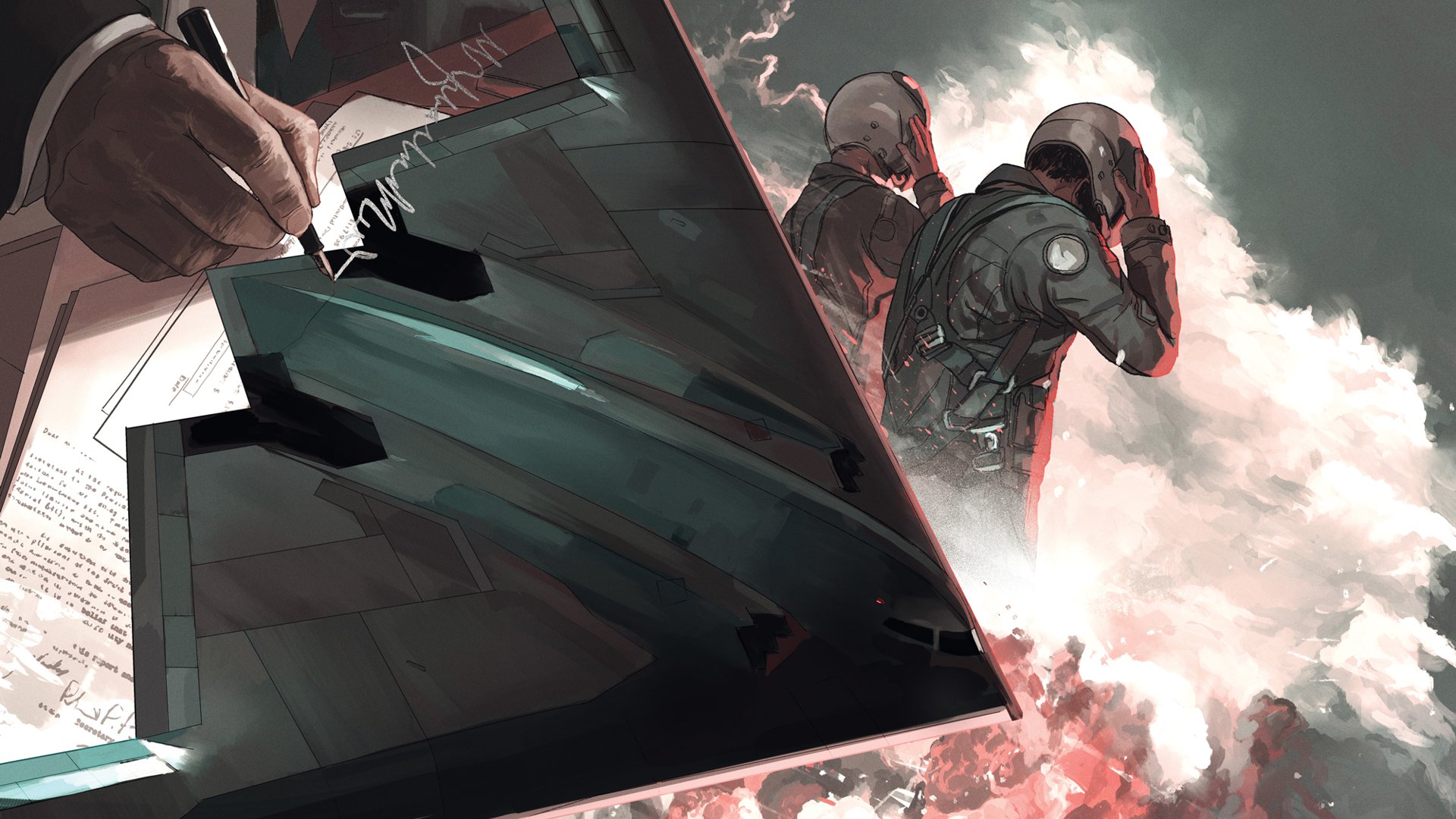
Target The B-2 stealth bomber is the world’s most exotic strategic aircraft, a subsonic flying wing meant to be difficult for air defenses to detect—whether by radar or other means—yet capable of carrying nearly the same payload as the massive B-52. It came into service in the late 1990s primarily for use in a potential nuclear war with the Soviet Union, and clearly as a first-strike weapon rather than a retaliatory one. First-strike weapons have destabilizing, not deterrent, effects. It is probably just as well that the stealth bomber was not quite as stealthy as it was meant to be, and was so expensive—at $2.1 billion each—that only 21 were built before Congress refused to pay for more. Nineteen of them are now stationed close to the geographic center of the contiguous United States, in the desolate farmland of central Missouri, at Whiteman Air Force Base. The United States Cannot Afford to Pick a Side in the Shia-Sunni Fight
Turkey’s Elections: Will It Be More of the Same?
Trump Administration Trump's Trade War Escalates
Turkey’s Warning
If they needed to fend off war with Russia, U.S. military leaders worry they might not get there in time
US Retakes Supercomputing Crown, But China Has Far More of Them
The US has regained its crown of owning the world’s fastest supercomputer—the machines that can achieve medical and scientific breakthroughs thanks to their enormous processing power—for the first time in six years. But China’s leaving the USin the dust when it comes to their respective shares of the world’s top supercomputers. According to the latest Top 500 list, published Monday (June 25), China has 206 supercomputers and is leading the US by a record margin—82. The US has just 124 machines on the list, “a new low,” according to the statement accompanying the ranking. Just six months ago, China, with 202 of the top computers, was only ahead of the US by 59. Top 500 has been releasing the supercomputer ranking, compiled by prominent computer scientists, every six months since 1993.Populist Narratives and the Making of National Strategy
The Wiretap Rooms: NSA’s Hidden Spy Hubs in 8 U.S. Cities
What's at Stake as the U.S. Considers Recognizing Israel's Claim to the Golan Heights
Israel is lobbying the United States to recognize the Golan Heights, occupied since 1967, as Israeli territory. If the United States agrees, it will be recognizing territory captured by military means for the first time since World War II. That move would add to a growing trend of America reshaping its relationship with post-World War II norms, possibly prompting more international instability.Part Two: Wargaming Moscow’s Virtual Battlefield
Response: The U.S. has responded to Russian activity in cyberspace through diplomatic measures, such as the expulsion of intelligence officials from Russian consulates in the country, economic methods, such as targeted sanctions, and legal actions, such as indictments of government personnel, criminal proxies and contracting entities that enable Russian network intrusions and influence operations. But indictments of Russian hackers often do not result in their eventual incarceration, given the protections provided to them by the Kremlin. Therefore, the more realistic intentions of U.S. indictments are to publicly name alleged perpetrators and impose increasing costs on them to travel or continue clandestine work.AI Solutionism
Mattis declares vigilance to be the best cyber defense
Additive Manufacturing in 2040
Four Ways 3D Printing May Threaten Security
3D printers already produce everything from prosthetic hands and engine parts to basketball shoes and fancy chocolates. But as with any technological advance, new possibilities come with new perils. A new RAND paper, Additive Manufacturing in 2040: Powerful Enabler, Disruptive Threat, explores how 3D printers will affect personal, national, and international security. The paper is part of RAND's Security 2040initiative, which looks over the horizon to anticipate future threats.Sharpening Our Military Edge: The NDS and the Full Continuum of Conflict
The Army is most excited about these 3 capabilities
A current Army exercise seeks to inform operational concepts and capability needs based on putting emerging technologies into the hands of soldiers for their direct feedback. The Army is staging its third annual Cyber Quest, which started June 11 and runs through June 27, and top officials spoke to the media about the capabilities that most excited them. Situational understanding Multiple officials discussed the importance of situational understanding tools that provide a view inside the unseeable cyber domain, allowing commanders to see enemy cyberspace, friendly cyberspace and even gray cyberspace.How industry helps shape the Army’s emerging tech
The Army continues to shape and evolve its concepts for cyber and electronic warfare operations, and it is using exercises such as Cyber Quest to identify what might be possible soon and what can be improved upon now. Cyber Quest, which runs June 11 to June 27, seeks to inform operational concepts as the Army continues to build cyber capacity and reestablish electronic warfare capacity and serves to inform operational requirements of new systems to counter threats, Maj. Gen. John Morrison, commander of the Cyber Center of Excellence and Fort Gordon, which hosted the exercise, said during a media call./arc-anglerfish-arc2-prod-mco.s3.amazonaws.com/public/45ZJBBJHTFF4JMZXKJ6QCRFYKE.jpg)