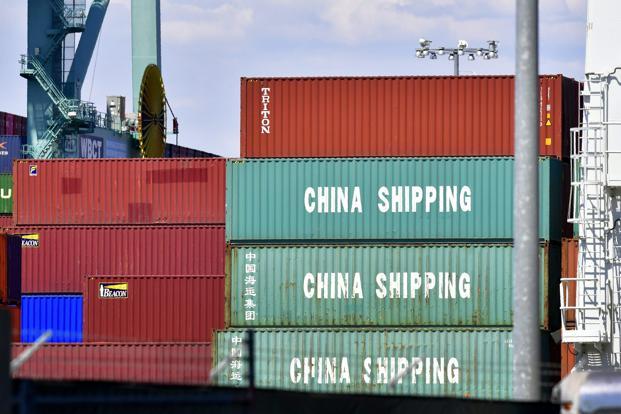
As wage increases in China limited its expansion in world markets for labour-intensive products in recent years, other Asian peers such as Bangladesh and Vietnam gained relatively more compared with India. Mumbai: The growing conflict between the two largest economies of the world, the US and China, has stirred a debate on its impact on India, Asia’s third largest economy. Some believe any escalation in a trade-cum-currency conflict will be universally harmful for all economies, and particularly so for emerging economies such as India. Others are more hopeful about India being able to strike a deal with the Donald Trump-led US administration to corner a share of the market that China currently enjoys.The Profession of Arms: A Guide for Young Army Officers
It takes courage, especially for a young officer, to check a man met on the road for not saluting properly or for slovenly appearance, but, every time he does, it adds to his stock of moral courage, and whatever the soldier may say, he has respect for the officer who does pull him up.
Read Document →The Dragon's Teeth: Assessing China's Military Modernization
PLA has focused on modernising its capabilities across all warfare domains to achieve these goals. This includes land, air, and maritime operations, nuclear, space, counter-space, electronic warfare and cyberspace operations, aiming to become a fully integrated joint force.
Read Document →Transforming the PLA: A Decade of reorganisation from SSF to ISF
PRC has engaged in a sustained and broad effort to transform the PLA from an infantry-heavy, low-technology, ground forces-centric military into a high-technology, networked force with an increasing emphasis on joint operations and naval and air power projection.
Read Document →Eyes without Borders: Exploring the World of Open Source Intelligence (OSINT) in the Digital Age
Open Source Intelligence (OSINT) is gaining prominence with the rise of social media, the digital society and the vast growth of publicly and commercially available information (PAI and CAI).
Read Document →
The PLA’s Developing Cyber Warfare Capabilities and India's Options
Informationised warfare blurs the lines between peacetime and wartime. A nation in the information age cannot wait for the hostilities to break out to collect intelligence, carryout influence operations, develop antisatellite systems or design computer software weapons.
Read Document →
Galwan and After
Why did China did this when he is under tremendous pressure in all fronts, is this China's salami slice tactics being progressed rigorously, what will be new Rules of Engagement, what will be escalatory control mechanism, who has taken this decision, will there be some pressure put by China in India's North-East through insurgency.
Read Document →
India’s Joint Doctrine for Cyberspace Operations: A Critical Review
Chief of Defence Staff (CDS) General Anil Chauhan and Secretary, Department of Military Affairs, formally released declassified versions of the Joint Doctrines for Cyberspace Operations during the Chiefs of Staff Committee meeting in New Delhi.
Read Document →
Know your Enemy General(now Field Marshal) Syed Aseem Munir
Gen SA Munir's position in the hierarchy of Pakistan was not very comfortable. The state of economy, insurgency in Pakhtoonistan and Balochistan, attack on the Jaffar Express, constant protests by supporters of Imran Khan's supporters inside and outside of parliament.
Read Document →
Decoding Operation SINDOOR: Key Aspects and Implications
Precision strikes were carried out on nine sites—four in Pakistan and five in PoK—linked to anti-India terrorist groups such as the LeT, JeM and the Hizbul Mujahideen. The targeted sites included Muridke (LeT headquarters) and Bahawalpur (JeM headquarters).
Read Document →
Chinese Cyber Exploitation in India's Power Grid - Is There a linkage to Mumbai Power Outage?
The New York Times (NYT), based on analysis by a U.S. based private intelligence firm Recorded Future, reported that a Chinese entity penetrated India’s power grid at multiple load dispatch points. Chinese malware intruded into the control systems that manage electric supply across India, along with a high-voltage transmission substation and a coal-fired power plant
Read Document →26 July 2018
China-US trade war: Is there a silver lining for India?
As wage increases in China limited its expansion in world markets for labour-intensive products in recent years, other Asian peers such as Bangladesh and Vietnam gained relatively more compared with India. Mumbai: The growing conflict between the two largest economies of the world, the US and China, has stirred a debate on its impact on India, Asia’s third largest economy. Some believe any escalation in a trade-cum-currency conflict will be universally harmful for all economies, and particularly so for emerging economies such as India. Others are more hopeful about India being able to strike a deal with the Donald Trump-led US administration to corner a share of the market that China currently enjoys.India among ten Asian economies to see robust GDP growth by 2030: Report
The 10 major economies of Asia, including India, are expected to see robust growth and amount to over $28 trillion in real GDP terms on aggregate, more than the US by 2030, says a DBS report. According to DBS the Asia-10 economies are -- China, Hong Kong, India, Indonesia, Malaysia, the Philippines, Singapore, South Korea, Taiwan, and Thailand. India Is the Weakest Link in the Quad
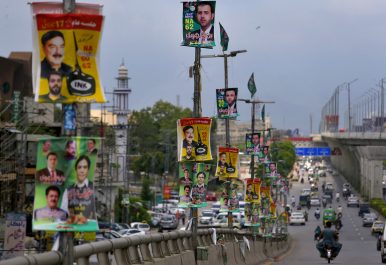
Japanese Rear Admiral Hiroshi Yamamura (L), US Rear Admiral William Byrne (R) and HCS Bisht, vice admiral of the Indian Navy, pose for photographers during the inauguration of joint naval exercises with the United States and India in Chennai on July 10, 2017. Since the Trump administration’s announcement that it seeks a “free and open” Indo-Pacific, observers have spilled much ink on the revival of the Quadrilateral Security Dialogue, or Quad, to achieve this objective. The Quad—an informal consultative mechanism comprising the United States, Australia, Japan, and India—is quietly opposed to China’s continued militarization of and attempts to control strategic waterways throughout the region, namely the South China Sea. The group met most recently last November, and again in June, after 10 years of inactivity.Pakistan's Election: Unique for All the Wrong Reasons
Allegations, confrontations, internal divisions, doubts, and an intensely charged environment have marked Pakistan’s democratic process as nearly 106 million voters are stepping forward to elect their country’s new leadership.The battle for central Punjab
THE muzzle is tighter and the leash shorter, but that’s just how it is for now — and will likely remain. Don’t let the rowdiness of social media and the freewheeling ways of the internet fool.National Ambitions Meet Local Opposition Along the China-Pakistan Economic Corridor
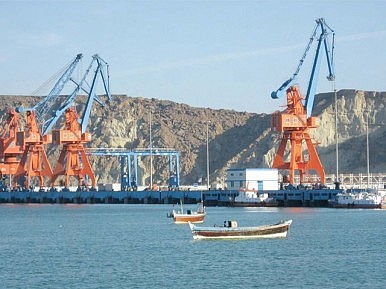
In the run-up to Pakistan’s general election on July 25, most political parties stand united in their belief that the China-Pakistan Economic Corridor (CPEC) will transform Pakistan’s ailing economy. In May, Pakistan’s ambassador to China asserted that “regardless of any political change in Pakistan, our commitment towards the successful completion of CPEC will not change.” But if political support at the national level appears unwavering, local opposition is growing over the lack of consultation and concerns regarding the inequitable distribution of the prospective benefits. In few places is this more noticeable than the southern Balochistan fishing town of Gwadar, the entry point of the corridor and a microcosm of the center-periphery tensions elsewhere that threaten CPEC’s implementation.China Sits on the World’s Biggest Shale Gas Prize. Pumping It Out Is the Hard Part
China Is a Climate Leader but Still Isn’t Doing Enough on Emissions, Report Says
China has become a global leader in policy and diplomacy on limiting the effects of climate change, but it still needs to take significant steps to curb its own carbon dioxide emissions, according to a report released on Thursday. The report, written by David Sandalow, a former United States energy official now at Columbia University, takes a broad look at emissions and coal use in 2017 in China, which is by far the world’s top emitter of the heat-trapping gases that accelerate climate change. The study also analyses recent policy moves on climate by the country’s government and by the Communist Party. China has wide-ranging climate policies, enshrined in the national Five-Year Plans and in blueprints at provincial and local levels. As a result, the report says, it is on its way to meeting major climate change goals, including lowering a measure known as carbon intensity, having carbon dioxide emissions reach a peak no later than 2030 and having a fifth of energy come from non-fossil-fuel sources by that year.Alibaba Joins $600 Million Round for AI Startup Megvii
China Sits on the World’s Biggest Shale Gas Prize. Pumping It Out Is the Hard Part
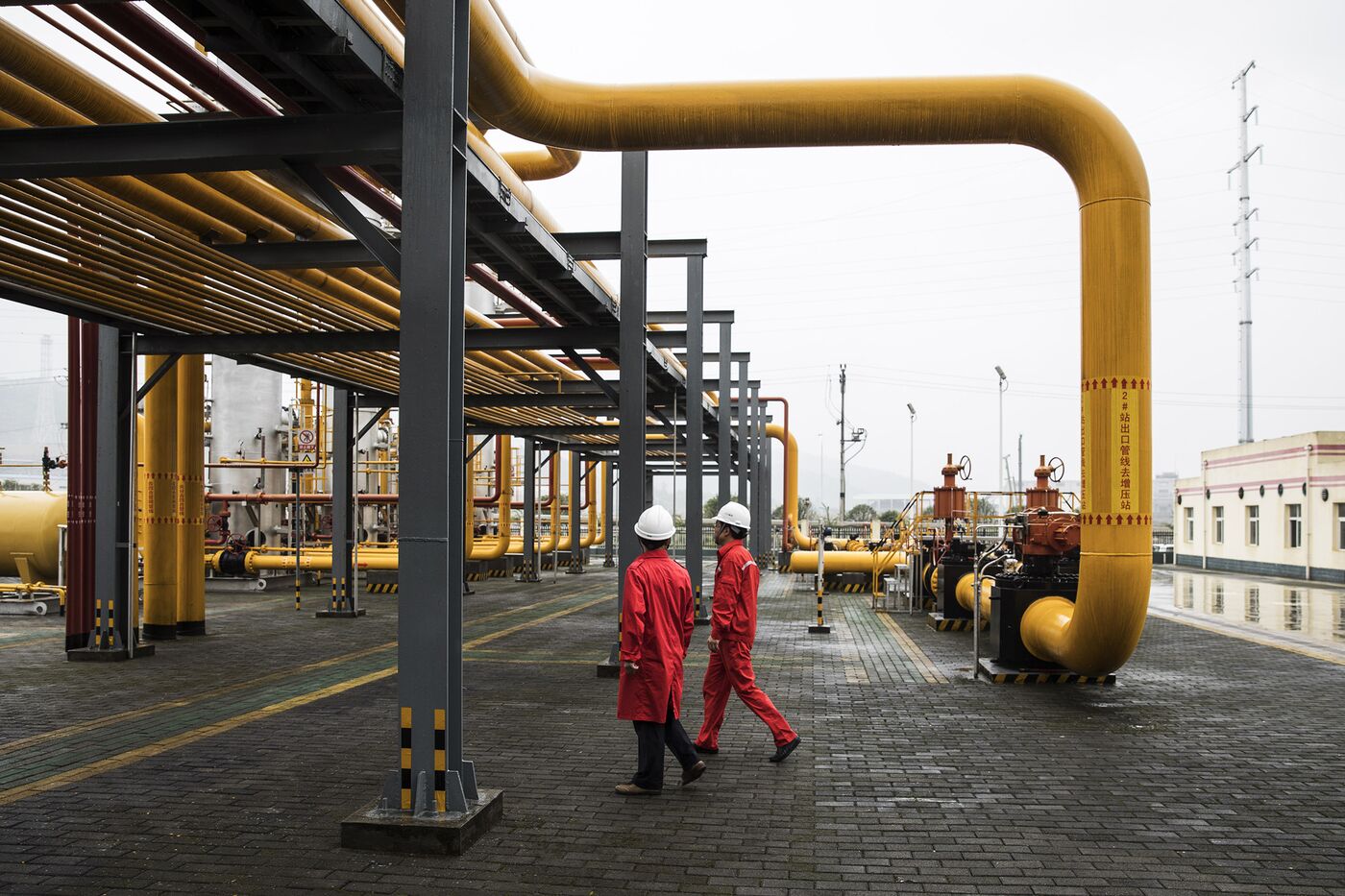
China’s reserves are deeper and harder to reach than those in North America. Guo Xusheng, a stout and affable chief geologist at a unit of China Petroleum & Chemical Corp., persuaded his bosses in 2009 to give him about $3 million to drill deeper than anyone had before in southwestern China. For Sinopec, as the company is known, the shale boom in the U.S. convinced them that Guo’s plan was worth a try. Success was far from certain. China National Petroleum Corp., the nation’s dominant oil company, already drilled the same area and came up dry. The shale gas collection and transfer facility at the Fuling shale gas field in Chongqing, China.U.S. Soy Will Strengthen Brazil's Hand in the Chinese Market
In the short term, China remains in a stronger position than the United States in terms of the soy market, with numerous alternative suppliers and substitutes for U.S. product available. Still, the large share of the Chinese market held by U.S. soybean exporters means that Beijing likely will be unable to shut off all U.S. soy imports. Tariffs will accelerate an existing trend that has led to increasing Brazilian soy exports to China. U.S. farmers could soon start to feel the sting of the White House's trade battles, especially as the fallout from its skirmishes with China begins to hit. Tariffs imposed by Beijing in retaliation for those slapped on Chinese goods by the United States include a 25 percent levy on soybeans, a key import. The world's second-largest economy is also its largest soybean importer, but China appears well positioned to weather the higher prices that tariffs have brought. In the end, higher prices for U.S. soybeans could accelerate changes already occurring in the Chinese market, eroding U.S. market share and spurring China to further increase domestic production of the crop.China's Xi offers fresh $295 million grant to Sri Lanka
Protests Reveal Iraq’s New Fault Line: The People vs. the Ruling Class
In what is becoming a summer ritual in southern Iraq, protesters took to the streets to voice their grievances amid scorching heat over the course of the past several weeks. Their government’s inability to provide basic services, namely electricity and water, makes the harsh summer unbearable to many Iraqis. The high unemployment rate means that many cannot afford a basic standard of living. Reflecting a heightened mood of desperation, the latest round of protests turned more violent than in previous years. In nine Iraqi provinces, protesters stormed government buildings and infrastructure as well as political party offices, at times setting them ablaze. No major leader or political party was spared. Demonstrators even attacked the offices of populist cleric-turned-politician Muqtada al-Sadr, who in the past has been a leader of the protests. Iraq's Water Crisis Gives the Public One More Reason to Protest
Water shortages will plague Iraq throughout the summer, causing a decline in agricultural production and a greater risk of social unrest in the southern part of the country. Political gridlock in Baghdad will impede progress on water management, while fighting over water at the provincial level will influence discourse at the federal level. Turkey will focus on maintaining and advancing its own strategy in Iraq without making any substantial changes over its water use. Iran, a Regional Power in Dire Straits
Saudi Arabia and the United Arab Emirates have a disastrous Yemen strategy
The Real Threat to America: Iran May Close the Strait of Hormuz The risk of miscalculation is now significantly higher. by Edward Chang
Bolshevik Hybrid Warfare
Whenever one is reviewing a long book about a narrow subject, one must provide the reader with motivation as much as explanation. Laura Engelstein’s Russia in Flames: War, Revolution, Civil War 1914-1921 is a detailed but readable history of the collapse of the Russian Empire, the Russian Civil War, and the birth of the Soviet Union. It manages a clean structure, well-organized chronologically into six parts and, within those parts, into chapters laying out the course of events in different regions of the hemisphere-spanning Russian empire and giving voice to the mosaic complexity of the Eastern Front, the revolution, and the civil war. What the book has going for it, compared to projects of similar scope like Orlando Figes’ A People's Tragedy: The Russian Revolution: 1891-1924 or classics by Shiela Fitzpatrick or Richard Pipes (both entitled The Russian Revolution),[1]is a relentless commitment to the geographic diversity within which the revolution occurred and the ever-shifting organizations and coalitions operating in that geography. This commitment to the sheer scale of the revolution gives the book enduring value and insight for those interested in strategy today, particularly in terms of political warfare. This review focuses on three broad lessons this period has to teach us.When the Enemy Has Better Tech
RUSSIA’S STRENGTH IS ITS WEAKNESS
The Syrian War Is Over, and America Lost
Earlier this month, Syrian regime forces hoisted their flag above the southern town of Daraa and celebrated. Although there is more bloodletting to come, the symbolism was hard to miss. The uprising that began in that town on March 6, 2011, has finally been crushed, and the civil war that has engulfed the country and destabilized parts of the Middle East as well as Europe will be over sooner rather than later. Bashar al-Assad, the man who was supposed to fall in “a matter of time,” has prevailed with the help of Russia, Iran, and Hezbollah over his own people.Transforming Big Data into Meaningful Insights
Ransomware Attacks: An Increasingly Common Threat
Can Anything Stop Cyber Attacks?
Deepfakes Are Coming. And They’re Dangerous.
The Army probably needs to update its cyber doctrine every 18 months
Top Army leaders say that their recent tours have provided valuable lessons on the rate of change in the cyber world that they’re now using to shape training and operations. “We’ve learned so much in the last two years because we’ve operated and the pace has increased,” Lt. Gen. Stephen Fogarty, commander of Army Cyber Command, said during a July 18 event hosted by the Association of Old Crows. “We’ve accelerated the learning curve and that’s given us confidence to start to make changes in organization, in capabilities and tactics, techniques and procedures.” Those lessons come, in part, from building out of the cyber mission force, Brig. Gen. Jennifer Buckner, director of the Army’s Cyber Directorate in charge of Army staff level electronic warfare, cyber and information operations policy, told Fifth Domain following the event. Given the pace of operations in the Middle East and other combatant commands around the world, there are a host of operational events that are informing training and organizational structures, Buckner said. Buckner served most recently as the deputy commander of the U.S. Cyber Command led counter-ISIS cyber offensive known as Joint Task Force-Ares.ACCELERATING MULTI-DOMAIN OPERATIONS: EVOLUTION OF AN IDEA
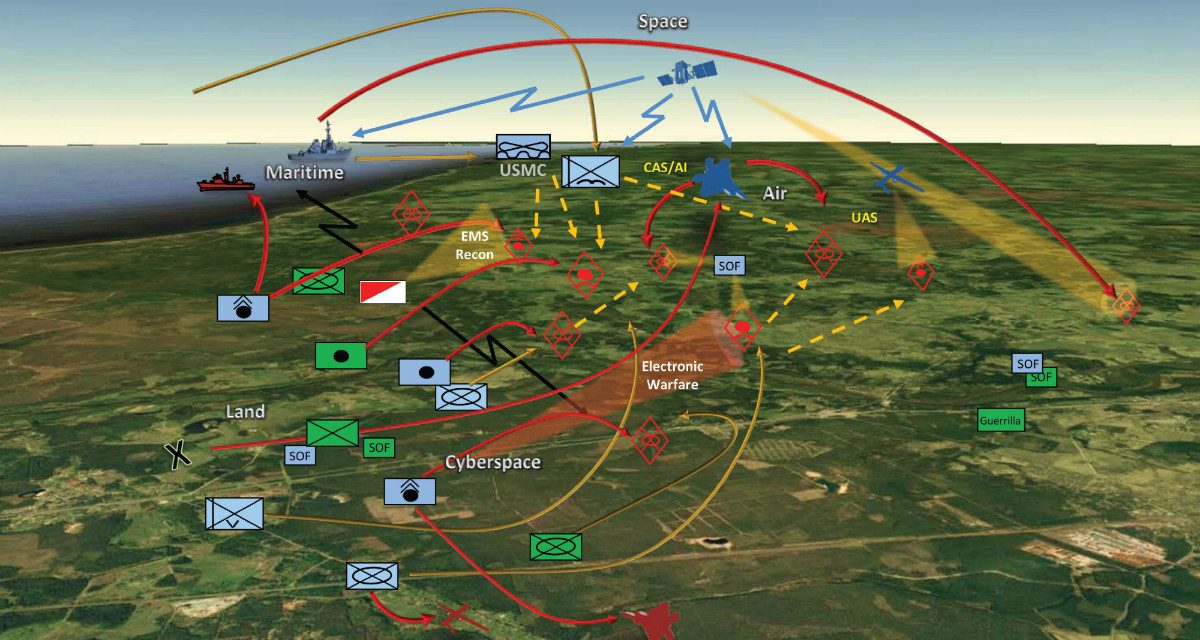
Multi-Domain Battle has a clear origin. Stemming from the idea that disruptive technologies will change the character of warfare, it recognizes that the way armies will fight and win wars will also change. It also reflects the desire to replicate the success of AirLand Battle, which is arguably the most significant case of developing a concept and then materializing capabilities across the DOTMLPF spectrum (Doctrine, Organization, Training, Material, Leadership Education, Personnel, and Facilities). Origin stories establish the foundation from which lasting ideas emerge. However, for ideas to have a lasting impact they must evolve.Five Reform Areas for Effective Peacekeeping Performance
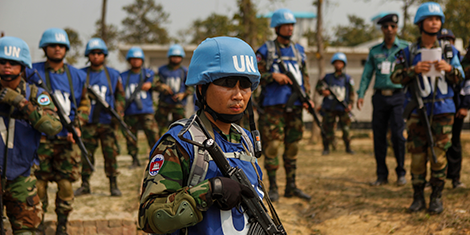
United Nations Secretary-General Antรณnio Guterres rightly prioritizes performance by including it as one of the five pillars of his Action for Peacekeeping (A4P) reform initiative. Peacekeeping operations are a principal tool, and one of the most expensive and visible ways, that the UN intervenes to prevent and mitigate conflict. Improving peacekeeping performance is thus essential, but it will not be easy. Peacekeeping operations are highly complex, with numerous UN bodies and member states holding different responsibilities, many of whom have resisted previous reform efforts aiming to ensure that peacekeeping operations can safely and effectively implement their mandates. Improving performance will require significant, high-level political engagement by numerous stakeholders across many areas of peacekeeping—which is exactly what the A4P initiative seeks to engender.MERICA VS. IRAN: CAN U.S. MILITARY WIN A WAR AGAINST ISLAMIC REPUBLIC?
The Redundant and Expensive Costs of Procuring Hypersonic Glide Vehicle
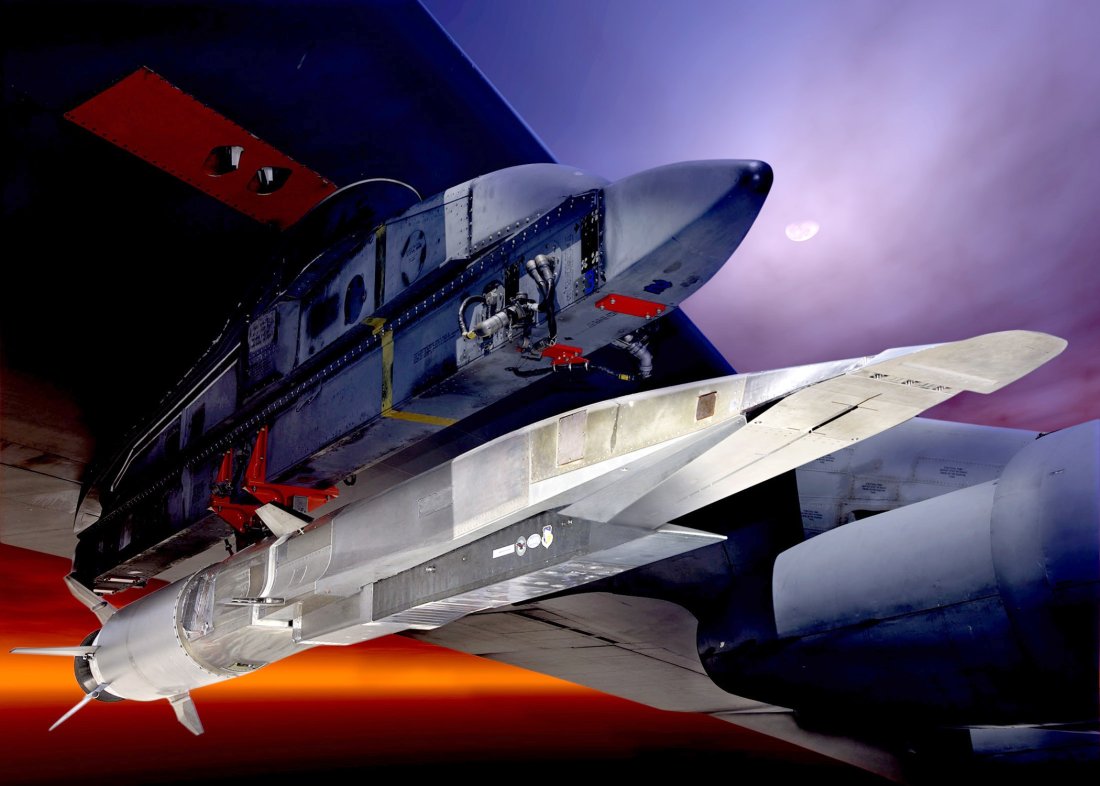
Hypersonic Glide Vehicles (HGVs), also referred to as Boost Glide Vehicles, are a hot topic in arms control circles. Flying at hypersonic speed, these weapon systems are considerably faster than contemporary supersonic and subsonic cruise missiles while possessing similar standoff range and maneuverability to ensure survival. Moreover, HGV delivery platforms could potentially vary from air-launched iterations to glide vehicles attached to ballistic missiles that detach following the missile’s boost phase and serve as maneuverable reentry vehicles. Such impressive capabilities do not come cheap and have already been touted as multi-billion dollaropportunities for aerospace contractors. Indeed, the Pentagon has already awarded a massive $1 billion HGV procurement contract to Lockheed Martin, with more such costs surely to follow if these capabilities are further pursued. The purported hypersonic threat has also prompted the Pentagon to pour more money into one of its favorite costly boondoggles: missile defense.