The Iranian nuclear deal fiasco has made the whole world anxious. U.S. President Donald Trump announced on May 8 that the United States will withdraw from the deal and planned to reinstate sanctions against the Iranian government. The sanctions were reimposed this week, making good on Trump’s threat. The scrapping of the nuclear deal is bound to have widespread repercussions for the regional security architecture in particular and global polity in general. Given New Delhi’s engagement not only with the United States and Iran but also with other significant Middle East countries like the UAE, Saudi Arabia, and Israel, the diplomatic headache resulting from these sanctions has multiplied for India.The Profession of Arms: A Guide for Young Army Officers

It takes courage, especially for a young officer, to check a man met on the road for not saluting properly or for slovenly appearance, but, every time he does, it adds to his stock of moral courage, and whatever the soldier may say, he has respect for the officer who does pull him up.
Read Document →The Dragon's Teeth: Assessing China's Military Modernization
PLA has focused on modernising its capabilities across all warfare domains to achieve these goals. This includes land, air, and maritime operations, nuclear, space, counter-space, electronic warfare and cyberspace operations, aiming to become a fully integrated joint force.
Read Document →Transforming the PLA: A Decade of reorganisation from SSF to ISF
PRC has engaged in a sustained and broad effort to transform the PLA from an infantry-heavy, low-technology, ground forces-centric military into a high-technology, networked force with an increasing emphasis on joint operations and naval and air power projection.
Read Document →Eyes without Borders: Exploring the World of Open Source Intelligence (OSINT) in the Digital Age
Open Source Intelligence (OSINT) is gaining prominence with the rise of social media, the digital society and the vast growth of publicly and commercially available information (PAI and CAI).
Read Document →
The PLA’s Developing Cyber Warfare Capabilities and India's Options
Informationised warfare blurs the lines between peacetime and wartime. A nation in the information age cannot wait for the hostilities to break out to collect intelligence, carryout influence operations, develop antisatellite systems or design computer software weapons.
Read Document →
Galwan and After
Why did China did this when he is under tremendous pressure in all fronts, is this China's salami slice tactics being progressed rigorously, what will be new Rules of Engagement, what will be escalatory control mechanism, who has taken this decision, will there be some pressure put by China in India's North-East through insurgency.
Read Document →
India’s Joint Doctrine for Cyberspace Operations: A Critical Review
Chief of Defence Staff (CDS) General Anil Chauhan and Secretary, Department of Military Affairs, formally released declassified versions of the Joint Doctrines for Cyberspace Operations during the Chiefs of Staff Committee meeting in New Delhi.
Read Document →
Know your Enemy General(now Field Marshal) Syed Aseem Munir
Gen SA Munir's position in the hierarchy of Pakistan was not very comfortable. The state of economy, insurgency in Pakhtoonistan and Balochistan, attack on the Jaffar Express, constant protests by supporters of Imran Khan's supporters inside and outside of parliament.
Read Document →
Decoding Operation SINDOOR: Key Aspects and Implications
Precision strikes were carried out on nine sites—four in Pakistan and five in PoK—linked to anti-India terrorist groups such as the LeT, JeM and the Hizbul Mujahideen. The targeted sites included Muridke (LeT headquarters) and Bahawalpur (JeM headquarters).
Read Document →
Chinese Cyber Exploitation in India's Power Grid - Is There a linkage to Mumbai Power Outage?
The New York Times (NYT), based on analysis by a U.S. based private intelligence firm Recorded Future, reported that a Chinese entity penetrated India’s power grid at multiple load dispatch points. Chinese malware intruded into the control systems that manage electric supply across India, along with a high-voltage transmission substation and a coal-fired power plant
Read Document →12 August 2018
What the US Iran Sanctions Mean for India
The Iranian nuclear deal fiasco has made the whole world anxious. U.S. President Donald Trump announced on May 8 that the United States will withdraw from the deal and planned to reinstate sanctions against the Iranian government. The sanctions were reimposed this week, making good on Trump’s threat. The scrapping of the nuclear deal is bound to have widespread repercussions for the regional security architecture in particular and global polity in general. Given New Delhi’s engagement not only with the United States and Iran but also with other significant Middle East countries like the UAE, Saudi Arabia, and Israel, the diplomatic headache resulting from these sanctions has multiplied for India.Pakistan’s Economic Crisis
With a Pakistan Tehreek-e-Insaf (PTI)-led National Assembly set to take the oath next week, following the party’s triumph in the July 25 election, the next government will inherit an economy facing multi-pronged crises. A minor recovery at the end of July notwithstanding, the Pakistani rupee has sunk by over 20 percent in the past seven months owing to a balance of payment quagmire. The rupee touched 130 against the U.S. dollar before election day, recovering to around 122 in the week after, as Beijing agreed to give Islamabad a $2 billion loan. During the previous calendar year the Pakistan stock exchange had gone from being Asia’s best performing market to the world’s worst. The stock exchange hit this year’s low point in July, two weeks before the elections.Regional states muscle in to seek a bigger ‘say’ in Afghan conflict
What the US Can Learn from China and India’s Engagement With Myanmar
Washington and Brussels recently levied new economic sanctions against certain Myanmar military officers in connection with the atrocities of the Rohingya crisis unfolding in the country’s western Rakhine state, where thousands of the Muslim minority group have died and hundreds of thousands more have fled across the border to Bangladesh. The United Nations High Commissioner for Human Rights, Zeid Ra’ad al-Hussein, has called for the country to be referred to the International Criminal Court. While these efforts would seem to indicate an emerging international consensus on the need to confront the government of Aung San Suu Kyi and the military commanders, some countries oppose condemnation and insist on engaging Naypyidaw. How Taiwan Competes With China in the Pacific
Concern about China’s aid investments in the Pacific Islands region have reached a fever pitch in the last year, with the general public waking up to the reality of the Pacific as a contested geopolitical space. China’s engagement, of course, has not happened overnight. There are even diaspora connections that date back generations. China began stepping up its engagement in 2006 when it held the first China-Pacific Island Countries Economic Development and Cooperation Forum, pledging increased funding to the eight countries with which it has diplomatic relations. The 2015 (updated in 2016) the Lowy Institute’s Chinese Aid in the Pacific Map revealed the full scale of how far that funding has grown.A Visit to the Dalai Lama’s Birthplace
On July 6, Tenzin Gyatso, the 14th Dalai Lama, celebrated his 83rd birthday in Ladakh, the Himalayan region in the Indian state of Jammu and Kashmir. On the other side of the world’s highest mountain range sits Lhasa, the Tibetan capital that he fled in 1959 during the Tibetan Uprising. The Dalai Lama has never been allowed to return. His has been a life lived in exile. But even Lhasa, home to the Jokhang Temple and Potala Palace, was a world away from the place where Tenzin Gyato was born. Takster is a small village in the far northeast of the Tibetan plateau, in the region of Amdo (these days, it’s part of the Chinese province of Qinghai). In his biography, Freedom in Exile, the Dalai Lama writes of Takster:Diaoyu Islands Dispute: A Chinese Perspective
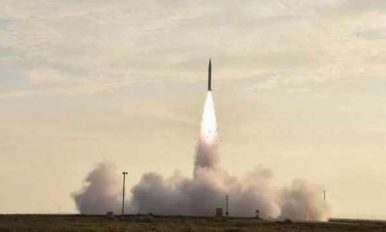
China Tests New 'Waverider' Hypersonic Vehicle
China Daily, a state-owned English-language tabloid, reported that it was the first Chinese test of a waverider hypersonic craft. The test saw the Starry Sky-2 flying for over 400 seconds and conducting extreme-angle maneuvers at sustained speeds above Mach 5.5. China has reportedly tested hypersonic weapons before, but those were boost-glide vehicles that are lofted to high altitudes by a rocket and then “glide” unpowered to their targets at hypersonic speeds – greater than Mach 5.Google's China Plans: Backtrack and Backlash
Google’s potential re-entry into the Chinese internet search engine business is garnering a great deal of attention, not much of it laudatory. Google drew praise for its ethical stand after exiling itself from that market in 2010, based on a hacking scandal and the company’s refusal to self-censor, as required by the Chinese government then and now. Now it faces criticism from media and the U.S. government alike over reports that Google is considering launching a censored search engine for use in China. High-profile commentators have taken up the battle cry, most notably in recent days Steve Hilton, host of the show, “The Next Revolution” on the Fox News Network. In the August 6 edition of the show, Hilton called out Google CEO Sundar Pichai, whom Hilton knows personally through his wife’s previous position at the company. Hilton, who was former British Prime Minister David Cameron’s director of strategy, criticized Google mostly on national security grounds: “Google pulled out of helping the U.S. Defense Department with Artificial Intelligence…but yet built an AI center in Beijing.” This at a time when “the Chinese have been saying they will use AI to gain military and economic dominance over America.”Chaotic New World: What the West Is Becoming
Russia Reels After U.S. Sanctions Spiral Escalates
Vivian Bercovici: Israel's mighty army is no match for Hamas's flaming condom bombs
Late afternoon last Wednesday, I climbed a sandy knoll at the edge of Sderot, a town of 25,000 in southern Israel, four kilometres from the border with the Gaza Strip. Accompanying me was Eddy, a local community worker, Sderot-born and bred. Ten years ago, Eddy moved with his wife and four young children away from Sderot to a kibbutz 3.5 kilometres further inland to escape the near constant barrage of rockets coming from the Gaza Strip. In Sderot, once the rocket alarms sound, people have 15 seconds, at most, to dash to the nearest shelter for safety. But the elderly, sick and very young are housebound — and terrorized. Every single public bus shelter in Sderot doubles as a fortified bunker, as do the 35 or so windowless kindergartens.Vietnam's New Cybersecurity Law Will Hurt Economic Growth
As U.S. Ambassador to Vietnam from 2011 to 2014, I would console myself when faced with a diplomatic setback that Vietnam has always achieved progress by taking two steps forward and one step back. However, the passage of a restrictive cybersecurity law by Vietnam’s National Assembly is a giant step back—one that comes at the expense of Vietnam’s small and medium-sized businesses (SMBs) in particular. In May 2017, the Vietnamese Government released an ambitious directive to guide the country through the Fourth Industrial Revolution (4IR). Directive 16, as it is officially known, instructed government agencies to improve Vietnam’s competitiveness by leveraging digital and communications technology. It warned against falling behind in the development of digital capabilities and exhorted government agencies to “enable people and enterprises to easily and fairly grasp the opportunities for digital content development.”Looking Back on the Russian-Georgian War, 10 Years Later
Indra Nooyi and the Vanishing Female C.E.O.
During an interview earlier this year, Indra Nooyi, the C.E.O. of PepsiCo, made some comments about men, women, and snacks. “You watch a lot of the young guys eat the chips,” she said, during an appearance on the “Freakonomics Radio” podcast. “They love their Doritos, and they lick their fingers with great glee, and when they reach the bottom of the bag they pour the little broken pieces into their mouth, because they don’t want to lose that taste of the flavor, and the broken chips in the bottom.” Women, Nooyi said, were different. “They don’t like to crunch too loudly in public,” she said. “And they don’t lick their fingers generously, and they don’t like to pour the little broken pieces and the flavor into their mouth.” She went on to say that PepsiCo, a hundred-and-sixty-billion-dollar company that owns dozens of well-known brands, including Mountain Dew, Gatorade, Ruffles, and Tropicana, was looking into developing a Doritos-like product specifically geared toward female consumers. Such a product would be less messy, easier to eat, and, most importantly, come in bags small enough to fit nicely in a handbag. “Because women love to carry a snack in their purse,” Nooyi said.‘It’s our time to serve the Motherland’ How Russia’s war in Georgia sparked Moscow’s modern-day recruitment of criminal hackers
On the night of August 8, 2008, Georgian troops started shelling Tskhinvali, the capital of South Ossetia, and then began their assault on the city. Within a few hours, Russia’s armed forces entered Georgia, leading to a five-day war that cemented South Ossetia’s secession. The conflict was fought not only on Georgian soil, but also in cyberspace, where Russian hacker groups hijacked the websites of Georgian news outlets and state agencies. This was the moment when Moscow first turned its attention to Russia’s so-called “patriotic bloggers,” and started relying systematically on their services, which were provided both voluntarily and compulsorily. Meduza special correspondent Daniil Turovsky looks at the history of Russia’s cyberwar with Georgia, and traces its links to the hacking of the Democratic Party in the United States and the arrest of several Russian Federal Security Service agents in 2016.In contemporary warfare, cyber trumps nukes
Nuclear proliferation appears to weigh heavily on U.S. President Donald Trump’s mind. Standing next to his Russian counterpart, Vladimir Putin, in Helsinki last month, Trump said ominously that it’s “probably the most important thing that we can be working on.” Since then, Trump has proposed dramatically to negotiate denuclearization with Iran — after threatening the country with “consequences the likes of which few throughout history have ever suffered before” — and even floated the idea of a second meeting with North Korean dictator Kim Jong Un with the goal of dismantling Pyongyang’s nuclear arsenal.Why small cyberattacks on power systems more likely than a long-running blackout
Attacks on American power systems are likely to be small and localized, according to a cybersecurity firm, casting doubt on the ability of a foreign power to take down broad swaths of U.S. electric systems at once. Given current technology it is not reasonable to expect an enemy to shut down large portions of the U.S grid., but hackers do have the ability to target an individual location, Joe Slowik, an adversary hunter at the cybersecurity firm Dragos, told Fifth Domain at the Black Hat conference. “I might not be able to turn off the eastern seaboard, but if I want to cause a power blip in Washington D.C., that is feasible,” Slowik said.German cyberwarriors assert right to ‘hack back’ when attacked
COLOGNE, Germany – German authorities believe they are on firm legal footing to retaliate against cyber attacks by unleashing digital or conventional counterattacks, according to a series of recent written responses by government officials to lawmakers. The documents shed light on some of the legal considerations of cyber-warfare mulled in Berlin, just as the Bundeswehr moves toward full operational capability of a new command devoted to cyber operations. Some of the assertions outlined in a missive last month are surprisingly hawkish for a country reflexively averse to the use of military force. While acknowledging certain gray areas in responding to potentially crippling cyber attacks, officials also made clear that defending the country would afford the security services broad leeway under international law.How 2,000-year-old roads predict modern-day prosperity
Book Breaking and Book Mending
Detect Nukes In Flight With Electron Beam Technology
SPACE & MISSILE DEFENSE SYMPOSIUM, HUNTSVILLE, ALA.: Imagine a technology that could detect roadside bombs and landmines buried underground, pick out a nuclear warhead from a cloud of decoys miles away, or even fry enemy electronics, potentially disarming those warheads from a distance. Well, physicist William Dent has invented that technology and briefed its potential to the Army and industry here. It’s called a neutron beam generator. Dent’s idea is a potential breakthrough for bomb squads and missile defenses, enthused conference organizer David Mann, a three-star Army general who ran Space & Missile Defense Command here (SMDC) until his retirement in 2016. Despite the Star Trek-esque name, Mann told me after Dent’s presentation, this is a feasible real-world technology, a matter of “when, not if.”How the Army is competing with Google for these ninjas
One of the Army’s most urgent, ongoing cyber fights is for talent, and it’s hauling out some new weapons, like bringing in new officers in ranks up to colonel to be cyber ninjas and offering big bonuses across the cyber force. Direct officer commissions at high ranks are now being considered in Congress for all the services to build up their cyber capabilities, Army officials say. That and hefty cash incentives are part of the Army’s strategy to bring in and keep people with high-demand cyber skills at a time when the civilian unemployment rate for them is essentially zero, the officials say. The Army is looking at more money for much of its cyber force, and working through authorization for direct officer commissioning for talented civilians at ranks through colonel, said Lt. Gen. Stephen Fogarty, the new commander of Army Cyber Command. He spoke Thursday at an Army Cyber + Networks event at the Association of the United States Army in Arlington, Virginia.The next step for the Army’s network? The cloud
The next step in the Army’s plan to build a next-generation tactical network is to focus on cloud computing in the tactical environment. After a major review of its network in 2017, the Army decided to halt programs that would not address operational requirements, fix existing programs that were critical to operational shortfalls and pivot to a new acquisition methodology that allows for the rapid insertion of new technology. Now, the Army is creating a common operating environment that enables soldiers from the command post to the vehicle to dismounted patrol to access the same information, a move leaders say will improve mission command.