The Profession of Arms: A Guide for Young Army Officers
It takes courage, especially for a young officer, to check a man met on the road for not saluting properly or for slovenly appearance, but, every time he does, it adds to his stock of moral courage, and whatever the soldier may say, he has respect for the officer who does pull him up.
Read Document →The Dragon's Teeth: Assessing China's Military Modernization
PLA has focused on modernising its capabilities across all warfare domains to achieve these goals. This includes land, air, and maritime operations, nuclear, space, counter-space, electronic warfare and cyberspace operations, aiming to become a fully integrated joint force.
Read Document →Transforming the PLA: A Decade of reorganisation from SSF to ISF
PRC has engaged in a sustained and broad effort to transform the PLA from an infantry-heavy, low-technology, ground forces-centric military into a high-technology, networked force with an increasing emphasis on joint operations and naval and air power projection.
Read Document →Eyes without Borders: Exploring the World of Open Source Intelligence (OSINT) in the Digital Age
Open Source Intelligence (OSINT) is gaining prominence with the rise of social media, the digital society and the vast growth of publicly and commercially available information (PAI and CAI).
Read Document →
The PLA’s Developing Cyber Warfare Capabilities and India's Options
Informationised warfare blurs the lines between peacetime and wartime. A nation in the information age cannot wait for the hostilities to break out to collect intelligence, carryout influence operations, develop antisatellite systems or design computer software weapons.
Read Document →
Galwan and After
Why did China did this when he is under tremendous pressure in all fronts, is this China's salami slice tactics being progressed rigorously, what will be new Rules of Engagement, what will be escalatory control mechanism, who has taken this decision, will there be some pressure put by China in India's North-East through insurgency.
Read Document →
India’s Joint Doctrine for Cyberspace Operations: A Critical Review
Chief of Defence Staff (CDS) General Anil Chauhan and Secretary, Department of Military Affairs, formally released declassified versions of the Joint Doctrines for Cyberspace Operations during the Chiefs of Staff Committee meeting in New Delhi.
Read Document →
Know your Enemy General(now Field Marshal) Syed Aseem Munir
Gen SA Munir's position in the hierarchy of Pakistan was not very comfortable. The state of economy, insurgency in Pakhtoonistan and Balochistan, attack on the Jaffar Express, constant protests by supporters of Imran Khan's supporters inside and outside of parliament.
Read Document →
Decoding Operation SINDOOR: Key Aspects and Implications
Precision strikes were carried out on nine sites—four in Pakistan and five in PoK—linked to anti-India terrorist groups such as the LeT, JeM and the Hizbul Mujahideen. The targeted sites included Muridke (LeT headquarters) and Bahawalpur (JeM headquarters).
Read Document →
Chinese Cyber Exploitation in India's Power Grid - Is There a linkage to Mumbai Power Outage?
The New York Times (NYT), based on analysis by a U.S. based private intelligence firm Recorded Future, reported that a Chinese entity penetrated India’s power grid at multiple load dispatch points. Chinese malware intruded into the control systems that manage electric supply across India, along with a high-voltage transmission substation and a coal-fired power plant
Read Document →15 August 2018
India's Missile Defenses Can Now Take On Decoys. That's a Really Big Deal.
China-India 'Cooperative Competition' In Iran Beijing needs Tehran for its Belt and Road Initiative, whereas New Delhi needs Tehran for its International North-South Transportation Corridor.
Making inroads into Iran has become a priority for both China and India, with both nations seeking to expand influence in their respective regions. Located at a critical juncture, Iran links Central Asia, the Caucasus and the Middle East. Furthermore, Iran’s abundant resources provide a significant amount of energy to China and India. These factors have always influenced Tehran’s relationships with Beijing and New Delhi, which have always fallen somewhere in between transactional and strategic. While the Sino-Indian relationship has been fraught with various challenges, the manner in which the two nations manage their differences in Iran—employing a mix of cooperation and competition—sheds light on their relative power and underlies the changing nature of their relations. Unlike traditional, binary inter-state strategic competition, the China-India rivalry in a sanctioned Iran likely will evolve into a long-term coexistence indicative of what may lie ahead for their strategic relationship in other, non-neighboring countries.AFGHAN TROOPS, TALIBAN BOTH CLAIM ADVANTAGE IN MAJOR FIGHTING
The Taliban Has Used Islam as a Weapon of War. This Is How Afghanistan Can Use It for Peace
Ambassador Tariq Ali Bakhiet is the Director General of Political Affairs for the Organization of Islamic Cooperation, the second-largest intergovernmental body in the world; he was previously a diplomat at the Sudanese Mission to the United Nations and at the Sudanese Ministry of Foreign Affairs. At last week’s NATO Summit, world leaders discussed the country in which the alliance has had its longest-running military operation: Afghanistan. In Brussels, the country was seen as a global security challenge; Britain announced it would double its troops there. But away from the cameras, 4,000 miles away, in Mecca, a town that unites Muslims across the world, something unprecedented was happening in Afghanistan’s four decades of near-constant war. One hundred religious scholars, or ulema, from across political parties, sects and ethnicities — from those hailing from the hinterlands often controlled by the Taliban to non-Pashtu minorities — met in a safe location to discuss one thing: peace.It’s Trump-Taliban Decision Time in Afghanistan: How To End America’s Longest War?
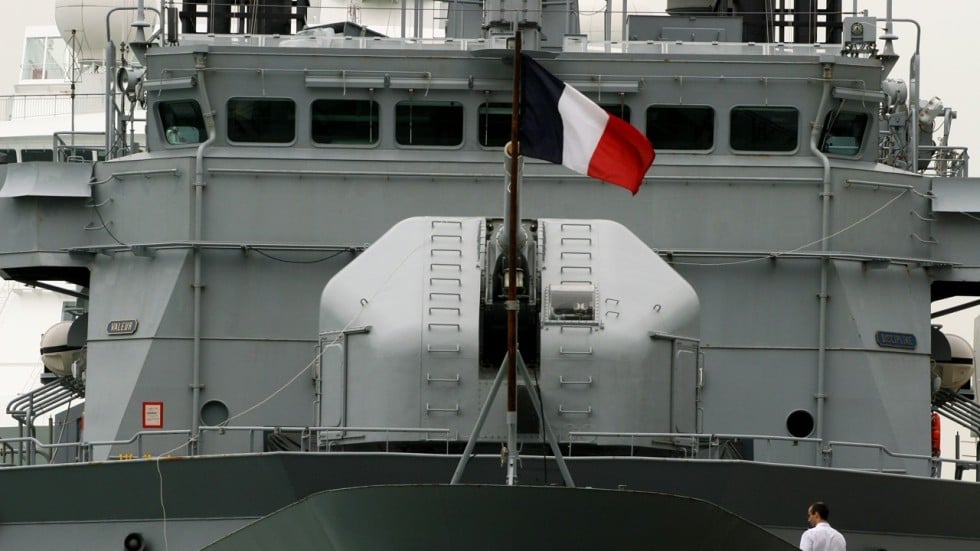
France's Navy: Political Messengers in the South China Sea
5 PLA Navy Projects to Watch in the Next 5 Years
Much has been reported on the Chinese navy’s recent milestones in surface warship procurement, from the recent dual launch of two 055 destroyers, to advancements in the carrier program and the winding down of 054A frigate production. Production of Y-8Q/KQ-200 ASW patrol aircraft, 052D destroyers, 056 corvettes, and 071 amphibious assault ships have also continued. These projects were verified through “evidence” in the form of undeniable photos or video, often taken in early stages of construction, launch, or maiden flights. Furthermore, a crescendo of speculation for new People’s Liberation Army (PLA) projects often precede their photographic confirmation, and as of mid-2018 there are a number of projects that are likely to definitively emerge and become “confirmed” within the next few years.How Xi Jinping is Shaping China’s Universities
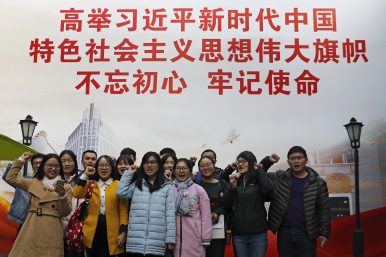
In this Nov. 19, 2017, photo, a group of university students raise their fists to take the oath in front of a giant propaganda billboard on display near the museum of the first National Congress of the Communist Party of China in Shanghai, China. The words on the billboard reads "Hold high Xi Jinping's new era and the great banner of socialism with Chinese characteristics, don't forget to remember the mission." Xi Jinping is one of the few Chinese leaders whose name appears alongside his own doctrine in China’s constitution. But supremacy in the legislative and political spheres is only the beginning of Xi’s influence. His government is poised to shape many areas of society. Giant billboards, once the domain of businesses vying for the attention of a spirited middle class, are now commonly found propagating Xi’s slogans. They are a ubiquitous symbol of the growing entrenchment of the state in Chinese daily life.Can China Fix Its Propaganda Problem?
As The Diplomat reported earlier, China has been reshuffling its propaganda and censorship chiefs recently. Multiple non-Chinese mainland media outlets, including the South China Morning Post, cited anonymous sources explaining that the top authority’s motive for the reshuffle is to “improve the country’s image abroad and ensure online views toe the Communist Party’s line.” Chen Daoyin, a political analyst in Shanghai, told the SCMP that China’s propaganda work, which “overhyped China’s rise,” is “a strategic mistake or failure.” “Someone has to be responsible [for this mistake], and changes needed to be made,” Chen added.What Are China’s Military Recruitment Priorities?
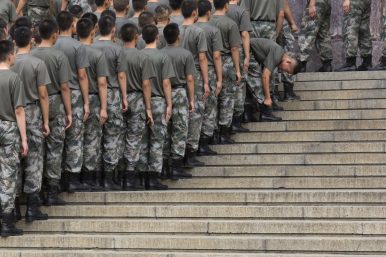
China’s military, the People’s Liberation Army (PLA), is aiming to improve the quality of its recruits in the 2018 conscription season (from August 1 to September 30). While conscription still technically exists under China’s Military Service Law, it has been rarely enforced by the authorities because China’s vast population produces more than enough volunteers for its military needs. On June 27, the annual National Conscription Work Video Conference was held. It set three priorities for this year’s conscription work. One priority is to increase recruits for the navy and the air force relative to the army. This is not surprising given that the PLA is currently in the process of rebalancing its force composition by downsizing its army and boosting its air, naval, and missile forces. To illustrate, since July last year, the PLA has cut around 300,000 troops, with the bulk coming from its ground forces.China: We Might Help Assad with the War in Syria
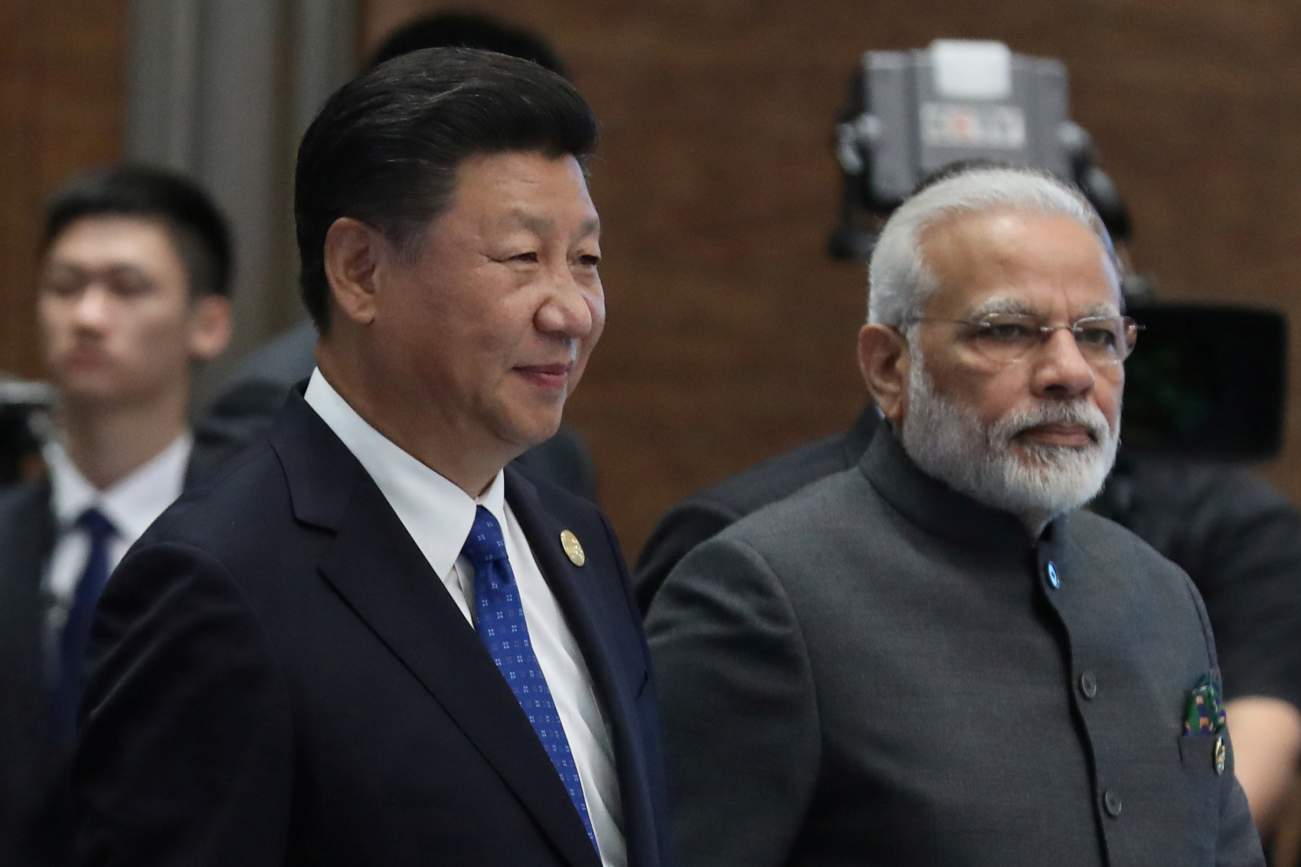
Xi Jinping's Path for China
Since assuming power, Chinese President Xi Jinping has taken many steps to reshape his country, de-emphasizing growth to build a more sustainable economy and engaging in more proactive diplomacy. He has also been rewriting political rules to establish himself as a strongman. But as China's economy slows while the United States escalates its trade attacks, policy debates inside the country are intensifying and testing core pillars of Xi's economic and foreign policies — as well as his own political strength. Despite the challenges, China cannot afford to dial back its progress in economic development and global involvement, especially considering its growing strategic competition with the United States.Why Uighur Muslims Across China Are Living in Fear
SYRIA’S WAR COULD BE ENTERING ITS LAST AND MOST DANGEROUS PHASE
THE FUTURE OF STABILITY OPERATIONS: CAN THE U.S. DO BETTER?
CFR BACKGROUNDER: NIGERIA’S BATTLE WITH BOKO HARAM
A ‘WEAKNESS OF THE WEST’? U.K. DEFENSE MINISTER WARNS OF LACK OF GRAND STRATEGY
Why countries still must prioritize action to curb nuclear terrorism
When a Superman-shaped drone crashed into a French nuclear plant on July 3 of this year, officials were lucky it was just Greenpeace demonstrating vulnerabilities at the facility, and not a terrorist group intent on attacking the site. This incident highlights why the 2010 Nuclear Posture Review’s assessment that nuclear terrorism is “today’s most immediate and extreme danger” remains relevant: It underscores the importance of the sustained and persistent six-year effort from 2010 to 2016 to reduce the threat posed by nuclear terrorism, far from the headline nuclear issues of Iran, North Korea, and arms control with Russia.The Long Shadow of 9/11
DHS’ Big Data Integration Challenge
Preparing for Free-Play Field Exercises: The Case for Decision-Forcing Cases
The pseudonymous ‘Steve B’ hits three nails squarely on their heads. In ‘A New Approach to Command Post Training,’ (Wavell Room, 10 July 2018) he provides us with a report on the current condition of battalion-level command post exercises in the British Army, a diagnosis of the malady that plagues such undertakings, and a promising prescription for a cure for that particular ailment. To be more specific, ‘Steve B’ describes ‘overly scripted’ events ‘with limited scope for free play or imagination from either side, argues that these fail ‘adequately simulate the mental and physical strain of combat’, and proposes that they be replaced with a smaller number of exercises in which complete brigades engage each other in full-scale, free-play field exercises.JAIC: Pentagon debuts artificial intelligence hub
In October 2016, the newly formed Defense Innovation Board released its first set of recommendations. (The board, an advisory body to senior leadership in the US Defense Department, contains representatives from the private sector, academia, and nonprofits.) One recommendation that stood out was the establishment of “a centralized, focused, well-resourced organization” within the Defense Department “to propel applied research in artificial intelligence (AI) and machine learning.”The Web is still a DARPA weapon.
An Open Secret: British Open Source Intelligence during the Second World War
Ben Wheatley is a Honorary Research Fellow in the School of History, University of East Anglia and a former Teaching Fellow at the Defence Studies Department, King’s College London. His 2017 book, British Intelligence and Hitler’s Empire in the Soviet Union, 1941-1945 published by Bloomsbury Academic will be available in paperback from August 2018. You can follow him on Twitter at @DrBenWheatley. Today we live in a networked world. Our reliance on the internet and social media has made open source intelligence (OSINT) a key resource for intelligence and security agencies across the world. However, the importance of OSINT is far from a modern development. The British government, for example, has placed the serious study of OSINT at the centre of its intelligence arsenal for the last 100 years (2018 being the centenary), but until now, to little fanfare.New Navy Boards Will Send Underperforming Officers to Early Retiremen
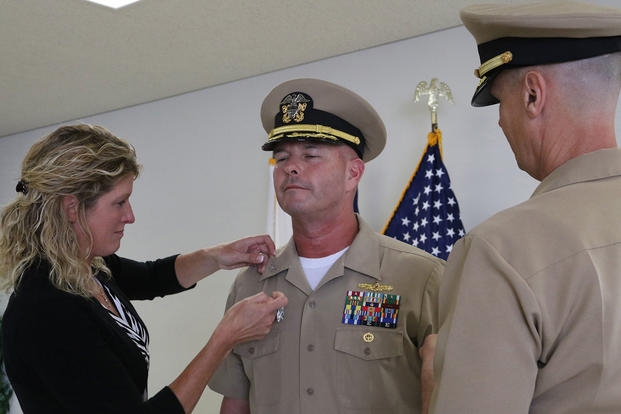
The Navy as a whole is poised to grow in coming years -- but top brass say there's still no room for senior officers who don't carry their weight. In a new move aimed at rooting out officers who are underperforming or causing problems at their units, the Navy on Thursday announced the creation of a new Selective Early Retirement Board, set to convene this fall. The move was made possible by a provision in the Fiscal 2018 National Defense Authorization Act that gives military service secretaries the ability to look within subsets of paygrades to find officers who aren't making the cut, Chief of Naval Personnel Vice Adm. Robert Burke told reporters this week.