The Profession of Arms: A Guide for Young Army Officers
It takes courage, especially for a young officer, to check a man met on the road for not saluting properly or for slovenly appearance, but, every time he does, it adds to his stock of moral courage, and whatever the soldier may say, he has respect for the officer who does pull him up.
Read Document →The Dragon's Teeth: Assessing China's Military Modernization
PLA has focused on modernising its capabilities across all warfare domains to achieve these goals. This includes land, air, and maritime operations, nuclear, space, counter-space, electronic warfare and cyberspace operations, aiming to become a fully integrated joint force.
Read Document →Transforming the PLA: A Decade of reorganisation from SSF to ISF
PRC has engaged in a sustained and broad effort to transform the PLA from an infantry-heavy, low-technology, ground forces-centric military into a high-technology, networked force with an increasing emphasis on joint operations and naval and air power projection.
Read Document →Eyes without Borders: Exploring the World of Open Source Intelligence (OSINT) in the Digital Age
Open Source Intelligence (OSINT) is gaining prominence with the rise of social media, the digital society and the vast growth of publicly and commercially available information (PAI and CAI).
Read Document →
The PLA’s Developing Cyber Warfare Capabilities and India's Options
Informationised warfare blurs the lines between peacetime and wartime. A nation in the information age cannot wait for the hostilities to break out to collect intelligence, carryout influence operations, develop antisatellite systems or design computer software weapons.
Read Document →
Galwan and After
Why did China did this when he is under tremendous pressure in all fronts, is this China's salami slice tactics being progressed rigorously, what will be new Rules of Engagement, what will be escalatory control mechanism, who has taken this decision, will there be some pressure put by China in India's North-East through insurgency.
Read Document →
India’s Joint Doctrine for Cyberspace Operations: A Critical Review
Chief of Defence Staff (CDS) General Anil Chauhan and Secretary, Department of Military Affairs, formally released declassified versions of the Joint Doctrines for Cyberspace Operations during the Chiefs of Staff Committee meeting in New Delhi.
Read Document →
Know your Enemy General(now Field Marshal) Syed Aseem Munir
Gen SA Munir's position in the hierarchy of Pakistan was not very comfortable. The state of economy, insurgency in Pakhtoonistan and Balochistan, attack on the Jaffar Express, constant protests by supporters of Imran Khan's supporters inside and outside of parliament.
Read Document →
Decoding Operation SINDOOR: Key Aspects and Implications
Precision strikes were carried out on nine sites—four in Pakistan and five in PoK—linked to anti-India terrorist groups such as the LeT, JeM and the Hizbul Mujahideen. The targeted sites included Muridke (LeT headquarters) and Bahawalpur (JeM headquarters).
Read Document →
Chinese Cyber Exploitation in India's Power Grid - Is There a linkage to Mumbai Power Outage?
The New York Times (NYT), based on analysis by a U.S. based private intelligence firm Recorded Future, reported that a Chinese entity penetrated India’s power grid at multiple load dispatch points. Chinese malware intruded into the control systems that manage electric supply across India, along with a high-voltage transmission substation and a coal-fired power plant
Read Document →30 August 2018
Japan-India Special Strategic Partnership Needs Added Special Robustness
India and the geoeconomics of climate change: Global responsibility as strategic interest
Is a first version of a text that will be developed into a larger publication of an academic or policy-relevant character. The series includes publications aimed at larger audiences as well as expert audiences. As climate change progresses, it will have impacts on global politics, creating both new vulnerabilities and opportunities. Geoeconomics provides a useful analytical framework for the political implications of climate change as it shifts the focus from military force to economic means of exerting power. This working paper looks at the geoeconomics of climate change in the case of India. It examines the ways in which India has used climate policies to gain leverage and contain threats regionally and globally. Due to its emerging power status and high vulnerability to climate impacts, India holds a key position in the global fight against climate change. India-Pakistan: Unclaimed Victories
Trump battles a sense of inertia in Afghanistan
As Russia plans Afghan peace talks, Kabul questions Taliban's motives
Kabul: Just over a week ago, Afghan and US officials hoped that after 17 years of war, the Taliban was starting down a road to peace. Despite a deadly four-day attack on the city of Ghazni, President Ashraf Ghani had offered the insurgents a second cease-fire since June, and Taliban leaders had hinted that they wanted to continue private talks held with US officials in July. Now, that optimism has all but collapsed. With the Taliban ignoring Ghani's truce offer and accepting an invitation for talks in Moscow instead, analysts said the momentum for direct negotiations has been derailed by international politics. And the intentions of insurgent leaders - who spout constant propaganda but remain invisible to the public - seem more inscrutable than ever.Back in Power, Malaysia's Prime Minister Moves Away From China
When Freedom of Expression Isn't Free: Journalism, Facebook, and Censorship in Bhutan
On August 6, a Bhutanese journalist was sentenced to three months in prison for libel. The journalist had written a post on her personal Facebook account about a woman mistreating her 6-year-old stepdaughter. The post went viral, the police and other related agencies became involved. There were testimonies made in defense of the journalist by several parties, but the court found them to be “inadmissible.” The court verdict, besides meting out this punishment, asked the journalist to post an “apology statement” addressed to the “victim” – not the child, but the stepmother – on Facebook and to keep it for a month.China—Not Russia—Elected Trump
While media and political attention are focused on Russian “meddling” in the 2016 election, attention should be sharply focused instead on the role of China in electing Trump. It is that concern that should inform American action today. China’s long-standing predatory trading policies have eaten America’s lunch, impacting most severely those who carry lunch buckets to work in America’s heartland. These predatory policies have included most prominently currency manipulation, unfair trading practices and, most damaging of all, intellectual property theft. The combination of these policies have hit the American manufacturing worker the hardest. Unemployment, decades of declining incomes and loss of dignity are the prices many of these workers have paid.Chinese Communist Party Funds Washington Think Tanks
China's Communist Party is intensifying covert influence operations in the United States that include funding Washington think tanks and coercing Chinese Americans, according to a congressional commission report. The influence operations are conducted by the United Front Work Department, a Central Committee organ that employs tens of thousands of operatives who seek to use both overt and covert operations to promote Communist Party policies. The Party's United Front strategy includes paying several Washington think tanks with the goal influencing their actions and adopting positions that support Beijing's policies.China ‘developing electromagnetic rocket with greater fire range’
Japan, Taiwan must re-evaluate how they’re intercepting Chinese threats
On a recent trip to East Asia, the subject of steadily increasing Chinese maritime and air activityin the waters and airspace of Japan and Taiwan came up often. China’s navy and air force are growing in number and sophistication of platforms, and China has been sending ships and aircraft in increasing numbers through international waters around both Taiwan and Japan, through their Exclusive Economic Zones, Air Defense Identification Zones, contiguous zones, and even territorial waters and airspace. Both Japan and Taiwan interpret this Chinese activity as a threat, intercept every Chinese airplane or ship as it approaches these zones, and escort them throughout their flight or voyage. Both Taiwan and Japan publish the number and location of these Chinese activities as they occur and in statistical accounts every year.The Problem With China's Powerful Air Force
China’s Expansion Demands Bold Actions
China steps up courting of Africa ahead of summit
BEIJING -- China is expanding its influence campaign in Africa as it prepares to host a summit with leaders from the continent, ready to offer economic assistance as part of its Belt and Road infrastructure initiative. The Forum on China-Africa Cooperation is scheduled for Sept. 3 and Sept. 4 in Beijing, with leaders from more than 50 African countries expected to attend. The summit is aimed at bringing China and Africa closer and building a shared destiny, Chinese Foreign Minister Wang Yi said at a press briefing on Aug. 22. The forum will serve to create a new chapter connecting the Belt and Road initiative with Africa's development, Wang added, revealing plans to announce economic assistance.How China Got Sri Lanka to Cough Up a Port
HAMBANTOTA, Sri Lanka — Every time Sri Lanka’s president, Mahinda Rajapaksa, turned to his Chinese allies for loans and assistance with an ambitious port project, the answer was yes. Yes, though feasibility studies said the port wouldn’t work. Yes, though other frequent lenders like India had refused. Yes, though Sri Lanka’s debt was ballooning rapidly under Mr. Rajapaksa. Over years of construction and renegotiation with China Harbor Engineering Company, one of Beijing’s largest state-owned enterprises, the Hambantota Port Development Project distinguished itself mostly by failing, as predicted. With tens of thousands of ships passing by along one of the world’s busiest shipping lanes, the port drew only 34 ships in 2012.Burden-Sharing within NATO: Facts from Germany for the Current Debate
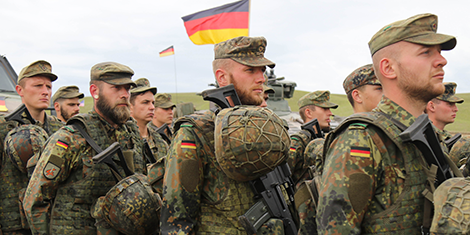
Professor Rachel Epstein’s interview with Professor Donald Abenheim of the Naval Postgraduate School and Lieutenant Colonel (General Staff) Marc-Andrรฉ Walther of the German Armed Forces Command and Staff College in Hamburg. 1. The President of the United States had some tough words for America’s NATO’s allies at the recent summit in Brussels. Is this sort of brinkmanship normal in the history of the Alliance? Burden sharing is often described by experts as the problem older than the alliance itself. The tasks of mutual aid and self-help for collective defense in Article III of the Washington Treaty lie entangled in the domestic politics among allies. In the present case, the 2% of GDP spending goal pivots on US and German internal policymaking. The last time alliance cohesion manifested itself with this vitriol was in the 2011 NATO air campaign in Libya, to say nothing of the Rumsfeld/Wolfowitz “New Europe/Old Europe” episode in 2002-2003 prelude to the Iraq War, where a divergence of policy and strategy tore open the wound in allied ministries and editorial pages left over from the 1999 NATO Kosovo campaign.How Will ‘Defense Reform 2.0’ Change South Korea’s Defense?
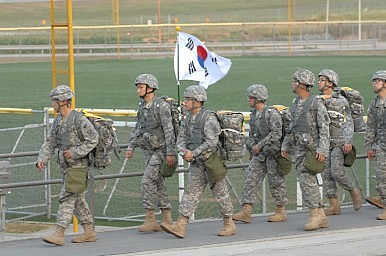
On July 27, South Korea’s Defense Minister Song Young-moo briefed President Moon Jae-in on “Defense Reform 2.0,” an expansive initiative to restructure and modernize Korea’s defense. The Ministry of National Defense (MND) has released seven proposals on specific agendas, most recently announcing plans to renovate military housing and facilities on August 16. The government is highly invested in military reform, but the array of modernization plans and restructuring raises questions about its financial feasibility and efficacy in improving Korea’s defense posture.Russia’s Favorite Mercenaries
In Russia, journalism is far from the safest profession—even more so when the subject of investigation happens to be a private mercenary army engaged in multiple active conflicts abroad. On July 30, three Russian journalists were killedin the Central African Republic (CAR) while investigating a particularly dangerous topic: the Russian private military company Wagner, a mercenary outfit highly active in the Syrian and Ukrainian conflicts. At least two other Russian journalists have also suffered while researching Wagner, including Maxim Borodin, who suddenly fell to his death from a balcony in Yekaterinburg in April, and Denis Korotkov, a Saint Petersburg journalist forced into hiding after receiving death threats owing to his work on Wagner. There are now indications that Wagner forces may be present with both rebels and government forces in CAR. A unit of the group, filmed by the recently deceased journalists, was operating in rebel-held territory—contrary to Moscow’s assertions that Russian forces were present only to assist CAR authorities.How Turkey Dumbed Itself Down
For most of the 2000s, Turkey was one of the world’s fastest-growing economies. The country’s ambitions soared even higher than its achievements: Ankara openly aspired to be the world’s 10th-largest market with a $2 trillion economy, exports reaching $500 billion, and a per capita income of $25,000. Every buzzword that global financial elites invented for their favorite combination of high-potential emerging markets—such as Goldman Sachs’s MINT and the Economist Intelligence Unit’s CIVETS—had a T for Turkey.How the U.S. Has ‘Learned a Lot’ About Russian Capabilities in Syria
Russian Ground-Launched Non-strategic Nuclear Weapons
Iran and Syria sign deal for military cooperation
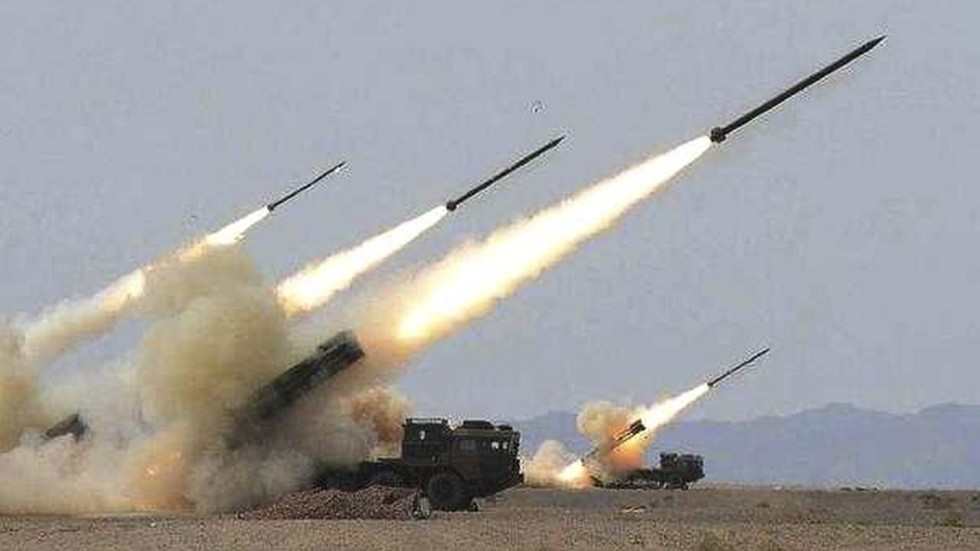
Israel Buys Rockets 'That Can Reach Anywhere in the Middle East'
The Defense Ministry signed a deal with Israel Military Industries for the purchase of the rockets, estimated to cost hundreds of millions of shekels. The new rockets have innovative technology that allow them high accuracy, the defense ministry said. This purchase is the first since Lieberman instructed the Israel Defense Forces in February to establish a new force of ground-to-ground missiles with a range of up to 300 kilometers.Information Warfare: A Lie Too Far In Iran
A Big Choice for Big Tech Share Data or Suffer the Consequences
Artificial Intelligence Is Now a Pentagon Priority. Will Silicon Valley Help?
MOUNTAIN VIEW, Calif. — In a May memo to President Trump, Defense Secretary Jim Mattis implored him to create a national strategy for artificial intelligence. Mr. Mattis argued that the United States was not keeping pace with the ambitious plans of China and other countries. With a final flourish, he quoted a recent magazine article by Henry A. Kissinger, the former secretary of state, and called for a presidential commission capable of “inspiring a whole of country effort that will ensure the U.S. is a leader not just in matters of defense but in the broader ‘transformation of the human condition.’” Mr. Mattis included a copy of Mr. Kissinger’s article with his four-paragraph note.The Future of Warfare is Irregular
BEYOND HUMAN: RISE OF THE SUPER-SOLDIERS – A PRIMER
Why States are Turning to Proxy War
The International Army Games Are Decadent and Depraved
Belarus' crew on a T-72B3 battle tank competes in a final relay race of the tank biathlon competition at the International Army Games in Alabino, Moscow region, on Aug. 11. The familiar roar of the crowd on the bleachers as the home team surges to take the lead. The excited, inciting yammer of the commentator. The big screens showing details and stats. Just another sporting event. Only this time, the team comprises three Russian soldiers crewing a T-72B3 in the finals of the tank biathlon against rivals from China, Kazakhstan, and Belarus. Russia’s successful blending of sport, warfare, soft power, and spectacle is a high-octane form of public entertainment. But it’s also much more than that. It opens an important window into how the Kremlin sees its military force as its Swiss army knife, a tool for all occasions.