The Profession of Arms: A Guide for Young Army Officers
It takes courage, especially for a young officer, to check a man met on the road for not saluting properly or for slovenly appearance, but, every time he does, it adds to his stock of moral courage, and whatever the soldier may say, he has respect for the officer who does pull him up.
Read Document →The Dragon's Teeth: Assessing China's Military Modernization
PLA has focused on modernising its capabilities across all warfare domains to achieve these goals. This includes land, air, and maritime operations, nuclear, space, counter-space, electronic warfare and cyberspace operations, aiming to become a fully integrated joint force.
Read Document →Transforming the PLA: A Decade of reorganisation from SSF to ISF
PRC has engaged in a sustained and broad effort to transform the PLA from an infantry-heavy, low-technology, ground forces-centric military into a high-technology, networked force with an increasing emphasis on joint operations and naval and air power projection.
Read Document →Eyes without Borders: Exploring the World of Open Source Intelligence (OSINT) in the Digital Age
Open Source Intelligence (OSINT) is gaining prominence with the rise of social media, the digital society and the vast growth of publicly and commercially available information (PAI and CAI).
Read Document →
The PLA’s Developing Cyber Warfare Capabilities and India's Options
Informationised warfare blurs the lines between peacetime and wartime. A nation in the information age cannot wait for the hostilities to break out to collect intelligence, carryout influence operations, develop antisatellite systems or design computer software weapons.
Read Document →
Galwan and After
Why did China did this when he is under tremendous pressure in all fronts, is this China's salami slice tactics being progressed rigorously, what will be new Rules of Engagement, what will be escalatory control mechanism, who has taken this decision, will there be some pressure put by China in India's North-East through insurgency.
Read Document →
India’s Joint Doctrine for Cyberspace Operations: A Critical Review
Chief of Defence Staff (CDS) General Anil Chauhan and Secretary, Department of Military Affairs, formally released declassified versions of the Joint Doctrines for Cyberspace Operations during the Chiefs of Staff Committee meeting in New Delhi.
Read Document →
Know your Enemy General(now Field Marshal) Syed Aseem Munir
Gen SA Munir's position in the hierarchy of Pakistan was not very comfortable. The state of economy, insurgency in Pakhtoonistan and Balochistan, attack on the Jaffar Express, constant protests by supporters of Imran Khan's supporters inside and outside of parliament.
Read Document →
Decoding Operation SINDOOR: Key Aspects and Implications
Precision strikes were carried out on nine sites—four in Pakistan and five in PoK—linked to anti-India terrorist groups such as the LeT, JeM and the Hizbul Mujahideen. The targeted sites included Muridke (LeT headquarters) and Bahawalpur (JeM headquarters).
Read Document →
Chinese Cyber Exploitation in India's Power Grid - Is There a linkage to Mumbai Power Outage?
The New York Times (NYT), based on analysis by a U.S. based private intelligence firm Recorded Future, reported that a Chinese entity penetrated India’s power grid at multiple load dispatch points. Chinese malware intruded into the control systems that manage electric supply across India, along with a high-voltage transmission substation and a coal-fired power plant
Read Document →16 October 2018
How India can crack open the Chinese fortune cookie
Not China, 1962 war called India’s bluff
India must not forget the catastrophic defeat of 1962 war with China, when our Army was routed in just 10 days of actual battle in two phases of five days each in October and November. The whole of North East Frontier Agency (NEFA) and 50 per cent of Ladakh were shamefully abandoned. To add insult to the injury, after achieving its political and military aims, China unilaterally declared a ceasefire and withdrew. Pakistan Seeks I.M.F. Bailout as Government Sends Mixed Messages
NEW DELHI — After Pakistan’s government signaled that it would seek a bailout from the International Monetary Fund, Prime Minister Imran Khan this week did the exact opposite of the austerity measures the global body is demanding: He inaugurated a public-housing project to deliver five million homes. That tension — between Mr. Khan’s campaign promises to build the social welfare state and the prescriptions to help set Pakistan’s devastated economy right — is leaving investors at home and internationally guessing about the policies he truly intends to pursue. But investors typically detest such uncertainty and responded this week by offloading the Pakistani rupee, which hit a historic low, while hammering the stock market with a sell-off, wiping $2 billion off the index’s value.Pakistan's Failing Economy Arises from Oversized Pak Army's Budget
Paddling Upstream: Transboundary Water Politics in South Asia
Power Play: Addressing China`s Belt and Road Strategy
If the U.S. Doesn’t Control Corporate Power, China Will
Last week, Bloomberg broke the news of a hack by the Chinese military of critical hardware assembled by an American company in China, affecting Apple, Amazon, and the U.S. Defense Department. While there is controversy over the story, no one doubts two key facts. Chinese hacking of Western corporations and governments is systemic, and China has a virtual monopoly over the manufacture of high-technology products, which it uses to its own advantage. The same day as Bloomberg published the expose, U.S. Vice President Mike Pence gave a speech discussing China. Espionage, he said, was just one of a range of tricks China uses. Others include tariffs, forced technology transfers, arm-twisting of corporate leaders to lobby the U.S. government, and censorship of Hollywood through enticing Western media companies with promises of reaching Chinese audiences.U.S. - China Trade Tariffs Are Reaching Their Limit
How President Trump is helping Beijing win in the South China Sea
For years now, China has been at war against the United States in the South China Sea — only Washington didn’t notice until the process was well underway. The Chinese way of war, modeled after the philosopher of middle antiquity, Sun Tzu, is to win without ever having to fight. Thus, the Chinese have been proceeding by microsteps: reclaim an island here, build a runway there, install a missile battery in a third place, deploy an oil exploration rig temporarily in disputed waters, establish a governorate, and so on. Each step is designed to create a small fact, but without eliciting a military response from the other side, since the Chinese know they may be a generation away from matching the U.S. Navy and Air Force in fighting capability.Chinese authorities launch 'anti-halal' crackdown in Xinjiang
How a Saudi Journalist's Disappearance Could Have a Global Impact
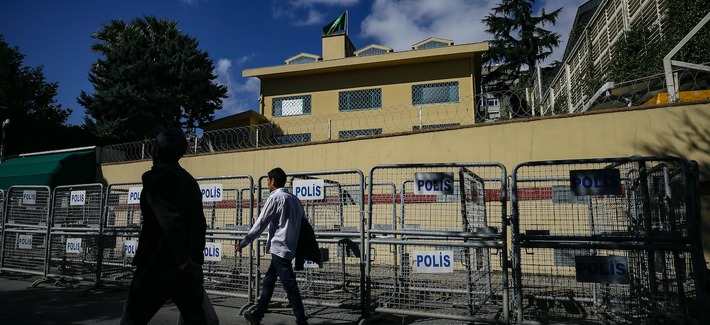
The mere suggestion that Jamal Khashoggi was murdered will have a chilling effect on all Saudi citizens who criticize Riyadh's policies. Saudi Arabia might calculate that any move against dissidents is unlikely to produce too many international consequences, but it could jeopardize much-needed foreign investment. If Riyadh and Ankara's stories continue to clash, however, relations could sour with Turkey, a key regional influence in the Sunni world. Jamal Khashoggi only needed to take care of some routine paperwork. On Oct. 3, the respected Saudi journalist and government critic arrived at his country's consulate in Istanbul to finalize divorce proceedings as his fiancee waited outside. Khashoggi, however, failed to reappear. And three days later, Turkish authorities announced that they had reason to believe a 15-person Saudi security team had tortured, murdered and dismembered the Washington Post journalist. The bombshell has given the unsettling disappearance a drastic, new level of seriousness that is sure to have repercussions across the region.Stop Military Aid to Saudi Arabia
By now you’ve seen the headlines: An American resident, a Saudi Arabian journalist who wrote for The Washington Post, has gone missing abroad and is presumed dead. Jamal Khashoggi was last seen walking into the Saudi consulate in Istanbul, and Turkish security officials believe he was killed “on the orders of the Saudi royal court,” according to The New York Times. He was a vocal critic of the lack of free speech in Saudi Arabia, which makes his sudden disappearance all the more suspicious given the Saudis’ aversion to public dissent.Lessons From An Islamist Neighbourhood Of London In The 1990s: Why ‘Urban Naxals’ Are The Wrong Kind Of ‘Safety Valves
Anyone who lived in north London in the late 1990s, and wasn’t biased to Islamism, would tell you that the propaganda that went unchecked there should have been nipped in the bud. Justice Chandrachud’s reference to dissent as a form of safety valve in democracies is undoubtedly well meant and pertinent. But as any engineer would tell you, safety valves need to be well designed. Otherwise they can lead to all kinds of lethal accidents. To allow dissent without discernment is dangerous to the very fabric of civilian engagement and compromise that modern democracies embody. I am speaking from personal lived experience from late 1990s United Kingdom. Living as a student in London in 1999-2000, I found cheap lodgings with a Bangladeshi immigrant family in Bounds Green area of north London. This stretch of the city from around Finsbury Park northwards had a large immigrant population, South Asian, Turkish, and West African, which was predominantly Muslim. These were pre 9/11 days, and mosques, ‘social clubs’, and shops brazenly displayed poster exhorting the faithful to jihad, and the destruction of the infidel in Kashmir and Chechnya.How a Saudi Journalist's Disappearance Could Have a Global Impact
The mere suggestion that Jamal Khashoggi was murdered will have a chilling effect on all Saudi citizens who criticize Riyadh's policies. Saudi Arabia might calculate that any move against dissidents is unlikely to produce too many international consequences, but it could jeopardize much-needed foreign investment. If Riyadh and Ankara's stories continue to clash, however, relations could sour with Turkey, a key regional influence in the Sunni world.In the future of work it's jobs, not people, that will become redundant
I am likely stating the obvious but it needs to be stated as often as possible – the world is changing and it is changing fast. The Fourth Industrial Revolution is blurring the lines between the real and the technological world and challenging what it means to be human. Yet people are clearly at the heart of all organizational transformations generated by this phenomenon. We see this, both in the transformation we are driving within Unilever but also when we look outside, across and beyond our industry. All of this is affects how people will experience work, whether it’s new operating models that challenge hierarchy, new career models that allow for different experiences, a borderless workplace that allows for flexible resourcing, hyper-personalization in the workplace or the need to close a growing skills gap through a culture of lifelong learning.What worries me about the U.S. economy
The U.S. economy certainly appears as if it is in an ideal place: unemployment is at its lowest in nearly half a century, and the number of people voluntarily leaving jobs to find new ones, an indicator of their confidence in the economy, is at a 20-year high. Economic growth this year is likely to be around 3 percent, more than what most economists think the economy is capable of in the medium term. Inflation is moderate. But as the current stock market nosedive reminds us, there are risks that could jolt the economy out of its strong position. They have to do with three related factors: timing, debt and slowing growth in the rest of the world.Berlin’s untenable foreign-policy strategic vacuum
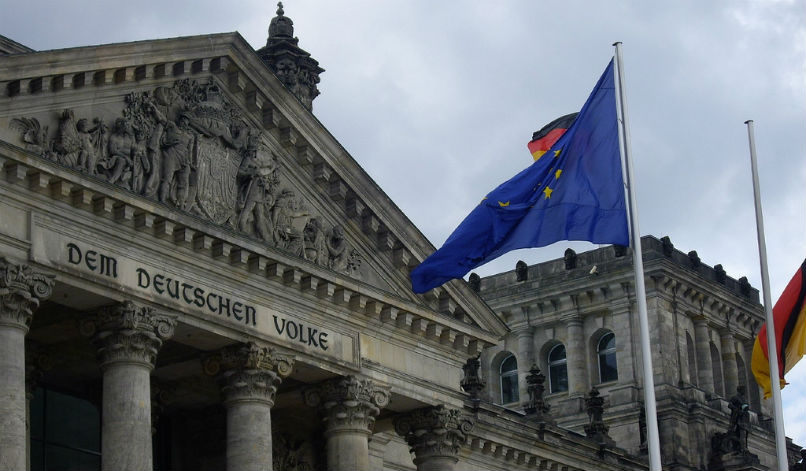
Berlin can no longer afford to float ideas that have no practical consequences, and keep muddling through There is a striking contrast between the magnitude of change in Germany’s foreign policy environment and the triviality of the country’s strategic debate. This change has three dimensions that fundamentally challenge the current position and practice of German foreign policy. Firstly, the European Union, though a principal framework of German policy, is more politically fragmented than ever, and lacks a stable centre. The bloc appears ever less able to act as the lever of German strength that Frank-Walter Steinmeier, during his tenure as foreign minister, believed it could be. The permissive consensus on Europe is long gone, and “sovereigntism” is shaping the discourse on the EU in many countries, including Germany.Ironically, the GRU Gets Bitten by the Internet
Seven Russian intelligence officers have been indicted in the U.S. in connection with hacking operations against a variety of targets in several countries. These officers have also received a great deal of embarrassing attention from activists on the internet and social media. This case illustrates how technologies such as social media, often used as a weapon by intelligence agencies, can also be turned against them.The AI Column: Time For A Moral Reckoning Down In Silicon Valley
The recent revelation that China’s security services had successfully compromised the servers of thousands of leading tech’ firms cloud computing platforms has sent shockwaves through the tech world. The hardware hack may have compromised some of the most sensitive computer systems used by the military and intelligence services. While the scope and sophistication of the operations were alarming, it was no surprise to some in national security circles.Defensive Protection Systems Leading Army Modernization
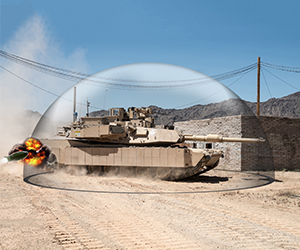
The modern battlefield has become a complex theater of threats, from powerful anti-armor and anti-aircraft missiles to the dawn of small but lethal unmanned aircraft. The Army and Marine Corps know these threats are not just in the hands of organized armies, but have proliferated and will be a part of any potential future conflict the U.S. military faces. To counter these threats, a major modernization effort to incorporate defensive protection systems for troops, aircraft and ground vehicles is underway. The need for troops to have access to most state-of-the-art EO/IR technologies mounted on vehicles, helmets or handheld is essential to keep the edge over increasingly advanced adversaries around the world. Technologies like the Leonardo DRS handheld Joint Effects Targeting System is a smaller next-generation EO/IR technology giving forward observers the ability to protect their fellow soldiers with extremely accurate calls for fire.The AI Column: Time For A Moral Reckoning Down In Silicon Valley
The recent revelation that China’s security services had successfully compromised the servers of thousands of leading tech’ firms cloud computing platforms has sent shockwaves through the tech world. The hardware hack may have compromised some of the most sensitive computer systems used by the military and intelligence services. While the scope and sophistication of the operations were alarming, it was no surprise to some in national security circles.The Military’s Cyber Defenses Are in Appallingly Bad Shape
Defense Buildup: Where Are the Forces?
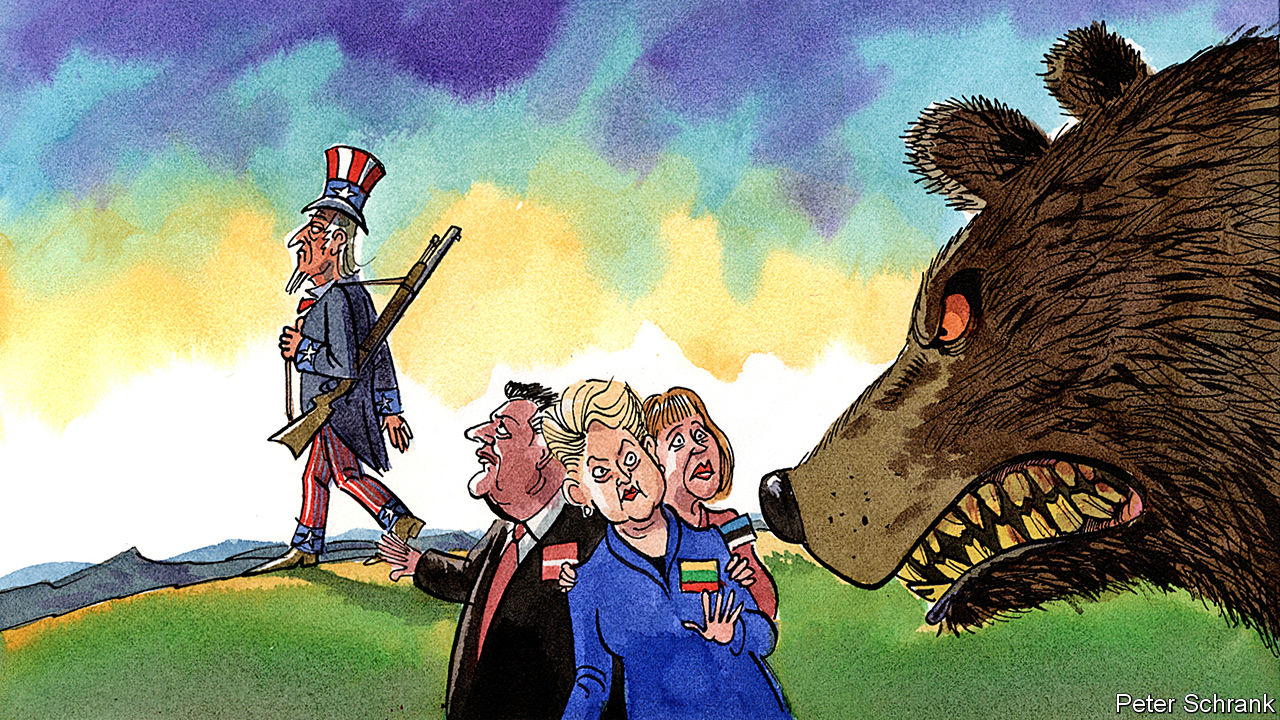
The Baltics fear European “strategic autonomy”
PERHAPS nowhere in Europe was John McCain mourned more deeply than in Estonia, Latvia and Lithuania. He had been one of a small group of American senators who in the 1990s called for NATO to encompass the Baltic states after four decades of Soviet rule. “He was always ready to listen to us and relate our problems and challenges to the US administration, Republican or Democrat,” says Juri Luik, Estonia’s defence minister. “He understood the role of NATO enlargement as part of the reunification of Europe; not everyone in Washington shared that.” Mr Luik has called for NATO’s new headquarters in Brussels to bear his name. Intentionally or not, such tributes also read like rebukes to President Donald Trump, whose commitment to transatlantic security remains as hazy as McCain’s was crystal-clear.Army Building 1,000-Mile Supergun