Social media is busy analysing S. Gurumurthy’s speech at the Vivekananda International Foundation on 15 November. He is a government nominee on the board of directors of the Reserve Bank of India (RBI). The board is meeting on 19 November, hence, the extraordinary interest in and reactions to his speech. It was an impressive speech and one that is thoughtful and thought-provoking, as always.The Profession of Arms: A Guide for Young Army Officers
It takes courage, especially for a young officer, to check a man met on the road for not saluting properly or for slovenly appearance, but, every time he does, it adds to his stock of moral courage, and whatever the soldier may say, he has respect for the officer who does pull him up.
Read Document →The Dragon's Teeth: Assessing China's Military Modernization
PLA has focused on modernising its capabilities across all warfare domains to achieve these goals. This includes land, air, and maritime operations, nuclear, space, counter-space, electronic warfare and cyberspace operations, aiming to become a fully integrated joint force.
Read Document →Transforming the PLA: A Decade of reorganisation from SSF to ISF
PRC has engaged in a sustained and broad effort to transform the PLA from an infantry-heavy, low-technology, ground forces-centric military into a high-technology, networked force with an increasing emphasis on joint operations and naval and air power projection.
Read Document →Eyes without Borders: Exploring the World of Open Source Intelligence (OSINT) in the Digital Age
Open Source Intelligence (OSINT) is gaining prominence with the rise of social media, the digital society and the vast growth of publicly and commercially available information (PAI and CAI).
Read Document →
The PLA’s Developing Cyber Warfare Capabilities and India's Options
Informationised warfare blurs the lines between peacetime and wartime. A nation in the information age cannot wait for the hostilities to break out to collect intelligence, carryout influence operations, develop antisatellite systems or design computer software weapons.
Read Document →
Galwan and After
Why did China did this when he is under tremendous pressure in all fronts, is this China's salami slice tactics being progressed rigorously, what will be new Rules of Engagement, what will be escalatory control mechanism, who has taken this decision, will there be some pressure put by China in India's North-East through insurgency.
Read Document →
India’s Joint Doctrine for Cyberspace Operations: A Critical Review
Chief of Defence Staff (CDS) General Anil Chauhan and Secretary, Department of Military Affairs, formally released declassified versions of the Joint Doctrines for Cyberspace Operations during the Chiefs of Staff Committee meeting in New Delhi.
Read Document →
Know your Enemy General(now Field Marshal) Syed Aseem Munir
Gen SA Munir's position in the hierarchy of Pakistan was not very comfortable. The state of economy, insurgency in Pakhtoonistan and Balochistan, attack on the Jaffar Express, constant protests by supporters of Imran Khan's supporters inside and outside of parliament.
Read Document →
Decoding Operation SINDOOR: Key Aspects and Implications
Precision strikes were carried out on nine sites—four in Pakistan and five in PoK—linked to anti-India terrorist groups such as the LeT, JeM and the Hizbul Mujahideen. The targeted sites included Muridke (LeT headquarters) and Bahawalpur (JeM headquarters).
Read Document →
Chinese Cyber Exploitation in India's Power Grid - Is There a linkage to Mumbai Power Outage?
The New York Times (NYT), based on analysis by a U.S. based private intelligence firm Recorded Future, reported that a Chinese entity penetrated India’s power grid at multiple load dispatch points. Chinese malware intruded into the control systems that manage electric supply across India, along with a high-voltage transmission substation and a coal-fired power plant
Read Document →25 November 2018
S. Gurumurthy’s hit and misses India is not in a position to embrace S. Gurumurthy’s ideas in practice because its economy is far from being strong
Social media is busy analysing S. Gurumurthy’s speech at the Vivekananda International Foundation on 15 November. He is a government nominee on the board of directors of the Reserve Bank of India (RBI). The board is meeting on 19 November, hence, the extraordinary interest in and reactions to his speech. It was an impressive speech and one that is thoughtful and thought-provoking, as always.Connecting India: How roads, teledensity and electricity have improved over time
A New Strategy for Afghanistan Begins In Iran
When the imposturous Donald Trump assumed the U.S. presidency in January 2017, he resolved to undo Obama’s legacy whether it was domestic achievements such as healthcare for all or the historic rapprochements with Cuba or the Iran-specific Joint Comprehensive Plan of Action (JCPOA). As promised, in May 2018, Trump withdrew from the so-called JCPOA and threatened sanctions upon anyone dealing with Iran. This discomfited India in particular for several reasons. First India imports more than 80% of crude of which about 10% comes from Iran. Indian refiners prefer Iranian crude due to better pricing and terms compared to other suppliers. Second, India is set to develop of one of three berths at Iran’s deep-sea port at Chabahar, which would also come under sanctions. India is also working to build a rail link from the port to the Afghan border. Not only would these sanctions strain India’s strategic goals, but it would also call into question the economic viability of the port which, in turn, would have deleterious consequences for Afghanistan, which needs access to ports other than those in Pakistan.What does Russia have to offer Asia?
The World, Built by China
Not Quite China's Century? An Early Appraisal
As part of a broader assessment of the state of Sino-American competition in Asia, we examined the economic and diplomatic balance of power in Asia in a previous article . Here, we look at how both states are faring across the military and ideological realms and conclude with some thoughts about how the United States and its allies can move forward.How China Took Over Your TV
CHINA QUIETLY UPGRADES A REMOTE REEF
Recent satellite imagery of Bombay Reef in the Paracel Islands shows that China has installed a new platform at the largely untouched South China Sea feature, which is also claimed by Taiwan and Vietnam. The modest new structure appears to be anchored on the north edge of the reef and is topped by a radome and solar panels. The development is interesting given Bombay Reef’s strategic location, and the possibility that the structure’s rapid deployment could be repeated in other parts of the South China Sea.Statement from President Donald J. Trump on Standing with Saudi Arabia
The Saudis Are Killing America’s Middle East Policy
U.S. President Donald Trump could kill someone on the White House lawn and Washington would still be talking about the disappearance and presumed murder of Jamal Khashoggi. It has been an extraordinary three weeks inside the Beltway. Not since Monica Lewinsky’s daily dash from a car to the lobby of her lawyer’s office building on Connecticut Avenue in 1998 has the city been so focused on a single story.Inside the British Army's secret information warfare machine
Abarbed-wire fence stretched off far to either side. A Union flag twisted in a gust of wind, and soldiers strode in and out of a squat guard’s hut in the middle of the road. Through the hut, and under a row of floodlights, I walked towards a long line of drab, low-rise brick buildings. It was the summer of 2017, and on this military base nestled among the hills of Berkshire, I was visiting a part of the British Army unlike any other. They call it the 77th Brigade. They are the troops fighting Britain’s information wars.Two Decades After 9/11, Militants Have Only Multiplied
Here’s how millennials can make globalization 4.0 work for all
Like many millennials, I spend my morning commute sifting through texts, emails and headlines on my phone. The news offers an odd blend of learning about robot backpacks that support remote collaboration, and reading about the millions of Venezuelans fleeing poverty and violence.Globalization 4.0 – what it means and how it could benefit us all
After World War II, the international community came together to build a shared future. Now, it must do so again. Owing to the slow and uneven recovery in the decade since the global financial crisis, a substantial part of society has become disaffected and embittered, not only with politics and politicians, but also with globalization and the entire economic system it underpins. In an era of widespread insecurity and frustration, populism has become increasingly attractive as an alternative to the status quo.The Entire Russian Military Will Be Trained in Anti-Drone Tactics
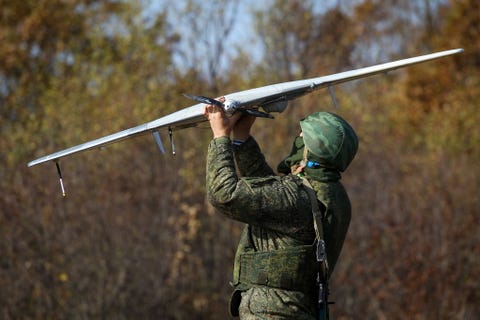
Drones are a growing presence on the battlefield and recognizing that trend, the Russian Defense Ministry has ordered that all branches of its military begin training in anti-drone combat.Hezbollah Took a Gamble in Syria, Raising the Stakes for Israel
European Security Post-Merkel
EU defence cooperation suffers from a lack of strategic purpose. This challenge offers an opportunity for smaller members such as Denmark to stress that PESCO supported by Germany and the French EI2 initiative are not and should not be competitive models.7% Of All Jobs Will Be Automated By 2034, And 'No Government Is Prepared' Says Economist
Almost half of all jobs could be automated by computers within two decades and "no government is prepared" for the tsunami of social change that will follow, according to the Economist.Moscow Returns to The Great Game
One of the most noticeable developments on the world stage has been the resurgence of Russia as a global player. Moscow has risen from the ashes of the USSR and is now once again spreading a challenge across not only its own back yard in Ukraine, Georgia and the Baltic states.Why is macroeconomics so hard to teach?
LAST month Nick Rowe had a bad dream. It was five minutes before the first class of the autumn term at Carleton University in Ottawa, where he has long taught macroeconomics. But he could not find the classroom. Then he woke up and remembered with relief that he had just retired.How the Blockchain Will Impact the Financial Sector
What is adversarial artificial intelligence and why does it matter?
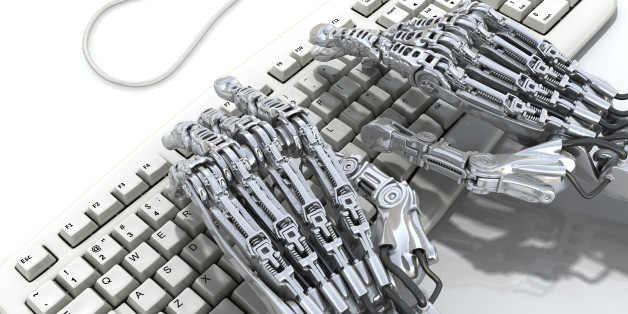
Artificial intelligence (AI) is quickly becoming a critical component in how government, business and citizens defend themselves against cyber attacks. Starting with technology designed to automate specific manual tasks, and advancing to machine learning using increasingly complex systems to parse data, breakthroughs in deep learning capabilities will become an integral part of the security agenda. Much attention is paid to how these capabilities are helping to build a defence posture. But how enemies might harness AI to drive a new generation of attack vectors, and how the community might respond, is often overlooked. Ultimately, the real danger of AI lies in how it will enable attackers.Cyber Deterrence is an Oxymoron for Years to Come
For cyber deterrence to make any sense for state actors, they need some concrete indicators of others’ offensive cyber capabilities. Thus, in order to develop even a rudimentary cyber deterrence framework, states need some lessons learned from the effects of “cyber weapons” and cyber war.Security warning: UK critical infrastructure still at risk from devastating cyber attack
New Internet: Blockchain Technology Could Help Us Take Back Our Data from Facebook, Google and Amazon
Joe Lubin was living in Jamaica in 2014 when he had the meeting that would transform him into a crypto billionaire and a high priest in a new technological ecosystem that some believe may one day prove more significant than the internet.New demand, new markets: What edge computing means for hardware companies
Disruptive technologies show why government needs data security standards now
Telepathy. Data uploading to the brain. Even humanoid sex robots. These are among the ideas that exist on a periodic table of disruptive technologies, a new visual guide that predicts what will alter human existence in the coming years.AI and Automation Will Replace Most Human Workers Because They Don't Have to Be Perfect—Just Better Than You
Is Civilian Control of the Military Eroding?
Water Wars: Agreements and Disagreements
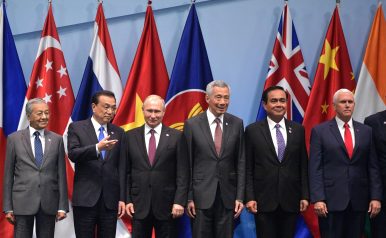
The annual Asia-Pacific Economic (APEC) Summit concluded on Nov. 18 in Papua New Guinea with leaders failing to agree on a final communique for the first time ever, due to clashes between the United States and China. APEC is an intergovernmental forum of 21 Pacific Rim states, including Canada, Australia, Japan, Indonesia, Singapore, Russia, Peru, Vietnam and others.