India's broad security commitments prevent it from meeting its naval ambitions, forcing it to rely on other strategic measures to challenge China's penetration into the region.The Profession of Arms: A Guide for Young Army Officers
It takes courage, especially for a young officer, to check a man met on the road for not saluting properly or for slovenly appearance, but, every time he does, it adds to his stock of moral courage, and whatever the soldier may say, he has respect for the officer who does pull him up.
Read Document →The Dragon's Teeth: Assessing China's Military Modernization
PLA has focused on modernising its capabilities across all warfare domains to achieve these goals. This includes land, air, and maritime operations, nuclear, space, counter-space, electronic warfare and cyberspace operations, aiming to become a fully integrated joint force.
Read Document →Transforming the PLA: A Decade of reorganisation from SSF to ISF
PRC has engaged in a sustained and broad effort to transform the PLA from an infantry-heavy, low-technology, ground forces-centric military into a high-technology, networked force with an increasing emphasis on joint operations and naval and air power projection.
Read Document →Eyes without Borders: Exploring the World of Open Source Intelligence (OSINT) in the Digital Age
Open Source Intelligence (OSINT) is gaining prominence with the rise of social media, the digital society and the vast growth of publicly and commercially available information (PAI and CAI).
Read Document →
The PLA’s Developing Cyber Warfare Capabilities and India's Options
Informationised warfare blurs the lines between peacetime and wartime. A nation in the information age cannot wait for the hostilities to break out to collect intelligence, carryout influence operations, develop antisatellite systems or design computer software weapons.
Read Document →
Galwan and After
Why did China did this when he is under tremendous pressure in all fronts, is this China's salami slice tactics being progressed rigorously, what will be new Rules of Engagement, what will be escalatory control mechanism, who has taken this decision, will there be some pressure put by China in India's North-East through insurgency.
Read Document →
India’s Joint Doctrine for Cyberspace Operations: A Critical Review
Chief of Defence Staff (CDS) General Anil Chauhan and Secretary, Department of Military Affairs, formally released declassified versions of the Joint Doctrines for Cyberspace Operations during the Chiefs of Staff Committee meeting in New Delhi.
Read Document →
Know your Enemy General(now Field Marshal) Syed Aseem Munir
Gen SA Munir's position in the hierarchy of Pakistan was not very comfortable. The state of economy, insurgency in Pakhtoonistan and Balochistan, attack on the Jaffar Express, constant protests by supporters of Imran Khan's supporters inside and outside of parliament.
Read Document →
Decoding Operation SINDOOR: Key Aspects and Implications
Precision strikes were carried out on nine sites—four in Pakistan and five in PoK—linked to anti-India terrorist groups such as the LeT, JeM and the Hizbul Mujahideen. The targeted sites included Muridke (LeT headquarters) and Bahawalpur (JeM headquarters).
Read Document →
Chinese Cyber Exploitation in India's Power Grid - Is There a linkage to Mumbai Power Outage?
The New York Times (NYT), based on analysis by a U.S. based private intelligence firm Recorded Future, reported that a Chinese entity penetrated India’s power grid at multiple load dispatch points. Chinese malware intruded into the control systems that manage electric supply across India, along with a high-voltage transmission substation and a coal-fired power plant
Read Document →28 November 2018
India Looks for a Strategic Edge in Its Indian Ocean Contest With China
India's broad security commitments prevent it from meeting its naval ambitions, forcing it to rely on other strategic measures to challenge China's penetration into the region.IMF links Pakistan bailout talks to financial blacklist
WHY ARE SEPARATIST MILITANTS VIOLENTLY TARGETING CHINESE IN PAKISTAN?
Backlash against China could jeopardize its ‘free ride’
The Sinicization and Suppression of China’s Muslim Uyghurs
The Chinese state-approved path to Islam and Uyghur culture now dictates every aspect of the Uyghurs existence and reality.One million Chinese people 'move into Muslim homes to report on Islamic or unpatriotic beliefs'
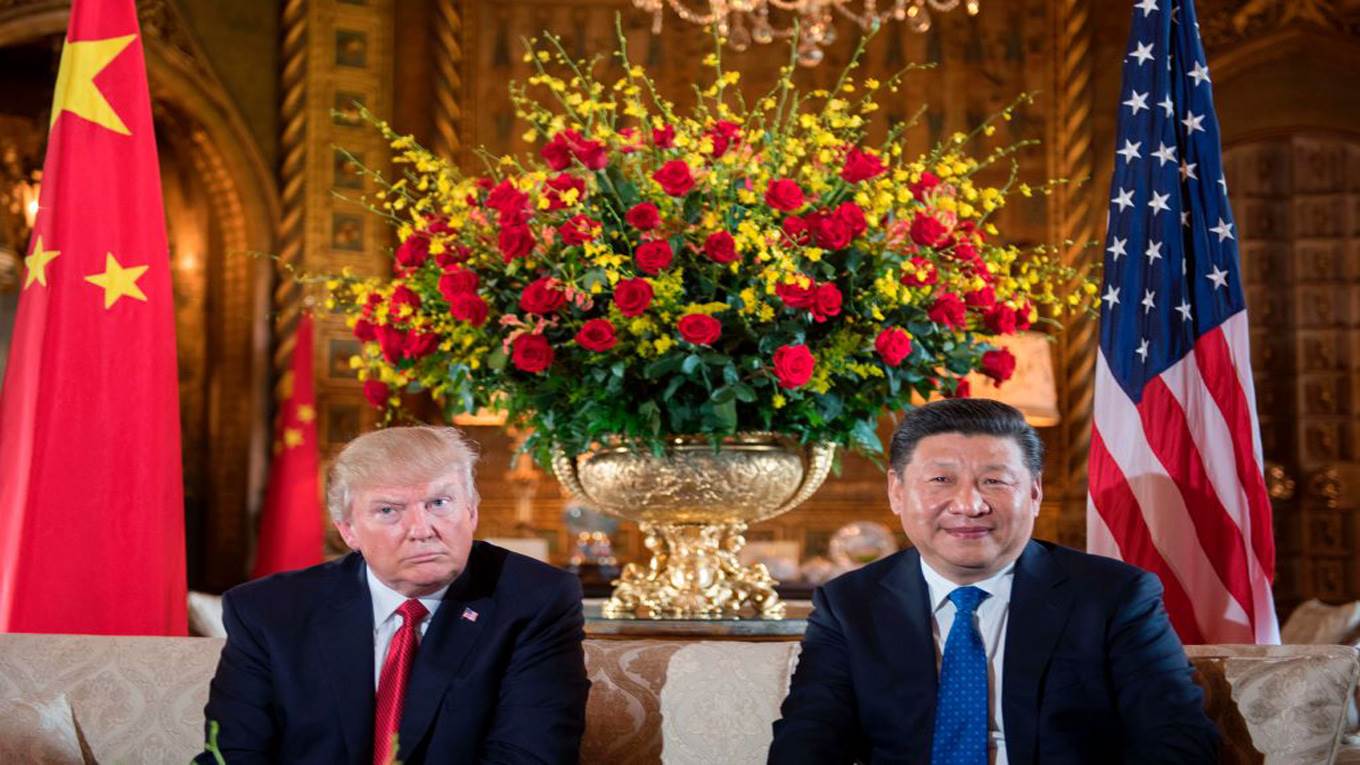
Xi’s China has instilled fear in Trump’s America
China, Philippines: Leaders Sign a New Raft of Deals
Stratfor's 2018 Fourth Quarter Forecast said China's overtures to the Philippines would bear fruit in the form of progress on joint energy development. The deals signed at a recent meeting between Chinese President Xi Jinping and Philippine President Rodrigo Duterte have confirmed this analysis and strengthened the links between the two countries.Will China Return to Isolationism?
In the past decade, there have been worrisome signs indicating that China is secluding itself from the outside world. The government has imposed strict regulations on the internet, blocked some foreign websites with unfavorable information through the Great Firewall, forbidden university teachers from adopting textbooks compiled by Western scholars, and set limitations on travel abroad by government personnel, among other steps. To make things worse, when the United States opened a trade war against China this year by imposing punitive tariffs on Chinese imports, China retaliated in kind. The latest example of a tendency toward seclusion is the vehement promotion of self-reliance in developing high-tech industries by President Xi Jinping on various occasions. Washington’s Search for a New Paradigm on China
With the conclusion of America’s recent mid-term elections, many analysts believe that a U.S. position on China will solidify. The Democrats, who gained a majority in the House, and President Donald Trump hold a shared interest in increasing pressure on China. Washington’s search for a new and more confrontational paradigm on U.S.-China relations, therefore, may accelerate.An Agenda for Resolving the US-China Conflict
Trump Is Right About Saudi Arabia
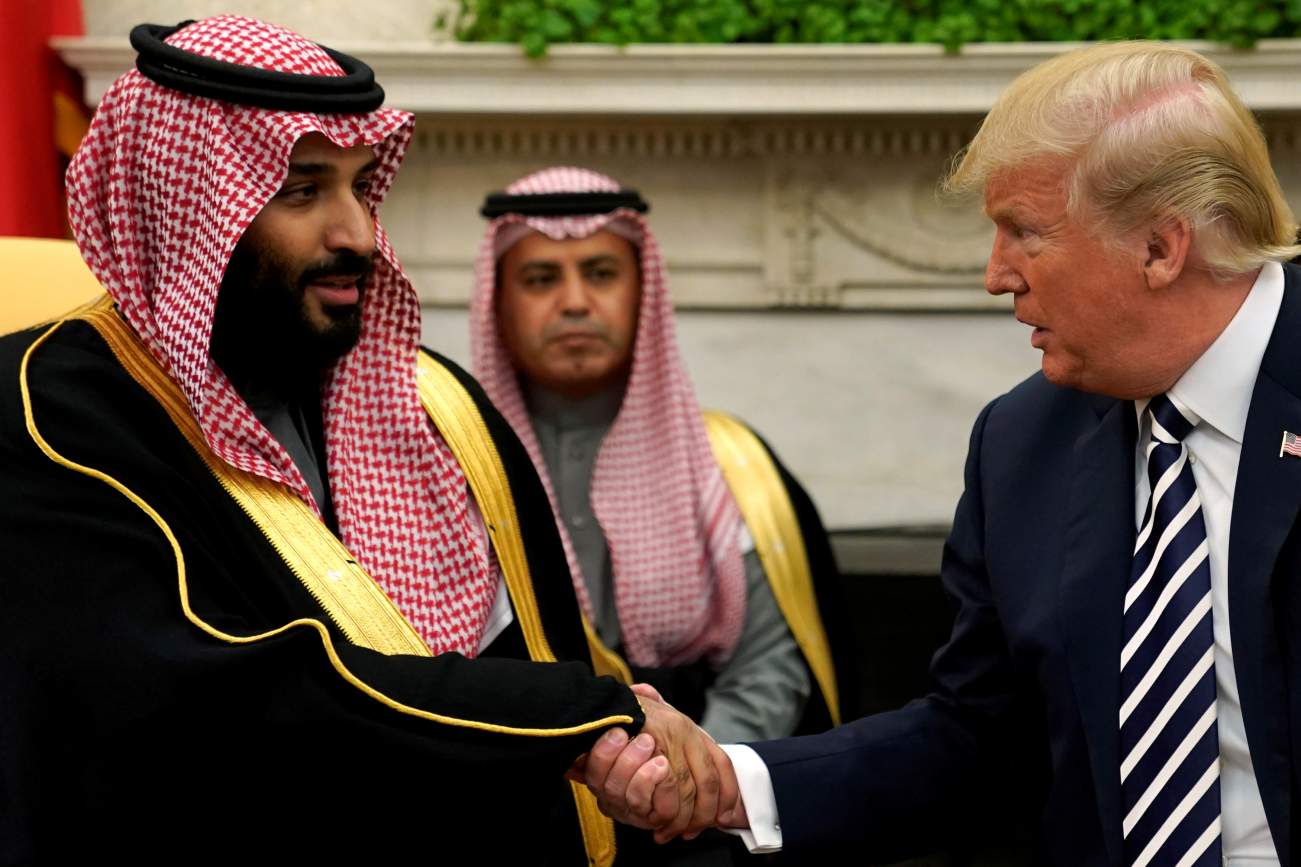
The meltdown over President Donald Trump’s decision to stick with Saudi Arabia despite a human-rights tiff was predictable if melodramatic.Trump Stands Up for Saudi Arabian Values
Why Iran's Government Will Bear the Weight of U.S. Sanctions
Iran's economy will enter a sharp recession in 2019, but Tehran can capably manage any political fallout that may follow. Economically, Iran will emphasize prudent management and protection of precious hard currency reserves while boosting domestic investment through its public sector and trying to continue financial sector reform. While it focuses on economic survival in the face of sanctions, however, Iran will make only limited progress on much-needed longer-term reforms, such as strengthening the private sector. Iran's squabbling political factions will try to take advantage of the economic environment, but in the face of the crisis, they will work together to prioritize regime preservation.Trump Is Crude. But He’s Right About Saudi Arabia.
There’s not much Republicans and Democrats agree on nowadays, but President Trump’s expression of support for Saudi Arabia on Tuesday in the wake of the Jamal Khashoggi killing managed to unite them. Democratic and Republican leaders declared that the president’s statement was dishonest, morally blinkered and strategically obtuse.Was Syria Different? Anticipating the Next Islamic State
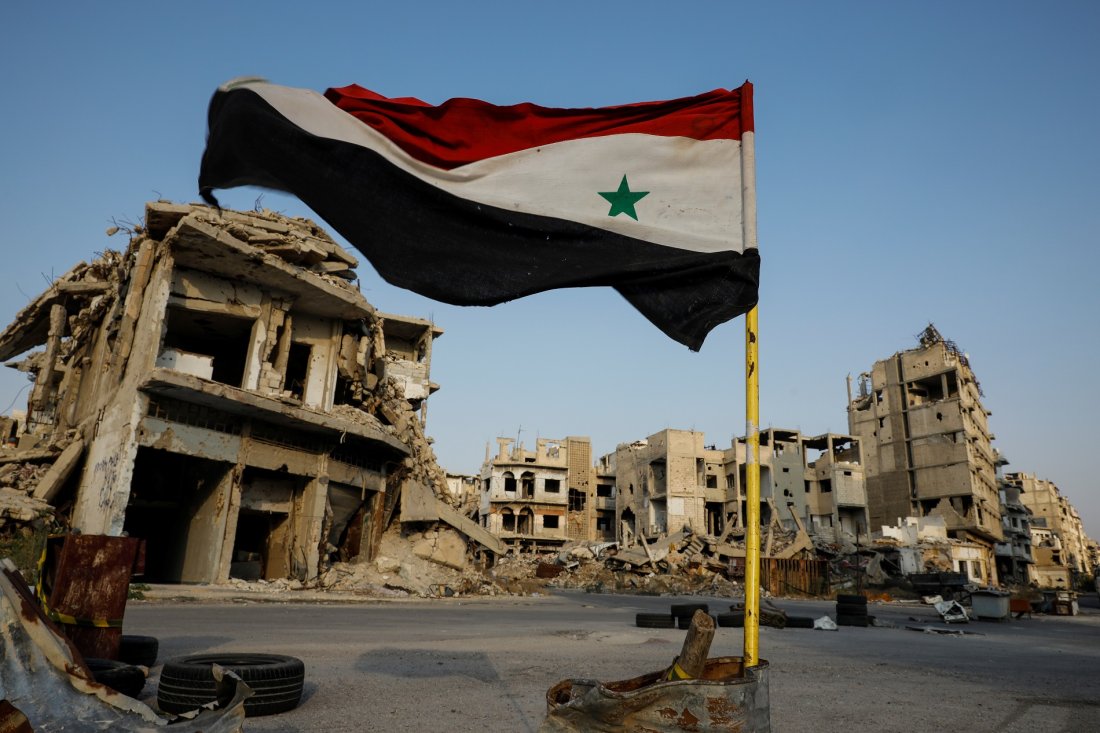
For counterterrorism officials, one of the most difficult counterterrorism challenges is identifying the next global struggle that, like the Syrian civil war, will energize the world’s Muslims and lead tens of thousands of foreigners to join the fray. However, as a Danish proverb (not Yogi Berra) warns, “It’s tough to make predictions, especially about the future.” But while counterterrorism officials must be on alert for the next cause that, like in Syria, produces a surge of foreign fighters and terrorism, they should not assume past is prologue. Indeed, there are many reasons to believe that the emergence of the Islamic State in Syria and the massive flow of foreigners to fight was due to unusual (though not unique) circumstances.The Case for Leaving Syria
British army chief: Russia 'far bigger threat than IS'
Russia is now a "far greater threat" to the UK's national security than the Islamic State group, the head of the British army has said.The Case for Leaving Syria
IT’S TIME FOR AMERICA TO RECKON WITH THE STAGGERING DEATH TOLL OF THE POST-9/11 WARS
Weapons of the weak: Russia and AI-driven asymmetric warfare
Europe's new regional defense
The Migration Disconnect Why Central Americans Will Keep on Heading to the United States
How to Quantify America's National Security Woes
The Heritage Foundation recently released its 2019 Index of U.S. Military Strength . Now in its fifth year, Heritage’s Index is a reliable bellwether of Washington’s hawkish consensus: the world’s problems are usually America’s problems, and military force, or the threat of it, is often the best tool for dealing with those problems The United States, which spends more on defense than the next seven countries combined, is the only state that can project power around the world and is unchallenged in its entire hemisphere. Yet Heritage rates overall U.S. military power as “marginal.” Such a conclusion rests on a worldview fundamentally at odds with both America’s history and her current position in the world.What to expect from a no-deal Brexit
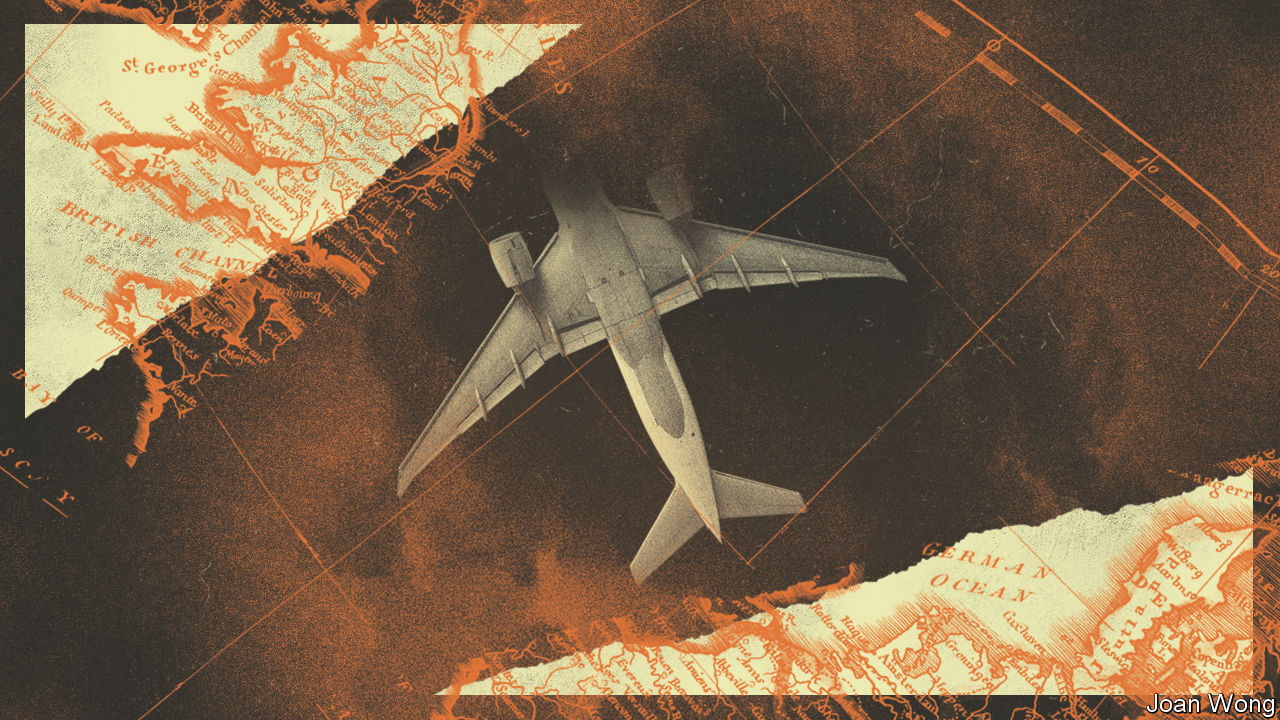
To stand on the white cliffs of Dover is not merely to reflect on British isolation, splendid or otherwise, or on the remarkable Cretaceous geology beneath your feet, or even to wonder at the perennial lack of bluebirds. It is to look down at a marvel of frictionless trade in action. Dover is Britain’s ninth-busiest port in gross tonnage, but in terms of roll-on-roll-off traffic, the sort that keeps the country’s economy tightly coupled to its neighbours beyond the narrow sea, it is far and away the biggest (see chart). Ships like the Pride of Kent and the Calais Seaway pass through its seawalls ten times a day; as many as 10,000 lorries snake slowly but uninterruptedly in and out of the port. About £120bn ($150bn) of traded goods pass up and down Jubilee Way to and from the port each year, 17% of Britain’s total. A lot of it is needed urgently.The Blockchain Could Make Trust Accessible to Everyone
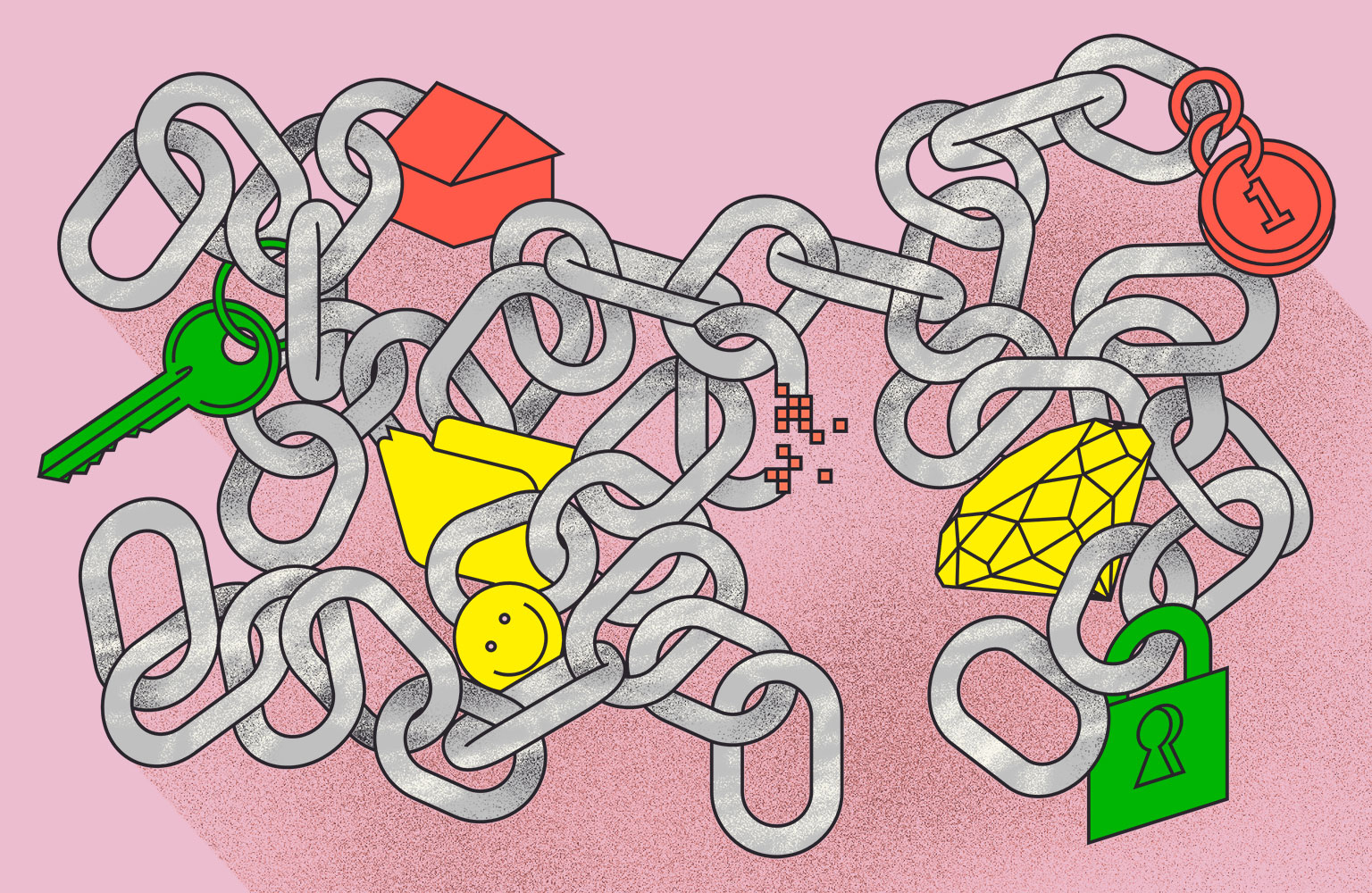
The blockchain isn’t just about transferring money—it’s also changing how people worldwide access data, keep and access records, and prove ownership.Women, Technology, And The Future Of Work
The Pentagon’s Move to the Cloud is Right but Presents Unique Challenges
TIM DRAPER: BITCOIN AND CRYPTOCURRENCIES WILL TAKE OVER THE WORL
The Lost Lessons of World War I
A combination of willful blindness, utter complacency, and intense stubbornness on the part of Europe’s leaders subjected their countries to two devastating wars in the twentieth century. With nationalism and populism once again flourishing across the West, the risk of another large-scale conflagration is rising fast.