Afghanistan has been a prime example of India’s aid and assistance programs. India’s contribution to Afghanistan’s civilian reconstruction efforts has been seen as one of the major factors leading to the famed goodwill for India among the Afghans. However, there has been a lack of critical and sober assessment of the tangible impact of Indian aid with respect to the priorities of security and development in Afghanistan. After more than 17 years of foreign security presence and multinational efforts to bring the war-torn country back to its feet and the evolving political space that requires talking to the Taliban while also fighting with them, Afghanistan is at crossroads. Amid such dynamic changes and continuities, the nature of India’s aid and assistance needs to undergo an assessment not only in terms of what India can offer but also in terms of what Afghanistan needs.The Profession of Arms: A Guide for Young Army Officers

It takes courage, especially for a young officer, to check a man met on the road for not saluting properly or for slovenly appearance, but, every time he does, it adds to his stock of moral courage, and whatever the soldier may say, he has respect for the officer who does pull him up.
Read Document →The Dragon's Teeth: Assessing China's Military Modernization
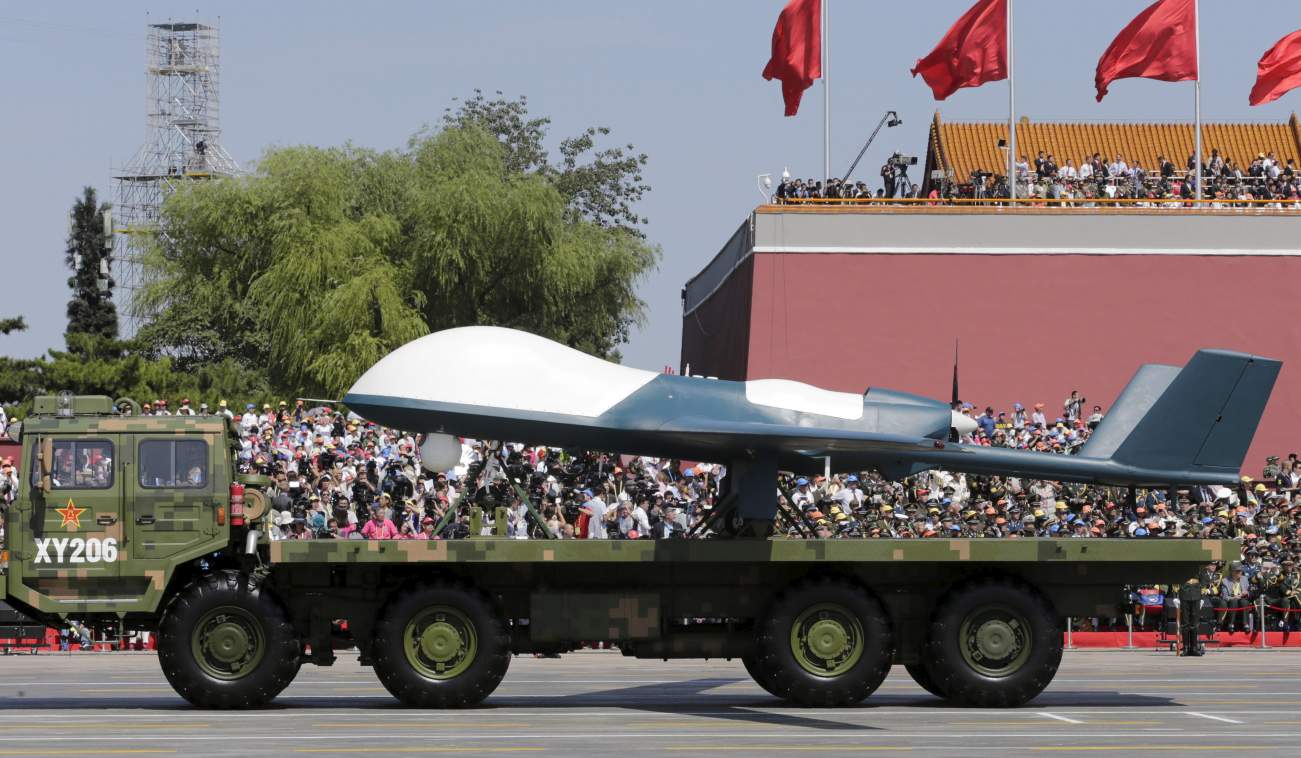
PLA has focused on modernising its capabilities across all warfare domains to achieve these goals. This includes land, air, and maritime operations, nuclear, space, counter-space, electronic warfare and cyberspace operations, aiming to become a fully integrated joint force.
Read Document →Transforming the PLA: A Decade of reorganisation from SSF to ISF
PRC has engaged in a sustained and broad effort to transform the PLA from an infantry-heavy, low-technology, ground forces-centric military into a high-technology, networked force with an increasing emphasis on joint operations and naval and air power projection.
Read Document →Eyes without Borders: Exploring the World of Open Source Intelligence (OSINT) in the Digital Age
Open Source Intelligence (OSINT) is gaining prominence with the rise of social media, the digital society and the vast growth of publicly and commercially available information (PAI and CAI).
Read Document →
The PLA’s Developing Cyber Warfare Capabilities and India's Options
Informationised warfare blurs the lines between peacetime and wartime. A nation in the information age cannot wait for the hostilities to break out to collect intelligence, carryout influence operations, develop antisatellite systems or design computer software weapons.
Read Document →
Galwan and After
Why did China did this when he is under tremendous pressure in all fronts, is this China's salami slice tactics being progressed rigorously, what will be new Rules of Engagement, what will be escalatory control mechanism, who has taken this decision, will there be some pressure put by China in India's North-East through insurgency.
Read Document →
India’s Joint Doctrine for Cyberspace Operations: A Critical Review
Chief of Defence Staff (CDS) General Anil Chauhan and Secretary, Department of Military Affairs, formally released declassified versions of the Joint Doctrines for Cyberspace Operations during the Chiefs of Staff Committee meeting in New Delhi.
Read Document →
Know your Enemy General(now Field Marshal) Syed Aseem Munir
Gen SA Munir's position in the hierarchy of Pakistan was not very comfortable. The state of economy, insurgency in Pakhtoonistan and Balochistan, attack on the Jaffar Express, constant protests by supporters of Imran Khan's supporters inside and outside of parliament.
Read Document →
Decoding Operation SINDOOR: Key Aspects and Implications
Precision strikes were carried out on nine sites—four in Pakistan and five in PoK—linked to anti-India terrorist groups such as the LeT, JeM and the Hizbul Mujahideen. The targeted sites included Muridke (LeT headquarters) and Bahawalpur (JeM headquarters).
Read Document →
Chinese Cyber Exploitation in India's Power Grid - Is There a linkage to Mumbai Power Outage?
The New York Times (NYT), based on analysis by a U.S. based private intelligence firm Recorded Future, reported that a Chinese entity penetrated India’s power grid at multiple load dispatch points. Chinese malware intruded into the control systems that manage electric supply across India, along with a high-voltage transmission substation and a coal-fired power plant
Read Document →29 November 2018
India’s Development Aid to Afghanistan: Does Afghanistan Need What India Gives?
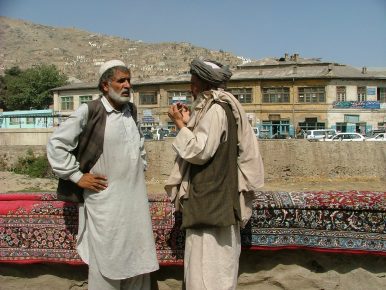
Afghanistan has been a prime example of India’s aid and assistance programs. India’s contribution to Afghanistan’s civilian reconstruction efforts has been seen as one of the major factors leading to the famed goodwill for India among the Afghans. However, there has been a lack of critical and sober assessment of the tangible impact of Indian aid with respect to the priorities of security and development in Afghanistan. After more than 17 years of foreign security presence and multinational efforts to bring the war-torn country back to its feet and the evolving political space that requires talking to the Taliban while also fighting with them, Afghanistan is at crossroads. Amid such dynamic changes and continuities, the nature of India’s aid and assistance needs to undergo an assessment not only in terms of what India can offer but also in terms of what Afghanistan needs.India-Singapore Relations and the Indo-Pacific: The Security Dimension
Over the past week, India and Singapore have engaged in a series of defense-related interactions. While these are only a few of the interactions the sides currently have with each other, they have nonetheless spotlighted some of the ongoing activity in the security relationship amid wider regional and international developments in the wider Indo-Pacific region.Lost in Sudan
Syria, Gaza, Afghanistan: The endless wars
US-China trade war, or trade deal?
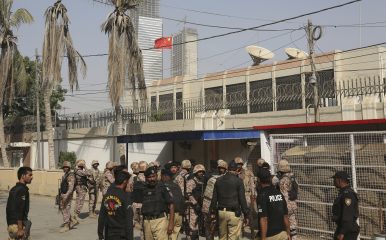
Why Balochs Are Targeting China
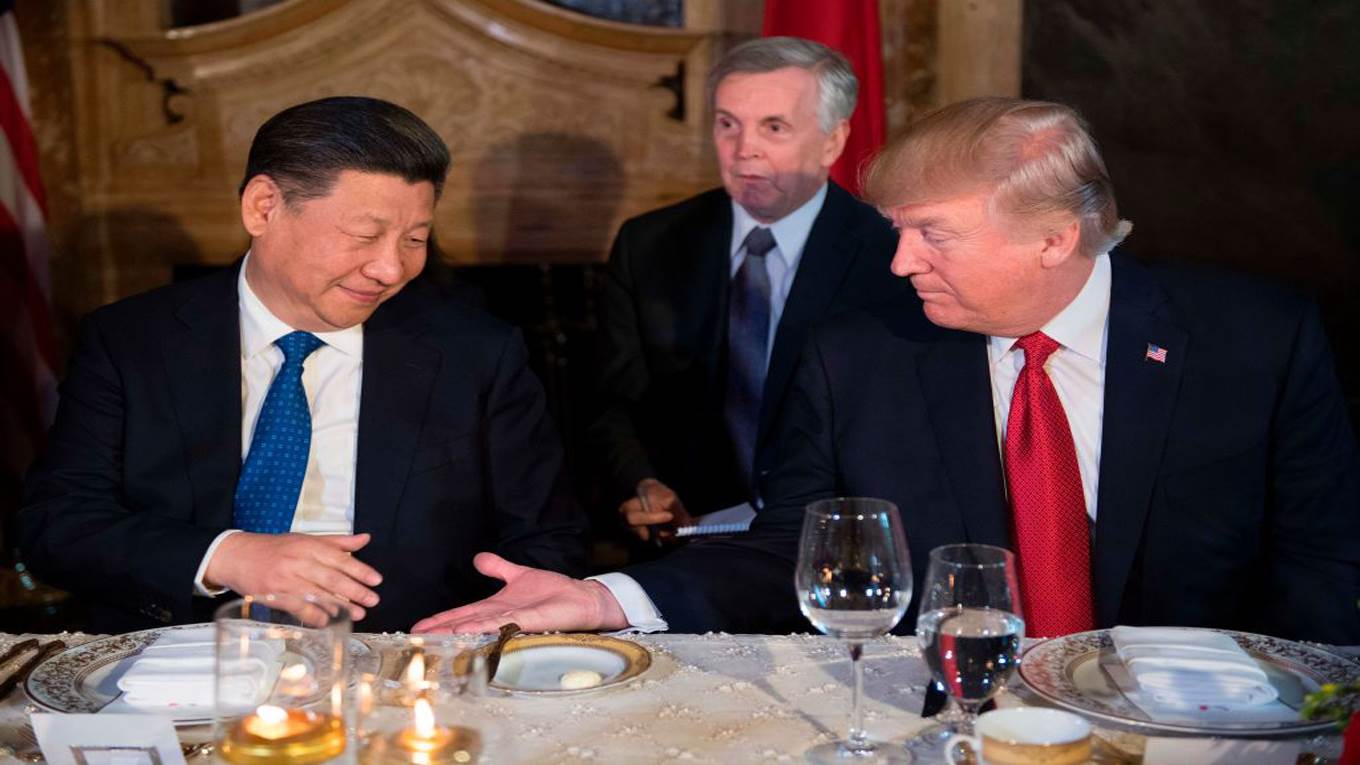
China-US tensions rise ahead of Xi-Trump trade talk
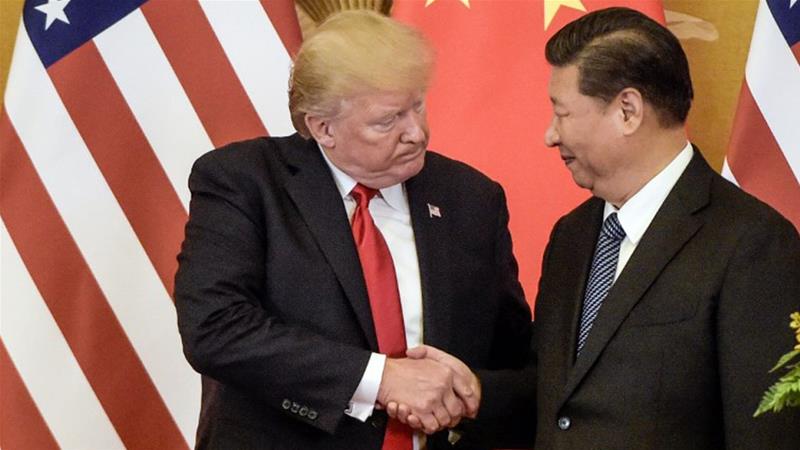
Beijing, China - Hopes this week's meeting between US President Donald Trump and his Chinese counterpart Xi Jinping at the G20 in Argentina will achieve a trade breakthrough are fading with analysts and business leaders expressing disappointment over intensifying tensions in the lead up to the summit.Europe arming itself against Chinese investment, despite denials
The Uighurs and China’s Long History of Trouble with Islam
Last month, I spent several days at the Forbidden City, the gargantuan palace in the middle of Beijing where China’s emperors ruled the land for nearly five hundred years. I was there to attend a conference on religion and power in imperial China, but my thoughts were drawn to more contemporary concerns: the plight of the Uighurs in China’s far western province of Xinjiang, including re-education camps aimed at breaking their faith in Islam.China Militarizes Its Influence in Africa
Albeit from the limited perspective of South Africa’s bi-annual Africa Aerospace and Defense (AAD) exhibition, from September 19–23, it is apparent that most African states are ready to enthusiastically support China’s ambitions for militarizing its growing influence on that continent, heralded by the first June 26 to July 11 China Africa Defense and Security Forum (CADSF). Meeting at the People’s Liberation Army National Defense University (PLANDU) in Beijing, this first forum meeting was attended by delegations from forty-nine African countries and the African Union.Why a US-China Tariff Ceasefire Is Coming Soon
Donald Trump's negotiating style – “shout loudly and carry a white flag” – may seem incoherent and dishonest, but it has been spectacularly successful for him. And he's about to use it again with China.China’s Four Traps
During its 40 years of reform, China has mastered learning by doing, engaged in bold policy experimentation, and become steadily more integrated into global economy. It will need to bring all of this experience to bear, as it attempts to avoid the pitfalls that could derail its effort to achieve high-income status.United Nations The Only Way to End the War in Yemen
The US is making a huge error in backing this spoiled Saudi princeling
When Mohammed bin Salman came to power in 2017, there was disquiet in Riyadh. Many prominent Saudis, including other royals, feared that the petulant princeling might destabilize the region, pursuing his vendetta against the emir of neighboring Qatar, aggravating the tension in Yemen, possibly even provoking a war with Iran. They also feared, with reason as it turned out, that he would overturn what few checks and balances existed in his oil-rich realm and establish a personal autocracy.Can Donald Trump Destroy The WTO?
Is It Poor Journalism Or Actual Fake News?
Be Afraid of Economic ‘Bigness.’ Be Very Afraid.
In the aftermath of the Second World War, an urgent question presented itself: How can we prevent the rise of fascism from happening again? If over the years that question became one of mostly historical interest, it has again become pressing, with the growing success of populist, nationalist and even neofascist movements all around the world.KMT Shocks With Its Success in Taiwan Elections
Taiwan’s ruling Democratic Progressive Party (DPP) was handed a rebuke in the island’s 2018 midterm elections on Saturday, with voters showing widespread dissatisfaction with the party’s handling of affairs over the past two years. The DPP, which had seen significant victories since Taiwan’s 2014 midterms, lost heavily on November 24, losing in seven of the 13 counties and cities up for grabs. Particularly devastating were the series of defeats suffered in the island’s south, the traditional stronghold of the DPP.Managing American Decline
America’s decline relative to a rising China has sparked interest among academics about power shifts in the international order—whether they can happen peacefully and under what conditions; what precedents exist and what they tell us. Now comes an important book, Twilight of the Titans, by Joseph M. Parent and Paul K. McDonald, who use quantitative analysis of power transitions to analyze the problem. What they find provides a warning to a rising China, and a road map for a declining United States to regain its standing.FOURTH NATIONAL CLIMATE ASSESSMENT
Before the Engagement: Mapping Social Media for Civil Military Operations
Today’s United States Army operates in a networked asymmetric world undreamed of in the early years of combating insurgency groups. According to Twitter, 500 million tweets are posted each day. YouTube reports that over one billion hours of videos are watched daily. In this rapidly evolving, saturated social media environment, a revolutionary with little more than an easily available internet connection can tap communications intertwined with billions of people and cause cultural upheaval and change centuries-old dogma. Through extensive social media use, groups revolt, leadership falls, and countries change. Civil Affairs as a branch needs to continue to evolve within the civil environment by formally adding a social media analysis function to its extensive repertoire, critical to maintaining a more complete understanding of current culture. This can be accomplished by examining historical examples of social media influence, exploring CIM expansion within future civil environments, and making updates and changes to Civil Affairs doctrine utilizing a DOTMLPF-P review. Defense, Homeland Security Secretaries Spearhead Cyber Cooperation Agreement
Homeland Security Secretary Kirstjen Nielsen and Defense Secretary Jim Mattis spearheaded an agreement signed last week about how their agencies will work together on future cybersecurity challenges, Homeland Security Undersecretary Chris Krebs said last week.Can automation alleviate the weight of war?
The United States Marine Corps is considering using remotely piloted and autonomous vehicles as a solution for a classic warfare dilemma.PROSECUTING ASSANGE IS ESSENTIAL FOR RESTORING OUR NATIONAL SECURITY | OPINION
Full disclosure: I am not a fan of Julian Assange or Wikileaks. My disdain for started long before both apparently acted as digital mouthpiece for Russian intelligence by releasing hacked emails. It began with the actions of Chelsea Manning, and hit a crescendo with Edward Snowden. Assange and Wikileaks are responsible for creating a class of leakers motivated by ego, who justify their betrayal of our national security by claiming that their moral code trumps the actual code governing the release of classified information.Special Report: Is the US Ready to Escalate in Cyberspace?
A barrage of cyber attacks have hit U.S. companies and institutions over the past decade. At long last, the United States says it’s ready to strike back.We’ve been targeted by hackers too, says China in wake of US cyber-espionage claims
The New Radicalization Of The Internet
Social media has played a key role in the recent rise of violent right-wing extremism in the United States, including three recent incidents — one in which a man was accused of sending mail bombs to critics of the president, another in which a man shot dead two African-Americans in a Kroger’s grocery store in Kentucky, and a third in which a man is accused of conducting a murderous rampage at a synagogue in Pittsburgh.What’s Next for Vietnam-Thailand Defense Cooperation?
This week, Vietnam’s deputy defense minister paid a visit to Thailand in yet another official exchange between the two Southeast Asian states. The interaction highlighted the ongoing activity on the defense side of the strategic partnership that both sides have forged over the years.The US Military’s Drone Swarm Strategy Just Passed a Key Test
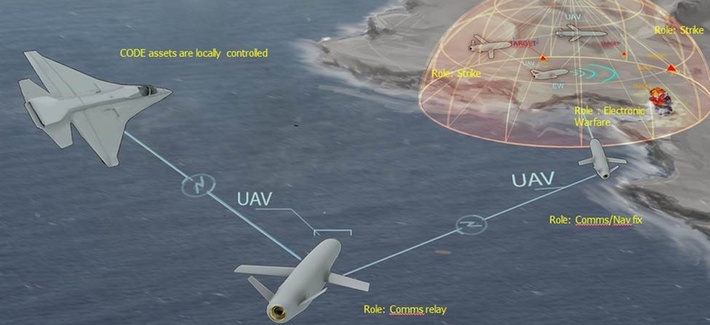
The U.S. military’s strategy for winning the next major war is to throw a bunch of highly autonomous, deeply interconnected drones, jets, ships, and other things at the enemy. But this massive, coordinated strike across air, land, sea and cyberspace is sure to run headfirst into electronic warfare defenses designed to disrupt the networks that make it possible..Mattis’s Infantry Task Force: Righting ‘A Generational Wrong
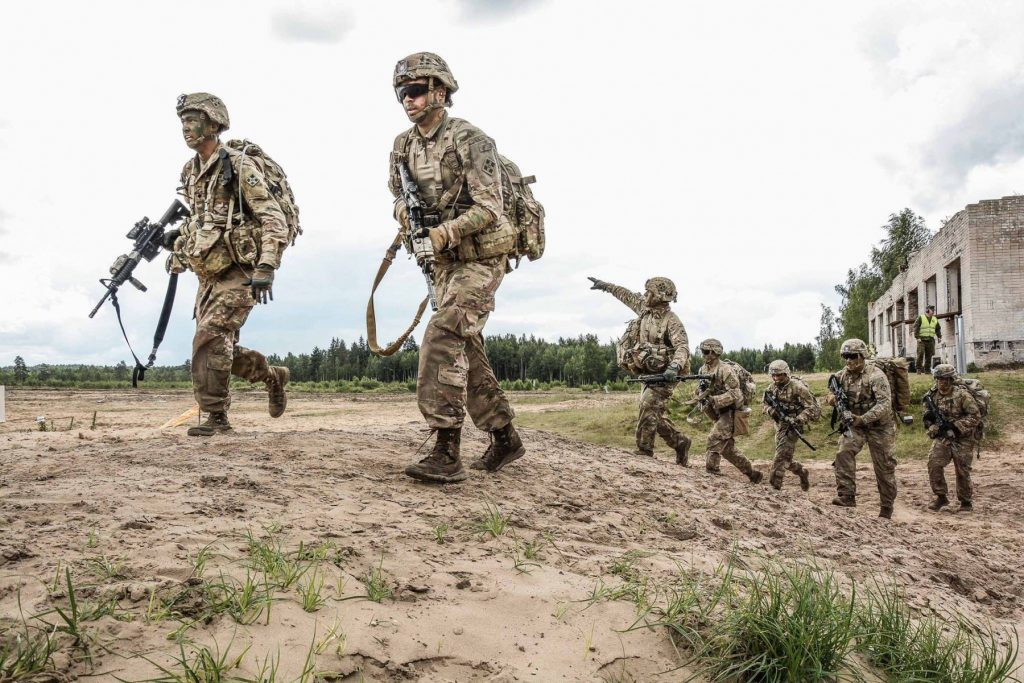
Retired Maj. Gen. Bob Scales is the former commandant of the Army War College, a Vietnam veteran (and recipient of the Silver Star for valor) turned military historian and futurist. He’s also one of the fathers of Defense Secretary Jim Mattis’s Close Combat Lethality Task Force to reform the infantry. In this op-ed, Scales goes into the task force’s achievements, its rationale, and the decades of unnecessary bloodshed it seeks to end. — the editors