The Profession of Arms: A Guide for Young Army Officers
It takes courage, especially for a young officer, to check a man met on the road for not saluting properly or for slovenly appearance, but, every time he does, it adds to his stock of moral courage, and whatever the soldier may say, he has respect for the officer who does pull him up.
Read Document →The Dragon's Teeth: Assessing China's Military Modernization
PLA has focused on modernising its capabilities across all warfare domains to achieve these goals. This includes land, air, and maritime operations, nuclear, space, counter-space, electronic warfare and cyberspace operations, aiming to become a fully integrated joint force.
Read Document →Transforming the PLA: A Decade of reorganisation from SSF to ISF
PRC has engaged in a sustained and broad effort to transform the PLA from an infantry-heavy, low-technology, ground forces-centric military into a high-technology, networked force with an increasing emphasis on joint operations and naval and air power projection.
Read Document →Eyes without Borders: Exploring the World of Open Source Intelligence (OSINT) in the Digital Age
Open Source Intelligence (OSINT) is gaining prominence with the rise of social media, the digital society and the vast growth of publicly and commercially available information (PAI and CAI).
Read Document →
The PLA’s Developing Cyber Warfare Capabilities and India's Options
Informationised warfare blurs the lines between peacetime and wartime. A nation in the information age cannot wait for the hostilities to break out to collect intelligence, carryout influence operations, develop antisatellite systems or design computer software weapons.
Read Document →
Galwan and After
Why did China did this when he is under tremendous pressure in all fronts, is this China's salami slice tactics being progressed rigorously, what will be new Rules of Engagement, what will be escalatory control mechanism, who has taken this decision, will there be some pressure put by China in India's North-East through insurgency.
Read Document →
India’s Joint Doctrine for Cyberspace Operations: A Critical Review
Chief of Defence Staff (CDS) General Anil Chauhan and Secretary, Department of Military Affairs, formally released declassified versions of the Joint Doctrines for Cyberspace Operations during the Chiefs of Staff Committee meeting in New Delhi.
Read Document →
Know your Enemy General(now Field Marshal) Syed Aseem Munir
Gen SA Munir's position in the hierarchy of Pakistan was not very comfortable. The state of economy, insurgency in Pakhtoonistan and Balochistan, attack on the Jaffar Express, constant protests by supporters of Imran Khan's supporters inside and outside of parliament.
Read Document →
Decoding Operation SINDOOR: Key Aspects and Implications
Precision strikes were carried out on nine sites—four in Pakistan and five in PoK—linked to anti-India terrorist groups such as the LeT, JeM and the Hizbul Mujahideen. The targeted sites included Muridke (LeT headquarters) and Bahawalpur (JeM headquarters).
Read Document →
Chinese Cyber Exploitation in India's Power Grid - Is There a linkage to Mumbai Power Outage?
The New York Times (NYT), based on analysis by a U.S. based private intelligence firm Recorded Future, reported that a Chinese entity penetrated India’s power grid at multiple load dispatch points. Chinese malware intruded into the control systems that manage electric supply across India, along with a high-voltage transmission substation and a coal-fired power plant
Read Document →1 January 2019
In 2018, the American dream began to fade for Indian techies
Why India will supersede China – Part 2
Pawns in a geostrategic chess game in the Himalayas
Did the U.S. Military Just Admit Victory in Afghanistan Is Impossible?
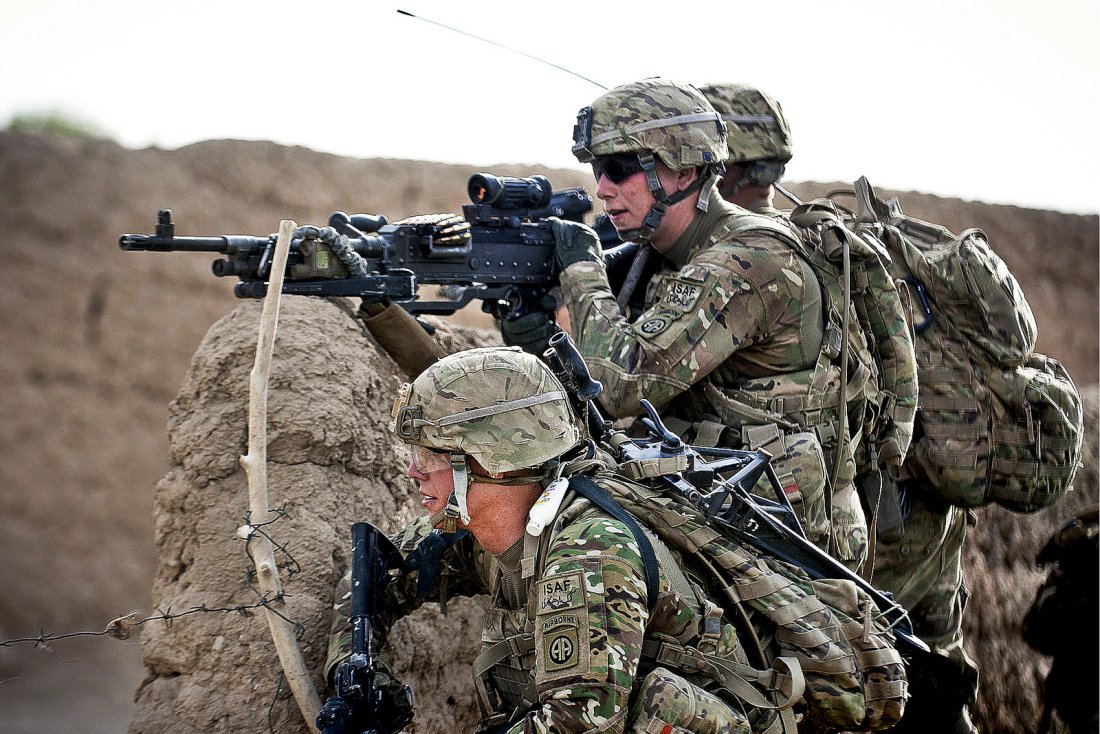
In the week before President Donald Trump’s reported decision to abruptly withdraw 7,000 U.S. service members from Afghanistan, the top U.S. commander there all but admitted that the 17-year-old war there will not end with a military victory for the Pentagon.U.S. LEAVING AFGHANISTAN COULD THREATEN INDIA AND PAKISTAN, BUT RUSSIA, CHINA AND IRAN ARE GETTING INVOLVED
Afghanistan: How does the Taliban make money?
There are indications that the US is planning a significant withdrawal of its troops from Afghanistan.Economic Issues Overshadow Bangladesh's Fraught Elections
Irrespective of who wins the elections on Dec. 30, the next administration in Dhaka will largely need to create jobs, develop infrastructure and advance the country's industrialization. An expanding economy will create greater demand for energy and infrastructure, creating opportunities for India and China to fund regional projects. In the lead-up to the elections, violence between supporters of the Awami League and the Bangladesh Nationalist Party is likely, heightening political risk to the fast-growing economy.The Fourth Estate in South Asia: Media’s Role in Inter-State Crises
Last month, the world paused to remember the tenth anniversary of 26/11 — the 2008 attack launched by Pakistan-based Lashkar-e-Taiba (LeT) in Mumbai, India’s commercial capital, in a series of carefully planned and orchestrated attacks. Official Pakistani connections to LeT added an inter-state dynamic to the attack, triggering a major India-Pakistan crisis — one of several in a long history of subcontinental crises that have sometimes resulted in military mobilization and outright conflict. 26/11 spanned three days and was transmitted in real time on our television screens. In its aftermath, the Indian news media was censured for flouting journalistic ethics on the ground and in newsrooms by revealing operational details and resorting to invective and jingoistic language to frame events. Ten years on, however, media behavior, determined to a large extent by the nature of its interaction with policymakers and the public, remains an understudied dynamic in inter-state crises in and beyond South Asia.World Order without Hegemony
How to Counter China's Ambitions in the South China Sea
President Xi’s state visit to the Philippines was the first in thirteen years. It marks a high point in Sino-Philippine relations with economic pledges from Beijing and an agreement to engage in joint exploration in the Scarborough Shoals, maritime features that are claimed as sovereign territories by both Beijing and Manila.Beijing’s Big, Bad Year
China’s Myth-Busting Miracle
On the 40th anniversary of China's great "opening up" under Deng Xiaoping, its leaders deserve praise for lifting hundreds of millions of people out of poverty and surpassing the United States as the world's largest economy. But China's experience has also dispelled three myths about the impact of economic growth.The Failure of the United States’ Chinese-Hacking Indictment Strategy
Just before Christmas, the U.S. Department of Justice unsealed an indictment against two Chinese nationals who allegedly conducted a twelve-year “global campaign[] of computer intrusions” to steal sensitive intellectual property and related confidential business information from firms in a dozen states and from the U.S. government. According to the indictment, the defendants conducted these acts as part of the APT10 hacking group “in association with” the Chinese Ministry of State Security.Is China Getting Too Close To Israel?
An Israeli naval officer holds the mooring rope of the INS Tanin, a Dolphin AIP class submarine, on its arrival at a naval base in the northern Israeli city of Haifa. Photo: AFPUkraine conflict: Russia completes Crimea security fence
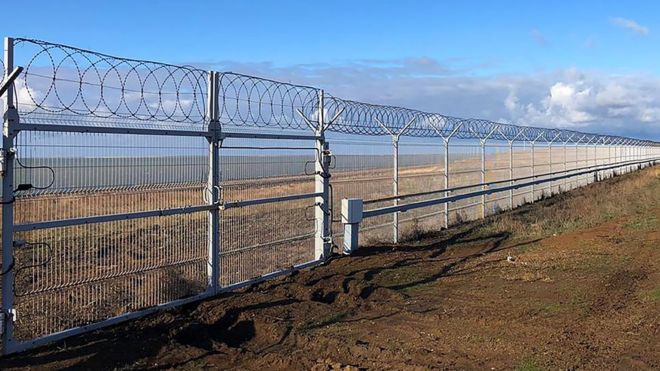
Russia has finished building a high-tech security fence along annexed Crimea's border with mainland Ukraine.A Review of the Yemen Civil War in 2018
For much of 2018, Yemen's civil war ground on, with the Saudi Arabian-led coalition backing the country's internationally recognized government on one side and rebels from the northern Houthi movement, who have received support and arms from Iran, on the other. The United States, through military support and funding, continues to back the Saudi coalition's efforts to dislodge the Houthis, a traditional Saudi adversary, from Sanaa, the country's ostensible capital. But support for the Saudi war effort in the U.S. Congress has been eroding in the wake of the murder of journalist Jamal Khashoggi, putting pressure on the coalition to cease hostilities.10 Conflicts to Watch in 2019
As the era of largely uncontested U.S. primacy fades, the international order has been thrown into turmoil. More leaders are tempted more often to test limits, jostle for power, and seek to bolster their influence—or diminish that of their rivals—by meddling in foreign conflicts. Multilateralism and its constraints are under siege, challenged by more transactional, zero-sum politics. Multilateralism and its constraints are under siege, challenged by more transactional, zero-sum politics. Instruments of collective action, such as the United Nations Security Council, are paralyzed; those of collective accountability, including the International Criminal Court, are ignored and disparaged.Syria’s Changing Power Grid: What Turkey Wants
The U.S. withdrawal from Syria removes the main obstacle to a Turkish campaign to eradicate Syrian Kurdish forces and could lead to a more dangerous phase of Syria’s civil war.When Geopolitics and Business Collide
Explaining the Hype Around Hypersonic Weapons
Countries around the world are in the process of developing hypersonic weapons technology, and the United States and China are leading the pack. With the technology needed for hypersonic missiles growing ever more feasible and accessible, we anticipate that both countries will have mature designs in the near future. The new missiles will be much faster than any current cruise missiles, and they will be extremely hard to detect. As the world adjusts to this evolving weaponry, the way countries approach offensive arms development and preemptive strikes is set to change dramatically.After Mattis: Strategic Challenge & Opportunity For President Trump
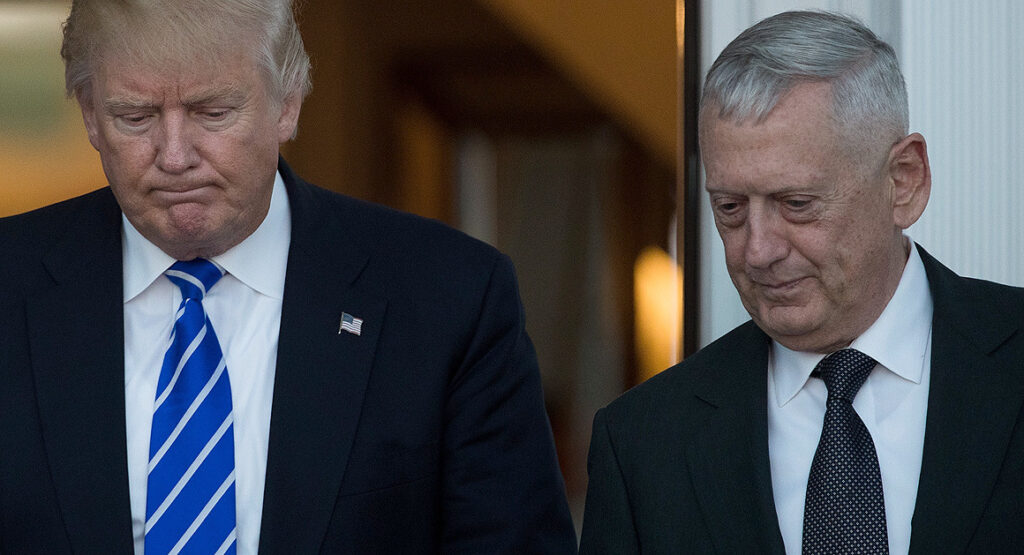
Whatever you think of Jim Mattis, his resignation and the outflow of officials that will follow create a major foreign policy problem for the United States. There is not one ally who is applauding Mattis’s departure — but depart he will, all the same. So what must President Trump and his next defense secretary do, not only to reassure the allies, but shape the strategy for a dangerous world?IBM's AI predictions: Trusted AI, quantum computing take center stage in 2019
AI Year in Review: Highlights of Papers and Predictions from IBM Research AI
How a Guy With a Camera Outsmarted the United States
On the morning of December 26, Alan Meloy stood on the front porch of his home in northern England and noticed that “murky” early clouds were clearing into a crisp and sunny winter’s day.The Geopolitics of the Gregorian Calendar
When England adopted the Gregorian calendar in 1752, some 170 years after it was introduced by Pope Gregory XIII, Benjamin Franklin wrote, "It is pleasant for an old man to be able to go to bed on Sept. 2, and not have to get up until Sept. 14." Indeed, nearly two weeks evaporated into thin air in England when it transitioned from the Julian calendar, which had left the country 11 days behind much of Europe. Such calendrical acrobatics are not unusual. The year 46 B.C., a year before Julius Caesar implemented his namesake system, lasted 445 days and later became known as the "final year of confusion."Reading Into Albert Einstein’s God Letter
Albert Einstein’s so-called God letter first surfaced in 2008, when it fetched four hundred and four thousand dollars in a sale at a British auction house. The letter came back into the news earlier this month, when its owner or owners auctioned it off again, this time at Christie’s in New York, and someone paid $2.9 million for it, a pretty good return on investment, and apparently a record in the Einstein-letters market. The former top seller was a copy of a letter to Franklin Roosevelt from 1939, warning that Germany might be developing a nuclear bomb. That one was sold at Christie’s for $2.1 million, in 2002. If you have any extra Einstein letters lying around, this might be a good time to go to auction.Are robot swarms the future of destroying sea mines?
A sea mine is a promise of tragedy in the future. Built for the immediate demands of a naval conflict, deployed for some once-pressing strategic end, and now left in place for decades, sea mines are an enduring risk. Clearing the sea from the dangerous refuse of the past can be a high-stakes proposition. Why not, then, let robots do it?Perspective | Mattis Was A Deeply Flawed Defense Secretary
What is Hybrid Warfare: A detailed analysis
This excerpt has been taken from the thesis of the writer titled “Challenges posed by Hybrid Warfare to International Humanitarian Law”.Flashpoints and Arms Races to Watch in 2019
The 2019 security outlook for Asia, as in past years, is dominated by a number of regional flashpoints that include the Korean Peninsula, the South and East China Seas, as well as the Taiwan Strait, all of which have the potential to trigger a military confrontation. Nonetheless, there appears to be a reduced risk for open military clashes in all of the four cases in the next 12 months.