The Profession of Arms: A Guide for Young Army Officers
It takes courage, especially for a young officer, to check a man met on the road for not saluting properly or for slovenly appearance, but, every time he does, it adds to his stock of moral courage, and whatever the soldier may say, he has respect for the officer who does pull him up.
Read Document →The Dragon's Teeth: Assessing China's Military Modernization
PLA has focused on modernising its capabilities across all warfare domains to achieve these goals. This includes land, air, and maritime operations, nuclear, space, counter-space, electronic warfare and cyberspace operations, aiming to become a fully integrated joint force.
Read Document →Transforming the PLA: A Decade of reorganisation from SSF to ISF
PRC has engaged in a sustained and broad effort to transform the PLA from an infantry-heavy, low-technology, ground forces-centric military into a high-technology, networked force with an increasing emphasis on joint operations and naval and air power projection.
Read Document →Eyes without Borders: Exploring the World of Open Source Intelligence (OSINT) in the Digital Age
Open Source Intelligence (OSINT) is gaining prominence with the rise of social media, the digital society and the vast growth of publicly and commercially available information (PAI and CAI).
Read Document →
The PLA’s Developing Cyber Warfare Capabilities and India's Options
Informationised warfare blurs the lines between peacetime and wartime. A nation in the information age cannot wait for the hostilities to break out to collect intelligence, carryout influence operations, develop antisatellite systems or design computer software weapons.
Read Document →
Galwan and After
Why did China did this when he is under tremendous pressure in all fronts, is this China's salami slice tactics being progressed rigorously, what will be new Rules of Engagement, what will be escalatory control mechanism, who has taken this decision, will there be some pressure put by China in India's North-East through insurgency.
Read Document →
India’s Joint Doctrine for Cyberspace Operations: A Critical Review
Chief of Defence Staff (CDS) General Anil Chauhan and Secretary, Department of Military Affairs, formally released declassified versions of the Joint Doctrines for Cyberspace Operations during the Chiefs of Staff Committee meeting in New Delhi.
Read Document →
Know your Enemy General(now Field Marshal) Syed Aseem Munir
Gen SA Munir's position in the hierarchy of Pakistan was not very comfortable. The state of economy, insurgency in Pakhtoonistan and Balochistan, attack on the Jaffar Express, constant protests by supporters of Imran Khan's supporters inside and outside of parliament.
Read Document →
Decoding Operation SINDOOR: Key Aspects and Implications
Precision strikes were carried out on nine sites—four in Pakistan and five in PoK—linked to anti-India terrorist groups such as the LeT, JeM and the Hizbul Mujahideen. The targeted sites included Muridke (LeT headquarters) and Bahawalpur (JeM headquarters).
Read Document →
Chinese Cyber Exploitation in India's Power Grid - Is There a linkage to Mumbai Power Outage?
The New York Times (NYT), based on analysis by a U.S. based private intelligence firm Recorded Future, reported that a Chinese entity penetrated India’s power grid at multiple load dispatch points. Chinese malware intruded into the control systems that manage electric supply across India, along with a high-voltage transmission substation and a coal-fired power plant
Read Document →6 March 2019
No Country for Strongmen How India’s Democracy Constrains Modi
Hold My Chai: Escalation and De-Escalation Scenarios in South Asia
Indian Air Strategy After Balakot: The China Factor
In the Wake of the Pulwama Massacre: What India Should Not Do
Were India’s airstrikes in Pakistan a strategy for public approval?
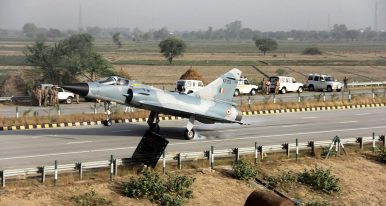
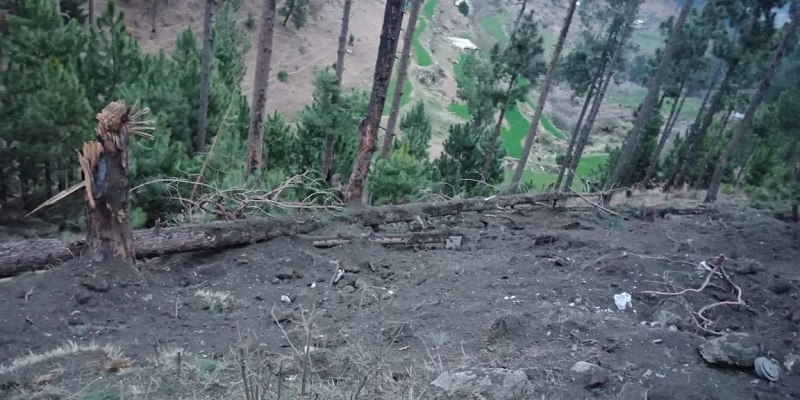
After 12 days of heightened tension between India and Pakistan following the 14 February Pulwama attack in Indian-administered Kashmir, considerable hostilities broke out between the two countries. In the early morning of 26 February, Indian fighter jets reportedly bombed a target in the Khyber Pakhtunkhwa province of Pakistan after crossing over the line of control and Pakistani-administered Kashmir.Infinite darkness of war lies ahead for India and Pakistan: Islamabad needs to ask if forcing New Delhi's hand is truly in its interest
In 415 BCE, the high noon of the power of the greatest empire the world had known, Athens dispatched its massive naval forces to punish the rebellious citizens of Syracuse. For the next several years, Thucydides, son of Olorus, owner of gold mines and survivor of the great plague of Athens, fought weapon in hand for the city he loved—and watched as its wealth, power and values were slowly extinguished in a relentless march to annihilation. In exile, he would reflect on the lessons in a work that, today, ranks among the greatest works of the philosophy of war:Why cybercriminals are stalking your social media accounts
Indian politicians lack good quality policy advice
In September 2017, Prime Minister Narendra Modi introduced some new faces to his cabinet of ministers. Some of them have had previous expertise in a particular area of governance. However, the portfolios allotted to them had nothing to do with their expertise. Hardeep Singh Puri, a former diplomat, was sent to the ministry of housing and urban affairs; KJ Alphons, who had experience in housing and urban affairs, was allotted tourism, and electronics and information technology; Satyapal Singh, a former police commissioner, was given the twin portfolios of human resource development, and water resources, river development and Ganga rejuvenation; and RK Singh, India’s former home secretary, found his new offices in the power ministry and the ministry of new and renewable energy. This cabinet reshuffle reminded me of a problem in a school mathematics textbook: In how many ways can four different letters be put in four distinctly addressed envelopes such that no letter goes in the right envelope?India’s national interests must not be subsumed by politically-motivated, competitive machismo masquerading as patriotism
The unthinkable has happened. For the first time ever, the air forces of two nuclear-armed neighbours, India and Pakistan, have crossed national boundaries and carried out kinetic attacks on each other’s soil. Aerial combat has also resulted in casualties and losses on both sides.Familiar Issues Cloud the Prospects for Afghan Peace
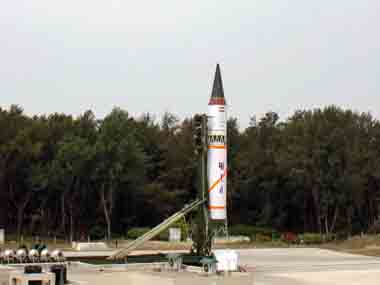
Because Washington is seeking to exit Afghanistan — one of the Taliban's main demands — their talks will proceed, but various other outstanding issues will impede greater progress. Pakistan, the Taliban's primary external sponsor, will push the movement to remain in talks with the aim of ensuring that any U.S. withdrawal proceeds in an orderly manner. The collapse of the Afghan state would threaten Islamabad's economic and security interests. Even though the talks might not soon produce a breakthrough, yet regional powers like Iran, India, China and Russia will all prepare for the ramifications of a U.S. withdrawal.Having called Pakistan's bluff, India must now make its own 'nuclear doctrine' more intimidating and relevant
The treacherous fault lines between Kashmir and the Afghan peace negotiations
The US is pushing negotiations with the Taliban in a bid to cut its losses and leave Afghanistan. But the recent India-Pakistan conflagration over Kashmir has exposed the treacherous fault lines in one of the world’s most dangerous regions.Contractors in Afghanistan are Fleecing the American Taxpayer
US-China Policy Task Force Warns Of China Threat In South China Sea – Analysis
A very distinguished unofficial “task force” of US China experts has issued a rather alarming report regarding the China threat to US security overall –and in the South China Sea in particular. https://asiasociety.org/sites/default/files/inlinefiles/CourseCorrection_FINAL_2.7.19_1.pdf I certainly defer to the group’s expertise regarding the overall picture and the exceedingly complex US-China relationship. However, But assuming that the group’s does not intend to provoke a military conflict I respectfully disagree with both its characterization of the situation in the South China Sea and its recommended way forward.US-China Policy Task Force Warns Of China Threat In South China Sea – Analysis
A very distinguished unofficial “task force” of US China experts has issued a rather alarming report regarding the China threat to US security overall –and in the South China Sea in particular. https://asiasociety.org/sites/default/files/inlinefiles/CourseCorrection_FINAL_2.7.19_1.pdf I certainly defer to the group’s expertise regarding the overall picture and the exceedingly complex US-China relationship. However, But assuming that the group’s does not intend to provoke a military conflict I respectfully disagree with both its characterization of the situation in the South China Sea and its recommended way forward.China's technology challenge is bigger than just Huawei, British spymaster says
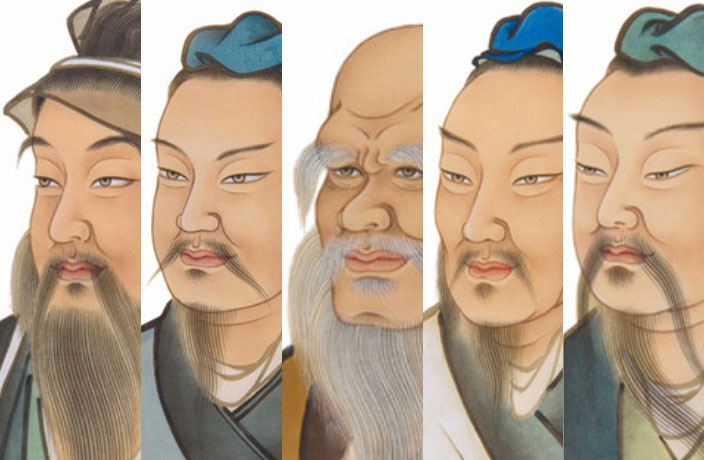
5 Ancient Chinese Philosophers You Need to Know
Introduction to China’s Military Operations Other than War
With its increasing capability witnessed in recent decades, the People’s Liberation Army’s (PLA) conduct of military operations other than war (MOOTW) remains woefully understudied. With most analyses concurring it improbable that Beijing would engage in traditional security operations in the foreseeable future, responses to non-traditional security (NTS) threats would appear to be an aspect where the PLA’s capabilities will continue to be showcased. In reviewing China’s MOOTW, this policy report provides a retrospective account of how the PLA has overseen previous MOOTW activities, as well as identify those areas of PLA MOOTW expected to undergo further refinement. A better appreciation of NTS and China’s MOOTW will provide a positive platform for facilitating cooperation between Beijing and other countries in the region.Yemen: The 60-Year War
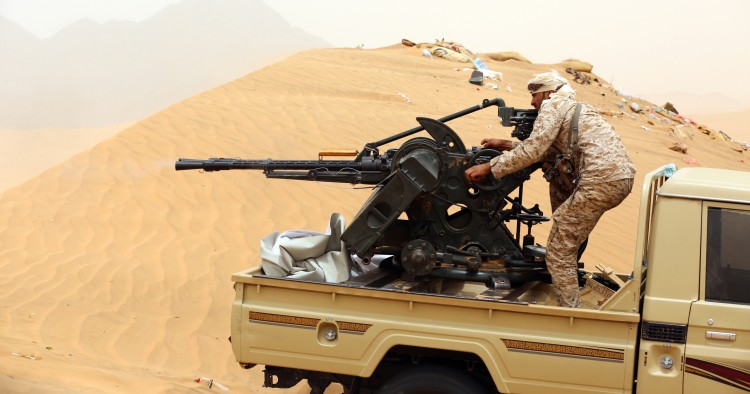
The root causes of the ongoing civil conflict in Yemen lie in the failure of Yemeni society to address and resolve the popular anger and frustration arising from political marginalization, economic disenfranchisement, and the effects of an extractive, corrupt, rentier state. This systemic failure has produced a cycle of violence, political upheaval, and institutional collapse since the creation of the modern Yemeni state in the 1960s, of which the current conflict is only the latest eruption.Clausewitz, Jihad, and Non-Lethal Weapons
Hypersonic Missile Nonproliferation Hindering the Spread of a New Class of Weapons
What are the implications of the proliferation of hypersonic missiles to additional nations? That is, why should the United States and the rest of the world be concerned with such proliferation, and why should it be addressed now? What are the possible measures to hinder such proliferation? That is, is it feasible to hinder the spread of this technology, and who should buy into such an objective and with what measures? Which specific hypersonic technologies could be subject to export controls? What are the technical barriers to mastering hypersonic technologies? What are the economic barriers to mastering hypersonic technologies?Resilience and Adaptation Strategies Can Address the Impacts of Climate Change
By the end of this century, Chicago could face the kind of searing summer heat that Las Vegas sees now. Phoenix could hit 110 degrees, 60 or more days a year.Engagement with North Korea: Small Steps May Matter More Than Big Ones
The second summit between U.S. President Donald Trump and North Korean leader Kim Jong Un is scheduled for February 27 and 28 in Vietnam. What can be expected?Energy Geopolitics in 2019
Twenty-First Century Proxy Warfare: Confronting Strategic Innovation in a Multipolar World
New America, as part of its partnership with Arizona State University, has embarked on a multiyear research project on twenty-first century proxy warfare. This report is the first in a series on conflicts in the Greater Middle East and its periphery that will be published as part of the project. This study highlights research gaps and reconceptualizes proxy warfare as a strategy that relies on third-party armed forces that lie outside the constitutional order of rival states engaged overtly or covertly in armed conflict. The analysis draws on a broad review of the existing literature and conversations with more than three dozen policymakers, researchers, and practitioners from July to October 2018. The analysis is also informed by discussions during a workshop on the subject of proxy warfare held by New America in coordination with Arizona State University and the Omran Center for Strategic Studies in Istanbul, Turkey, featuring more than 35 journalists, analysts, and former policymakers.Awesome Resources: Revealing Critical Information Infrastructure
Information Domination Through Mission Integration
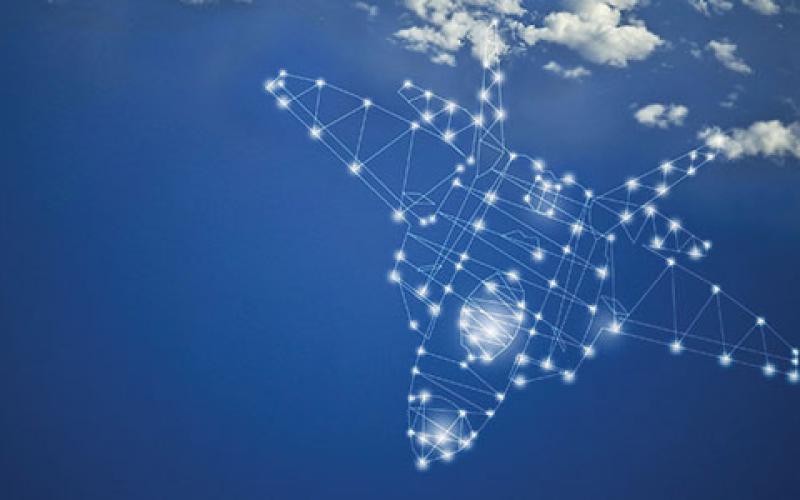
The newly created Cyber and Non-Kinetic Operations Division within the Air Combat Command is expected to reach full strength this summer. The new organization integrates multiple missions, including cyber, electronic warfare, intelligence and information warfare.APG/MENAFATF SOCIAL MEDIA & TERRORISM FINANCING REPORT
5G TECHNOLOGY IS COMING – LINKED TO CANCER, HEART DISEASE, DIABETES, ALZHEIMER’S, AND DEATH
Putting a Spotlight on Information
As the U.S. Army continues to evolve its newest warfighting domain, the cyber domain, information plays a key role. The service is working to incorporate information capabilities along with intelligence, electronic warfare, cyber and space, as well as with traditional fire capabilities.