In an interview, Chaudhry Fawad Hussain said no American warplane had been deployed India Today's findings revealed Nauman Ali Kahn is an F-16 pilot Sourced images show Khan taking part in joint military exercise with US Air Force in 2010The Profession of Arms: A Guide for Young Army Officers
It takes courage, especially for a young officer, to check a man met on the road for not saluting properly or for slovenly appearance, but, every time he does, it adds to his stock of moral courage, and whatever the soldier may say, he has respect for the officer who does pull him up.
Read Document →The Dragon's Teeth: Assessing China's Military Modernization
PLA has focused on modernising its capabilities across all warfare domains to achieve these goals. This includes land, air, and maritime operations, nuclear, space, counter-space, electronic warfare and cyberspace operations, aiming to become a fully integrated joint force.
Read Document →Transforming the PLA: A Decade of reorganisation from SSF to ISF
PRC has engaged in a sustained and broad effort to transform the PLA from an infantry-heavy, low-technology, ground forces-centric military into a high-technology, networked force with an increasing emphasis on joint operations and naval and air power projection.
Read Document →Eyes without Borders: Exploring the World of Open Source Intelligence (OSINT) in the Digital Age
Open Source Intelligence (OSINT) is gaining prominence with the rise of social media, the digital society and the vast growth of publicly and commercially available information (PAI and CAI).
Read Document →
The PLA’s Developing Cyber Warfare Capabilities and India's Options
Informationised warfare blurs the lines between peacetime and wartime. A nation in the information age cannot wait for the hostilities to break out to collect intelligence, carryout influence operations, develop antisatellite systems or design computer software weapons.
Read Document →
Galwan and After
Why did China did this when he is under tremendous pressure in all fronts, is this China's salami slice tactics being progressed rigorously, what will be new Rules of Engagement, what will be escalatory control mechanism, who has taken this decision, will there be some pressure put by China in India's North-East through insurgency.
Read Document →
India’s Joint Doctrine for Cyberspace Operations: A Critical Review
Chief of Defence Staff (CDS) General Anil Chauhan and Secretary, Department of Military Affairs, formally released declassified versions of the Joint Doctrines for Cyberspace Operations during the Chiefs of Staff Committee meeting in New Delhi.
Read Document →
Know your Enemy General(now Field Marshal) Syed Aseem Munir
Gen SA Munir's position in the hierarchy of Pakistan was not very comfortable. The state of economy, insurgency in Pakhtoonistan and Balochistan, attack on the Jaffar Express, constant protests by supporters of Imran Khan's supporters inside and outside of parliament.
Read Document →
Decoding Operation SINDOOR: Key Aspects and Implications
Precision strikes were carried out on nine sites—four in Pakistan and five in PoK—linked to anti-India terrorist groups such as the LeT, JeM and the Hizbul Mujahideen. The targeted sites included Muridke (LeT headquarters) and Bahawalpur (JeM headquarters).
Read Document →
Chinese Cyber Exploitation in India's Power Grid - Is There a linkage to Mumbai Power Outage?
The New York Times (NYT), based on analysis by a U.S. based private intelligence firm Recorded Future, reported that a Chinese entity penetrated India’s power grid at multiple load dispatch points. Chinese malware intruded into the control systems that manage electric supply across India, along with a high-voltage transmission substation and a coal-fired power plant
Read Document →30 March 2019
Pak lie exposed by India Today TV: Terroristan flew F-16 jets to attack India
In an interview, Chaudhry Fawad Hussain said no American warplane had been deployed India Today's findings revealed Nauman Ali Kahn is an F-16 pilot Sourced images show Khan taking part in joint military exercise with US Air Force in 2010Asian Free Trade Proposal Is Broad in Scope, Narrow in Focus
The proposed Regional Comprehensive Economic Partnership (RCEP)'s comparatively narrow focus on tariffs to the exclusion of nontariff barriers would limit the agreement's boost to Asian trade. The 16 countries negotiating RCEP likely will not reach consensus on a final deal until after the conclusion of 2019 elections in India, Australia and Indonesia. Because India views free trade as a vehicle for economic growth in an era of rising protectionism, it will remain committed to negotiating an RCEP agreement, though its demands are likely to further delay a conclusive deal. Despite its limitations, RCEP offers the Association of Southeast Asian Nations a chance to help promote intraregional trade. China will demand a rapid resolution to negotiations so it can seek enhanced market access to offset a cooling economy against the backdrop of its trade war with the United States.One Step Closer to an Elusive Peace in Afghanistan
Last year, when President Donald Trump gave the go-ahead for negotiations to start between the US and the Taliban, nobody expected his patience to last very long. He could sabotage the American negotiating team at any time, many observers feared, by ordering an arbitrary pullout of US forces from Afghanistan, leaving the Afghan government vulnerable to a Taliban takeover of Kabul.US-China Who Is Bigger and When
When China Convinced the US That Uighurs Were Waging Jihad
They arrived at the American detention center in Guantรกnamo Bay, Cuba—where, as Defense Secretary Donald Rumsfeld put it, the “worst of the worst” would be held—a few months after 9/11, directly from Bagram Airfield in Afghanistan. There were 22 of them, all men, all of them Muslim, bearded, ranging in age from their early 20s to their mid-40s. Five had been captured by American forces following a battle in northern Afghanistan, and the other 17 were seized by police in Pakistan.U.S. and China Got Into a Trade War and Mexico Won
US-China Trade War: Mixed Currency Fortunes? – Analysis
The last trade war that the United States fought against the world’s second largest economy was in the 1970s witht Japan. That trade war fundamentally changed the structure of the Japanese economy while the nature of the US trade deficit remained unchanged. In the early 1980s, Japan accounted for 50 percent of the US trade deficit. Today, China accounts for nearly 50 percent of the US deficit.No Middle-Income Trap for China
China's Slowdown and the World Economy

Electronic Weapons: Pixel Perfect Targets
Kazakhstan Caught In Great Power Rivalry – Analysis
President Nursultan Nazarbayev’s resignation from leadership marks an end of an era for Kazakhstan – a country he has ruled since 1989, when it was still part of the Soviet Union. As Central Asia’s largest and richest country that borders revisionist Russia and rising China, Kazakhstan could become the epicenter for great power competition as Beijing seeks global dominance at the expense of the United States and Russia. As Kazakhstan’s regime undergoes transition, so will the country’s foreign policy and a regional dynamic that centers on triangular competition among Russia, China and Central Asia over natural resources and markets. How China positions itself in Kazakhstan and Central Asia could become a litmus test of Beijing’s economic diplomacy and geopolitical aims in challenging Russia.Strategic Strong Points and Chinese Naval Strategy
Italy’s Belt and Road Deal With China Widens Rifts in the Euro-Atlantic Alliance
On March 23, Italy officially joined China’s Belt and Road Initiative, or BRI, an expansive development strategy first unveiled in 2013 that aims to build a network of roads, railways and ports connecting China with more than 60 countries across Africa, the Middle East and Europe. They Are Thriving After Years of Persecution but Fear a Taliban Deal
KABUL, Afghanistan — Daoud Naji was a student in the northern Afghan city of Mazar-e-Sharif during a massacre of members of his ethnic Hazara minority in 1998. He remembers digging tunnels to hide terrified families during a Taliban killing spree that left as many as 2,000 civilians dead.Israel, Palestinian Territories: With Rockets and Retaliation, the Specter of Another Gaza Conflict Looms
Relations between the Israeli government and the militant forces who rule the Palestinian Gaza Strip frequently deteriorate into small-scale skirmishes along the Gaza-Israel border. Yet political constraints on both sides contain the violence, preventing a larger conflict — such as the localized war that took place between Israel Defense Forces and Hamas in 2014 — from evolving. If unusually long-range rocket launches from the Gaza Strip occur more frequently, the Israeli threshold for a stronger retaliation will lower, even on the eve of a contentious general election.Europe’s Largest Party Suspends Its Resident Autocrat—for Now
A Test Case for Reciprocity: The US Reciprocal Access to Tibet Act
Western governments have long complained about the lack of reciprocity in dealing with China. As the traditional basis for international relations, reciprocity suggests that benefits and penalties alike, granted from one state to another, should be returned in kind.The Economic Consequences of Global Uncertainty
As Lawrence J. Lau of Stanford University has shown, the problem is not that tit-for-tat tariffs have had an especially large impact, except perhaps on particular US and Chinese economic sectors. Rather, the conflict has cast doubt on the future of global economic connectivity, which has led to lower investment and consumption in China and the United States, and among their respective trading partners.A Middle Path? US Public Opinion and Grand Strategy
In recent years, a sharp debate dominates the scholarly literature on American foreign policy and grand strategy: should the United States retrench from the expansive commitments undertaken in the aftermath of World War II as a globe-spanning military superpower, or should it renew its efforts to pursue the present strategy of global leadership? This issue is not merely of parochial interest to academics; rather, it represents the key dilemma faced by Washington foreign policymakers in the aftermath of the 2016 election campaign and the changes brought by the anti-establishment Trump presidency. Both sides of this debate contend that the American public supports their preferred strategy. However, a closer examination of recent public opinion date actually shows that the American people favor a “middle path” rather than either of the two preferred grand strategies advanced by proponents of Global Leadership and Restraint, respectively.The Lost Art of American Diplomacy
Global police arrest dozens of people in dark web stin
U.K., EU: London Buys More Time for Brexit. What's Next?
In our 2019 Annual and Second-Quarter Forecasts, Stratfor said that a delayed Brexit was possible, considering the United Kingdom's difficulties with approving an exit agreement. Developments on March 21 confirmed those forecasts. But the United Kingdom has only bought more time, and a hard exit is still possible considering the country's internal divisions.Have the grown-ups killed the Green New Deal?
How to Read a Scientific Paper in 5 Steps
Andrew Marshall, Pentagon’s Threat Expert, Dies at 97
Lasers: Beyond The Power Problem
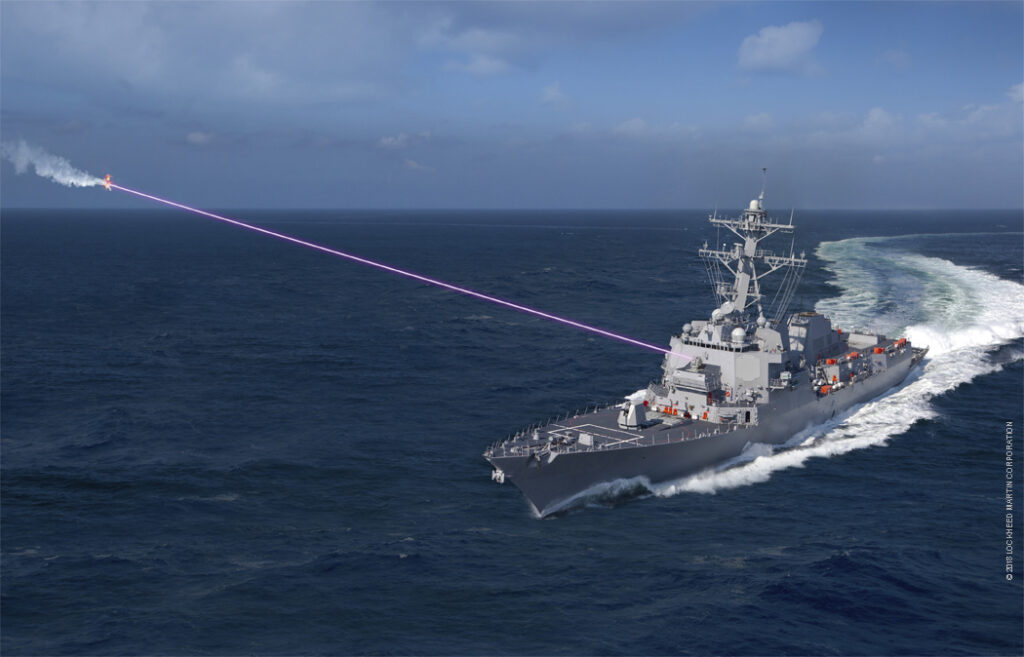
WASHINGTON: Integration of lasers on ships and other weapons is the biggest challenge today— not power. Officers and officials say there are lots of devilish details to deal with before the US military can employ laser weapons on the battlefield, from beam control to targeting to controls you can operate without a PhD.Mobility’s second great inflection point
Understanding the Army’s new approach to its tactical network
As Army leaders develop a new approach to the tactical network, which allows soldiers on the battlefield to communicate with their commanders, officials are deviating from past practices as a way to improve connectivity, bolster resiliency and keep pace with technology.How 5G Can Advance the SDGs
In Test of Boeing Jet, Pilots Had 40 Seconds to Fix Error
During flight simulations recreating the problems with the doomed Lion Air plane, pilots discovered that they had less than 40 seconds to override an automated system on Boeing’s new jets and avert disaster.