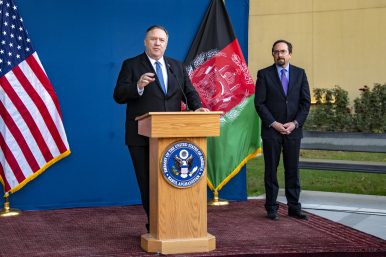
Mike pompeo, America’s secretary of state, had two objectives during his trip to Delhi on June 25th. The first was to affirm India’s importance to America, which envisages a grand Indo-Pacific alliance to counter China. The second was to soothe an increasingly heated row about trade. Achieving the first was easy enough, but the second is proving harder.The Profession of Arms: A Guide for Young Army Officers
It takes courage, especially for a young officer, to check a man met on the road for not saluting properly or for slovenly appearance, but, every time he does, it adds to his stock of moral courage, and whatever the soldier may say, he has respect for the officer who does pull him up.
Read Document →The Dragon's Teeth: Assessing China's Military Modernization
PLA has focused on modernising its capabilities across all warfare domains to achieve these goals. This includes land, air, and maritime operations, nuclear, space, counter-space, electronic warfare and cyberspace operations, aiming to become a fully integrated joint force.
Read Document →Transforming the PLA: A Decade of reorganisation from SSF to ISF
PRC has engaged in a sustained and broad effort to transform the PLA from an infantry-heavy, low-technology, ground forces-centric military into a high-technology, networked force with an increasing emphasis on joint operations and naval and air power projection.
Read Document →Eyes without Borders: Exploring the World of Open Source Intelligence (OSINT) in the Digital Age
Open Source Intelligence (OSINT) is gaining prominence with the rise of social media, the digital society and the vast growth of publicly and commercially available information (PAI and CAI).
Read Document →
The PLA’s Developing Cyber Warfare Capabilities and India's Options
Informationised warfare blurs the lines between peacetime and wartime. A nation in the information age cannot wait for the hostilities to break out to collect intelligence, carryout influence operations, develop antisatellite systems or design computer software weapons.
Read Document →
Galwan and After
Why did China did this when he is under tremendous pressure in all fronts, is this China's salami slice tactics being progressed rigorously, what will be new Rules of Engagement, what will be escalatory control mechanism, who has taken this decision, will there be some pressure put by China in India's North-East through insurgency.
Read Document →
India’s Joint Doctrine for Cyberspace Operations: A Critical Review
Chief of Defence Staff (CDS) General Anil Chauhan and Secretary, Department of Military Affairs, formally released declassified versions of the Joint Doctrines for Cyberspace Operations during the Chiefs of Staff Committee meeting in New Delhi.
Read Document →
Know your Enemy General(now Field Marshal) Syed Aseem Munir
Gen SA Munir's position in the hierarchy of Pakistan was not very comfortable. The state of economy, insurgency in Pakhtoonistan and Balochistan, attack on the Jaffar Express, constant protests by supporters of Imran Khan's supporters inside and outside of parliament.
Read Document →
Decoding Operation SINDOOR: Key Aspects and Implications
Precision strikes were carried out on nine sites—four in Pakistan and five in PoK—linked to anti-India terrorist groups such as the LeT, JeM and the Hizbul Mujahideen. The targeted sites included Muridke (LeT headquarters) and Bahawalpur (JeM headquarters).
Read Document →
Chinese Cyber Exploitation in India's Power Grid - Is There a linkage to Mumbai Power Outage?
The New York Times (NYT), based on analysis by a U.S. based private intelligence firm Recorded Future, reported that a Chinese entity penetrated India’s power grid at multiple load dispatch points. Chinese malware intruded into the control systems that manage electric supply across India, along with a high-voltage transmission substation and a coal-fired power plant
Read Document →30 June 2019
India presents America with a choice between geopolitics and trade
Mike pompeo, America’s secretary of state, had two objectives during his trip to Delhi on June 25th. The first was to affirm India’s importance to America, which envisages a grand Indo-Pacific alliance to counter China. The second was to soothe an increasingly heated row about trade. Achieving the first was easy enough, but the second is proving harder.Inside the deadly world of India’s sand mining mafia
Opinion: America’s three big mistakes in Afghanistan
Pompeo Optimistic About Peace in Brief Visit to Afghanistan En Route to Asia
A Preliminary Survey of CCP Influence Operations in Japan
Containment Plan: How Trump Can Challenge China's Rising Power
The Trump administration should reach out to Allies and partners to build a coalition to prevent and plan for growing Chinese and Russian alignment.Taiwan Desperately Needs This 1 Thing to Stop China if War Comes
What are Taiwan’s military capabilities, and does Taiwan stand a chance of repelling a prospective Chinese invasion?U.S. Tech Companies Sidestep a Trump Ban, to Keep Selling to Huawei
SHANGHAI — United States chip makers are still selling millions of dollars of products to Huawei despite a Trump administration ban on the sale of American technology to the Chinese telecommunications giant, according to four people with knowledge of the sales.Is Turkey’s Future in Play After the Opposition Won Istanbul’s Election Rerun?
The results of Sunday’s rerun election for mayor of Istanbul sent headline writers and political commentators scrambling for the right description. One Turkish newspaper called the crushing defeat of President Recep Tayyip Erdogan’s hand-picked candidate an “earthquake.” Another called it a “people’s victory.” Cumhuriyet, the main opposition daily, declared that “one-man rule” had been “thrashed.”Iran's Asymmetric Order of Battle
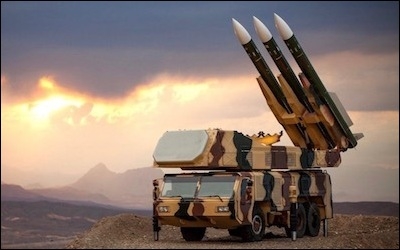
Originally published under the title "If There Is a War: This Is How U.S. and Allies Stack up to Iran."Why War With Iran Isn’t in the United States’ Interests
The U.S.-Iran standoff continues to evolve quickly, yet the blow-by-blow commentary covering tanker attacks, a downed drone, and reversed orders for airstrikes from the White House fails to consider the strategic logic behind an intervention, if in fact the Trump administration decides to intervene. With that in mind, it’s worth taking a moment to imagine what a war between the two would actually look like.Leveraging Iran
EXECUTIVE SUMMARY: Mainstream analysis of the current crisis in US-Iran relations revolves around “maximum pressure” sanctions and potential American military contingencies. There is another move, however, involving a unique set of knights on the regional chessboard – and one that comes straight out of Tehran’s own playbook.Why Franco-German Leadership on European Defense is Not in Sight
In January 2019, French President Emmanuel Macron and German Chancellor Angela Merkel signed the Aachen Treaty, intended to renew the 1963 Elysรฉe Treaty which outlined the future of a Franco-German friendship. But Barbara Kunz contends the pomp surrounding the signing ceremony in Aachen barely hides that things are not going well in Franco-German relations, including in European defense cooperation. Why? Simply put, Kunz argues that it’s because France and Germany have different strategic cultures.Europe's Finally Upping Its Defense Spending, and U.S. Companies Want in
The European Union's plans to develop a military initiative and a multi-billion dollar defense fund have threatened the United States' access to its EU allies' defense markets.Not Even Trump Has Any Idea What His Iran Policy Is
The president canceled a strike because it was “not proportionate,” and then vowed “obliteration.”JUN 25, 2019Trump Keeps ‘Maximum Pressure’ on Iran, Even Though It Is Failing in Venezuela
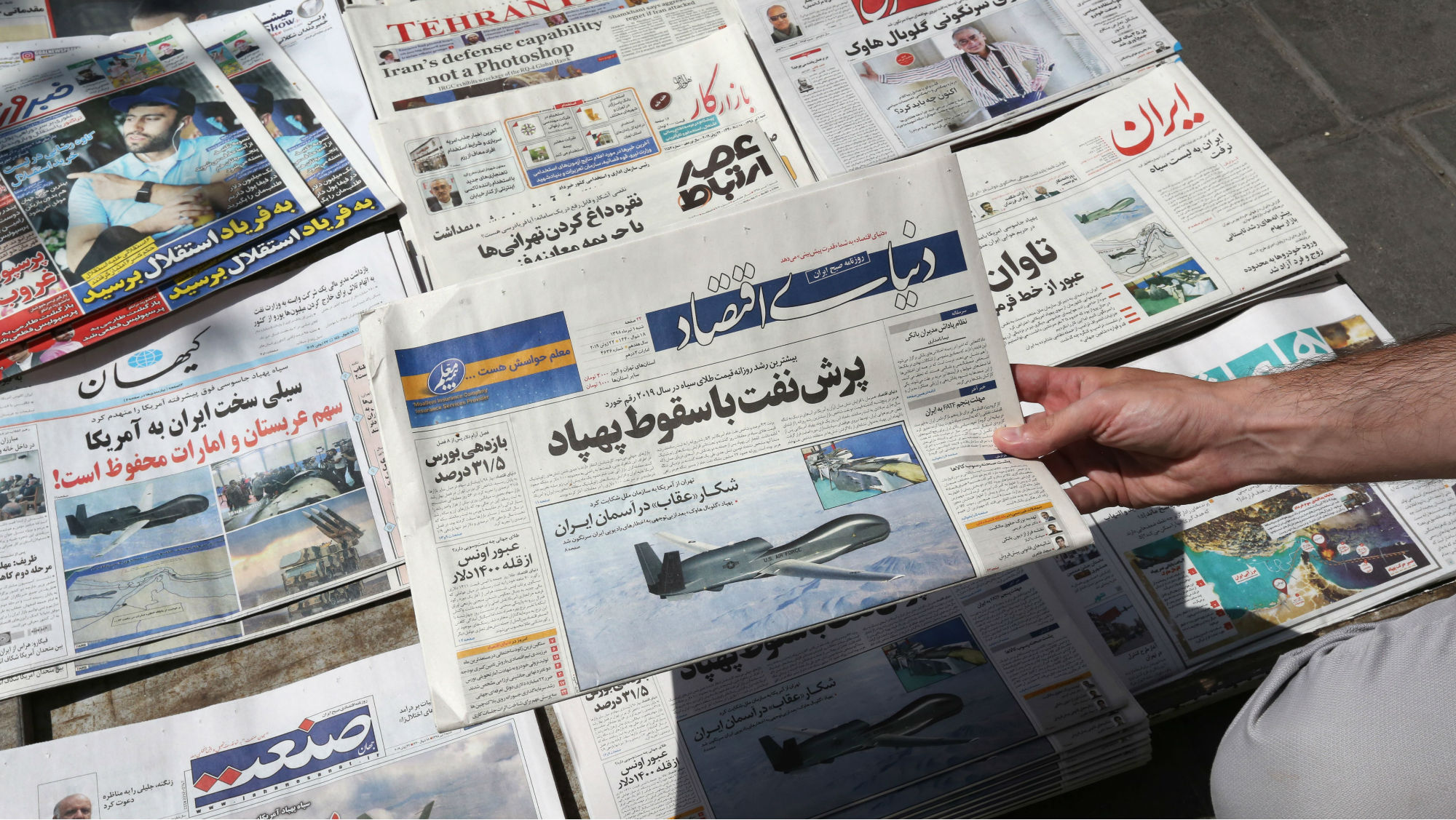
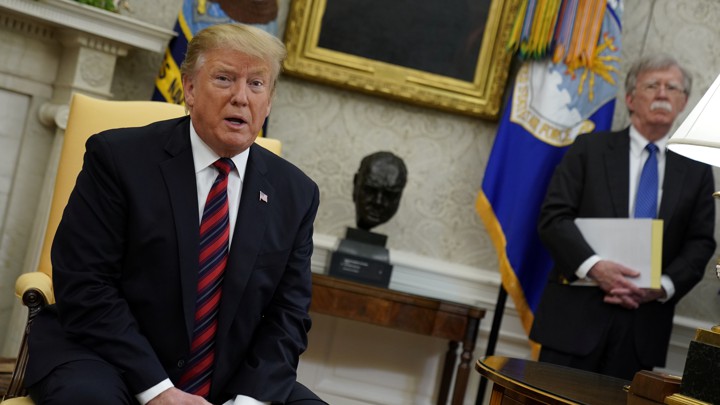
Escalating tensions in the Persian Gulfpeaked last week when President Donald Trump abruptly canceled U.S. airstrikes against Iranian military assets, after Iran shot down an unmanned American surveillance drone over the Gulf of Oman. Trump’s ordering of military strikes, only to change his mind apparently at the last moment, has raised more questions about the administration’s strategy toward Iran and its ultimate goals. Trump’s decision to call off the airstrikes seemed to indicate that he doesn’t see a military solution to this growing crisis, even though that view was thrown for a loop Tuesday when Trump warned on Twitter that “Any attack by Iran on anything American will be met with great and overwhelming force. In some areas, overwhelming will mean obliteration.” ...US is woefully unprepared for cyber-warfare
How Democrats Can Get Tough on China—Without Imitating Trump
Whatever U.S. President Donald Trump is for, Democrats are against, and vice versa—that’s a pretty good rule of thumb in the U.S. foreign-policy debate today. For example, the more Trump aligns himself with the positions of Russian President Vladimir Putin, Saudi Crown Prince Mohammed bin Salman, or Israeli Prime Minister Benjamin Netanyahu, the more vocal Democrats have become in their criticism of those leaders. Conversely, the more Trump attacks NATO, financial assistance to Central America, or former President Barack Obama’s Iran nuclear deal, the more enthusiastically Democrats seem to support them. The substantive differences are genuine, but they are magnified by the politics of opposing Trump.On Watch in the Arabian Gulf: What the U.S. Navy Faces Against Iran
Draft New Education Policy – A Case Of Thinking Inside The Box
The draft policy has been a massive exercise. The scope and scale of issues and consultations are truly mind-boggling.Competition and Cooperation in the Maritime Domain
Competition over the world’s maritime resources and territorial disputes over maritime borders are becoming increasingly prominent in international affairs. At the same time, depleted fish stocks and polluted waters make the question of how countries can collectively manage maritime resources a central one, particularly in discussions over climate change.Raison d’Etat: Richelieu’s Grand Strategy During the Thirty Years’ War
AI Changes Attack Missions for Fighter Jets & Bombers
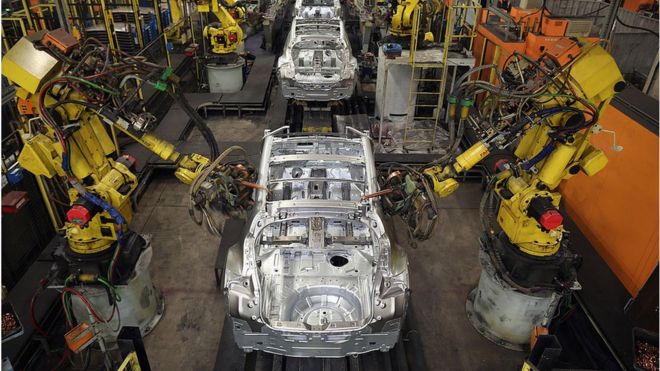
Robots 'to replace up to 20 million factory jobs' by 2030
Up to 20 million manufacturing jobs around the world could be replaced by robots by 2030, according to analysis firm Oxford Economics.About the first cyberwar, an electronic Pearl Harbor
Cyber runs: How a cyber attack could affect U.S. financial institutions
Race to 5G Puts U.S. Economic and National Security at Risk, According to New INSA White Paper
Arlington, VA (June 17, 2019) – In the global race to 5G, it is imperative that U.S. policymakers, wireless carriers, and technology leaders work together to ensure U.S. economic and national security, according to a new white paper issued today by the Intelligence and National Security Alliance (INSA).Whole-of-Government Cyber Information Sharing
Use Of Cyber War As Force Multiplier In US-Iran Escalation – OpEd
The US-Iran relations have escalated since the withdrawal of the United States of America from the Iran nuclear deal. This resulted in harsh sanctions exacerbating the sharp decline of Iran’s economy. The US government has prohibited trade with many Iranian business sectors including carpets, pistachios, aviation and gold. The cyberattacks are the latest episode in the “Ghost Wars” as both Iran and US are heavily engaged in targeting each other’s cyberspace.Want to improve the Army’s infantry?
The Army is in the market for robots and artificial intelligence technology to support its ground infantry troops, increasing their lethality, mobility, protection, situational awareness, endurance, persistence and depth./arc-anglerfish-arc2-prod-mco.s3.amazonaws.com/public/RX23BANJNVHKRIB6MFSMHS64HE.jpg)