The Profession of Arms: A Guide for Young Army Officers
It takes courage, especially for a young officer, to check a man met on the road for not saluting properly or for slovenly appearance, but, every time he does, it adds to his stock of moral courage, and whatever the soldier may say, he has respect for the officer who does pull him up.
Read Document →The Dragon's Teeth: Assessing China's Military Modernization
PLA has focused on modernising its capabilities across all warfare domains to achieve these goals. This includes land, air, and maritime operations, nuclear, space, counter-space, electronic warfare and cyberspace operations, aiming to become a fully integrated joint force.
Read Document →Transforming the PLA: A Decade of reorganisation from SSF to ISF
PRC has engaged in a sustained and broad effort to transform the PLA from an infantry-heavy, low-technology, ground forces-centric military into a high-technology, networked force with an increasing emphasis on joint operations and naval and air power projection.
Read Document →Eyes without Borders: Exploring the World of Open Source Intelligence (OSINT) in the Digital Age
Open Source Intelligence (OSINT) is gaining prominence with the rise of social media, the digital society and the vast growth of publicly and commercially available information (PAI and CAI).
Read Document →
The PLA’s Developing Cyber Warfare Capabilities and India's Options
Informationised warfare blurs the lines between peacetime and wartime. A nation in the information age cannot wait for the hostilities to break out to collect intelligence, carryout influence operations, develop antisatellite systems or design computer software weapons.
Read Document →
Galwan and After
Why did China did this when he is under tremendous pressure in all fronts, is this China's salami slice tactics being progressed rigorously, what will be new Rules of Engagement, what will be escalatory control mechanism, who has taken this decision, will there be some pressure put by China in India's North-East through insurgency.
Read Document →
India’s Joint Doctrine for Cyberspace Operations: A Critical Review
Chief of Defence Staff (CDS) General Anil Chauhan and Secretary, Department of Military Affairs, formally released declassified versions of the Joint Doctrines for Cyberspace Operations during the Chiefs of Staff Committee meeting in New Delhi.
Read Document →
Know your Enemy General(now Field Marshal) Syed Aseem Munir
Gen SA Munir's position in the hierarchy of Pakistan was not very comfortable. The state of economy, insurgency in Pakhtoonistan and Balochistan, attack on the Jaffar Express, constant protests by supporters of Imran Khan's supporters inside and outside of parliament.
Read Document →
Decoding Operation SINDOOR: Key Aspects and Implications
Precision strikes were carried out on nine sites—four in Pakistan and five in PoK—linked to anti-India terrorist groups such as the LeT, JeM and the Hizbul Mujahideen. The targeted sites included Muridke (LeT headquarters) and Bahawalpur (JeM headquarters).
Read Document →
Chinese Cyber Exploitation in India's Power Grid - Is There a linkage to Mumbai Power Outage?
The New York Times (NYT), based on analysis by a U.S. based private intelligence firm Recorded Future, reported that a Chinese entity penetrated India’s power grid at multiple load dispatch points. Chinese malware intruded into the control systems that manage electric supply across India, along with a high-voltage transmission substation and a coal-fired power plant
Read Document →27 September 2019
Don’t Mess With Modi in Texas
Baluch Raji Ajohi Sangar: Emergence of a New Baluch Separatist Alliance
As US-Taliban Peace Process Collapses, an Opportunity for Russia?
On September 9, U.S. President Donald Trump declared that talks with the Taliban were “dead,” after the militant group carried out a car bombing in Kabul which killed a U.S. soldier. Trump’s remarks followed his cancellation of a meeting with the Taliban at Camp David and dashed hopes for a U.S.-Taliban agreement to end the war in Afghanistan. Chinese Covert Social Media Propaganda and Disinformation Related to Hong Kong
Everything Old is New Again: Russian, Chinese, Iranian and North Korean Use of Proxies Against the United States
Competing with China for a Free and Open Indo-Pacific
Chinese troops on parade 13 September 2018 during the Vostok 2018 military exercise on Tsugol training ground in Eastern Siberia, Russia. The exercise involved Russian, Chinese, and Mongolian service members. Chinese participation included three thousand troops, nine hundred tanks and military vehicles, and thirty aircraft. (Photo by Sergei Grits, Associated Press)Modernizing the Military: China’s Path to Hegemony?
The Coming Crisis of China’s One-Party Regime
China Is Waging a Silent Media War for Global Influence
How dominant are Chinese companies globally?
Sustainability with Chinese Characteristics
Expanding Cyber Demands Embolden China’s Homegrown Cybersecurity Darlings
In tandem with the rapid growth of internet accessibility over the last decade, the expanding footprint of cyber warfare has meant no absence of new threats and vulnerabilities. From the individual level all the way to corporations and the bureaucracies responsible for managing sovereign states, no party is immune from the perils of our increasingly connected internet landscape. Saudi Arabia won’t attack Iran. But it may pay someone else to
There is a longstanding joke told in the Middle East about Saudi Arabia’s reluctance to fight its own wars. “Saudi Arabia will fight until the last Pakistani,” the punchline goes, in reference to the fact that Pakistani troops have long supported Saudi’s military endeavours.The Most Dangerous Moment of the Trump Presidency
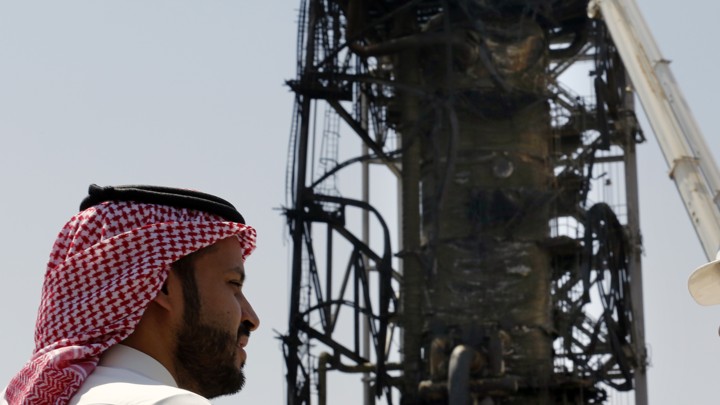
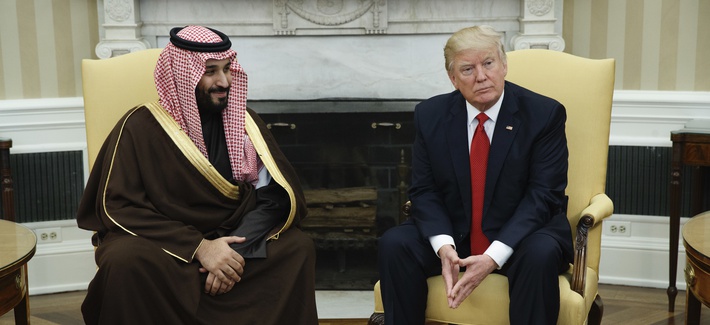
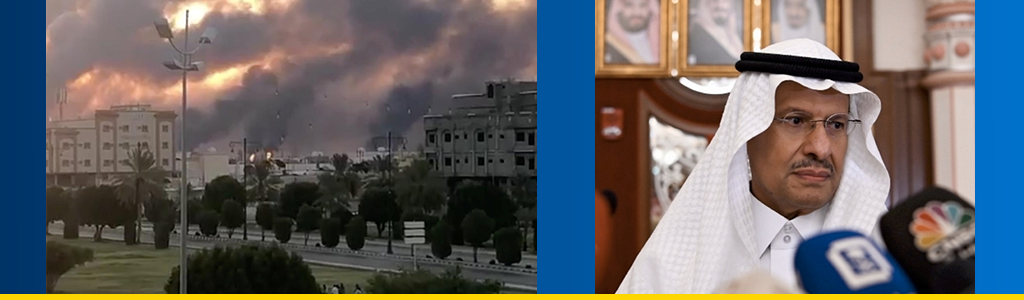
For all of the uncertainty of the Trump administration’s nearly three years in power, genuine international crises have been rare. That’s changing right now. The attack a week ago on Saudi Arabia’s massive Abqaiq oil field took offline half of the country’s oil production—some 5 percent of global output. The drone and missile salvo has the hallmarks of Tehran, and with top administration officials pointing to Iranian culpability, the world is watching to see if and how the United States responds. It’s the most dangerous moment of Donald Trump’s presidency thus far.For Saudi Arabia, What Now?
Saudi leaders thought the kingdom was safe — they were wrong
More Fracking, or More War?
Here is a news lead that begins with a bang and ends with a whimper: “The strike on the heartland of Saudi Arabia’s oil industry, including damage to the world’s biggest petroleum-processing facility, has driven oil prices to their highest level in” — here, Reuters should have used some ellipses of irony — “nearly four months.”Team Iran
No, We Shouldn’t Let Saudi Arabia ‘Fight Its Own Wars’
As the president considers how the United States should respond to a series of aggressive acts by Iran and its proxies in the Middle East, one fact should be clear: There are no good options.Aramco Attack Exposes Saudi Vulnerabilities
Reconciliation Must Drive Development
America’s Gray-Zone Offensive Against Iran Could Turn Into War
Trump Is the Odd Man Out at the U.N.
I Work for N.S.A. We Cannot Afford to Lose the Digital Revolution.
The National Security Operations Center occupies a large windowless room, bathed in blue light, on the third floor of the National Security Agency’s headquarters outside of Washington. For the past 46 years, around the clock without a single interruption, a team of senior military and intelligence officials has staffed this national security nerve center.