The Regional Comprehensive Economic Partnership (RCEP) is a proposed mega-regional trade pact being negotiated between ASEAN and their six FTA partner-countries (India, Australia, China, Japan, South Korea, and New Zealand) since 2012. It covers a wide range of issues, including trade in goods, trade in services, investment, intellectual property rights, competition policy, dispute settlement, and economic and technical cooperation.The Profession of Arms: A Guide for Young Army Officers
It takes courage, especially for a young officer, to check a man met on the road for not saluting properly or for slovenly appearance, but, every time he does, it adds to his stock of moral courage, and whatever the soldier may say, he has respect for the officer who does pull him up.
Read Document →The Dragon's Teeth: Assessing China's Military Modernization
PLA has focused on modernising its capabilities across all warfare domains to achieve these goals. This includes land, air, and maritime operations, nuclear, space, counter-space, electronic warfare and cyberspace operations, aiming to become a fully integrated joint force.
Read Document →Transforming the PLA: A Decade of reorganisation from SSF to ISF
PRC has engaged in a sustained and broad effort to transform the PLA from an infantry-heavy, low-technology, ground forces-centric military into a high-technology, networked force with an increasing emphasis on joint operations and naval and air power projection.
Read Document →Eyes without Borders: Exploring the World of Open Source Intelligence (OSINT) in the Digital Age
Open Source Intelligence (OSINT) is gaining prominence with the rise of social media, the digital society and the vast growth of publicly and commercially available information (PAI and CAI).
Read Document →
The PLA’s Developing Cyber Warfare Capabilities and India's Options
Informationised warfare blurs the lines between peacetime and wartime. A nation in the information age cannot wait for the hostilities to break out to collect intelligence, carryout influence operations, develop antisatellite systems or design computer software weapons.
Read Document →
Galwan and After
Why did China did this when he is under tremendous pressure in all fronts, is this China's salami slice tactics being progressed rigorously, what will be new Rules of Engagement, what will be escalatory control mechanism, who has taken this decision, will there be some pressure put by China in India's North-East through insurgency.
Read Document →
India’s Joint Doctrine for Cyberspace Operations: A Critical Review
Chief of Defence Staff (CDS) General Anil Chauhan and Secretary, Department of Military Affairs, formally released declassified versions of the Joint Doctrines for Cyberspace Operations during the Chiefs of Staff Committee meeting in New Delhi.
Read Document →
Know your Enemy General(now Field Marshal) Syed Aseem Munir
Gen SA Munir's position in the hierarchy of Pakistan was not very comfortable. The state of economy, insurgency in Pakhtoonistan and Balochistan, attack on the Jaffar Express, constant protests by supporters of Imran Khan's supporters inside and outside of parliament.
Read Document →
Decoding Operation SINDOOR: Key Aspects and Implications
Precision strikes were carried out on nine sites—four in Pakistan and five in PoK—linked to anti-India terrorist groups such as the LeT, JeM and the Hizbul Mujahideen. The targeted sites included Muridke (LeT headquarters) and Bahawalpur (JeM headquarters).
Read Document →
Chinese Cyber Exploitation in India's Power Grid - Is There a linkage to Mumbai Power Outage?
The New York Times (NYT), based on analysis by a U.S. based private intelligence firm Recorded Future, reported that a Chinese entity penetrated India’s power grid at multiple load dispatch points. Chinese malware intruded into the control systems that manage electric supply across India, along with a high-voltage transmission substation and a coal-fired power plant
Read Document →5 November 2019
India and Regional Comprehensive Economic Partnership: Key Issues and Implications
The Regional Comprehensive Economic Partnership (RCEP) is a proposed mega-regional trade pact being negotiated between ASEAN and their six FTA partner-countries (India, Australia, China, Japan, South Korea, and New Zealand) since 2012. It covers a wide range of issues, including trade in goods, trade in services, investment, intellectual property rights, competition policy, dispute settlement, and economic and technical cooperation.Tackling Naxalism: A New Approach
Was Hack on Indian Nuclear Plant Used to Test Cyber Intrusion Abilities?
Debates within the Counter-LWE Policy
Why Democratic candidates should propose ‘5,000 for 5’ in Afghanistan
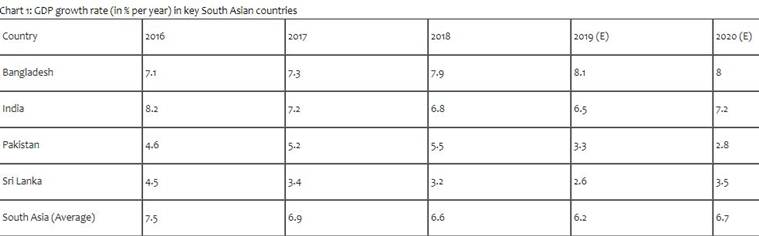
Bangladesh Booms in a Sluggish World Economy
Tibet’s Rivers Will Determine Asia’s Future
At the dawn of a new era of building dams on the Yarlung Tsangpo, countless lives and ecosystems are being risked in the name of “development” and geopolitics.Dept. of Interior Grounds Its Chinese-Made Drones
China’s Global Critics Are Helping It Win
What America Never Understood About ISIS
The Elimination of al-Baghdadi from the Arena: A Limited Shockwave
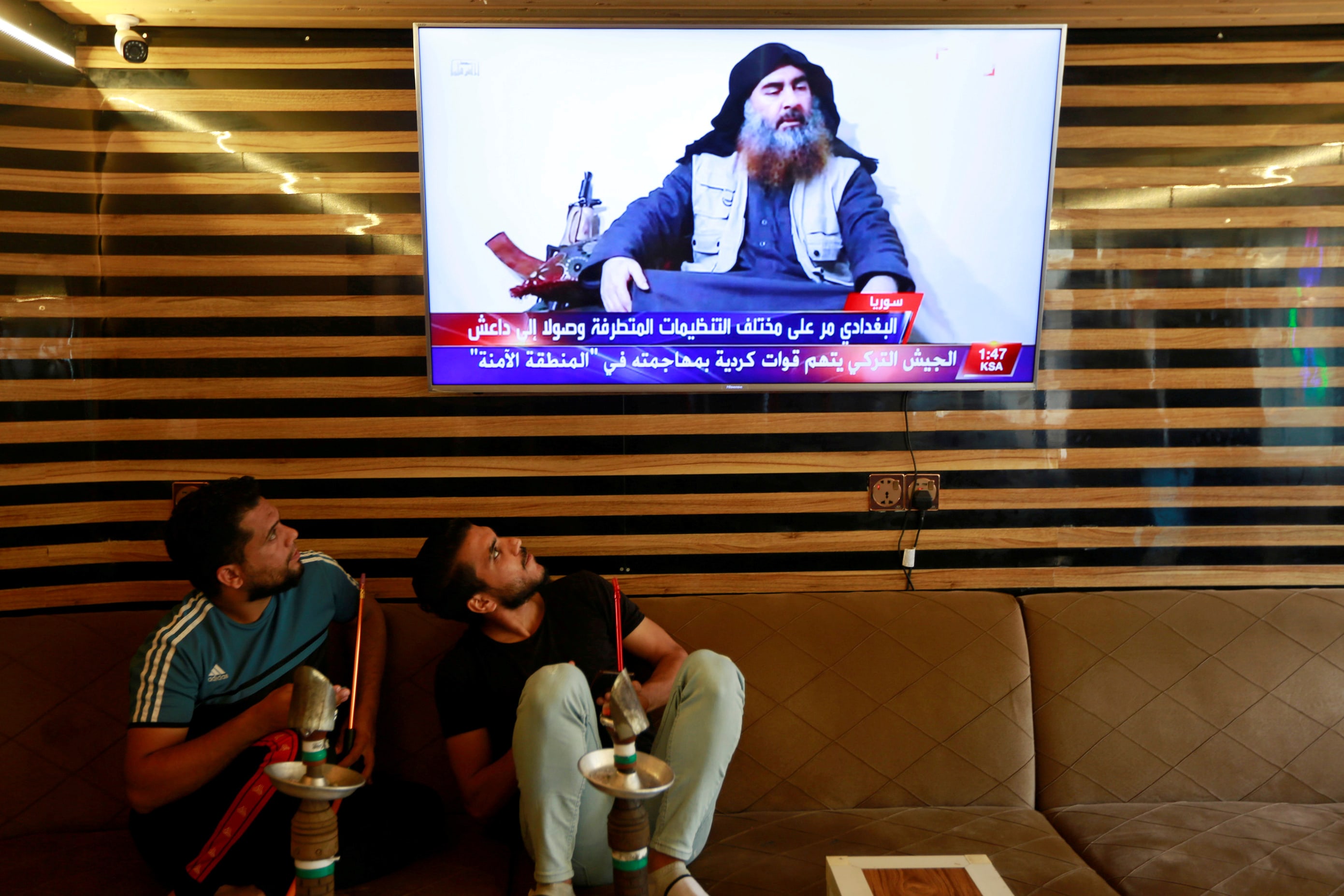
The death of caliph Abu Bakr al-Baghdadi is an important intelligence, operational, and moral achievement for the United States, as well as for its partners in the ongoing international campaign against global terrorist threats. However, the practical significance of this event is less than its symbolic significance. Indeed, the main challenge facing ISIS is far greater than the elimination of its leader, as the organization has struggled in recent months to survive physically and to maintain its position as the dominant organization on the global Salafi-jihadi stage. Thus the elimination of al-Baghdadi from the scene – as important and dramatic as it may seem – is far from heralding the downfall of ISIS or any significant reduction in the dangers posed by the organization, due to the capability attributed to it to recover and to launch terrorist attacks and guerilla warfare in the Levant and beyond. For Israel, the elimination of Abu Bakr al-Baghdadi does not bear much significance. Nonetheless, and although the threat posed to Israel from ISIS inside its territory and at its borders is relatively small Israel should invest intelligence efforts in case the situation changes and for the benefit of its allies abroad.The death of caliph Abu Bakr al-Baghdadi during a commando raid on his hiding place near the village of Barisha in Idlib province conducted on October 26, 2019 by United States special forces is an important intelligence, operational, and moral achievement for the United States, as well as for its partners in the ongoing international campaign against global terrorist threats. However, the practical significance of al-Baghdadi’s death is less than its symbolic significance. The elimination of al-Baghdadi, mainly as an authoritative supreme religious figure of the Islamic State “camp” (rather than as an extraordinary military maverick) is challenging, particularly because the shrinking ISIS organization has struggled in recent months to survive physically. ISIS has also sought to maintain its position as the dominant organization in the global Salafi-jihadi stage against its competitors, al-Qaeda and its allies, and advance preparations to continue and even increase its local, regional, and global activities.
5 lessons from the death of Baghdadi
The Current US Approach to Terror Is a Recipe for Forever War
Without minimizing the bravery and tradecraft that went into killing Abu Bakr al Baghdadi, chasing down terrorist leaders without helping the communities they prey on is a recipe for prolonging, not ending, the war on terror.The Defeat of General Mattis
The Deadly Protests Shaking Iraq: What to Know
The Twin Rise of Populism and Authoritarianism
Globally, the past decade has been marked by the twin advances of authoritarianism and populism. The two are not always linked, but in situations ranging from the Philippines and Cambodia to Hungary and Poland, politicians have leveraged populist movements to seize power. Once in office, they have begun the process of dismantling the institutions designed to check their authority and protect human rights, particularly the judiciary and the media.What Happens to the United Kingdom Now?
LONDON – The United Kingdom’s Brexit psychodrama continues. Although the UK government and the European Union reached a revised withdrawal agreement in mid-October, Prime Minister Boris Johnson was unable to push the deal through Parliament so that the UK could leave the bloc by his hoped-for date of October 31. EU leaders have therefore granted a further three-month extension of the Brexit deadline until January 31, and the UK will now hold a parliamentary election on December 12, which may help to resolve the current impasse. Reimagining U.S. Security Spending For The 21st Century & Beyond
Russia is still a threat, despite what Washington thinks
Beirut 1958 How America's Wars in the Middle East Began
In July 1958, U.S. Marines stormed the beach in Beirut, Lebanon, ready for combat. They were greeted by vendors and sunbathers. Fortunately, the rest of their mission—helping to end Lebanon’s first civil war—went nearly as smoothly and successfully, thanks in large part to the skillful work of American diplomats who helped arrange a compromise solution. Future American interventions in the region would not work out quite as well.U.S. Deterrence in the Middle East Is Collapsing
'I Don't Believe In Limits.' Marathoner Eliud Kipchoge On Breaking the 2-Hour Barrier
“Personally, I don’t believe in limits,” Kenyan marathoner Eliud Kipchoge tells TIME. The Olympic gold medalist and world-record holder put his beliefs to the test on October 12 in Vienna, when he attempted to become the first human in history to run 26.2 miles in under two hours. Kipchoge accomplished this breathtaking feat with relative ease, finishing the test in 1 hour, 59 minutes and 40 seconds. As he approached the finish line, Kipchoge pointed to the crowd before breaking a barrier many had considered impossible.How to Tame Big Tech
Effective Competitive Advantage: Strategy, Technology and Information
Quantum leap: why the next wave of computers will change the world
In 1936, Alan Turing proposed the Turing machine, which became the foundational reference point for theories about computing and computers. Around the same time, Konrad Zuse invented the Z1 computer, considered to be the first electromagnetic binary computer.The Pentagon’s AI Ethics Draft Is Actually Pretty Good
History’s message about regulating AI
How Lasers Work, According to the World's Top Expert
America’s Military Is Misdirected, Not Underfunded
U.S. strategy should be more focused on preventing conflict with nuclear-armed China than on spinning out elaborate war-fighting scenarios.