The Profession of Arms: A Guide for Young Army Officers
It takes courage, especially for a young officer, to check a man met on the road for not saluting properly or for slovenly appearance, but, every time he does, it adds to his stock of moral courage, and whatever the soldier may say, he has respect for the officer who does pull him up.
Read Document →The Dragon's Teeth: Assessing China's Military Modernization
PLA has focused on modernising its capabilities across all warfare domains to achieve these goals. This includes land, air, and maritime operations, nuclear, space, counter-space, electronic warfare and cyberspace operations, aiming to become a fully integrated joint force.
Read Document →Transforming the PLA: A Decade of reorganisation from SSF to ISF
PRC has engaged in a sustained and broad effort to transform the PLA from an infantry-heavy, low-technology, ground forces-centric military into a high-technology, networked force with an increasing emphasis on joint operations and naval and air power projection.
Read Document →Eyes without Borders: Exploring the World of Open Source Intelligence (OSINT) in the Digital Age
Open Source Intelligence (OSINT) is gaining prominence with the rise of social media, the digital society and the vast growth of publicly and commercially available information (PAI and CAI).
Read Document →
The PLA’s Developing Cyber Warfare Capabilities and India's Options
Informationised warfare blurs the lines between peacetime and wartime. A nation in the information age cannot wait for the hostilities to break out to collect intelligence, carryout influence operations, develop antisatellite systems or design computer software weapons.
Read Document →
Galwan and After
Why did China did this when he is under tremendous pressure in all fronts, is this China's salami slice tactics being progressed rigorously, what will be new Rules of Engagement, what will be escalatory control mechanism, who has taken this decision, will there be some pressure put by China in India's North-East through insurgency.
Read Document →
India’s Joint Doctrine for Cyberspace Operations: A Critical Review
Chief of Defence Staff (CDS) General Anil Chauhan and Secretary, Department of Military Affairs, formally released declassified versions of the Joint Doctrines for Cyberspace Operations during the Chiefs of Staff Committee meeting in New Delhi.
Read Document →
Know your Enemy General(now Field Marshal) Syed Aseem Munir
Gen SA Munir's position in the hierarchy of Pakistan was not very comfortable. The state of economy, insurgency in Pakhtoonistan and Balochistan, attack on the Jaffar Express, constant protests by supporters of Imran Khan's supporters inside and outside of parliament.
Read Document →
Decoding Operation SINDOOR: Key Aspects and Implications
Precision strikes were carried out on nine sites—four in Pakistan and five in PoK—linked to anti-India terrorist groups such as the LeT, JeM and the Hizbul Mujahideen. The targeted sites included Muridke (LeT headquarters) and Bahawalpur (JeM headquarters).
Read Document →
Chinese Cyber Exploitation in India's Power Grid - Is There a linkage to Mumbai Power Outage?
The New York Times (NYT), based on analysis by a U.S. based private intelligence firm Recorded Future, reported that a Chinese entity penetrated India’s power grid at multiple load dispatch points. Chinese malware intruded into the control systems that manage electric supply across India, along with a high-voltage transmission substation and a coal-fired power plant
Read Document →9 November 2019
Where Air Pollution Cuts Life Expectancy The Most
Lost in the data localisation debate: Does India have full power to exploit its own data?
The Narendra Modi government wants to reportedly water down the provisions related to data localisation proposed in the draft Personal Data Protection Bill 2018 formulated by the Justice Srikrishna Committee.India’s Quest for Jobs: A Policy Agenda
The Islamic State Will Outlive Baghdadi. Afghanistan Shows How.
Acouple of years ago, a conspiracy theory emerged alleging that the United States was backing the Islamic State in Afghanistan. It had a curious mix of propagators: former Afghan President Hamid Karzai, the Russian government, and large numbers of Pakistani Twitter handles, among others.To End the War in Afghanistan, the U.S. Reaches Out to Its Rivals
The prospects of a U.S. drawdown from Afghanistan has compelled both China and Russia to take a more active role in the peace negotiations. In doing so, Moscow and Beijing are also forging stronger relations with the Taliban, which the United States will try to leverage to ensure the insurgents uphold their end of an eventual peace deal.The NBA’s Hong Kong Disaster Should Warn Britain Off Huawei
The British government is set to grant Huawei access to the parts of the United Kingdom’s 5G network deemed nonessential, likely opening a rift between the U.K. and its allies in the United States and across the Five Eyes. Sources close to the prime minister suggest that the decision is based on technological considerations: Huawei, they claim, is considerably further ahead in its implementation of the fifth-generation communications technology than any other company anywhere else in the world, and the U.K. would be missing out if it ruled out working with the Chinese telecommunications giant. Courting China in a post-Brexit world where the U.K. will need new trade deals might also have been a consideration.Watching Huawei’s “Safe Cities”
Francis Fukuyama interview: “Socialism ought to come back”
Sudan Drawing Down Troops in Yemen in Recent Months
Abu Bakr al-Baghdadi's True Legacy
This July 5, 2014, photo shows an image grab taken from a propaganda video released by al-Furqan Media showing Islamic State leader Abu Bakr al-Baghdadi as he declares himself caliph in Mosul. Now that he is dead, al-Baghdadi has left behind a legacy of supreme violence and other barbarity.Saudi Arabia’s Oil Vision and the Oil Price Cycle
Beyond Baghdadi: The Next Wave of Jihadist Violence
Why are so many countries witnessing mass protests?
FOR ANYONE trying to follow protest movements around the world it is hard to keep up. Large anti-government demonstrations, some peaceful and some not, have taken place in recent weeks in places on every continent: Algeria, Bolivia, Britain, Catalonia, Chile, Ecuador, France, Guinea, Haiti, Honduras, Hong Kong, Iraq, Kazakhstan, Lebanon and more. On November 1st Pakistan joined the ever-lengthening roll as tens of thousands of protesters converged on the capital, Islamabad, to demand that the prime minister, Imran Khan, stand down within 48 hours.Toward a Theory of Journalistic Objectivity
Could Congress Reverse Trump's Decision To Pull Troops Out Of Syria?
It’s Not All Trump’s Fault: Syria Shows the Danger of War on the Cheap
The Yes-Men Have Taken Over the Trump Administration
GERMAN LESSONS Thirty years after the end of history: Elements of an education
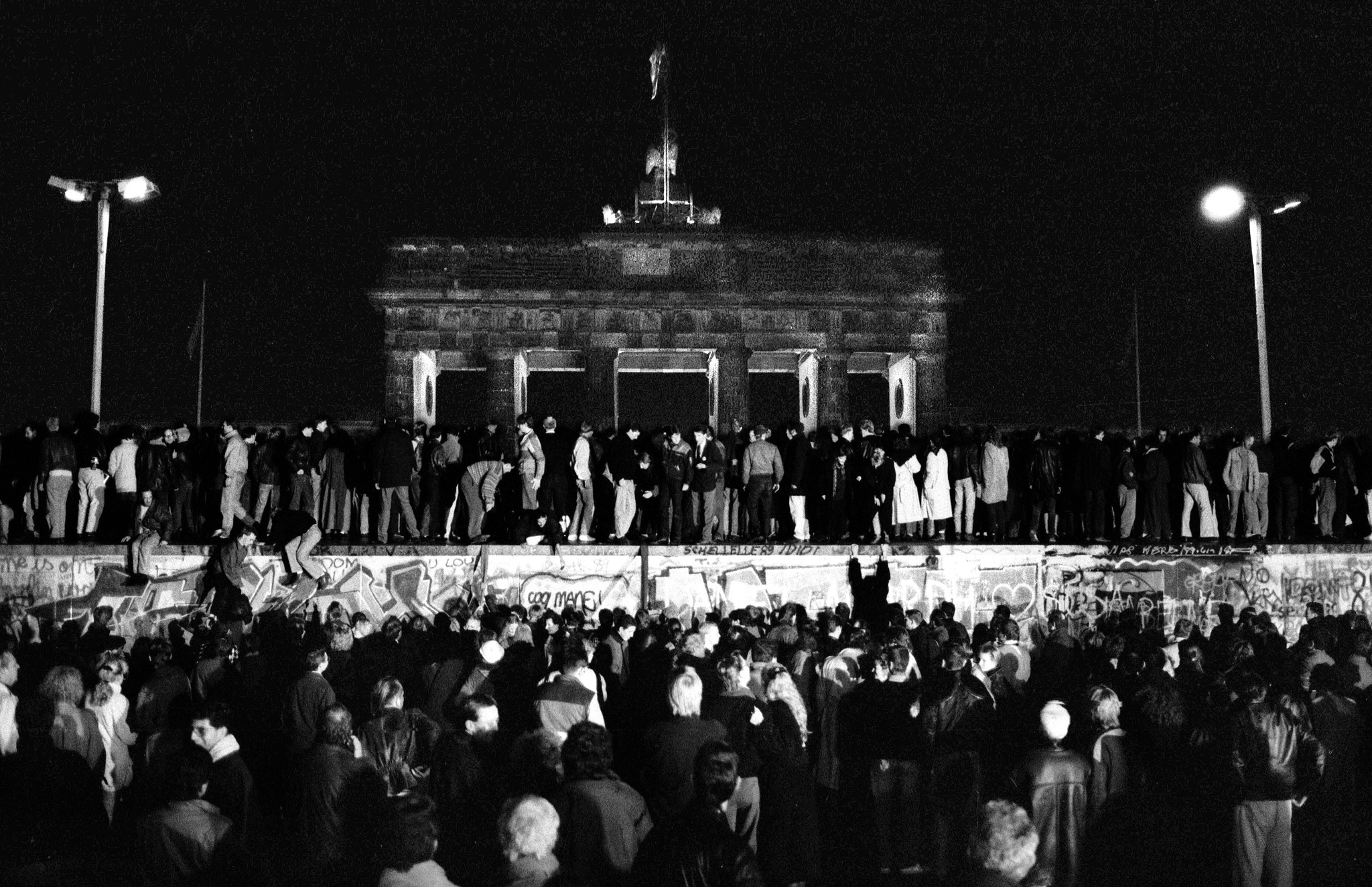
When the revolution happened, I was not there for it. To be exact, I was 3,776 miles away in Somerville, Massachusetts. On the clear, chilly afternoon of November 9, 1989, I was sitting at my desk in the drafty wooden double-decker house whose upper-level apartment I shared with three other graduate students, mulling over an early chapter of my doctoral thesis on direct democracy in America. Hunched over library books on Puritan town meetings, I clasped a mug of steaming tea, swaddled in scarf and sweater, and beneath it all, very probably wearing my L.L. Bean double-layered thermal long underwear, essential for survival in a New England winter.How Trump Is Manipulating U.S. Trade Policy to Suit His Own Political Interests
For just the third time in modern American history, the U.S. House of Representatives is investigating whether a president should be removed from office. Speaker of the House Nancy Pelosi has so far kept the impeachment inquiry narrowly focused on President Donald Trump’s pressure campaign to get Ukraine to dig up dirt on his political opponents. But even as the House approved a resolution last week setting out the next steps in that inquiry, there have been reports of other instances in which Trump appears to be manipulating U.S. policy—in this case involving trade—to serve his narrow political interests, rather than those of the country as a whole.US ballistic missile defenses, 2019
Syria’s Civil War: The Descent Into Horror
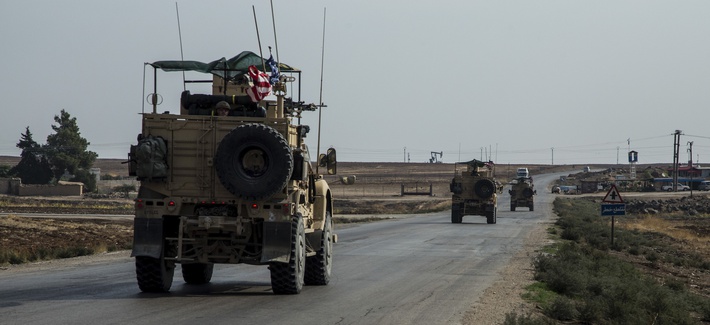
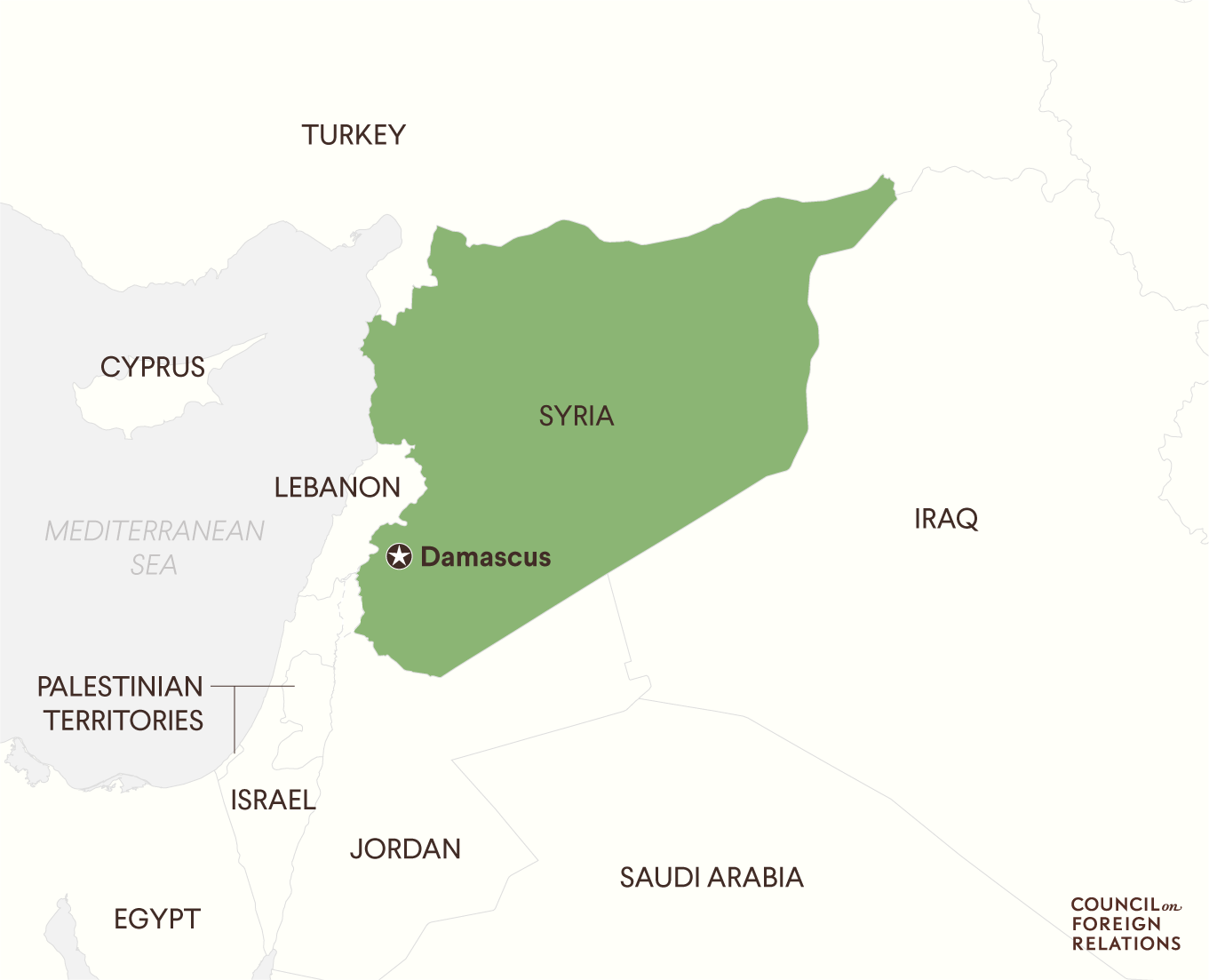
In the eight years since protesters in Syria first demonstrated against the four-decade rule of the Assad family, hundreds of thousands of Syrians have been killed and some twelve million people—more than half the country’s prewar population—have been displaced. The country has descended into an ever more complex civil war: jihadis promoting a Sunni theocracy have eclipsed opposition forces fighting for a democratic and pluralistic Syria, and regional powers have backed various local forces to advance their geopolitical interests on Syrian battlefields. The United States had been at the forefront of a coalition conducting air strikes on the self-proclaimed Islamic State, then abruptly removed forces in October 2019 ahead of the second invasion of northern Syria by Turkey, a North Atlantic Treaty Organization (NATO) ally. The Turks seek to push Kurdish forces, the United States’ main local partner in the fight against the Islamic State, from border areas. Russia too has carried out air strikes in Syria, coming to the Assad regime’s defense, while Iranian forces and their Hezbollah allies have done the same on the ground.The Geopolitics of Brazil: An Emergent Power's Struggle with Geography
This is the 15th in a series of Stratfor monographs on the geopolitics of countries influential in world affairs.Google Is Helping Design an Open Source, Ultra-Secure Chip
The Story of Sandworm, the Kremlin's Most Dangerous Hackers
Over the last half decade, the world has witnessed a disturbing escalation in disruptive cyberattacks. In 2015 and 2016, hackers snuffed out the lights for hundreds of thousands of civilians in the first power outages ever triggered by digital sabotage. Then came the most expensive cyberattack in history, NotPetya, which inflicted more than $10 billion in global damage in 2017. Finally, the 2018 Olympics became the target of the most deceptive cyberattack ever seen, masked in layers of false flags.Report: The Government and Tech Need to Cooperate on AI
DISA’s 10 tech focuses for 2020
The Defense Information Systems Agency wants to improve the military’s cybersecurity posture in 2020 and that focus is evident in the agency’s top priorities for emerging technologies.The Zero-Day War? How Cyber is Reshaping the Future of the Most Combustible Conflicts
As tensions rage beneath the Middle East cauldron, the expanded employment of cyber operations is preventing the region from boiling over. An Oct. 17 Reuters report detailing the United States’ covert cyber operation against Iran, in response to the Sept. 14 attacks on oil facilities in Saudi Arabia, underscores the inclination of states to use cyber operations and points to broader strategic implications in the region. Israeli-Saudi security cooperation quietly incubated over mutual intolerance toward an expansionist Iran is blossoming into a gradually open relationship, with cyber at its heart. Bonds such as these, forged behind closed doors, provide options for de-escalatory approaches to regional conflict. Twitter Will Ban All Political Ads, C.E.O. Jack Dorsey Says
SAN FRANCISCO — Twitter said on Wednesday that it would ban all political ads, putting a spotlight on the power and veracity of online advertising and ramping up pressure on Facebook’s chief executive, Mark Zuckerberg, to reverse his hands-off stance.Stories of technological threat—and hope
These Five Next-Generation Weapons Are How The U.S. Army Plans To Beat Russia and China
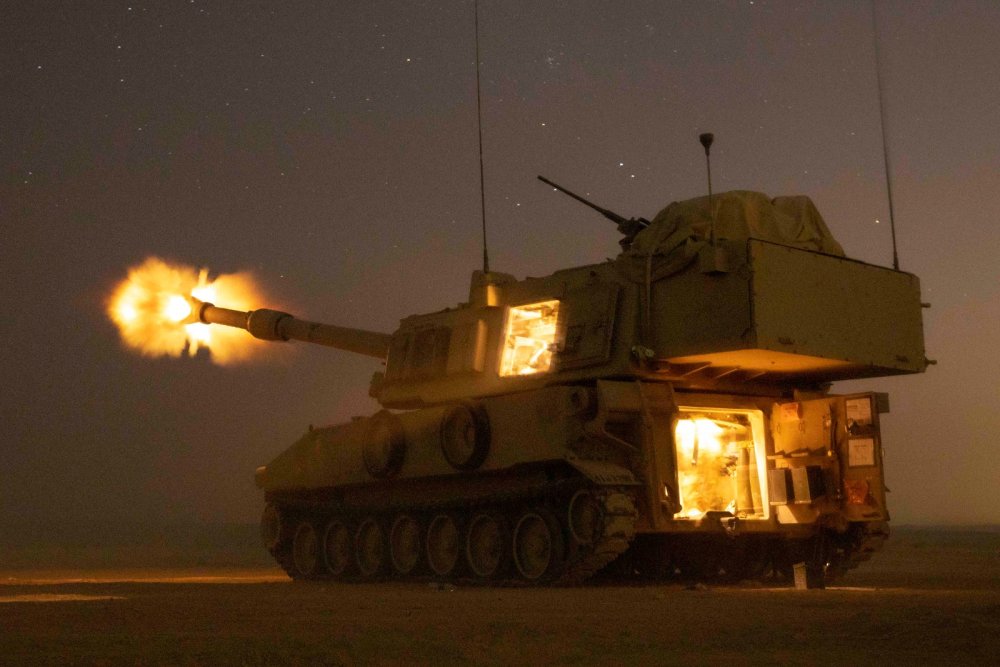
The U.S. Army already fields an impressive array of weapons. But as the U.S. Army prepares itself for potential conflicts against high-tech Russian and Chinese armies, the Army is working on a slew of new systems ranging from tanks to missiles.