The Profession of Arms: A Guide for Young Army Officers
It takes courage, especially for a young officer, to check a man met on the road for not saluting properly or for slovenly appearance, but, every time he does, it adds to his stock of moral courage, and whatever the soldier may say, he has respect for the officer who does pull him up.
Read Document →The Dragon's Teeth: Assessing China's Military Modernization
PLA has focused on modernising its capabilities across all warfare domains to achieve these goals. This includes land, air, and maritime operations, nuclear, space, counter-space, electronic warfare and cyberspace operations, aiming to become a fully integrated joint force.
Read Document →Transforming the PLA: A Decade of reorganisation from SSF to ISF
PRC has engaged in a sustained and broad effort to transform the PLA from an infantry-heavy, low-technology, ground forces-centric military into a high-technology, networked force with an increasing emphasis on joint operations and naval and air power projection.
Read Document →Eyes without Borders: Exploring the World of Open Source Intelligence (OSINT) in the Digital Age
Open Source Intelligence (OSINT) is gaining prominence with the rise of social media, the digital society and the vast growth of publicly and commercially available information (PAI and CAI).
Read Document →
The PLA’s Developing Cyber Warfare Capabilities and India's Options
Informationised warfare blurs the lines between peacetime and wartime. A nation in the information age cannot wait for the hostilities to break out to collect intelligence, carryout influence operations, develop antisatellite systems or design computer software weapons.
Read Document →
Galwan and After
Why did China did this when he is under tremendous pressure in all fronts, is this China's salami slice tactics being progressed rigorously, what will be new Rules of Engagement, what will be escalatory control mechanism, who has taken this decision, will there be some pressure put by China in India's North-East through insurgency.
Read Document →
India’s Joint Doctrine for Cyberspace Operations: A Critical Review
Chief of Defence Staff (CDS) General Anil Chauhan and Secretary, Department of Military Affairs, formally released declassified versions of the Joint Doctrines for Cyberspace Operations during the Chiefs of Staff Committee meeting in New Delhi.
Read Document →
Know your Enemy General(now Field Marshal) Syed Aseem Munir
Gen SA Munir's position in the hierarchy of Pakistan was not very comfortable. The state of economy, insurgency in Pakhtoonistan and Balochistan, attack on the Jaffar Express, constant protests by supporters of Imran Khan's supporters inside and outside of parliament.
Read Document →
Decoding Operation SINDOOR: Key Aspects and Implications
Precision strikes were carried out on nine sites—four in Pakistan and five in PoK—linked to anti-India terrorist groups such as the LeT, JeM and the Hizbul Mujahideen. The targeted sites included Muridke (LeT headquarters) and Bahawalpur (JeM headquarters).
Read Document →
Chinese Cyber Exploitation in India's Power Grid - Is There a linkage to Mumbai Power Outage?
The New York Times (NYT), based on analysis by a U.S. based private intelligence firm Recorded Future, reported that a Chinese entity penetrated India’s power grid at multiple load dispatch points. Chinese malware intruded into the control systems that manage electric supply across India, along with a high-voltage transmission substation and a coal-fired power plant
Read Document →29 January 2020
20 years after Clinton’s pathbreaking trip to India, Trump contemplates one of his own
African Democratisation and the One China Policy
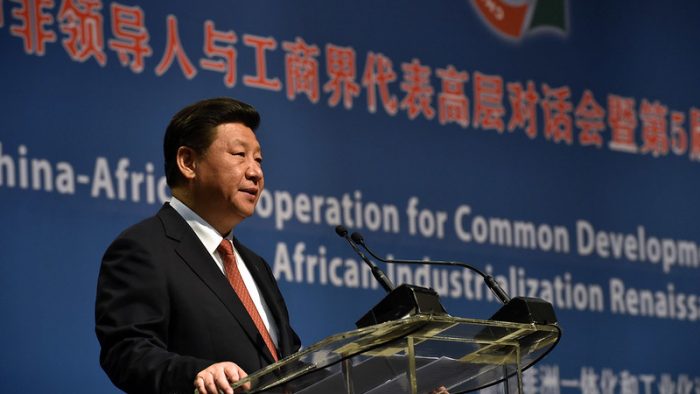
Democracy in Africa is among the most contentious issues in the continent’s relationship with China. On one hand, many reform-minded scholars, international organisations, and western governments criticise the People’s Republic of China (PRC) for its indifference to the unsatisfactory levels of democracy within many of the African states it deals with. On the other hand, Rich and Banerjee (2015), who carried out a study seeking to identify variables which led African states to have relations with the PRC over Taiwan/Republic of China (ROC) and vice versa, found out that in the continent, Taiwan tended to be more recognised by states that were non-democratic. The paper does not elaborate on why, however; noting only a positive correlation. What mechanisms may underline such a phenomenon? Subsequent literature has likewise not answered this and has thus far placed much emphasis on the economic factors; namely, that African countries have recognised China because of its economic strengths and gains to be made from increased trade with it. As it stands, only a single state recognises Taiwan on the continent. However, the continent has had domestic governance changes that began in the 1990s – the so-called ‘Third Wave’ of democratisation (Huntington, 1991: 12) – and culminated in the 2000s, which merit analysis alongside the One China issue in Africa.The Geopolitics of the Yangtze River: Wuhan's Rise
Editor's Note: In an effort to contain the outbreak of a deadly coronavirus strain, Chinese authorities have shut down all travel into and out of Wuhan, capital of Hubei province and a key logistical, manufacturing and research center on the Yangtze River. This assessment, originally published in April 2013, explores the strategic importance of the city to China.The Fate of the China-Russia Alliance
Opinion – Challenges for Oman’s New Sultan
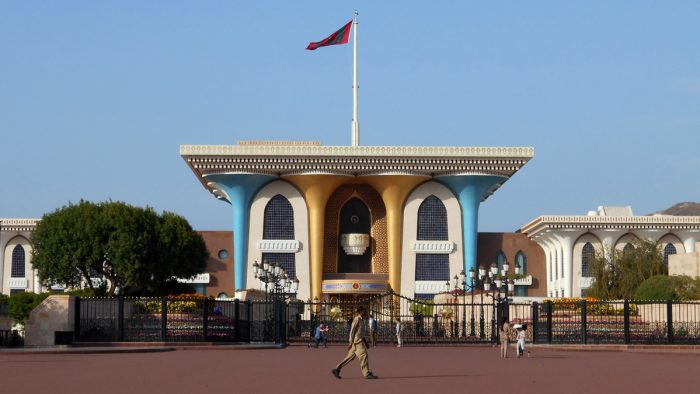
Sultan Qaboos of Oman passed away on Friday, 10 January, ending his 50 year-rule since 1970. He had been the longest-serving ruler in the Arab world. Haitham bin Tariq Al Said was agreed to be appointed as the new Sultan by the Defence Council and the country’s Royal Family. The country faced both difficult and prosperous times under Sultan Qaboos’s rule. His father, who had been considered eccentric after surviving an assassination attempt by Communist rebels, had not effectively responded to the politics of the time, thereby isolating Oman from the rest of the world and generating many internal problems for it. Under this political atmosphere, Sultan Qaboos, who was young, energetic, and supported by the British, removed his father from the throne in 1970 through a bloodless coup and declared himself the new Sultan with promises of modernising the country. He dealt with a civil war and an underdeveloped country during the first years of his reign. By the time of his passing, he had not only consolidated his power but also achieved noteworthy development of his country thanks to oil revenues. Qaboos’s reign is known by state elites as the “Omani Renaissance” and is praised at every possible opportunity.Striking Oil Ain’t What It Used to Be
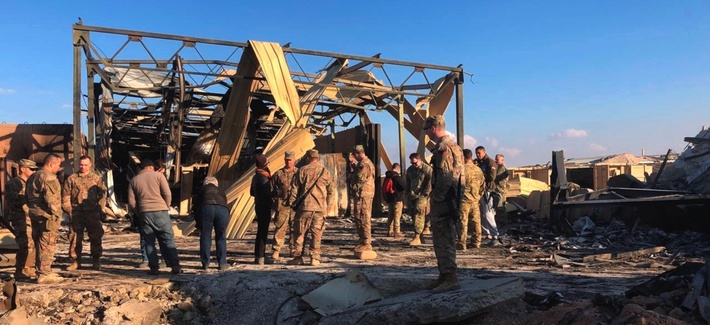
As Trump says injuries suffered by U.S. troops in Iranian attack are ‘not very serious,’ Pentagon offers few details
34 Injured in Iran Attack, Pentagon Now Says; Launches a Review of Reporting Procedures
SecDef Mark Esper ordered a review of “processes for tracking and reporting injuries” after criticism in the wake of the Iranian missile attack.The Bezos Hack and the Dangers of Spyware in the Hands of Autocrats
From Bezos to bots, cyber espionage is fraying the world order
The rising importance of cyber warfare has, as we've seen with regards to the West's relations with Russia in particular, increasingly blurred the line between war and peace. Where once an aggressive act – shooting down a plane, landing troops on a beach, manoeuvring missiles into an offensive position – was clear and obvious, things are not now so clear cut.Iran Has a Bitcoin Strategy to Beat Trump
What new documents say about US-partner cyber operations
The WTO's Existential Crisis: How to Salvage Its Ability to Settle Trade Disputes
Brexit Will Be Britain's Never-Ending Story
This Man Is Trump's Biggest Problem in the Middle East
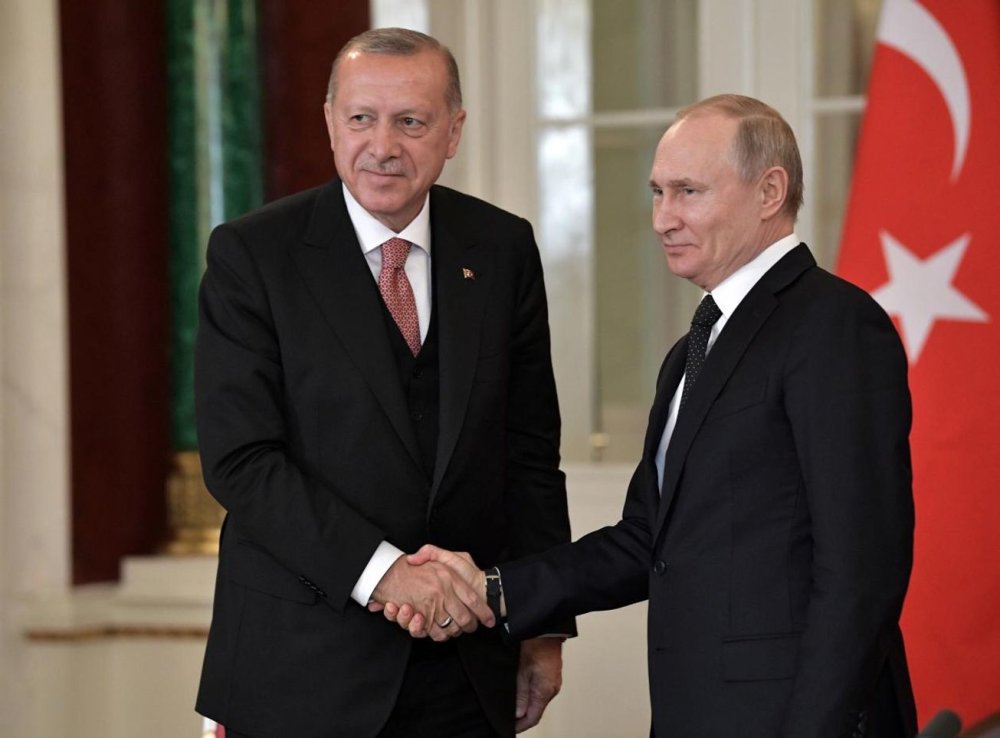
How Washington's Infinite CAATSA Sanctions May Actually Help Russia Sell More Weapons
The Twin Rise of Populism and Authoritarianism
5 reasons why US-Europe tensions will grow in the 2020s — and how to stop it
Brexit Could Spark a Return to Violence in Northern Ireland
The conflict in Northern Ireland was thought to have ended with the 1998 Good Friday Agreement. The Troubles—as the conflict is known colloquially—was a low-level ethnonationalist war fought between militant republicans (who strove to unify Northern Ireland with the Republic of Ireland) on one side and militant loyalists (who wanted to preserve the union between Northern Ireland and Britain) on the other.Africa Is a Continent on the Brink ... but of What?
It makes sense that a continent home to 54 countries and 1.2 billion people would also house a mass of contradictory developments. Africa features several of the world’s fastest-growing economies and a burgeoning middle class. But much of the continent remains mired in debt, ravaged by conflict, disease or terrorism, and plagued by elites clinging to power.Artificial Intelligence and the Manufacturing of Reality
The case for AI transparency requirements
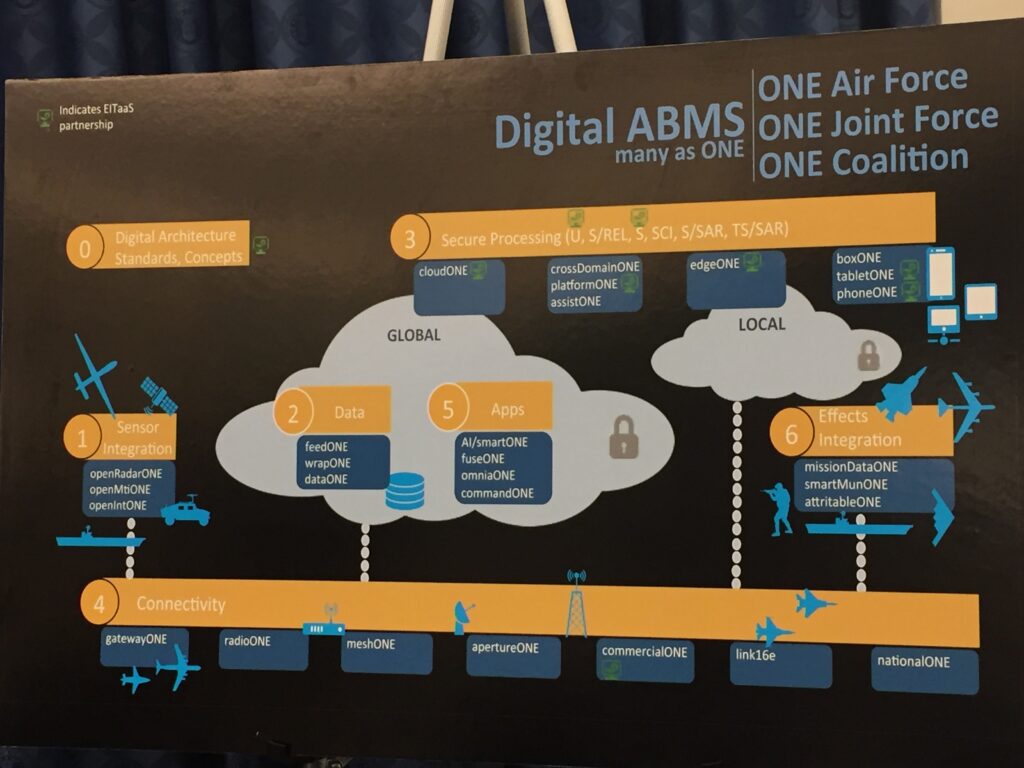
ABMS Demos Speed New Capabilities To Warfighters
WASHINGTON: Keen to build support for its Advanced Battle Management System (ABMS) for command and control of future multi-domain operations, the Air Force will let combatant commands “walk away” with and field emerging technologies tested in its quarterly series of exercises, senior officials say.Crippling the capacity of the National Security Council
Whoever leads in artificial intelligence in 2030 will rule the world until 2100
What new documents reveal about Cyber Command’s biggest operation
New documents provide insight into the growing pains U.S. Cyber Command faced in building a force while simultaneously conducting operations.Future battles will require these 5 pillars of cyber resilience
How military hacking can improve
Here's How We Can Stop The Coming Space Arms Race
Laws and regulations covering outer space are mired in geopolitical gridlock and are failing to keep pace with burgeoning commercial use of space and new technologies. Dependency on space is increasing both in everyday civilian life and military applications, yet, despite its cross-cutting importance, space security continues to be considered a niche field.The Killer Algorithms Nobody’s Talking About
This past fall, diplomats from around the globe gathered in Geneva to do something about killer robots. In a result that surprised nobody, they failed.


/arc-anglerfish-arc2-prod-mco.s3.amazonaws.com/public/OJAW3D4WSRATHBUPH2OIAMKQRU.jpg)
/arc-anglerfish-arc2-prod-mco.s3.amazonaws.com/public/P34VEIRTRZFA7G72GQKUPCLB7E.jpg)