The attack on Saudi oil installations has large scale implications for the hydrocarbon supply to the world specially for countries like China, India and the Asian giants of Japan and South Korea. The Strait of Hormuz becomes critical for energy imports of these countries.The Profession of Arms: A Guide for Young Army Officers
It takes courage, especially for a young officer, to check a man met on the road for not saluting properly or for slovenly appearance, but, every time he does, it adds to his stock of moral courage, and whatever the soldier may say, he has respect for the officer who does pull him up.
Read Document →The Dragon's Teeth: Assessing China's Military Modernization
PLA has focused on modernising its capabilities across all warfare domains to achieve these goals. This includes land, air, and maritime operations, nuclear, space, counter-space, electronic warfare and cyberspace operations, aiming to become a fully integrated joint force.
Read Document →Transforming the PLA: A Decade of reorganisation from SSF to ISF
PRC has engaged in a sustained and broad effort to transform the PLA from an infantry-heavy, low-technology, ground forces-centric military into a high-technology, networked force with an increasing emphasis on joint operations and naval and air power projection.
Read Document →Eyes without Borders: Exploring the World of Open Source Intelligence (OSINT) in the Digital Age
Open Source Intelligence (OSINT) is gaining prominence with the rise of social media, the digital society and the vast growth of publicly and commercially available information (PAI and CAI).
Read Document →
The PLA’s Developing Cyber Warfare Capabilities and India's Options
Informationised warfare blurs the lines between peacetime and wartime. A nation in the information age cannot wait for the hostilities to break out to collect intelligence, carryout influence operations, develop antisatellite systems or design computer software weapons.
Read Document →
Galwan and After
Why did China did this when he is under tremendous pressure in all fronts, is this China's salami slice tactics being progressed rigorously, what will be new Rules of Engagement, what will be escalatory control mechanism, who has taken this decision, will there be some pressure put by China in India's North-East through insurgency.
Read Document →
India’s Joint Doctrine for Cyberspace Operations: A Critical Review
Chief of Defence Staff (CDS) General Anil Chauhan and Secretary, Department of Military Affairs, formally released declassified versions of the Joint Doctrines for Cyberspace Operations during the Chiefs of Staff Committee meeting in New Delhi.
Read Document →
Know your Enemy General(now Field Marshal) Syed Aseem Munir
Gen SA Munir's position in the hierarchy of Pakistan was not very comfortable. The state of economy, insurgency in Pakhtoonistan and Balochistan, attack on the Jaffar Express, constant protests by supporters of Imran Khan's supporters inside and outside of parliament.
Read Document →
Decoding Operation SINDOOR: Key Aspects and Implications
Precision strikes were carried out on nine sites—four in Pakistan and five in PoK—linked to anti-India terrorist groups such as the LeT, JeM and the Hizbul Mujahideen. The targeted sites included Muridke (LeT headquarters) and Bahawalpur (JeM headquarters).
Read Document →
Chinese Cyber Exploitation in India's Power Grid - Is There a linkage to Mumbai Power Outage?
The New York Times (NYT), based on analysis by a U.S. based private intelligence firm Recorded Future, reported that a Chinese entity penetrated India’s power grid at multiple load dispatch points. Chinese malware intruded into the control systems that manage electric supply across India, along with a high-voltage transmission substation and a coal-fired power plant
Read Document →1 February 2020
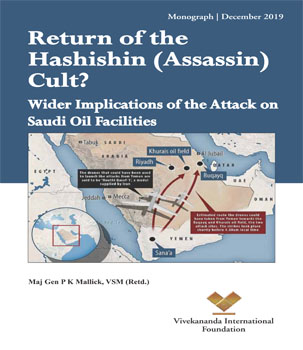
Return of the Hashishin (Assassin) Cult?: Wider Implications of the Attack on Saudi Oil Facilities
The attack on Saudi oil installations has large scale implications for the hydrocarbon supply to the world specially for countries like China, India and the Asian giants of Japan and South Korea. The Strait of Hormuz becomes critical for energy imports of these countries.India's indigenous missile defense capability is nowhere near strong
Across the Border from China, How Should India Prepare for the Coronavirus?
COOPERATION BETWEEN THE UNITED STATES AND PAKISTAN: WHAT IS THE FUTURE?
Within the Indo-Pacific region, the United States and Pakistan have sharply divergent strategic objectives. While American objectives have changed over time, focusing in recent years on rivalry with China, Pakistan’s strategic objective has remained constant—to maintain a balance of power with India. Yet Pakistan retains close strategic and economic ties with China, and the United States considers India an important strategic partner. Nevertheless, the two countries have worked together for nearly two decades toward two tactical goals—achieving a political settlement in Afghanistan and eliminating terrorism in South Asia. There is potential for them to cooperate more broadly, for example, increasing direct foreign investment to Pakistan and helping Islamabad balance its relations with the United States and China. Washington’s willingness to expand such cooperation will depend on Pakistan’s cooperation in fighting terrorism in the region.All Weather Friends: China and Pakistan Space Cooperation
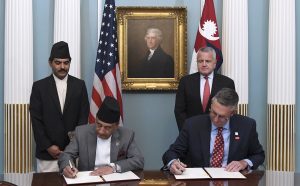
The Indo-Pacific Vs. the Belt and Road: Nepal’s Great MCC Debate
A $500 million grant under the U.S. Millennium Challenge Corporation faces opposition within Nepal’s ruling party.China’s economy held up well in 2019 – Serious challenges ahead
The CCP Response to the Wuhan Coronavirus: A Preliminary Assessment
The Takshashila PLA Insight
The Wuhan Virus Is Not a Lab-Made Bioweapon
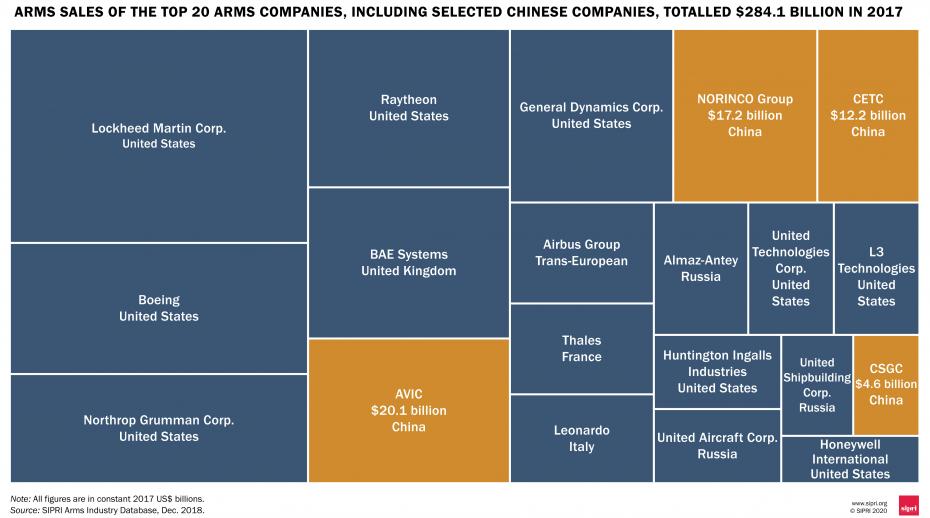
The recent outbreak of a new and potentially deadly coronavirus in China has, unsurprisingly, kicked off a deluge of misinformation and conspiracy theories.New SIPRI data reveals scale of Chinese arms industry
(Stockholm, 27 January 2020) New research from the Stockholm International Peace Research Institute (SIPRI) suggests that China is the second-largest arms producer in the world, behind the United States but ahead of Russia. This research represents the most comprehensive picture of Chinese companies’ weapons production to date.The New China Scare
In February 1947, U.S. President Harry Truman huddled with his most senior foreign policy advisers, George Marshall and Dean Acheson, and a handful of congressional leaders. The topic was the administration’s plan to aid the Greek government in its fight against a communist insurgency. Marshall and Acheson presented their case for the plan. Arthur Vandenberg, chair of the Senate Committee on Foreign Relations, listened closely and then offered his support with a caveat. “The only way you are going to get what you want,” he reportedly told the president, “is to make a speech and scare the hell out of the country.”Operation Iranian Freedom: What Would Happen If America Invaded Iran in 2026?
Key point: In an era of forever wars, this fictional account tells what it would be like to fight Iran. Needless to say, it would be no cakewalk.Isis starting to reassert itself in Middle East heartlands, UN warns
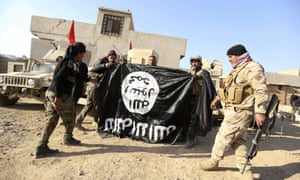
Islamic State has begun to reassert itself in its heartlands in the Middle East and continues to seek opportunities to strike in the west, the United Nations has said.Mistake: Banning Huawei Makes It Harder to Access 5G
Can Belarus Ever Overcome the Pull of Russia?
Getting to Less? The Progressive Values Strategy
Brexit: Now What?
How Third-Worldism Can Be Reimagined Today
Not so long ago, nations of what was once called the Third World commonly looked to each other as prospective allies and partners, even extending their diplomatic ties across the oceans in order to advance their shared interests and protect themselves amid the dangers and complexities of the Cold War.Why can’t South Africa grow its economy?
Venezuela’s Problem Isn’t Socialism
Wilson Quarterly
Injecting Electromagnetic Pulses into the Electric Grid and Infrastructure: The Poor Man’s EMP Nuke
There are fewer wars when you take power away from men in big castles
Defense Mergers Are a Win for National Security
Great Powers Must Talk to Each Other About AI
Even as they compete, major militaries have reason to cooperate: to avoid misunderstanding and to establish best practices and pragmatic parameters.