The country’s Chandrayaan 2 spacecraft has successfully launched from the Sriharikota space centre – a giant leap in its increasingly ambitious space programme.The Profession of Arms: A Guide for Young Army Officers
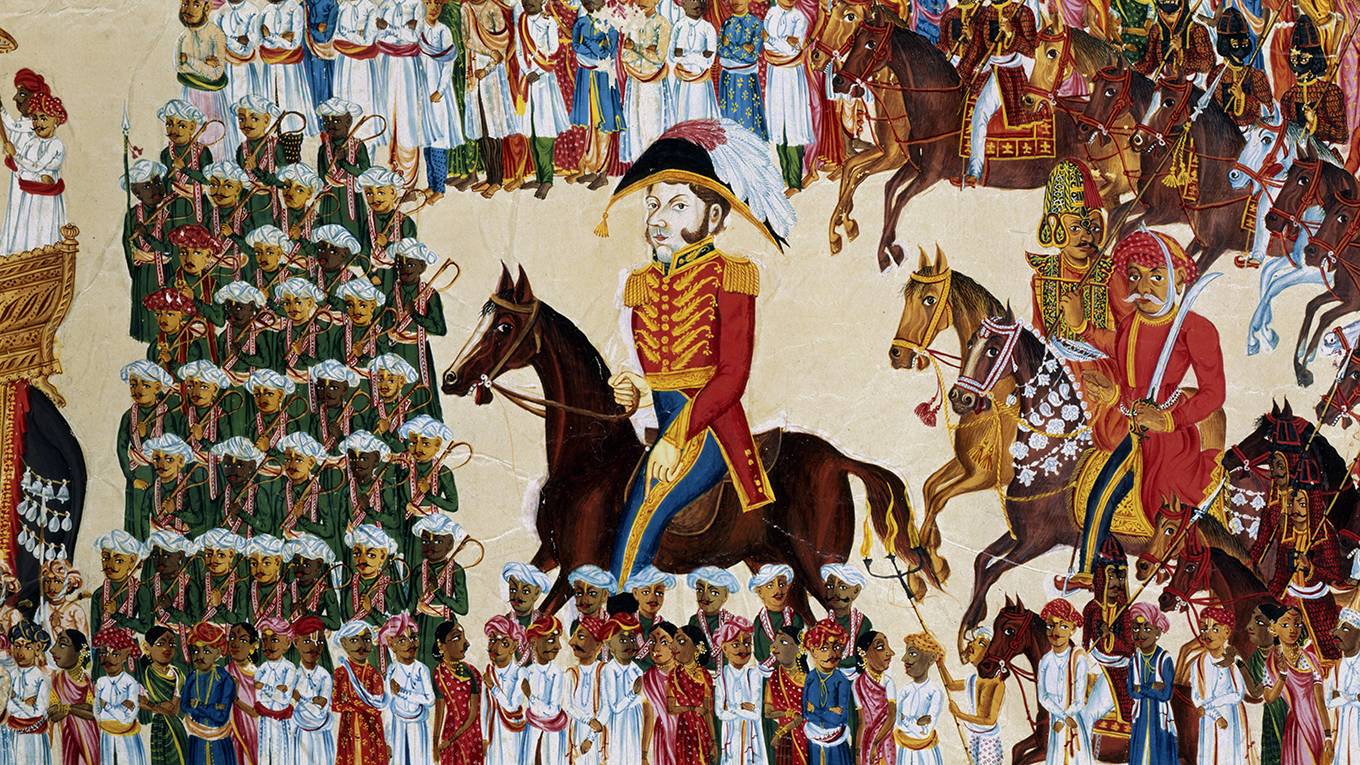
It takes courage, especially for a young officer, to check a man met on the road for not saluting properly or for slovenly appearance, but, every time he does, it adds to his stock of moral courage, and whatever the soldier may say, he has respect for the officer who does pull him up.
Read Document →The Dragon's Teeth: Assessing China's Military Modernization
PLA has focused on modernising its capabilities across all warfare domains to achieve these goals. This includes land, air, and maritime operations, nuclear, space, counter-space, electronic warfare and cyberspace operations, aiming to become a fully integrated joint force.
Read Document →Transforming the PLA: A Decade of reorganisation from SSF to ISF
PRC has engaged in a sustained and broad effort to transform the PLA from an infantry-heavy, low-technology, ground forces-centric military into a high-technology, networked force with an increasing emphasis on joint operations and naval and air power projection.
Read Document →Eyes without Borders: Exploring the World of Open Source Intelligence (OSINT) in the Digital Age
Open Source Intelligence (OSINT) is gaining prominence with the rise of social media, the digital society and the vast growth of publicly and commercially available information (PAI and CAI).
Read Document →
The PLA’s Developing Cyber Warfare Capabilities and India's Options
Informationised warfare blurs the lines between peacetime and wartime. A nation in the information age cannot wait for the hostilities to break out to collect intelligence, carryout influence operations, develop antisatellite systems or design computer software weapons.
Read Document →
Galwan and After
Why did China did this when he is under tremendous pressure in all fronts, is this China's salami slice tactics being progressed rigorously, what will be new Rules of Engagement, what will be escalatory control mechanism, who has taken this decision, will there be some pressure put by China in India's North-East through insurgency.
Read Document →
India’s Joint Doctrine for Cyberspace Operations: A Critical Review
Chief of Defence Staff (CDS) General Anil Chauhan and Secretary, Department of Military Affairs, formally released declassified versions of the Joint Doctrines for Cyberspace Operations during the Chiefs of Staff Committee meeting in New Delhi.
Read Document →
Know your Enemy General(now Field Marshal) Syed Aseem Munir
Gen SA Munir's position in the hierarchy of Pakistan was not very comfortable. The state of economy, insurgency in Pakhtoonistan and Balochistan, attack on the Jaffar Express, constant protests by supporters of Imran Khan's supporters inside and outside of parliament.
Read Document →
Decoding Operation SINDOOR: Key Aspects and Implications
Precision strikes were carried out on nine sites—four in Pakistan and five in PoK—linked to anti-India terrorist groups such as the LeT, JeM and the Hizbul Mujahideen. The targeted sites included Muridke (LeT headquarters) and Bahawalpur (JeM headquarters).
Read Document →
Chinese Cyber Exploitation in India's Power Grid - Is There a linkage to Mumbai Power Outage?
The New York Times (NYT), based on analysis by a U.S. based private intelligence firm Recorded Future, reported that a Chinese entity penetrated India’s power grid at multiple load dispatch points. Chinese malware intruded into the control systems that manage electric supply across India, along with a high-voltage transmission substation and a coal-fired power plant
Read Document →18 February 2020
3 things to know about India’s space programme
The country’s Chandrayaan 2 spacecraft has successfully launched from the Sriharikota space centre – a giant leap in its increasingly ambitious space programme.Pakistan’s Efforts to Silence Dissenters Amplifies Their Causes
The colonial-era relic of “sedition” is being used in present-day Pakistan to whip dissenting politicians, outspoken journalists, writers, poets, artists, lawyers and rights activists. How Afghans Can Secure a Peace Deal With the Taliban
US, Taliban Close to ‘Reduction in Violence’ Agreement
The Taliban have issued an ultimatum to Washington after weeks of talks with a U.S. peace envoy, demanding a reply on their offer of a seven-day reduction of violence in Afghanistan, or they would walk away from the negotiating table, two Taliban officials said Wednesday. China's lead in the global solar race - at a glanc

As Numbers Soar, Here’s Everything We Don’t Know About the Coronavirus
Questions about the coronavirus are coming thick and fast—but not answers. Today China reported a startling leap in cases, adding over 14,000—a third of the existing number—to the total in Hubei, the central Chinese province where the virus started. This seems to be in part the result of a broader methodology that has moved many cases from the suspected column into being clearly counted as confirmed—but much remains uncertain. As the death toll reaches over 1,300, the virus remains wrapped in a cloud of doubt. Some of these issues will eventually become clear. Many won’t.New Warnings Over China's Efforts in Quantum Computing
Trump's Nightmare Is Here: Is ISIS Making a Comeback?
75 years after a historic meeting on the USS Quincy, US-Saudi relations are in need of a true re-think
On Valentine’s Day 1945, President Franklin D. Roosevelt met with Saudi King Abdul Aziz Ibn Saud on an American cruiser, the USS Quincy, in the Suez Canal. It was the dawn of what is now the longest U.S. relationship with an Arab state. Today the relationship is in decline, perhaps terminally, and needs recasting.A Partnership at Risk
For Whom the Bell Tolls
The Complex Relationship Between Coal and Gas in Europe
Is the EU tough enough to stand up to digital giants like Amazon and Google?
What the Trump Defense Budget Gets Wrong About the Future of War
Europe Puts What Remains of the JCPOA in Limbo
The Approaching Debt Wave
Mean Streets
The New Spheres of Influence
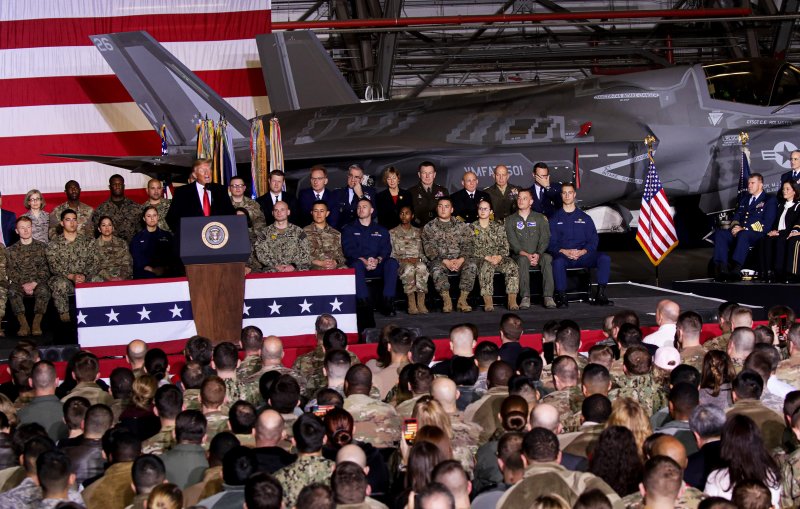
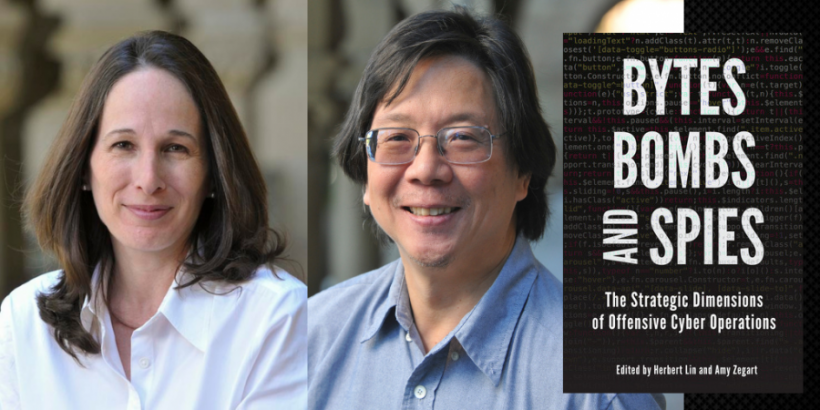
In the heady aftermath of the Cold War, American policymakers pronounced one of the fundamental concepts of geopolitics obsolete. Secretary of State Condoleezza Rice described a new world “in which great power is defined not by spheres of influence . . . or the strong imposing their will on the weak.” Secretary of State Hillary Clinton declared that “the United States does not recognize spheres of influence.” Secretary of State John Kerry proclaimed that “the era of the Monroe Doctrine is over,” ending almost two centuries of the United States staking claim to its own sphere of influence in the Western Hemisphere.Scholars examine cyber warfare in new book
AI looks set to disrupt the established world order. Here’s how
AI a new and ‘frightening’ battlefield in cyber war, experts warn
Unbeknownst to the CEO of a company who was interviewed on TV last year, a hacking group that was trailing the CEO taped the interview and then taught a computer to perfectly imitate the CEO’s voice — so it could then give credible instructions for a wire transfer of funds to a third party.How to Protect Democracy From Future Cyber Threats
Why more research is needed to craft good cyber policy
Several academics in the cyber community working on a bipartisan commission to help craft a U.S. cyber strategy believe there isn't empirical evidence on cyber operations to understand its geopolitical dynamics. (NASA)Top 10 ERP vendors in 2020
The Strongest Military Is an Inclusive One
What makes an army successful in battle? A few factors come to mind: strength in numbers, tactical acumen, the type of political institutions at home. New technologies, including artificial intelligence, drones, and hypersonic weapons, might also tip the balance. But one of the most important determinants of battlefield performance is consistently overlooked: equality among soldiers, regardless of their ethnicity.