In an unprecedented move this week, India banned 59 Chinese smartphone apps, including popular applications such as TikTok and CamScanner. The government justified the decision on the basis of “data security” and “privacy” concerns which, the Ministry of Information Technology said, also pose a threat to India’s “sovereignty and security.”The Profession of Arms: A Guide for Young Army Officers
It takes courage, especially for a young officer, to check a man met on the road for not saluting properly or for slovenly appearance, but, every time he does, it adds to his stock of moral courage, and whatever the soldier may say, he has respect for the officer who does pull him up.
Read Document →The Dragon's Teeth: Assessing China's Military Modernization
PLA has focused on modernising its capabilities across all warfare domains to achieve these goals. This includes land, air, and maritime operations, nuclear, space, counter-space, electronic warfare and cyberspace operations, aiming to become a fully integrated joint force.
Read Document →Transforming the PLA: A Decade of reorganisation from SSF to ISF
PRC has engaged in a sustained and broad effort to transform the PLA from an infantry-heavy, low-technology, ground forces-centric military into a high-technology, networked force with an increasing emphasis on joint operations and naval and air power projection.
Read Document →Eyes without Borders: Exploring the World of Open Source Intelligence (OSINT) in the Digital Age
Open Source Intelligence (OSINT) is gaining prominence with the rise of social media, the digital society and the vast growth of publicly and commercially available information (PAI and CAI).
Read Document →
The PLA’s Developing Cyber Warfare Capabilities and India's Options
Informationised warfare blurs the lines between peacetime and wartime. A nation in the information age cannot wait for the hostilities to break out to collect intelligence, carryout influence operations, develop antisatellite systems or design computer software weapons.
Read Document →
Galwan and After
Why did China did this when he is under tremendous pressure in all fronts, is this China's salami slice tactics being progressed rigorously, what will be new Rules of Engagement, what will be escalatory control mechanism, who has taken this decision, will there be some pressure put by China in India's North-East through insurgency.
Read Document →
India’s Joint Doctrine for Cyberspace Operations: A Critical Review
Chief of Defence Staff (CDS) General Anil Chauhan and Secretary, Department of Military Affairs, formally released declassified versions of the Joint Doctrines for Cyberspace Operations during the Chiefs of Staff Committee meeting in New Delhi.
Read Document →
Know your Enemy General(now Field Marshal) Syed Aseem Munir
Gen SA Munir's position in the hierarchy of Pakistan was not very comfortable. The state of economy, insurgency in Pakhtoonistan and Balochistan, attack on the Jaffar Express, constant protests by supporters of Imran Khan's supporters inside and outside of parliament.
Read Document →
Decoding Operation SINDOOR: Key Aspects and Implications
Precision strikes were carried out on nine sites—four in Pakistan and five in PoK—linked to anti-India terrorist groups such as the LeT, JeM and the Hizbul Mujahideen. The targeted sites included Muridke (LeT headquarters) and Bahawalpur (JeM headquarters).
Read Document →
Chinese Cyber Exploitation in India's Power Grid - Is There a linkage to Mumbai Power Outage?
The New York Times (NYT), based on analysis by a U.S. based private intelligence firm Recorded Future, reported that a Chinese entity penetrated India’s power grid at multiple load dispatch points. Chinese malware intruded into the control systems that manage electric supply across India, along with a high-voltage transmission substation and a coal-fired power plant
Read Document →5 July 2020
India’s Great Firewall Against China Could Backfire
In an unprecedented move this week, India banned 59 Chinese smartphone apps, including popular applications such as TikTok and CamScanner. The government justified the decision on the basis of “data security” and “privacy” concerns which, the Ministry of Information Technology said, also pose a threat to India’s “sovereignty and security.”Why a Trade War With China Is a Bad Idea for India
Why Russia’s relations with India and China will survive Galwan border clash
The rise in tensions along the China-India border in the Himalayas began in early May and resulted in bloodshed earlier this month with violence in the Galwan valley. This border stand-off bears similarities to the skirmish in 2017, with the only exception being a lack of fatalities three years ago.China’s Indian Ocean ambitions Investment, influence, and military advantage
Pakistan’s Climate Wake-up Call
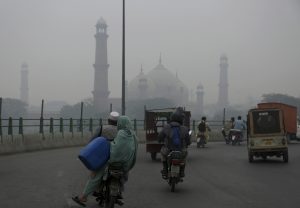
On April 19, almost a month after a nationwide lockdown had been imposed, Pakistan’s second largest city, Lahore, witnessed a 63 percent plunge in average PM2.5 particulate matter pollution. Lahore was the world’s most polluted city this past October, when seasonal smog takes air pollution to hazardous levels; the air was given a much-needed respite by the COVID-19 pandemic.Taliban Bounties Would Be a New Low Even for Putin
James Stavridis is a Bloomberg Opinion columnist. He is a retired U.S. Navy admiral and former supreme allied commander of NATO, and dean emeritus of the Fletcher School of Law and Diplomacy at Tufts University. He is also an operating executive consultant at the Carlyle Group and chairs the board of counselors at McLarty Associates.Gulf-Asia Connectivity After the COVID-19 Crisis
Taiwan Opens Office to Help People Fleeing Hong Kong in Wake of National Security Law
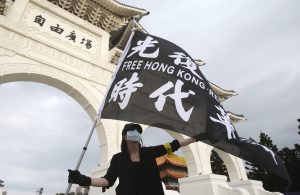
A Hong Kong protester in Taiwan waves a flag to mark the first anniversary of a mass rally in Hong Kong against the now-withdrawn extradition bill at Democracy Square in in Taipei, Taiwan, June 13, 2020.Credit: AP Photo/Chiang Ying-yingChina’s Approach to Global Governance
For more than two millennia, monarchs who ruled China proper saw their country as one of the dominant actors in the world. The concept of zhongguo—the Middle Kingdom, as China calls itself—is not simply geographic. It implies that China is the cultural, political, and economic center of the world. This Sino-centrist worldview has in many ways shaped China’s outlook on global governance—the rules, norms, and institutions that regulate international cooperation. The decline and collapse of imperial China in the 1800s and early 1900s, however, diminished Chinese influence on the global stage for more than a century.What Is the World Doing to Create a COVID-19 Vaccine?
A global race is underway to develop and mass-produce an effective vaccine to counter the new, deadly, and highly infectious coronavirus disease, COVID-19, which has brought much of the world to a standstill. Many governments have warned that daily life cannot return to normal until their populations have built up antibodies to fend off the virus. Accelerated clinical trials are already underway, but vaccine development often takes years.Xi Jinping’s Internal Great Wall
If the Great Wall of China was the symbol of its past reclusiveness from the rest of the world as some have asserted, then Xi Jingping’s thought policing has created an Internal Great Wall that still exists today. COUNTERING RUSSIAN & CHINESE INFLUENCE ACTIVITIES
EXPLORING CHINA’S UNMANNED OCEAN NETWORK
The Monarchs’ Pawns?
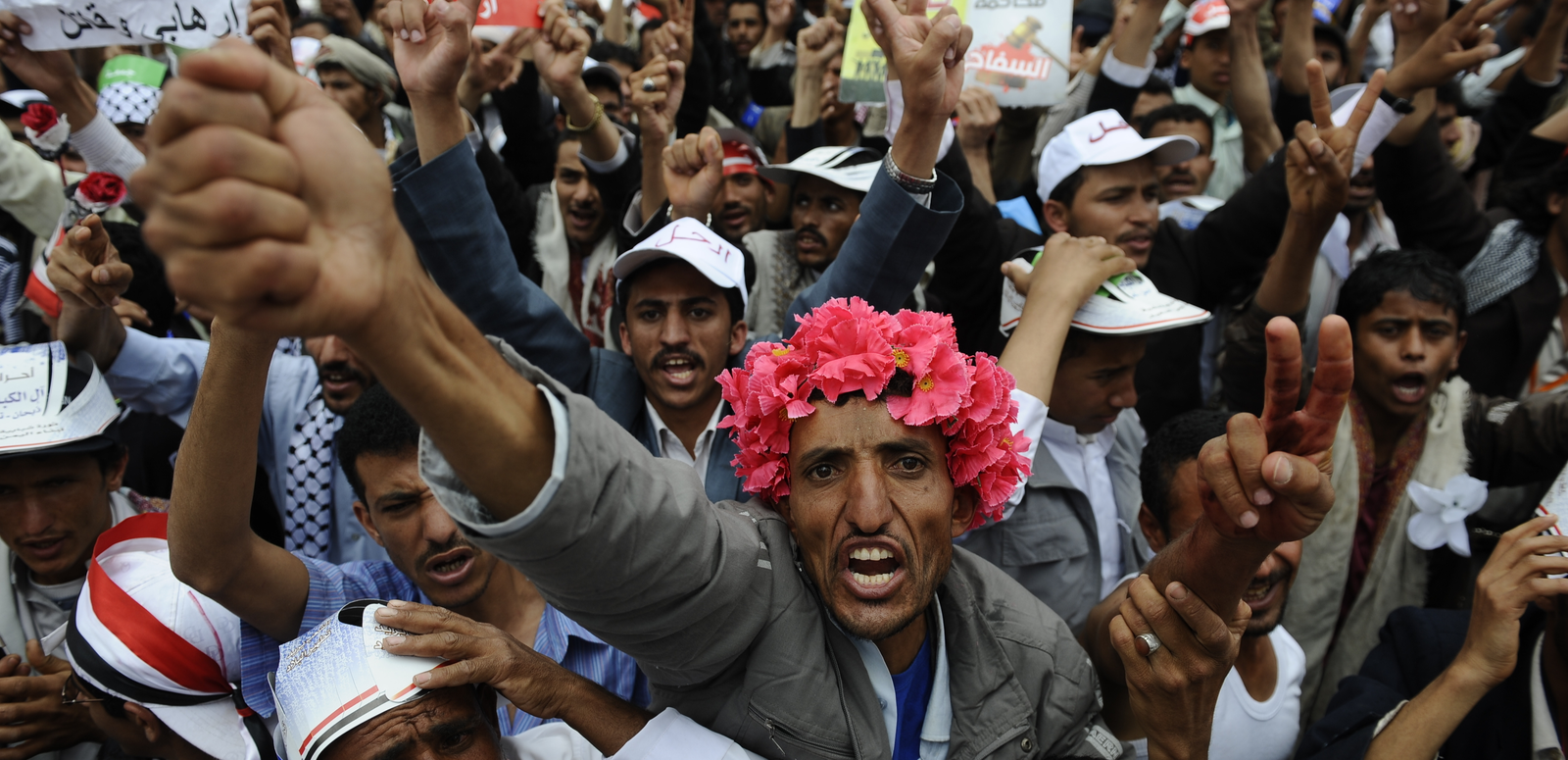
This report examines the combined influence of four factors by about 2014 led three Gulf monarchies to change their calculations and adopt proxy warfare strategies aimed more consistently at managing crises that threatened their spheres of interest and maintaining the political status quo for the region rather than revising the regional balance of power. After introducing you to the three Gulf monarchies the report is divided into four sections. The first section examines each of these three Gulf monarchies’ strategic interests in the early post-Arab Spring period from 2011 through 2014 and goes on to look at how these interests shaped their proxy interventions in Bahrain, Libya, and Syria. The second section examines the four factors that led the Gulf states to change their strategic assessments, and the third section examines the interventions that followed that turning point in Yemen. Finally, the conclusion discusses what the Gulf states’ shifting approach means for U.S. policy in the Middle East.Europe Portrays Both America and Iran As Rogue States At the UN
The Black Lives Matter Movement Must Solve Its Violence Problem
The Fatal Flaw in America’s Counterterrorism Strategy
American Military Leaders have Forgotten American History
Generals Are People Too: And Their Involvement in Politics Is Part of the American Tradition
Global Economic Prospects, June 2020
The COVID-19 pandemic has, with alarming speed, dealt a heavy blow to an already-weak global economy, which is expected to slide into its deepest recession since the second world war, despite unprecedented policy support. The global recession would be deeper if countries take longer to bring the pandemic under control, if financial stress triggers defaults, or if there are protracted effects on households and firms. Economic disruptions are likely to be more severe and protracted in emerging market and developing economies with larger domestic outbreaks and weaker medical care systems; greater exposure to international spillovers through trade, tourism, and commodity and financial markets; weaker macroeconomic frameworks; and more pervasive informality and poverty. Beyond the current steep economic contraction, the pandemic is likely to leave lasting scars on the global economy by undermining consumer and investor confidence, human capital, and global value chains. Being mostly a reflection of the recent plunge in global energy demand, low oil prices are unlikely to provide much of a boost to global growth in the near term. While policymakers’ immediate priorities are to address the health crisis and moderate the short-term economic losses, the likely long-term consequences of the pandemic highlight the need to forcefully undertake comprehensive reform programs to improve the fundamental drivers of economic growth, once the crisis abates.Europe as a Neutral Giant?
Exploring Blockchain Technology for Government Transparency: Blockchain-Based Public Procurement to Reduce Corruption
Algorithmic Warfare: Army Bolstering Electronic Warfare Arsenal
THE AMERICAN WAY OF WAR IN THE TWENTY-FIRST CENTURY: THREE INHERENT CHALLENGES
The reality of American military power has long been that the United States must project its forces into the enemy’s territory. This brings with it a host of challenges, some inflicted by the adversary and others that are self-inflicted (such as lack of strategic lift or production capacity). In any future war, the US military will likely play an “away game,” and an adversary will probably not allow the United States to leisurely amass personnel and equipment on its borders, but will actively try to prevent it. As a result, the US military will suffer from an inherent asymmetry and have immense costs imposed on it, at least in the initial phases of the war. This challenge lies at the heart of what is colloquially called the “anti-access/area denial” family of military concepts.