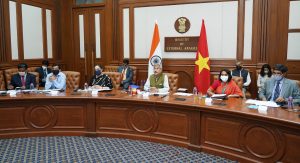
Earlier this week, India and Vietnam held the 17th meeting of their bilateral Joint Commission on Trade, Economic, Scientific and Technological Cooperation. The Indian Ministry of External Affairs (MEA) in a statement said that the meeting was co-chaired by External Affairs Minister S. Jaishankar and Vietnam’s Deputy Prime Minister and Minister of Foreign Affairs Pham Binh Minh via video conference.The Profession of Arms: A Guide for Young Army Officers
It takes courage, especially for a young officer, to check a man met on the road for not saluting properly or for slovenly appearance, but, every time he does, it adds to his stock of moral courage, and whatever the soldier may say, he has respect for the officer who does pull him up.
Read Document →The Dragon's Teeth: Assessing China's Military Modernization
PLA has focused on modernising its capabilities across all warfare domains to achieve these goals. This includes land, air, and maritime operations, nuclear, space, counter-space, electronic warfare and cyberspace operations, aiming to become a fully integrated joint force.
Read Document →Transforming the PLA: A Decade of reorganisation from SSF to ISF
PRC has engaged in a sustained and broad effort to transform the PLA from an infantry-heavy, low-technology, ground forces-centric military into a high-technology, networked force with an increasing emphasis on joint operations and naval and air power projection.
Read Document →Eyes without Borders: Exploring the World of Open Source Intelligence (OSINT) in the Digital Age
Open Source Intelligence (OSINT) is gaining prominence with the rise of social media, the digital society and the vast growth of publicly and commercially available information (PAI and CAI).
Read Document →
The PLA’s Developing Cyber Warfare Capabilities and India's Options
Informationised warfare blurs the lines between peacetime and wartime. A nation in the information age cannot wait for the hostilities to break out to collect intelligence, carryout influence operations, develop antisatellite systems or design computer software weapons.
Read Document →
Galwan and After
Why did China did this when he is under tremendous pressure in all fronts, is this China's salami slice tactics being progressed rigorously, what will be new Rules of Engagement, what will be escalatory control mechanism, who has taken this decision, will there be some pressure put by China in India's North-East through insurgency.
Read Document →
India’s Joint Doctrine for Cyberspace Operations: A Critical Review
Chief of Defence Staff (CDS) General Anil Chauhan and Secretary, Department of Military Affairs, formally released declassified versions of the Joint Doctrines for Cyberspace Operations during the Chiefs of Staff Committee meeting in New Delhi.
Read Document →
Know your Enemy General(now Field Marshal) Syed Aseem Munir
Gen SA Munir's position in the hierarchy of Pakistan was not very comfortable. The state of economy, insurgency in Pakhtoonistan and Balochistan, attack on the Jaffar Express, constant protests by supporters of Imran Khan's supporters inside and outside of parliament.
Read Document →
Decoding Operation SINDOOR: Key Aspects and Implications
Precision strikes were carried out on nine sites—four in Pakistan and five in PoK—linked to anti-India terrorist groups such as the LeT, JeM and the Hizbul Mujahideen. The targeted sites included Muridke (LeT headquarters) and Bahawalpur (JeM headquarters).
Read Document →
Chinese Cyber Exploitation in India's Power Grid - Is There a linkage to Mumbai Power Outage?
The New York Times (NYT), based on analysis by a U.S. based private intelligence firm Recorded Future, reported that a Chinese entity penetrated India’s power grid at multiple load dispatch points. Chinese malware intruded into the control systems that manage electric supply across India, along with a high-voltage transmission substation and a coal-fired power plant
Read Document →1 September 2020
India-Vietnam Relations: Strong and Getting Stronger
Earlier this week, India and Vietnam held the 17th meeting of their bilateral Joint Commission on Trade, Economic, Scientific and Technological Cooperation. The Indian Ministry of External Affairs (MEA) in a statement said that the meeting was co-chaired by External Affairs Minister S. Jaishankar and Vietnam’s Deputy Prime Minister and Minister of Foreign Affairs Pham Binh Minh via video conference.Islamic State’s India Dilemma
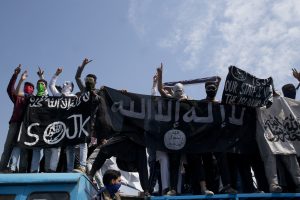
While claiming responsibility for the Nangarhar jailbreak in eastern Afghanistan, the Islamic State Khorasan Province (ISKP)’s propaganda wing released photographs of 11 attackers, including three Indian recruits from Kerala. In six months, this is the second time that Indian radicals have been part of a high-profile attack in Afghanistan. In March, a pro-IS Indian militant from Kerala, Muhammad Anis alias Abu Khalid Al-Hindi, perpetrated the Sikh Gurdwara attack in Kabul. Later, Islamic State’s weekly newsletter, Al-Naba, carried a detailed profile of Anis. In February 2020, IS also started a monthly propaganda magazine, Voice of Hind, which exclusively focuses on India.The Pakistan Army’s Belt and Road Putsch
THE FUTURE OF PAKISTAN-TALIBAN TIES IN AFGHANISTAN
The signing of the Doha Agreement between the Afghan Taliban and the United States in February 2020 represented a success for Pakistan, which had advocated and worked towards providing diplomatic resolution to the Afghan War for many years. The Doha Agreement gives Pakistan a double cause for celebration. First, as reflected in the presence of Pakistan’s Foreign Minister at the signing ceremony, Pakistan has managed to regain its forlorn status as the regional U.S. ally and has since openly asserted that it has a significant role to play in bringing peace to Afghanistan. Second, the deal has opened the door for a power-sharing arrangement in Afghanistan in which the Taliban are likely to play a significant role. The Taliban are the principal pro-Pakistan actor in Afghanistan, and Islamabad sees them as integral for securing Pakistan’s political and security interests in the region.Political Polarization in South and Southeast Asia: Old Divisions, New Dangers
Political polarization is growing in South and Southeast Asia—one part of a troubling global trend. From long-established democracies like India to newer ones like Indonesia, deep-seated sociopolitical divisions have become increasingly inflamed in recent years, fueling democratic erosion and societal discord. New political and economic strains caused by the coronavirus pandemic are only reinforcing this worrisome trend.Big Tech Embraces New Cold War Nationalism
Can AI Solve the Rare Earths Problem? Chinese and U.S. Researchers Think So
A joint U.S.-Chinese research team has shown that artificial intelligence can help find potent new combinations of materials to replace rare earth metals that are key to military technology. Stay Calm About China
A central distinction in realist international relations thought is that between vital and secondary national interests. Vital interests are threats to a state’s survival, and can take the form either of conquest and subjugation from outside, or the promotion of internal subversion aimed at destroying the existing political and ideological order—the strategy followed by the Soviet Union across much of the world during the Cold War, and by the United States against the Soviet Union and allied regimes.DoD War Games Predict ‘Extremely Destabilizing’ Chinese Military Parity
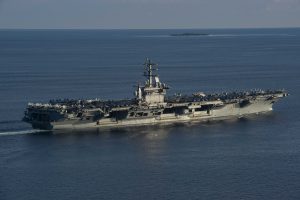
WASHINGTON: Worried about America’s eroding dominance at sea, the Pentagon has been running through a series of war games to shake out a plan to stay ahead of the rapid-fire Chinese military modernization effort. The hidden growth driver: China’s industrial aftermarket-services sector
North Korea Doesn’t Trust China to Protect It
With Latest Sanctions, US Casts a Shadow Over China’s Belt and Road
On Wednesday, the United States announced yet another tranche of sanctions targeting Chinese companies. This time, 24 Chinese firms were added to the Entity List, which prevents them from doing business with U.S. companies.In a Drill, Beijing Launches Missiles into the South China Sea
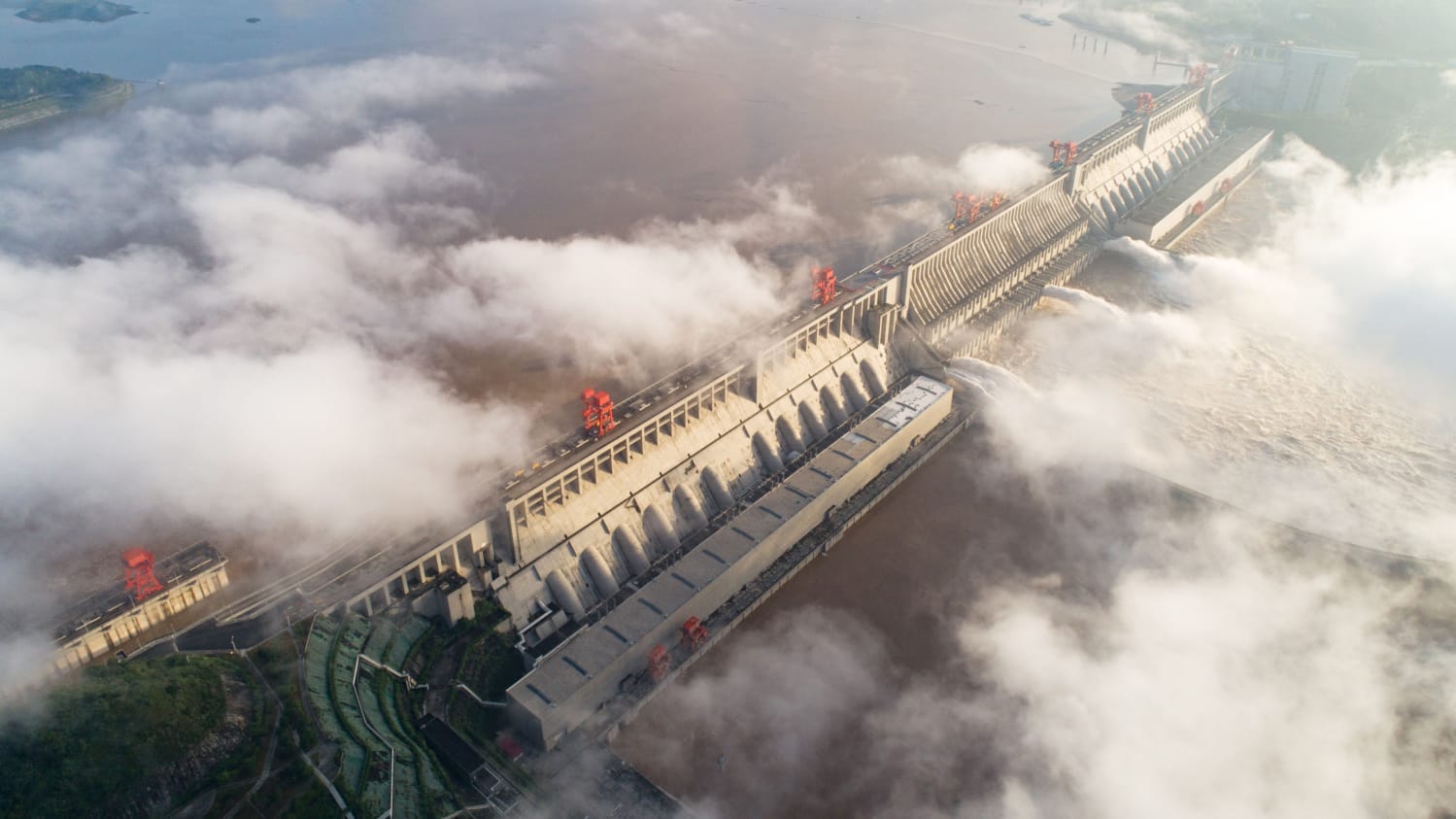
China's Three Gorges Dam is one of the largest ever created. Was it worth it?
When construction began in 1994, it was designed not only to generate electricity to propel China's breakneck economic growth, but also to tame China's longest river, shield millions of people from fatal floods and, as a symbol of technological prowess, become a searing point of national pride.Turkey’s Plans to Become a Regional Energy Giant Just Got a Boost
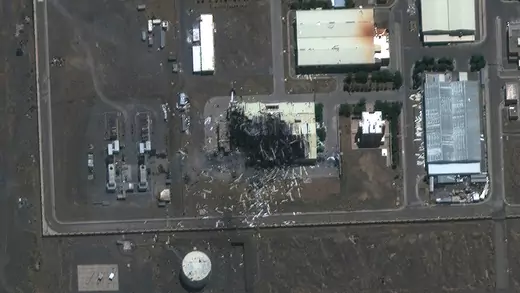
Did Iran Suffer a Nuclear Setback?
Pompeo’s RNC Speech Was a Preview of ‘America First’ After Trump
Is Mike Pompeo the Teflon Don reincarnated? If you watched the U.S. secretary of state’s pre-recorded speech to the Republican National Convention on Tuesday, you’ll know your answer doesn’t matter, because Pompeo doesn’t really care about what you, many Americans or the world thinks. Pompeo delivered his address from Jerusalem while on an official diplomatic trip to the Middle East, breaking decades of political norms, and likely federal ethics laws. In this new era of American gangster diplomacy, what matters is always being right—as Pompeo sees it—and always being unapologetic in strong-arming the world into accepting the Republican Party’s isolationist and increasingly authoritarian bent under the GOP’s godfather-in-chief, President Donald J. Trump.The October Surprise Is Already Here
US Space Force tests new anti-jamming capability
WASHINGTON — The U.S. Space Force has tested a new anti-jamming capability that will make the military’s main satellite communications constellation more resilient than ever, the Space and Missile Systems Center announced Aug. 26.Belarus is a reminder that the USSR is still collapsing
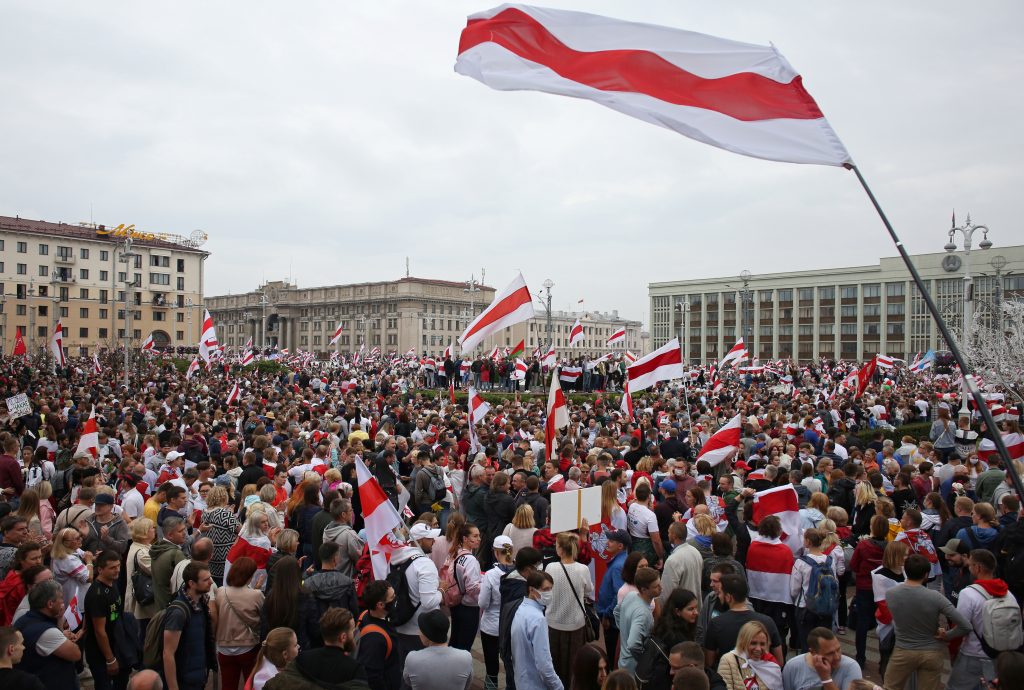
It is common to view history as a series of specific dates and distinct periods, but real life is rarely so neat and tidy. Instead, empires and epochs have a tendency to expand and disperse like clouds in the sky, blending and merging in ways that expose the shortcomings of traditional chronologies. One relatively recent example of this phenomenon is the collapse of the Soviet Union. Generally viewed as a series of dramatic developments that took place over a relatively concentrated period of time in 1990-91, recent events in Belarus are reminder that the fall of the USSR is actually an ongoing event that continues to shape the global geopolitical climate.EU Leaders Meet as Eastern Mediterranean Crisis Deepens
Here is today’s Foreign Policy brief: EU officials meet to discuss the crisis in the eastern Mediterranean, Bahrain says it is committed to Palestinian statehood, and the United Nations rejects U.S. efforts to reimpose sanctions on Iran. 5 challenges for the EU’s new trade chief
A Post-Pandemic Trade Revival
What’s Next for the U.S.–Japan ‘Special Relationship’
U.S. Deputy Secretary of State Stephen Biegun, left, and Japanese Vice Foreign Minister Takeo Akiba, right, prior to their bilateral meeting at Iikura Guest House, July 9, 2020, in Tokyo, Japan. (Eugene Hoshiko/Reuters)Cooperation in all phases of defense will greatly benefit both partners.