Maj Gen PK Mallick, VSM (Retd)

It takes courage, especially for a young officer, to check a man met on the road for not saluting properly or for slovenly appearance, but, every time he does, it adds to his stock of moral courage, and whatever the soldier may say, he has respect for the officer who does pull him up.
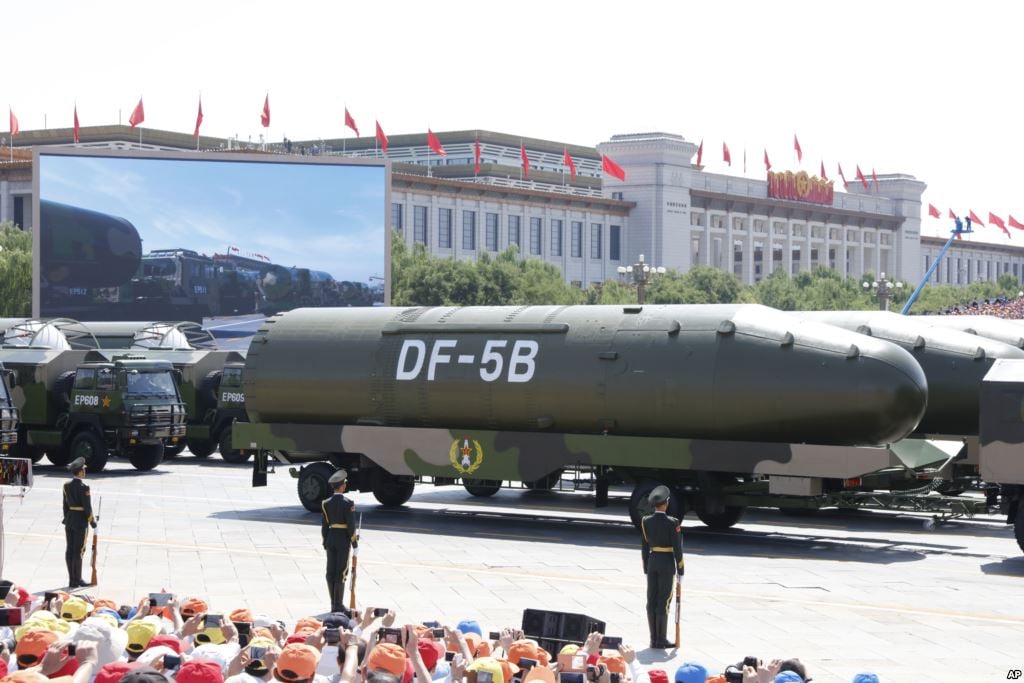
Read Document →PLA has focused on modernising its capabilities across all warfare domains to achieve these goals. This includes land, air, and maritime operations, nuclear, space, counter-space, electronic warfare and cyberspace operations, aiming to become a fully integrated joint force.
Read Document →PRC has engaged in a sustained and broad effort to transform the PLA from an infantry-heavy, low-technology, ground forces-centric military into a high-technology, networked force with an increasing emphasis on joint operations and naval and air power projection.
Read Document →Open Source Intelligence (OSINT) is gaining prominence with the rise of social media, the digital society and the vast growth of publicly and commercially available information (PAI and CAI).
Read Document →
Informationised warfare blurs the lines between peacetime and wartime. A nation in the information age cannot wait for the hostilities to break out to collect intelligence, carryout influence operations, develop antisatellite systems or design computer software weapons.
Read Document →
Why did China did this when he is under tremendous pressure in all fronts, is this China's salami slice tactics being progressed rigorously, what will be new Rules of Engagement, what will be escalatory control mechanism, who has taken this decision, will there be some pressure put by China in India's North-East through insurgency.
Read Document →
Chief of Defence Staff (CDS) General Anil Chauhan and Secretary, Department of Military Affairs, formally released declassified versions of the Joint Doctrines for Cyberspace Operations during the Chiefs of Staff Committee meeting in New Delhi.
Read Document →
Gen SA Munir's position in the hierarchy of Pakistan was not very comfortable. The state of economy, insurgency in Pakhtoonistan and Balochistan, attack on the Jaffar Express, constant protests by supporters of Imran Khan's supporters inside and outside of parliament.
Read Document →
Precision strikes were carried out on nine sites—four in Pakistan and five in PoK—linked to anti-India terrorist groups such as the LeT, JeM and the Hizbul Mujahideen. The targeted sites included Muridke (LeT headquarters) and Bahawalpur (JeM headquarters).
Read Document →
The New York Times (NYT), based on analysis by a U.S. based private intelligence firm Recorded Future, reported that a Chinese entity penetrated India’s power grid at multiple load dispatch points. Chinese malware intruded into the control systems that manage electric supply across India, along with a high-voltage transmission substation and a coal-fired power plant
Read Document →Maj Gen PK Mallick, VSM (Retd)

Maj Gen PK Mallick, VSM (Retd)


President Biden promised to put U.S. diplomacy back in the "hands of genuine professionals," but more than six months into his administration only one of his ambassadors to another country has been confirmed.


The extent to which “smart city” technology is altering our sense of freedom in public spaces deserves more attention if we want a democratic future. Democracy–the rule of the people–constitutes our collective self-determination and protects us against domination and abuse. Democracy requires safe spaces, or commons, for people to organically and spontaneously convene regardless of their background or position to campaign for their causes, discuss politics, and protest. In these commons, where anyone can take a stand and be noticed is where a notion of collective good can be developed and communicated. Public spaces, like our streets, parks, and squares, have historically played a significant role in the development of democracy. We should fight to preserve the freedoms intrinsic to our public spaces because they make democracy possible.
On August 24, a report President Joe Biden ordered 90 days earlier from the intelligence bureaucracy about the origin of COVID-19 will be due. There is an odd lack of leaked information about where the report stands now. Despite their supposedly secretive nature, these agencies often seem to employ even more aggressive publicists than SEAL Team Six and leak what passes for intelligence to force the hand of a president they are supposed to serve. When he ordered the review, Biden forecast that the agencies might not agree on a source of COVID, or might issue a posterior-covering report that stresses they present their conclusions with “moderate” confidence—shorthand for “guessing.”
National security structures envisioned in the 20th century are inadequate for the cyber threats that America faces in the 21st century. These structures, created to address strategic, external threats on one end, and homeland security emergencies on the other, cannot protect us from ambient cyber conflict, because they were designed for different times and threats. Our nation—comprising the federal government, private sector companies, critical infrastructure operators, state and local governments, nonprofits and universities, and even private citizens—are constantly under attack by a myriad of cyber actors with ever-increasing capabilities.