The Profession of Arms: A Guide for Young Army Officers
It takes courage, especially for a young officer, to check a man met on the road for not saluting properly or for slovenly appearance, but, every time he does, it adds to his stock of moral courage, and whatever the soldier may say, he has respect for the officer who does pull him up.
Read Document →The Dragon's Teeth: Assessing China's Military Modernization
PLA has focused on modernising its capabilities across all warfare domains to achieve these goals. This includes land, air, and maritime operations, nuclear, space, counter-space, electronic warfare and cyberspace operations, aiming to become a fully integrated joint force.
Read Document →Transforming the PLA: A Decade of reorganisation from SSF to ISF
PRC has engaged in a sustained and broad effort to transform the PLA from an infantry-heavy, low-technology, ground forces-centric military into a high-technology, networked force with an increasing emphasis on joint operations and naval and air power projection.
Read Document →Eyes without Borders: Exploring the World of Open Source Intelligence (OSINT) in the Digital Age
Open Source Intelligence (OSINT) is gaining prominence with the rise of social media, the digital society and the vast growth of publicly and commercially available information (PAI and CAI).
Read Document →
The PLA’s Developing Cyber Warfare Capabilities and India's Options
Informationised warfare blurs the lines between peacetime and wartime. A nation in the information age cannot wait for the hostilities to break out to collect intelligence, carryout influence operations, develop antisatellite systems or design computer software weapons.
Read Document →
Galwan and After
Why did China did this when he is under tremendous pressure in all fronts, is this China's salami slice tactics being progressed rigorously, what will be new Rules of Engagement, what will be escalatory control mechanism, who has taken this decision, will there be some pressure put by China in India's North-East through insurgency.
Read Document →
India’s Joint Doctrine for Cyberspace Operations: A Critical Review
Chief of Defence Staff (CDS) General Anil Chauhan and Secretary, Department of Military Affairs, formally released declassified versions of the Joint Doctrines for Cyberspace Operations during the Chiefs of Staff Committee meeting in New Delhi.
Read Document →
Know your Enemy General(now Field Marshal) Syed Aseem Munir
Gen SA Munir's position in the hierarchy of Pakistan was not very comfortable. The state of economy, insurgency in Pakhtoonistan and Balochistan, attack on the Jaffar Express, constant protests by supporters of Imran Khan's supporters inside and outside of parliament.
Read Document →
Decoding Operation SINDOOR: Key Aspects and Implications
Precision strikes were carried out on nine sites—four in Pakistan and five in PoK—linked to anti-India terrorist groups such as the LeT, JeM and the Hizbul Mujahideen. The targeted sites included Muridke (LeT headquarters) and Bahawalpur (JeM headquarters).
Read Document →
Chinese Cyber Exploitation in India's Power Grid - Is There a linkage to Mumbai Power Outage?
The New York Times (NYT), based on analysis by a U.S. based private intelligence firm Recorded Future, reported that a Chinese entity penetrated India’s power grid at multiple load dispatch points. Chinese malware intruded into the control systems that manage electric supply across India, along with a high-voltage transmission substation and a coal-fired power plant
Read Document →4 April 2023
Darkening Waters, Gathering Storm: Sino-Indian Water War on the Brahmaputra River

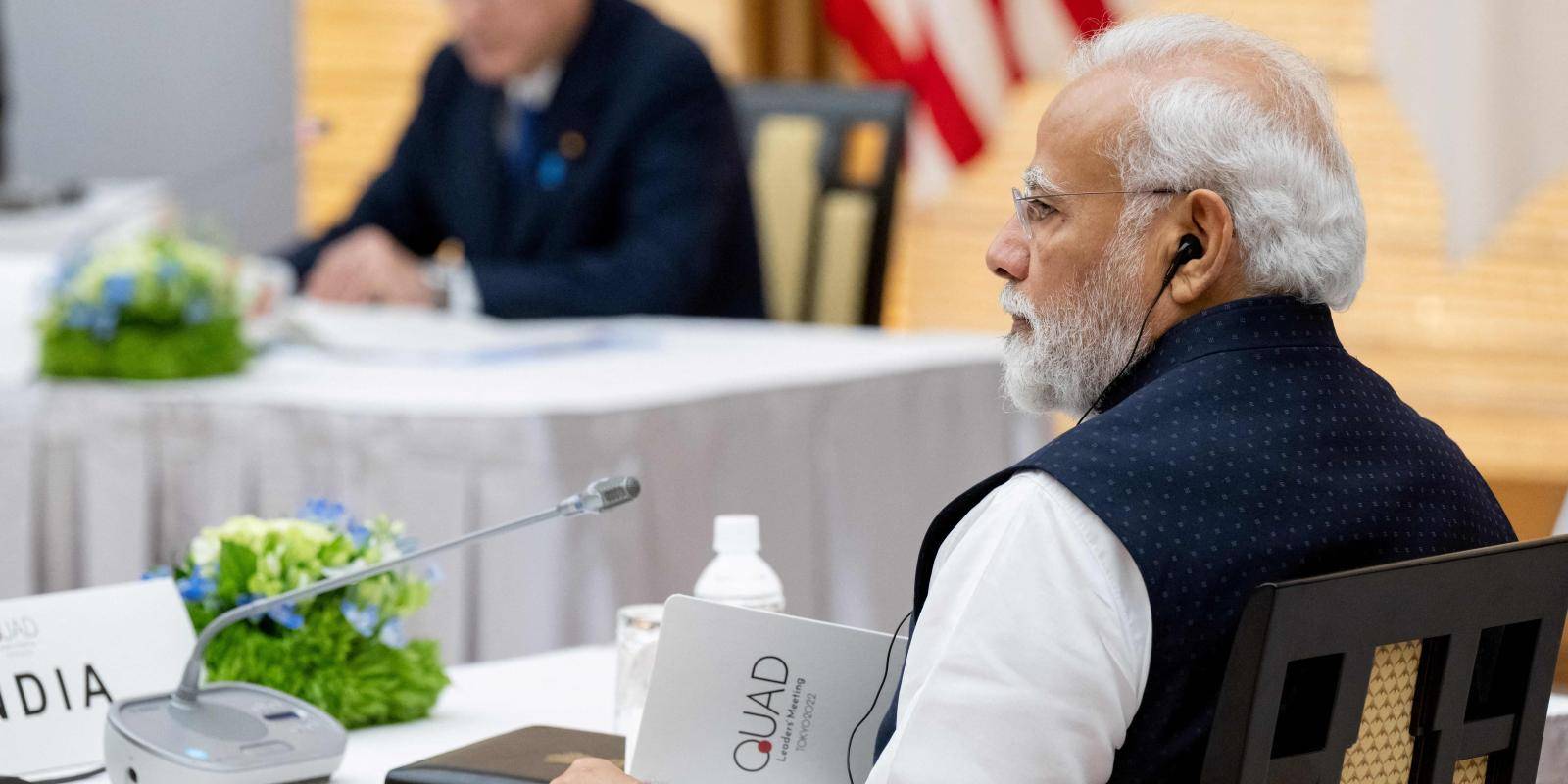
India-China relations: Is the Quad the answer?
India’s border with China became the site of tense conflict in 2020, which led to India reinvesting in the Quad. Arzan Tarapore discusses key issues from his International Affairs article, such as how India is responding to increased aggression at the border and how a reinvigorated Quad may hold answers to balancing China in the Indo-Pacific.Reforming Islamic Jurisprudence Shapes The Battle To Define Moderate Islam – Analysis
The world’s largest, most moderate Muslim civil society movement has called for abolishing the concept of a caliphate in Islamic law.Singapore Polls Show India’s Growing Influence in ASEAN as More Nations Put Trust in Delhi over Beijing

China and the Not Very New Cold War
China Creates a New World Order as Biden Ignores the Threats

Riyadh’s Motivations Behind the Saudi-Iran Deal
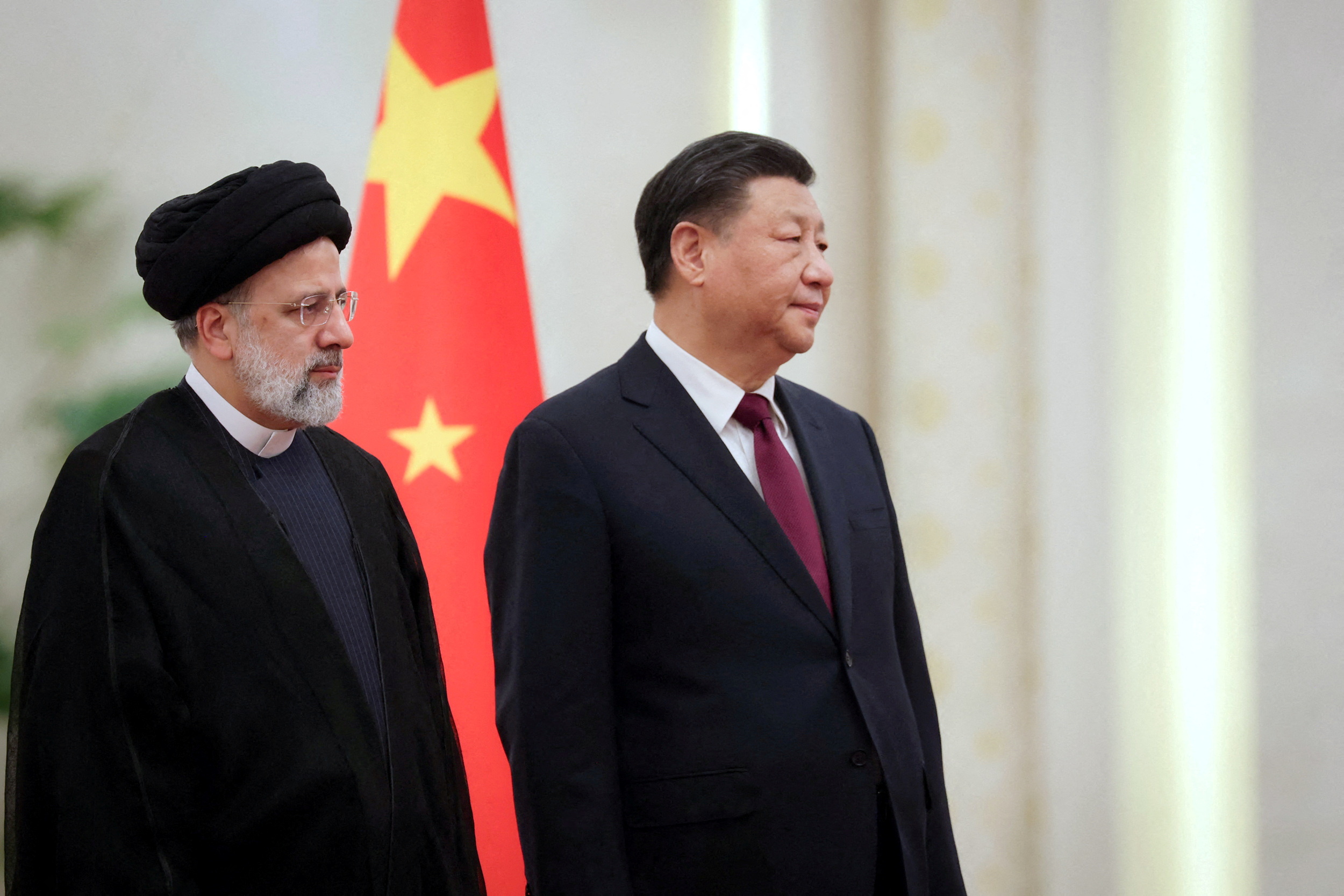
Whither Iran and China? A Limited Partnership, yet Deep and Durable

America's Dangerous Short War Fixation

India-China Border Tensions and U.S. Strategy in the Indo-Pacific
The AUKUS Alliance Has a Lot More to Offer Than Submarines

Winning the New Cold War: A Plan for Countering China
The Russo-Ukraine War: Possible Lessons for the IDF

In Preparation for Spring Offensive, Ukraine Organizes Additional Assault Brigades

Central African Republic Mine Attack: Can China Protect its Overseas Nationals?

The Grand Ethiopian Renaissance Dam: Cooperation and Conflict Resolution
This content was originally written for an undergraduate or Master's program. It is published as part of our mission to showcase peer-leading papers written by students during their studies. This work can be used for background reading and research, but should not be cited as an expert source or used in place of scholarly articles/books.The War in Ukraine: A Process Sociological Perspective on How We Got Here

VP Kamala Harris’ visit to Africa: Delivering on US commitments or countering China and Russia?
Some Rules of Global Politics Matter More Than Others
If there's a phrase that (supposedly) defines what U.S. foreign policy is all about these days, it's "the need to uphold a rules-based order." Case in point: a desire to strengthen the current order is one of the main reasons the Biden administration has worked so hard to assemble a set of like-minded nations this week, in the second iteration of its so-called Democracy Summit. One can understand why: Saying the United States is just trying to uphold the rules is politer than saying its goal is to preserve U.S. primacy in perpetuity, weaken China permanently, topple governments it doesn't like, or undermine its other adversaries.U.S.-China Rivalry: The Dangers of Compelling Countries to Take Sides
As the U.S.-China rivalry intensifies — with some speculating a new Cold War is in the offing — many Asian countries are looking on with concern. If Washington seeks to maintain its role as a global leader, it should be judicious in how it contests Chinese influence in Asia, which seems likely to be the key battleground of the new Sino-American rivalry. The United States must understand that Asian countries do not want to be forced to constantly manage competing pressures from superpowers. Cold War-era Sino-American competition demonstrates that forcing Asian countries to choose sides can ultimately be counterproductive and undermines one of the United States’ chief attributes in this global competition.Navigating the Deployment of Russian Tactical Nuclear Warheads in Belarus: Key Factors and Considerations

Silicon Valley Bank shows the perils of regulators fighting the last war

Ukraine Is Forming Three New Army Corps—Should It Bring Back Divisions Too?

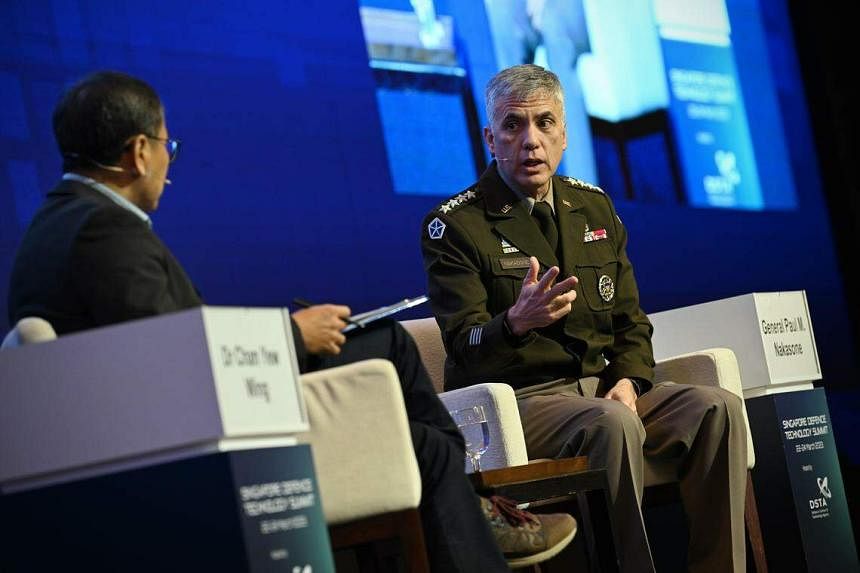
China-Russia links in cyberspace are a source of concern, says America’s top cyber warrior

Reflecting on One Year of War
In December 2021, with Russian troops massed on Ukraine's borders, President Biden ruled out sending U.S. forces to defend Ukraine. A year after the invasion, direct military engagement between NATO and Russia remains out-of-bounds. Despite this, the West finds itself in indirect conflict with Russia, backing Ukraine with weapons, intelligence, training, and an unprecedented package of sanctions against Moscow.