The Profession of Arms: A Guide for Young Army Officers
It takes courage, especially for a young officer, to check a man met on the road for not saluting properly or for slovenly appearance, but, every time he does, it adds to his stock of moral courage, and whatever the soldier may say, he has respect for the officer who does pull him up.
Read Document →The Dragon's Teeth: Assessing China's Military Modernization
PLA has focused on modernising its capabilities across all warfare domains to achieve these goals. This includes land, air, and maritime operations, nuclear, space, counter-space, electronic warfare and cyberspace operations, aiming to become a fully integrated joint force.
Read Document →Transforming the PLA: A Decade of reorganisation from SSF to ISF
PRC has engaged in a sustained and broad effort to transform the PLA from an infantry-heavy, low-technology, ground forces-centric military into a high-technology, networked force with an increasing emphasis on joint operations and naval and air power projection.
Read Document →Eyes without Borders: Exploring the World of Open Source Intelligence (OSINT) in the Digital Age
Open Source Intelligence (OSINT) is gaining prominence with the rise of social media, the digital society and the vast growth of publicly and commercially available information (PAI and CAI).
Read Document →
The PLA’s Developing Cyber Warfare Capabilities and India's Options
Informationised warfare blurs the lines between peacetime and wartime. A nation in the information age cannot wait for the hostilities to break out to collect intelligence, carryout influence operations, develop antisatellite systems or design computer software weapons.
Read Document →
Galwan and After
Why did China did this when he is under tremendous pressure in all fronts, is this China's salami slice tactics being progressed rigorously, what will be new Rules of Engagement, what will be escalatory control mechanism, who has taken this decision, will there be some pressure put by China in India's North-East through insurgency.
Read Document →
India’s Joint Doctrine for Cyberspace Operations: A Critical Review
Chief of Defence Staff (CDS) General Anil Chauhan and Secretary, Department of Military Affairs, formally released declassified versions of the Joint Doctrines for Cyberspace Operations during the Chiefs of Staff Committee meeting in New Delhi.
Read Document →
Know your Enemy General(now Field Marshal) Syed Aseem Munir
Gen SA Munir's position in the hierarchy of Pakistan was not very comfortable. The state of economy, insurgency in Pakhtoonistan and Balochistan, attack on the Jaffar Express, constant protests by supporters of Imran Khan's supporters inside and outside of parliament.
Read Document →
Decoding Operation SINDOOR: Key Aspects and Implications
Precision strikes were carried out on nine sites—four in Pakistan and five in PoK—linked to anti-India terrorist groups such as the LeT, JeM and the Hizbul Mujahideen. The targeted sites included Muridke (LeT headquarters) and Bahawalpur (JeM headquarters).
Read Document →
Chinese Cyber Exploitation in India's Power Grid - Is There a linkage to Mumbai Power Outage?
The New York Times (NYT), based on analysis by a U.S. based private intelligence firm Recorded Future, reported that a Chinese entity penetrated India’s power grid at multiple load dispatch points. Chinese malware intruded into the control systems that manage electric supply across India, along with a high-voltage transmission substation and a coal-fired power plant
Read Document →25 January 2024
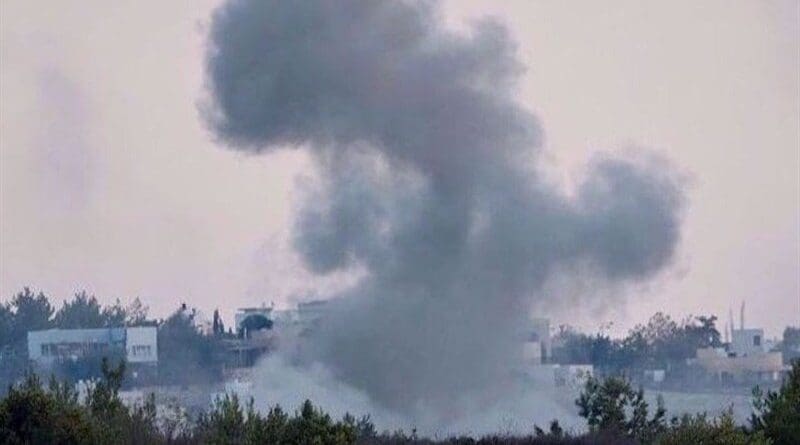
Hezbollah’s Exposed Position Following IDF Bombardment – Analysis

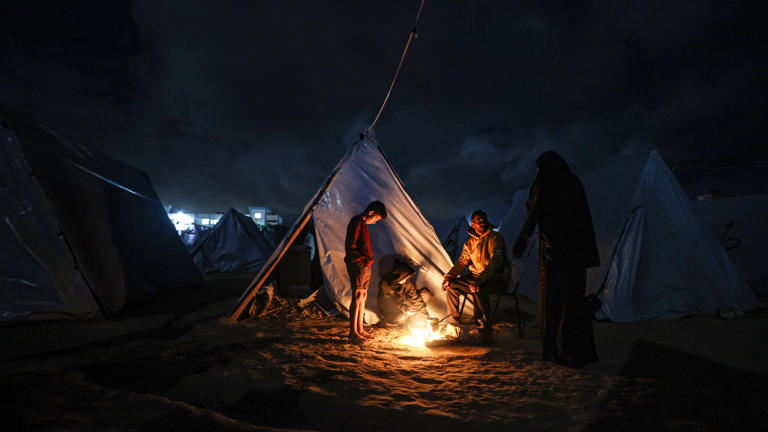
The Greater Goal in Gaza
Some Palestinians Want to Leave Gaza. Let Them.
Why Iran Doesn’t Want a War

Indian Government to Terminate Free Movement Regime With Myanmar

Making Sense of India’s Muted Response to the Red Sea Crisis

The BNP’s Islamist Dilemma

India's Private Power Market: Expanding Private Sector Electricity Distribution
The U.S. Should Remain Engaged in Bangladesh

Surveying the Experts: U.S. and Taiwan Views on China's Approach to Taiwan

Time Is Not On Myanmar Junta’s Side Almost 3 Years After Coup – Analysis

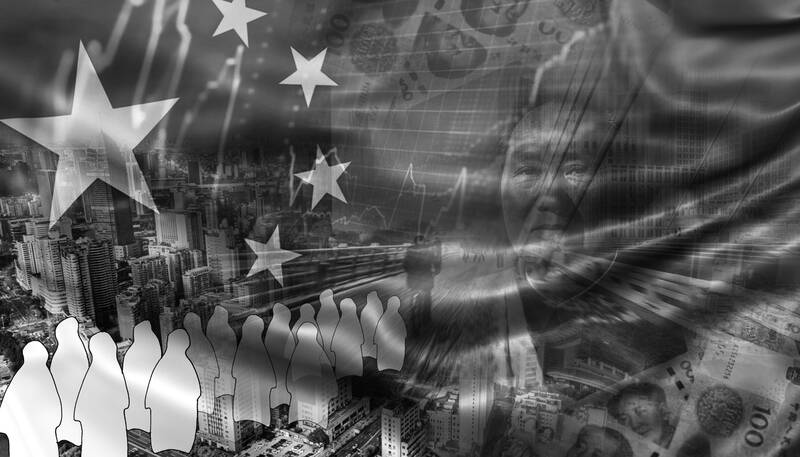
China’s Challenge To The International Economic Order – Analysis

No Place to Hide: A Look into China’s Geosynchronous Surveillance Capabilities

China’s long march back to stagnation

End America’s unwise alliance with Qatar

Biden sent private message to Tehran amid airstrikes: ‘We’re well-prepared’

Ukraine’s $30 Billion Problem: How to Keep Fighting Without Foreign Aid
The World Bank and the International Monetary Fund Should Do Less to Achieve More

Towards Achieving a Better Understanding of the Nation’s Defenses
US support for Ukraine: The difference between victory and defeat

National Security Advisers Meet In Davos To Advance Blueprint For Peace In Ukraine

The Battle To Clear The Black Sea Of Mines – Analysis

US tops public distrust in innovation on eve of Davos, survey shows

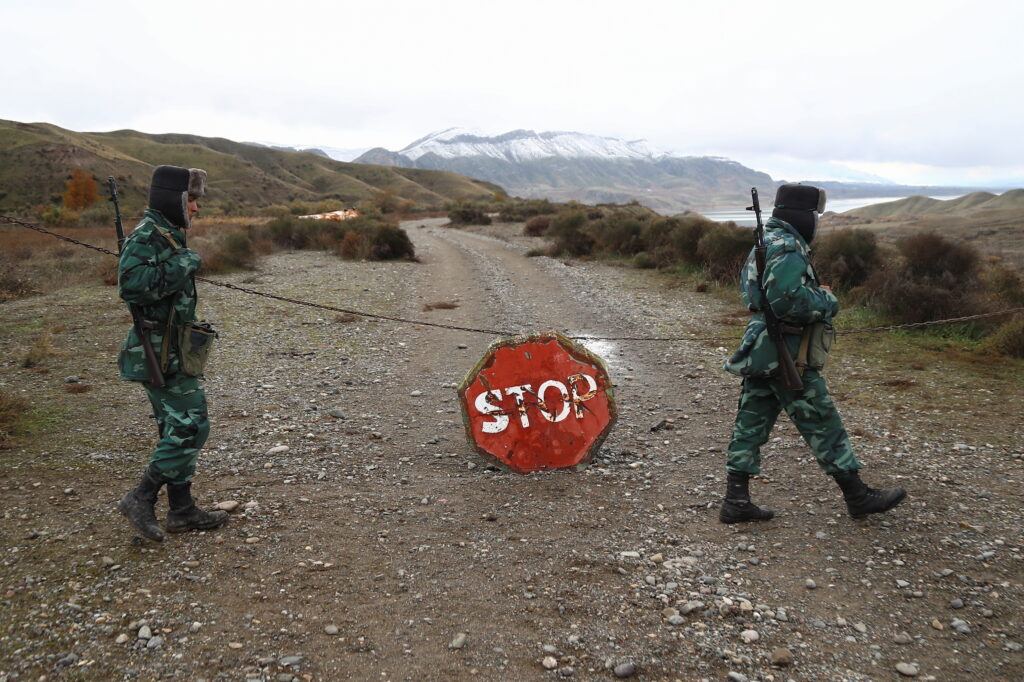
A "Frozen Conflict" Boils Over: Nagorno-Karabakh in 2023 and Future Implications
- Azerbaijan’s lightning attack on Nagorno-Karabakh in September 2023 ended three decades of de facto independence for the breakaway region. Previously, the Armenian-populated Nagorno-Karabakh Republic had shown remarkable durability, enabled by support from Armenia and Russia, the latter more after the Second Karabakh War of 2020. However, changed regional and global power dynamics since Russia’s full-scale invasion of Ukraine in early 2022 encouraged an opportunistic Azerbaijan, backed by Turkey, to deliver the death knell to Nagorno-Karabakh.
- Prior to Azerbaijan’s latest assault, two wars had been fought over Nagorno-Karabakh. The first began as a limited conflict, which turned into a larger-scale war when the USSR dissolved. Its ceasefire in 1994 resulted in the establishment of the de facto independent Nagorno-Karabakh Republic. The second war, in 2020, resulted in Azerbaijan reversing the gains of the Nagorno-Karabakh Armenians and further isolating the territory. Russia mediated the ceasefire and thereafter stationed peacekeepers in the region.
- Many issues are still unresolved in this long-running conflict. The biggest concern is directing much-needed humanitarian aid to those displaced by the latest violence. There also remains potential for future Azerbaijani incursions into Armenia to secure a path to its exclave of Nakhchivan.
- Nagorno-Karabakh has important implications for other international conflicts grappling with the competing principles of territorial integrity and national self-determination. The principle of nonuse of force is also affected by the fall-out of this dispute, risking the normalization of international violence with impunity.
- The US has limited foreign policy options to affect the current situation on the ground. One approach is to expand the American diplomatic footprint in the region to reinforce its influence. More consequentially, it should work with the European Union and regional players to implement an enduring monitoring mechanism to prevent renewed escalation. This effort should focus on reducing human suffering while improving the quality of life of people displaced by violence, and be pursued with a presence on the ground in Armenia and Nagorno-Karabakh to facilitate the potential return of refugees to their homes.