The Profession of Arms: A Guide for Young Army Officers
It takes courage, especially for a young officer, to check a man met on the road for not saluting properly or for slovenly appearance, but, every time he does, it adds to his stock of moral courage, and whatever the soldier may say, he has respect for the officer who does pull him up.
Read Document →The Dragon's Teeth: Assessing China's Military Modernization
PLA has focused on modernising its capabilities across all warfare domains to achieve these goals. This includes land, air, and maritime operations, nuclear, space, counter-space, electronic warfare and cyberspace operations, aiming to become a fully integrated joint force.
Read Document →Transforming the PLA: A Decade of reorganisation from SSF to ISF
PRC has engaged in a sustained and broad effort to transform the PLA from an infantry-heavy, low-technology, ground forces-centric military into a high-technology, networked force with an increasing emphasis on joint operations and naval and air power projection.
Read Document →Eyes without Borders: Exploring the World of Open Source Intelligence (OSINT) in the Digital Age
Open Source Intelligence (OSINT) is gaining prominence with the rise of social media, the digital society and the vast growth of publicly and commercially available information (PAI and CAI).
Read Document →
The PLA’s Developing Cyber Warfare Capabilities and India's Options
Informationised warfare blurs the lines between peacetime and wartime. A nation in the information age cannot wait for the hostilities to break out to collect intelligence, carryout influence operations, develop antisatellite systems or design computer software weapons.
Read Document →
Galwan and After
Why did China did this when he is under tremendous pressure in all fronts, is this China's salami slice tactics being progressed rigorously, what will be new Rules of Engagement, what will be escalatory control mechanism, who has taken this decision, will there be some pressure put by China in India's North-East through insurgency.
Read Document →
India’s Joint Doctrine for Cyberspace Operations: A Critical Review
Chief of Defence Staff (CDS) General Anil Chauhan and Secretary, Department of Military Affairs, formally released declassified versions of the Joint Doctrines for Cyberspace Operations during the Chiefs of Staff Committee meeting in New Delhi.
Read Document →
Know your Enemy General(now Field Marshal) Syed Aseem Munir
Gen SA Munir's position in the hierarchy of Pakistan was not very comfortable. The state of economy, insurgency in Pakhtoonistan and Balochistan, attack on the Jaffar Express, constant protests by supporters of Imran Khan's supporters inside and outside of parliament.
Read Document →
Decoding Operation SINDOOR: Key Aspects and Implications
Precision strikes were carried out on nine sites—four in Pakistan and five in PoK—linked to anti-India terrorist groups such as the LeT, JeM and the Hizbul Mujahideen. The targeted sites included Muridke (LeT headquarters) and Bahawalpur (JeM headquarters).
Read Document →
Chinese Cyber Exploitation in India's Power Grid - Is There a linkage to Mumbai Power Outage?
The New York Times (NYT), based on analysis by a U.S. based private intelligence firm Recorded Future, reported that a Chinese entity penetrated India’s power grid at multiple load dispatch points. Chinese malware intruded into the control systems that manage electric supply across India, along with a high-voltage transmission substation and a coal-fired power plant
Read Document →13 March 2024
Gaza War Turns Palestine Into A Potential Middle Eastern Lightning Rod – Analysis

Bibi’s Other Political Problem

Why America Isn’t Using Its Leverage with Israel

EU and US accelerate sea corridor plan to feed Gaza
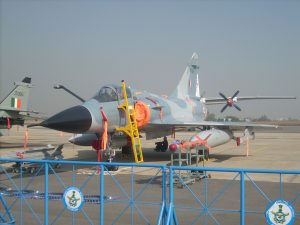
Lessons Learned From India’s Struggle to Maintain the Mirage 2000

New Delhi’s Balancing Act In A Chaotic Middle East

Pakistan’s Generals Fail to Fix the Election

Inside Afghanistan's gender apartheid
China’s defence budget boost can’t mask real pressures

RED DRAGON RISING? INSIGHTS FROM A DECADE OF CHINA CONFLICT STUDIES AND WARGAMES

Tibetans targeted by China-linked supply chain attacks using malicious language translators

The Houthis Are Holding The World To Ransom – OpEd

Iranian Elections and the Future of the Regime
What’s Wrong With The US Welfare State? – OpEd

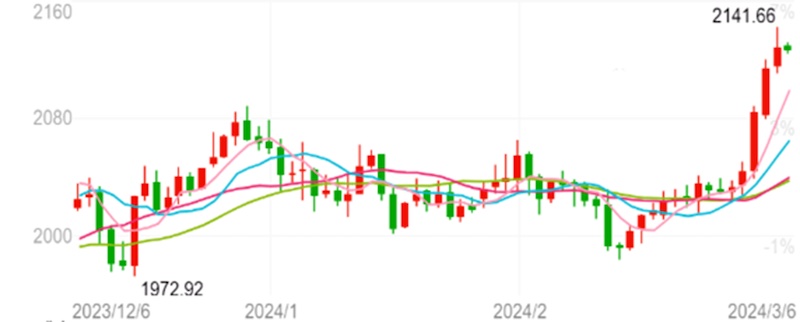
Soaring Gold Prices And Decoupling With US Dollar – Analysis

Sweden’s NATO Membership Will Further Intensify The Arctic Geopolitical Rivalry – Analysis

AI can be easily used to make fake election photos - report

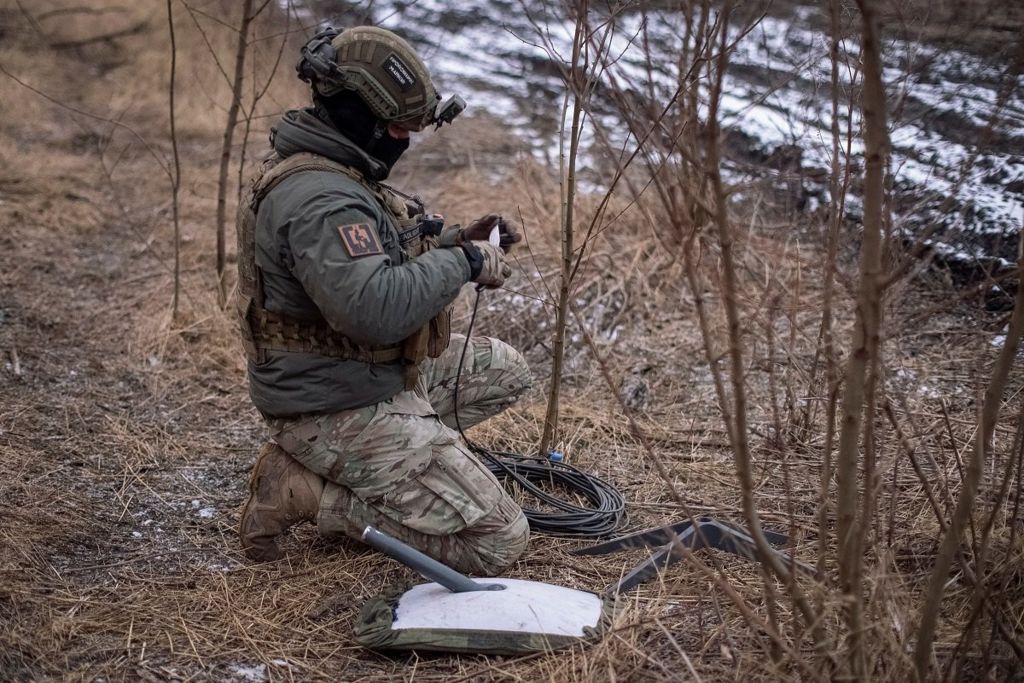
US lawmakers quiz Musk's Starlink over Russia claims

The Economics of ‘Oppenheimer’

Biden Starkly Lays Out the Stakes for 2024

Russian state-backed hackers breached Microsoft's core software systems, company says

Infrastructure Investment and Jobs Act: Unsung Hero Protecting Critical Infrastructure from National Security Threats

What It Takes to Fly the F-16: Challenges for Ukraine

Understanding The AI Revolution – Analysis

10 Biggest Cyber Espionage Cases: Undercover Campaigns of the Last 12 Months

- Cyber espionage cases have evolved to target critical infrastructures and strategic sectors globally.
- State-sponsored actors, including those from China, Russia, Iran, and North Korea, have demonstrated sophisticated capabilities to infiltrate and disrupt networks.
- The latest incidents reveal the growing challenge of securing cloud infrastructure against espionage efforts.
- Advanced persistent threats (APTs) employ innovative tactics such as “MFA bombing” and forging authentication tokens to gain unauthorized access.
- The strategic targeting of sectors outlined in national development plans, such as “Made in China 2025,” showcases the economic motivations behind cyber espionage campaigns.