11 March 2015

Ahead of Abe Visit, Pressure Builds For Obama on TPP

By Jack Detsch
March 10, 2015

The clock is ticking for the Obama administration to get the TPP past Congress. 

In less than fifty days, Japan will begin its biggest holiday period of the year. Golden Week, which lasts from April 27 to May 10, includes seven public holidays, and is typically a time for rest and relaxation. You wouldn’t have any trouble spotting Japanese tourists at San Francisco’s Alcatraz Island, on Hollywood Boulevard in Los Angeles, or sunbathing on Guam’s Gun Beach during that time.

Joining the exodus will be Prime Minister Shinzo Abe. He’s expected to arrive in Washington for a state visit, during which he could become Japan’s first premier to address a joint session of Congress. That speech could come at a critical moment. Congress is deep in negotiations on “fast track” trade promotion authority for the Trans-Pacific Partnership (TPP), which would allow the White House to deliver a finalized agreement to the legislature without the threat of amendment. TPP negotiations are still ongoing between 12 countries on both sides of the Pacific, including the U.S. and Japan.

If the current mood in Congress is any indication, Abe’s visit will be anything but a walk in the park. At a heated hearing of the House Foreign Affairs Asia Subcommittee last Wednesday, TPP supporters got an earful from critics in the lower chamber. “Goods that are 65 percent admitted made in China, which means they may be 70, 80, or 90 percent made in China, they get ‘made in Korea’ put on them,” Representative Brad Sherman, a California Democrat, argued in his opening remarks. “That’s the value added in Korea. They come into our country duty-free, and we get no benefits, no access to the Chinese market.”

China isn’t involved in the TPP: Sherman is referring to “rules of origin,” which determine how goods produced outside the free trade zone are treated in the agreement. Still, Sherman is hardly the only voice on President Obama’s side of the aisle that has expressed misgivings about the deal, which encompasses nearly 40 percent of the world economy.

What the Dutch Can Teach Americans about Politics

March 9, 2015

Political polarization seems engrained in American public affairs. Yet a model that has been working for much of the last three decades in the Netherlands can be seen as a partial template for consensus-building.

By any measure, the US is a remarkably divided nation. Stagnant real wages for the average worker, increasing wealth accumulation for the top 5%, social tension, and competitive elections have all contributed to what many view as one of the most polarized periods in recent American memory.

With gerrymandering, the 24-hour news cycle, the lack of campaign finance restrictions, and a host of other potential explanatory variables, ascribing the blame for this development is not easy. Measuring its toll, however, is.

The deteriorating political climate led to the National Journal last year ranking Congress as the most divided since it began its ratings in 1982. FiveThirtyEight has gone even further, grading Congressional partisanship as the highest since World War I.

Most depressingly, a seminal 2011 study by McCarty, Poole, and Rosenthal found that the House and Senate were at levels of ideological disunity not seen since the end of Reconstruction. And that was written before the political acrimony caused by the "fiscal cliff" negotiations.

Increases in political polarization have been linked to actual reductions in investment, output, and employment, according to the Philadelphia Fed. Additionally, polarization not only means less meaningful bipartisan laws passed on Capitol Hill, but fewer laws passed in general. Last year's batch of legislators passed the second lowest number of non-ceremonial bills since mid-century. The least productive assembly? The 112th Congress the year before.

But there's an alternative to the hyper-partisan political trajectory.

America Is Losing the War in Syria

MARCH 9, 2015 

Moderate rebel groups are suffering. The Islamic State and Nusra are gaining ground. And Washington’s piecemeal efforts are worthless. Here’s a grand plan worth paying for. 
The current U.S. strategy in Syria isn’t working. Despite the coalition airstrikes against the Islamic State, the group still has strategic depth in Syria to back its campaign in Iraq. Syrian President Bashar al-Assad’s regime, meanwhile, isn’t fighting the Islamic State — it’s locked in combat with the moderate opposition. Despite Washington’s hope for a national political transition away from Assad, there is no sign of a cease-fire, much less a comprehensive political deal.

More than ever, Americans — and Syrians — need to ask themselves what has gone wrong and what can be fixed. U.S. strategy needs to center on taking back ground from the Islamic State and driving a wedge between Assad’s small ruling circle and his increasingly wobbly support base so that a new government can be established to rally more Syrians against the jihadis. Reinforcing Syria’s moderate rebels is still the key component in achieving these goals, but we — and they — have to get the strategy and tactics right.

U.S. President Barack Obama’s administration should undertake a major diplomatic and assistance effort, or it should walk away from Syria.

U.S. President Barack Obama’s administration should undertake a major diplomatic and assistance effort, or it should walk away from Syria. Merely continuing to inject small amounts of aid and men in the fight won’t sustainably contain the jihadis or be sufficient to reach the political negotiation the administration keeps hoping for.

Muhammadu Buhari: Nigeria's Ticket to a Strong Democracy?

March 10, 2015 

The challenger to Goodluck Jonathan could do wonders for Nigeria.

Though he's not the candidate with the name "Goodluck," Muhammadu Buhari, the challenger in Nigeria's now-delayed presidential election, must be feeling lucky.

As the race shapes up to be the closest election since the return of “civilian” government in 1999, it also promises to be the most important test of Nigeria's nascent and imperfect democracy. Unlike the previous four elections, there's a real chance that the dominant People's Democratic Party (PDP) could fall from power. If it does, Nigeria's incumbent president Goodluck Jonathan will be judged by history on the basis of how he left office as much as what he did in power.

Jonathan today is as embattled as African heads of state typically get. Struggling in his fight to halt Boko Haram's rise in northeastern Nigeria as a growing international threat, and reeling from a collapse in global oil prices that's left his government staggering to slash a national budgetalready inadequate to address the dual challenges of Nigerian security and development, the country's nominally independent national election commission postponed its general election for six weeks—from February 14 to March 28—ostensibly to register more voters in areas affected by the Boko Haram insurgency and to give the Nigerian military a chance for one last offensive against the group.

The six-week delay initially felt like a suspicious opportunity for Jonathan to rally his chiefly southern, chiefly Christian supporters to win reelection. But it is already turning out quite differently. Jonathan is increasingly sidelined by economic and security problems, and last week brought a long-time-coming defection from his former patron, former president Olusegun Obasanjo, who tore up his PDP membership card last week, the latest chapter in an increasingly vocal turn away from Jonathan and toward Buhari.

After Obama: Restoring America's Middle East Leadership

March 10, 2015 

It's time to ditch the dramatics and get serious about America's future in the Middle East.

President Obama sure knows how to get the world’s attention. His public tantrum over Benjamin Netanyahu being invited to speak before a joint session of Congress pretty much assured that the entire globe would tune in to hear the Israeli prime minister enumerate his concerns over a nuclear deal with Iran.

This soap opera offers a potent reminder of the sorry state of U.S. policy in the Middle East, a policy that has pulled the closest of allies the furthest apart on the most important issues. While the fate of the Iran agreement may play out over the next few months, much of the Middle East muddle will remain until Obama vacates the Oval Office and beyond. So it’s is not too soon to start thinking about how to live with the mess this administration will leave behind.

President Obama has misunderstood the region at every level. The next presidential team will have to do better—not only grasping all the relevant frameworks that govern the greater Middle East, but jettisoning the bad reasoning that clouds everything the White House has done. Here are five key frameworks.

The Great Game

Russian Defense Industry On the Rebound After Two Decades of Neglect

Richard Weitz
March 9, 2015

Russia’s Defense Industry: Breakthrough Or Breakdown? – Analysis

The actual state of Russia’s military-industrial complex remains something of a mystery. On the one hand, Russian defense firms are currently breaking post-Soviet export records and providing all branches of the Russian military with new weapons systems that boast cutting-edge capabilities (at least on paper). On the other, the country’s defense industry remains beset by countless production problems, while the armed forces have yet to confirm the effectiveness of its new systems in traditional combat operations. And while the Kremlin insists that it will continue to increase defense spending, it now faces unprecedented financial challenges due to the fall in the value of energy exports, the collapse in the value of the Ruble, and increasingly severe Western sanctions.
POST-SOVIET COLLAPSE AND RENEWAL

The traumatic disintegration of the formerly integrated Soviet military-industrial complex (voenno-promyshlennyy kompleks, or VPK) , coupled with the sharp and sustained slowdown in government defense spending, left Russia’s post-Soviet defense companies with excess human and manufacturing capacities. Whereas the Soviet Union produced hundreds of modern tanks and planes, as well as dozens of new warships every few years, the newly-founded Russian Federation struggled to manufacture a handful of new systems. For example, while production of the next-generation strategic submarine Yury Dolgoruki commenced in 1996, the boat did not enter into service until the end of the following decade. It also took 19 years to complete the Yaroslav Mudry frigate, which finally entered service in June 2009. The Sukhoi design bureau labored for a decade to develop a fifth-generation fighter that has yet to enter into service with the Russian Air Force. Meanwhile, even Soviet-era platforms proved difficult to maintain as so many weapons designers and manufacturers went bankrupt or tried to enter more lucrative civilian markets. Even today, the Russian armed forces show the signs of the decade-long suspension of almost all new military procurements.

Syria’s ancient sites under attack

Author Wissam AbdallahPosted 
March 8, 2015

A girl runs along an archaeological site, which displaced families are using as shelters, in the southern countryside of Idlib, Feb. 5, 2015. (photo by REUTERS/Khalil Ashawi)

Syrian civilization can be described as an outdoor museum. Museums and archaeological sites are scattered all over Syrian territory. As the fire of war has reached the people and the stones, the country’s civilization, both in terms of the archaeological sites and Syria’s identity, has become a part of the war.

A source who is well informed about the protection of Syria’s heritage affairs told As-Safir that the country’s heritage has been impacted by the war. He said, “The map of the affected Syrian archaeological sites can be divided into four administrative divisions. From this division, the reports of the Directorate-General of Antiquities and Museums are based, as well as the figures included in the directorate's recent report on the fourth quarter of 2014.”

The source estimated that nearly 104 sites have been damaged in the country's east, which includes Deir ez-Zor, Hasakah and Raqqa. In Raqqa, the museum was damaged in a blast. In Hasakah's countryside, illegal excavation and digging activities were conducted, as occurred in Tel Barde, Tel Abu Hamza and Tel Jalal. Secret excavation activities took place at the Dura-Europos site in Deir ez-Zor, yet they were halted after the archaeological layers were almost completely destroyed. In north Syria, including Aleppo and Idlib, about 39 sites have been damaged.

Collateral Damage

March 8, 2015

Russia appears to have triumphed on the battlefield in Ukraine, but in doing so it has done at least as much damage to itself as its poor neighbor.

The war in Ukraine seems fated to be a drawn-out, lose-lose proposition. Paradoxically, notwithstanding the recent triumph of Russian arms in the Donbass—in fact, partly because of it—the Russians are shaping up to be the biggest losers of all.

Recall that the original justification for Russia’s intervention was to save ethnic Russians and Russian-speaking Ukrainians from slaughter at the hands of roving bands of Ukrainian fascists, reportedly on their way to Crimea when the polite green men arrived to save the day. How, then, have the Russians of Ukraine fared one year on?

The Russians of Crimea, the initial beneficiaries of Moscow’s humanitarian intervention, have seen the collapse of tourism and agriculture, soaring prices, physical isolation, and massive disruption as the peninsula switches from Ukrainian to Russia law, regulation and practice. All the same, the most acute problems are potentially only of a transitional nature. If Moscow comes through with the promised funding, and most of it isn’t stolen (two very heroic assumptions), Crimea could with time settle into, if not exactly prosperity, then at least a state of tolerable stagnation.

The Donbass, on the other hand, would be lucky to have Crimea’s problems. Desultory demonstrations and the seizure of a few municipal centers and armories were transformed into armed conflict once Igor Strelkov and his gang of Russians gunned down the Ukrainian security forces who tried to stop their incursion. However, Moscow failed to repeat its Crimean cakewalk in the Donbass, which became a theater of fierce positional fighting punctuated by heavy artillery bombardment in densely populated areas.

It’s Nato that’s empire-building, not Putin

7 March 2015

Two sides are required for a New Cold War — and there is no obvious need for an adversarial system in post-Soviet Europe

Peter Hitchens and Ben Judah debate Putin's empire building

Just for once, let us try this argument with an open mind, employing arithmetic and geography and going easy on the adjectives. Two great land powers face each other. One of these powers, Russia, has given up control over 700,000 square miles of valuable territory. The other, the European Union, has gained control over 400,000 of those square miles. Which of these powers is expanding?

There remain 300,000 neutral square miles between the two, mostly in Ukraine. From Moscow’s point of view, this is already a grievous, irretrievable loss. As Zbigniew Brzezinski, one of the canniest of the old Cold Warriors, wrote back in 1997, ‘Ukraine… is a geopolitical pivot because its very existence as an independent country helps to transform Russia. Without Ukraine, Russia ceases to be a Eurasian empire.’

This diminished Russia feels the spread of the EU and its armed wing, Nato, like a blow on an unhealed bruise. In February 2007, for instance, Vladimir Putin asked sulkily, ‘Against whom is this expansion intended?’

In Nemtsov Murder: Five Suspects Taken Alive, Another Blows Himself Up


03.08.15 

The head of Russia’s spy agency announces the names of suspects in the brazen murder of opposition politician Boris Nemtsov. All appear to have Chechen connections. 

On Sunday, the ninth day since the murder of Russian opposition leader and former vice prime minister Boris Nemtsov, the list of suspected and detained assassins had included names of six men, one of whom allegedly blew himself up with a grenade. 

Not a single one of the suspects’ names sounded Russian. All were said to have come form the North Caucasus, and one of the key suspects, Zaur Dadayev, reportedly served as a deputy commander of an interior ministry battalion in Chechnya. Dadayev admitted his involvement in Nemtsov’s murder, according to a spokeswoman at the Basmanny court in Moscow on Sunday. The court formally arrested Dadayev. 

The other four detained suspects, Anzor Gubashev, Shagid Gubashaev, Tamerlan Eskerkhanov and Khamzat Bakhayev denied their involvement in the crime. 

It was remarkable, some Moscow experts noted, that most of the information about detainees came not from the offices of judicial officials but from Alexander Bortnikov, the head of the Federal Security Service (FSB) the major security agency in charge of investigating, among other things, crimes committed by so called “Islamic underground.” The FSB is the successor organization to the old Soviet KGB. 

One more suspect, a 30-year-old resident of Chechnya, Beslan Shavanov, allegedly committed suicide during a special police operation on Saturday night, according to the generally reliable website Caucasus Knot.

That night, Chechen special forces surrounded Shavanov in a multiple story building in downtown Grozny, the Chechen capital. Shavanov did not have any criminal record, reports say. The order to detain him came from Moscow. 

Why would Chechens be involved in killing an opposition leader? 

The core question remains unanswered: Who ordered the murder of Boris Nemtsov? 

For their sake, immigrants must speak the language of Shakespeare

08 Mar 2015

Boris Johnson on the cultural and political dilemma revealed by an application to put up a satellite dish

I am more than usually bleary-eyed this morning, having spent a dark night of the soul. What kind of a Conservative am I, anyway, I asked myself, at about 3am, as the last chunderings and barrackings died away in the street. Am I a Hayekian free-market liberal?

Or am I a cultural conservative? A fox barked. A tin can rattled down the pavement – and sleep continued to elude me. I tossed and turned and grappled for the answer.

It all depends, you see, on your instinctive response to the planning policies of a certain Left-wing Labour council.

There is a chap I know who has just got married, and who wants to watch satellite television – cricket and so on. He needs to put a dish, an aerial, on the exterior wall of his flat. The Lefty council in question has told him that he may not do this, because in their snooty opinion the dish would be an eyesore.

Great Escape

By Sudip Bose
MARCH 4, 2015 

On Normandy’s coast a century ago, Claude Debussy fled the war and composed his final piano masterpiece
By the time he began composing his monumental set of 12 piano etudes, 100 years ago, Claude Debussy could look back on his body of work and know that he had attained a place among the greats. And yet, at the outset of the summer of 1915, there was little indication that he had any more masterpieces in him.

Increasingly melancholy and reclusive in the last decade or so of his life, the composer only rarely ventured beyond his home overlooking the broad Avenue du Bois de Boulogne, in Paris’s 16th arrondissement. Relations with his second wife, Emma, had long been strained, and he suffered almost constantly from hemorrhages and hemorrhoids, symptoms of the rectal cancer that had yet to be diagnosed. Always something of a penniless bohemian with wildly expensive tastes, he had been sinking even further into debt. He was also finding it difficult to compose—burdened not only by the weight of his past success but also by concerns of his place in a musical world upended by the emergence of Igor Stravinsky. Germany’s declaration of war on France in August 1914 brought greater hardships. Seething with anger, plummeting deeper into depression, Debussy was unable to write at all—nine months passed without a single piece of music. His personal motto, toujours plus haut—“always higher”—had resulted in such works as the Prelude to the Afternoon of a Faun, the opera Pellรฉas et Mรฉlisande, and the symphonic poem La Mer, but now his Paris study became, as he would later recall, “a factory of nothingness.”

Then came an opportunity for escape. A writer Debussy had met at one of the Tuesday night soirees hosted by the poet Stรฉphane Mallarmรฉ offered the composer the use of a villa in Pourville-sur-Mer, a town he had visited before, a hundred miles away on the Normandy coast. Debussy happily accepted, and on July 12, 1915, he set off with Emma and their nine-year-old daughter for a three-month sojourn by the sea. He was 53 years old at the time, with not much longer to live.

Salvaging Global Order

March 10, 2015 

It is on the notion of order that the world turns, or burns.

International order is all the rage these days. Not since end of Cold War has so much sustained attention focused on the web of norms, institutions, rules, and relationships that has for seven decades regulated large swathes of international behavior.

And for good reason: among global leaders there is a palpable sense that global order is fraying, but there is far less agreement on what to do about it. George H.W. Bush may have held out the prospect of a New World Order as the Soviet bloc collapsed, but today’s leaders have put forth few coherent plans. This invites danger, as the future of world order is in many ways the question of our geopolitical age.

It’s clear that global fragmentation preoccupies foreign policy minds these days. President Obama devoted a full quarter of his recently released National Security Strategy to international order and America’s efforts to strengthen it. Henry Kissinger’s new book World Order is a bestseller, and former Secretary of State Madeleine Albright this month expressed great concern the international order “because there is a lot of pressure on the system.” The Council on Foreign Relations’ Richard Haass recently wrote of the “era of disorder” and Director of National Intelligence James Clapper told the U.S. Congress that last year saw the highest rate of political instability across the world since 1992.

The CIA Says It’s Time to Up Its Cyber Game

March 7, 2015

The Director of U.S.’s Central Intelligence Agency is worried it’s in danger of losing relevance in an ever-more-digital world. 

His answer has been to order a sweeping reorganization of the C.I.A., which would include the creation of a new Directorate of Digital Innovation who would manage a new division overseeing both cyber-spying capabilities as well as internal technology needs and would rank as high as the agency’s powerful operations and analysis groups.

And while Brennan steered clear of saying it clearly, it’s the latest signal the U.S. is leaning in to a more offensive posture in the areas of cyber-espionage and cyber-warfare than before, a position that could prompt America’s adversaries to ratchet up their own cyber-spying capabilities, setting the stage for a technological cold war.

In the wake of last year’s attack by North Korea against Sony Pictures Entertainment and numerous other breaches, the urge to hack back, or at least build up the means to do so when and if needed, has increased.

The stats on the subject are pretty clear. The most widely-cited collection of data on hacking incidents is the annual Data Breach Investigations Report put out by telecom giant Verizon. Figures for 2014 have not yet been released, but in 2013 its authors flagged a tripling of incidents of “cyber espionage,” around the world. More than half of all incidents reported — 54 percent — were against American companies, government agencies or other entities like universities. The vast majority — 87 percent — were state-sponsored, meaning they were carried out by hackers working on behalf of the governments of other countries.

Is It Time to Give the Hackers a Dose Of Their Own Medicine?

Danny Bradbury
March 9, 2015

Should we hack the hackers?

If we’re losing the war against cybercrime, then should we take off the gloves and strike back electronically against hackers?

As banks reel from another major hacking revelation, a former US director of intelligence has joined some of them in advocating for online counterstrikes against cybercriminals.

In February, security firm Kaspersky detailed a direct hack against 100 banks, in a co-ordinated heist worth up to $1bn. This follows growing sentiment among banks, expressed privately, that they should be allowed to hack back against the cybercriminals penetrating their networks.

At February’s Davos forum, senior banking officials reportedly lobbied for permission to track down hackers’ computers and disable them. They are frustrated by sustained hacking campaigns from attackers in other countries, intent on disrupting their web sites and stealing their data.

Dennis Blair, former director of national intelligence in the Obama administration, has now spoken out in favour of electronic countermeasures, known in cybersecurity circles as hacking back, or strikeback.

Blair co-authored a 2013 report from the US Commission on the Theft of American Intellectual Property. It considered explicitly authorising strikeback operations but stopped short of endorsing this measure at the time.

Instead, the report suggested exploring non-destructive alternatives, such as electronically tagging stolen data for later detection. It also called for a rethinking of the laws that forbid hacking, even in self-defence.

Western law enforcers don’t have jurisdiction in the countries where cybercriminals operate. Ideally, they would pass information about hackers onto their counterparts there, said Blair, but in many cases local police are un-cooperative. It’s time to up the ante, he suggested.

Destroying Art: The Perfect War Crime


This article was originally published in El Espectador

BOGOTA - Art has been one of the chief targets, and victims, of political upheavals and war. Pillaging monuments may have picked up pace in the 19th century and become "respectable" to satisfy the yearnings of Western collectors. It was a time when European states had turned fallen empires into colonies. But art vandalism clearly did not begin or end then. Think of the Vandals. And who can be sure how much patrimony was destroyed in the Reformation or the Thirty Years' War, or by the Iconoclasts in eighth and ninth century Byzantium?

And more recently, at the hands of the bloodthirsty iconoclasts of our time, ISIS nihilists destroyed ancient sculptures at Iraq's Mosul Museum. It appears that some of the statues ISIS ravaged in Mosul were replicas, though not the Assyrian winged bull shown being drilled in video footage.

Since December 2014, several of the city's cultural buildings, including the main library, have been ransacked and had treasures stolen or destroyed. Close to 8,000 books and manuscripts have reportedly been burned, including some dated at more than 5,000 years old.

At their word

Watching footage of the Mosul art being destroyed is painful. The statues seem to acquire a human quality for a moment, which may be why ISIS ordered them wrecked - for being idols and distractions from the warped worship of their God.

The religious argument is not invalid per se. We may suppose ISIS really does wish to remove anything harmful to Islam, or its version of Islam. Since taking Mosul in 2014, ISIS has made Sharia law - again, its reading of it - the law of Mosul, implementing other "smashing" - of social measures such as dismissing women from government and teaching positions.

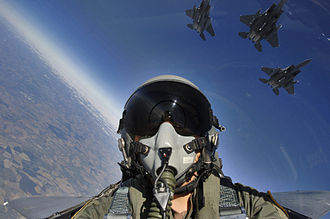
What Happens When a Fighter Pilot Has Diarrhea in the Cockpit?

04/03/2015
http://www.huffingtonpost.com/quora/what-happens-when-a-fight_b_6794524.html?ir=India

What is it like to have diarrhea in the cockpit as a fighter pilot?: originally appeared on Quora: The best answer to any question. Ask a question, get a great answer. Learn from experts and access insider knowledge. You can follow Quora on Twitter, Facebook, and Google+.

Sorry for the outburst, but this is the pilot's greatest fear. Even beyond enemy aces, missile batteries, or parachuting into a sea of sharks with frickin' laser beams attached to their heads! 

Let me get this right out in front: not only did I never experience this, I never even urinated while in a tactical aircraft. I didn't want to let my body know that this was a thing, having heard too many tales of pilots having to go several times each flight. Anyway:

My favorite university instructor, CAPT (ret) George Faulkner, USN, started his career as an F-4U pilot in '46. He told me about dash-5 in an 8-plane formation, who'd slipped out and was flailing away a bit behind the rest of the formation. After lead instructed him--as dash 2--to go find out the matter, he flew over and looked down into the cockpit. The other pilot had his flight suit down around his knees and was crapping in a glove. Several minutes later he rejoined. I never found out if he got a new callsign out of that.

During one of my early at-sea periods, we had an emergency pull-forward, where all the aircraft parked in the landing area were quickly unchained and moved forward in order to allow a plane to land. As a junior LSO, just learning the role, I raced up there to help wave the guy aboard, expecting a damaged bird, or at least a single-engine. But as he came in on a short straight-in, he called the ball, "203, Tomcat ball, 6.2, emergency, physiology." I didn't even hear it right, but some of the saltier paddles sprouted huge grins, "Roger ball, 10 knots, down the angle." BAM! Trap, over to parking, and shut down. Even before the chains were completely tied down, the canopy was coming up and the RIO was leaping from the cockpit. They said that he almost made it to the head that's right inside the base of the island.

One of the department heads of the S-3 squadron, an NFO, was out on a routine tanker hop when Nature called. Of course, the way he described it, Nature sent a dozen Jehovah's Witnesses on meth with AK-47s and a fresh will to spread the Good News. He clambered into the little space where you board the plane. He was ready to sacrifice his really nice helmet bag, like the ones these boys are toting.

Like these E-2 bubbas, the Viking guys wore no oxygen masks, nor G-suits (which was likely the downfall of the F-14 RIO of the last paragraph). While the pressure was building to fantastic heights, he was able to go to one-quarter mast -- flight suit around the knees -- and opened the bag just in time. He underestimated the explosive power, though, and shot high, hitting everything except the inside of the bag. When they landed about 30 minutes later, the whole crew were very noticeably wearing their oxygen masks. To his credit, after the rest of the guys tumbled out, he warned off the plane captain and deck chief, taking almost an hour to clean the inside of the plane, then tossing his bag and flight suit into the sea and soaking his survival vest and harness for hours. Even the fate of his boots was a toss up.

Vietnam, Cambodia Boost Defense Ties

March 10, 2015

The two sides are looking to expand their defense cooperation. 

Vietnam and Cambodia have vowed to boost defense cooperation between their two nations following high-level talks, Vietnamese media outlets reported earlier this week.

At talks held on March 6 in Ho Chi Minh City, the defense ministers of the two countries signed the Protocol and Plan for Cooperation in 2015 between their two ministries.

According to media reports, the two ministers – Vietnam’s General Phung Quang Thanh and Cambodia’s General Tia Banh – agreed to continue to boost defense ties in areas including military exchanges, education and training; searching for, retrieving and repatriating the remains of Vietnamese soldiers in Cambodia; and coordinating the management of border areas.

The two sides also reviewed their defense cooperation to date. Thanh thanked the Cambodian government and defense ministry for their assistance thus far, particularly in recovering remains of Vietnamese soldiers who were killed in Cambodia during the war. He also affirmed the Vietnam People Army’s willingness to increase its support for the Royal Cambodian Armed Forces in Cambodia’s national development process.

Both sides also noted improvements in the defense relationship, including through enhanced cooperation in personnel training, border protection and sea joint patrols that had facilitated economic development in border areas. They agreed that defense ties were one of the key pillars of the overall bilateral relationship.

The talks were held during the March 6-7 visit of a high-ranking delegation of the Cambodian defense ministry led by General Tia Banh to boost defense ties. He also serves as Cambodia’s deputy prime minister.

Taiwan Plans Military Display to Mark WW2 Anniversary

March 10, 2015

The KMT is eager to make sure its contributions to World War II are not overlooked. 

Taiwan will hold a military display sometime this summer to commemorate the 70th anniversary of the end of World War II, a Taiwanese defense ministry spokesperson said last week.

According to CNA, spokesman Major General Lou Shou-he told reporters that Taiwan was planning a military display to be held in northern Taiwan, in Hsinchu county. Lo made the comment in response to a question about whether or not Taiwanese President Ma Ying-jeou would inspect Taiwanese troops on the anniversary of the end of the World War II.

During his first briefing before Taiwan’s legislature, new Defense Minister Kao Kuang-chi said the military display would be similar in scale to the one held in 2011, the 100th anniversary of the Republic of China.According to the China Post, the 2011 military display included “71 aircraft of various types, 168 ground vehicles and 1,802 officers and soldiers” and featured Taiwan’s “biggest ever air show.”

The military display will be part of a series of events held by Taiwan’s military to mark the anniversary, including concerts, exhibitions, and special programs opening select military bases to the public. “These special events are to commemorate the bravery and daunting efforts of our troops and those who sacrificed their lives for the nation,” Luo said in January, when the programs were announced. Taiwan also plans to dedicate part of its commemorative activities to the theme of post-war “peace and cooperation between the Chinese people and the Japanese people.”

Previously, a ruling party legislator, Lin Yu-fang, had suggested holding a full-fledged military parade in front of the Presidential Office in Taipei to mark the end of the war. Taiwan’s defense ministry decided for the more modest option of a display held at a military parade ground.

What Should We Be Teaching Our Kids About War?

By Sally Abrahms
March 6, 2015 

This woman's mission is to make a film that shows how children think about war

Three years ago, over dinner with friends, Susan Hackley shared her ambitious New Year’s resolution: She wanted to make a film that would show how American children think about war.

Today, she is in the midst of making that documentary, A Child’s Guide to War. As managing director of the Program on Negotiation at Harvard Law School by day, Hackley is well positioned to take on this project.

At Harvard, she organizes programs on conflict issues and seminars for people from around the world (from Israel and Palestine to Latin America) to be better negotiators. “We try to help them deal with conflict in productive ways,” she says.

Hackley, 68, holds a master’s in public administration from the Harvard Kennedy School. She is former chair of the Alliance for Peacebuilding, a Washington, D.C.-based national organization. And, she has a personal connection to war. Her son Zac was a young Marine who fought in Iraq and was among the first troops to enter Baghdad.

We caught up with Hackley in between interviewing and filming children of military and non-military families, trauma experts, members of Congress and veterans — and busily tapping fundraising sources:

Next Avenue: Why the topic of war? 

Hackley: The media have focused on the struggles of veterans, but little has been said about the impact on their children and families. The subject is current, underreported and extremely important. I think this film offers a new perspective.

Speaking of perspectives, how did you react in 2000 when your son told you he had joined the Marines?

I was stunned. He hadn’t mentioned enlisting and had been accepted to college. I was worried that four years in the Marines would derail his education plans. But he assured me he would go to college later — and he did.

British Army could be cut to just 50,000 over next four years, report warns

By Tom Whitehead, Rosa Prince and Ben Riley Smith
09 Mar 2015

Defence budgets could be cut by up to another 10 per cent during the next parliament and leave Army at its smallest for 250 years 

British Army could be decimated after next election Photo: Heathcliff O'Malley/The Telegraph

The British Army could be reduced to its smallest size in nearly 250 years, taking its overall troop level to just 50,000 soldiers, a former Government defence adviser has warned. 

A report by the respected Royal United Services Institute (Rusi) suggests that defence budgets may be slashed by 10 per cent during the next parliament, shrinking personnel for the three Armed Forces by as many as 42,000. 

Britain’s military appears once again in line for massive culls after the next general election because of the continuing austerity drive and a lack of commitment by any of the major parties to protect defence spending, Rusi said. 

Downing Street has been forced to deny that David Cameron and George Osborne, the Chancellor, are at “loggerheads” over whether to maintain the Nato target of committing two per cent of the nation's finances to defence. 

David Cameron, the Prime Minister 

Hybrid War: Old wine in new bottles?

March 9, 2015 

President Barack Obama delivers remarks at the National Cybersecurity and Communications Integration Center (NCCIC) in Arlington, Virginia on January 13, 2015. President Obama discussed efforts to improve the government’s ability to collaborate with industry to combat cyber threats. UPI/Photo by Kristoffer Tripplaar/Pool 

It is seductive to conclude that "hybrid war" is a creature of the 21st century in which technology now offers an alternative and a reinforcement to the blunter use of military force. Based on successful Russian encroachment into Ukraine and occupation of Crimea with hybrid war tactics, it is fair to ask if the same could happen to the Baltic States. Consider Estonia as a candidate target for Moscow. 

Suppose Estonia is subjected to attempts at subversion by its giant neighbor to the east. Russian propaganda accuses the Estonian government of repressing the Russian-speaking minorities legitimizing an incursion under the right to protect. Russian soldiers in mufti flow across the border. Tallinn's telecommunications center is target number one. Control communications and control the country. All this can be called hybrid war. 

But the year is not 2015. It is 1924. Lenin had his sights set on swallowing the Soviet Union's tiny neighbor. In those days, cyber warfare meant occupying and controlling the telephone exchange. And so-called "little green men" who swarmed into eastern Ukraine and Crimea were the great-grandchildren of those Lenin ordered into Estonia. Fortunately, Lenin failed. 

10 March 2015

India’s Middle East Policy Gathers Momentum

By Kabir Taneja
March 08, 2015

New Delhi’s active diplomacy with the region is now being bolstered by growing recognition of threats such as ISIS. 

Much of India’s foreign policy, even today, is based on the fundamentals laid down by the country’s first prime minister, Jawaharlal Nehru. India’s place in the world and the policies that have shaped its global personality as a nation are based on Nehru’s ideals, which were sacrosanct until the Indo-China war of 1962 offered a perspective based on realism, rather than idealism.

Nehru was genuinely fond of driving India’s foreign policy, just like Manmohan Singh and now Narendra Modi have been. However, Nehru’s play in extending India’s hand of friendship and cooperation in the Middle East and Persian Gulf (more commonly known in India as West Asia) was a masterstroke, the benefits of which India reaps in the region even today.

India’s influence post-independence in the region started with the rapport that Nehru ended up building with the former Egyptian President Gamal Abdel Nasser. By 1953, eminent Indian diplomat V. K. Krishna Menon had already started to market the idea of a Non-Aligned Movement (NAM) at the United Nations. Nehru, Gamel, and others from Asia and Europe later championed the NAM, at the time a revolution, but now an idea well past its expiry date.

Nehru made Cairo a single-point policy in West Asia, though which New Delhi over the years developed exposure to the various intricacies of the region. Even though trade between Egypt and India never flourished to the levels that both Nasser and Nehru had hoped for, the Nehru-Nasser dynamic did lay much of the groundwork for India’s policy of strategically backing Arab states. Even after Nasser died in 1970, India supported his successor President Anwar Sadat’s regime as it partnered with Hafez al-Assad’s Syria and took on the Israelis in the October War (Yom Kippur War).

Continuing the trend, India also maintained good relations with Hafez al-Assad’s Ba’athist regime in Damascus. These ties were retained when his son, Bashar al-Assad, took over the presidency of Syria in 2000. India has maintained a sly preference for the Assad regime even during the current Syrian Civil War, echoing the Russian line of supporting only an amicable solution via talks. In addition to taking part in the Geneva II talks, New Delhi sent a business delegation to Syria last May to bolster trade ties.

India's ‘Airpocalypse’

By Asit K. Biswas ,Julian Kirchherr
March 08, 2015

India has been pursuing a non-sustainable development path that repeats many of China’s mistakes. 

Rising levels of air pollution in India are truly worrisome. New Delhi is now ranked as the most polluted city on earth where air pollution may be 60 times higher than what is considered safe. In total, 13 of the world’s dirtiest 20 cities are now in India, according to the World Health Organization (WHO).

The ramifications of this development are many. Air pollution has already shortened average life expectancy by three years for almost 700 million people in India, according to an estimate by the University of Chicago. Only China is worse off. Air pollution has shortened the lives of the people in north Chinese by 5.5 years, the relic of its past growth-at-any-cost policies.

China is fundamental in the discourse on air pollution in India. When the WHO released its report on the most polluted cities on earth, India rejected the findings immediately, claiming the UN agency had overestimated the levels, especially in India’s capital, while underestimating the levels in Beijing (ranked 77th in the WHO report). The Indian government was unwilling to accept that the country had already surpassed China’s high air pollution levels.

Many believe that air pollution will be an inevitable side effect if India wants to grow as fast in the next three decades as China did in the past three. When asked recently if he planned to cut coal-powered electricity, Prakash Javadekar, the Environment Minister, responded: “What cuts? That’s more for developed countries. India’s first task is the eradication of poverty.”

China is now significantly more developed than India. Its per capita income is 4.5 times higher. However, it is now paying the price for its past high-growth policies. China’s “pollution is nature’s red-light warnings against the model of inefficient and blind development,” Prime Minister Li Keqiang recently acknowledged.

Consequently, China has now launched a variety of anti-air-pollution initiatives in its declared “war on pollution.” Many may be promising – ranging, among other things, from public transportation enhancement to green trade and a revision of the country’s energy mix. Beijing alone, once dubbed as “Greyjing” by the international media, will invest almost 760 billion yuan ($121 billion) in anti-air-pollution measuresby 2017. Admittedly, China has been no environmental ideal thus far, but it may now be on the right track.

Southern Asia's Nuclear Powers Southern Asia's Nuclear Powers

Author: Eleanor Albert, Online Writer/Editor

March 6, 2015 Indian Defence Research and Development Organisation/Courtesy Reuters

Introduction 

Southern Asia is home to three nuclear powers—China, India, and Pakistan—that continue to expand and modernize their arms programs. Motivated by the need to address perceived security threats, each is seeking to expand ballistic missile and cruise missile-based nuclear delivery systems. Such nuclear competition is dangerous given mounting mistrust and a dearth of diplomatic measures in place to reduce risk of confrontation. Pakistan’s chronic political instability, spotty nonproliferation record, and ongoing threats posed by militant forces have focused special concern on the safety of its nuclear materials. 

What are China's nuclear capabilities? 

China is seeking to soon achieve a nuclear triad (land, air, and sea-based nuclear delivery capabilities). Analysts estimate that China’s inventory is close to two hundred and fifty warheads. This includes short, intermediate, and long-range ballistic missiles. Some experts say China has as many as sixty long-range missiles with ranges between 4,350-9,320 miles. China's Central Military Commission oversees the country's nuclear weapons under the management (PDF) of the Second Artillery Force of the People’s Liberation Army.

Beijing first pursued atomic weapons after the Korean War (1950–1953) and conducted its first nuclear test in 1964. The U.S. nuclear threat during the 1950s Taiwan Crisis incentivized China's strategic nuclear program. Since China’s economic boom, Beijing has sought to modernize its nuclear forces to improve survivable second-strike capabilities, which would prevent the destruction of its entire arsenal in the event of a first-strike attack, securing the means for nuclear retaliation. Though historically driven by both U.S. and Soviet capabilities, the recent modernization of China's nuclear forces is primarily motivated (PDF) by existing and developing U.S. capabilities.

In addition to increasing the size of its arsenal, China is also altering the composition of its nuclear forces to build up more mobile systems. The U.S.-China Economic and Security Review Commission’s 2014 annual report (PDF) said that China’s nuclear forces would grow considerably over the next five years, with the introduction of road-mobile nuclear missiles, ballistic missile submarines, and multiple independently targetable reentry vehicles. Meanwhile, some experts stress that the pace of growth is slow. Chinese missile accuracy has also significantly improved (PDF), according to a U.S. Department of Defense report.

What India can Aspire for in Unmanned Systems and Cyber Warfare

By Rear Admiral (Retd) Dr S Kulshrestha 
Source Link

“We will not apologise for our way of life, nor will we waver in its defence. And for those who seek to advance their aims by inducing terror and slaughtering innocents, we say to you now that our spirit is stronger and cannot be broken—you cannot outlast us, and we will defeat you.”

—President Barack Obama, inaugural address, January 20, 2009

THE CURRENT approach to the US national security relies on technological superiority over the adversaries and not on overwhelming numbers of weaponry, as was the case during WW II. 

Technology is thus, the core and integral aspect of US national security. Technology is integral to war fighting, be it weapons, C4ISR, logistics or counter measures and its superiority consists in quickly overpowering the adversary. Inferring from the above, a technology acquired/developed by an adversary or ability to acquire it, also becomes a national security issue for a government, this in turn, propels the science and technology policy to invest in military R&D. Emerging technologies with military uses should therefore continue to remain in forefront of issues affecting national security. Developing technologies to meet a nation’s national security environment is a complex process involving basic research, applied research, and development of useful products, which aid in national security. This therefore envelops a much larger canvas of institutions and production agencies in the civilian sector. A country would perforce have to seek technologies in the civilian realm if they are befitting goals in the national security domain. The investment in science and technology has to be structured to meet the security needs that may fructify in the civil sector as well.