11 August 2015

China’s Maritime Militia Upends Rules on Naval Warfare

The use of fishing vessels as a maritime militia has profound legal implications.
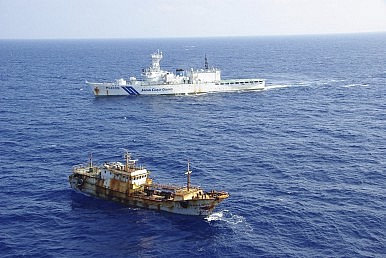
China operates a network of fishing vessels organized into a maritime militia with paramilitary roles in peacetime and during armed conflict. The maritime militia forms an irregular naval force that provides the People’s Liberation Army Navy (PLAN) with an inexpensive force multiplier, raising operational, legal and political challenges for any opponent. The sheer size and scope of the vast network of China’s maritime militia complicates the battlespace, degrades any opponent’s decision-making process and exposes adversaries to political dilemmas that will make them more cautious to act against China during a maritime crisis or naval war. The legal implications are no less profound.

Coming Soon: China's Demographic Doomsday

August 10, 2015

By 2022—and probably sooner—India will overtake China to become the world’s most populous state, a status the latter has held for at least three centuries and perhaps for all recorded history.

And once the Chinese nation loses its demographic crown, it will fall fast. The country’s population will peak in 2028 according to the UN’s “World Population Prospects: The 2015 Revision,” released at the end of July. China in its peak year will have 1.42 billion people. By the end of the century, the country will be just a smidgen over a billion—and very, very gray.

India, on the other hand, has a bright demographic future. No country willcontribute more to global population growth between now and 2050. And the Indian state will continue to grow well into the second half of the century. India, according to the UN, will peak in 2068, when it will be home to 1.75 billion souls. That year, China is projected to have 541 million fewer people.

5 Russian Weapons of War China Should Fear

August 9, 2015

Relations between Moscow and Beijing might be rosy for now. However, if relations were to turn sour...
In our last article, we discussed the possibility of Russia and China going to war. Relations between the two are currently fairly good, and war between the two countries is seemingly unlikely. That being said, the two have had their share of territorial disputes, and at this point it is probably not a good idea to consider any dispute with China dormant.

Both Russia and China would have their own advantages and disadvantages in a war. The Russian military has gone to war numerous times in the last twenty years, in Chechnya, Georgia and now Ukraine. Russian forces, although often ill-trained and ill-prepared, are resilient and capable. Russia also holds a technological edge over China—for now, anyway.

The flip side is that Russian equipment, on balance, is fairly old. Russia’s economy is also less than a fifth of China’s, which will chip away at her strategic position. Another issue is as old as Russian power: much of the country’s military lies west of the Urals and would need to be sent east by air and rail.

China decides on issue of Dalai reincarnation

JAYADEVA RANADE

Jayadeva Ranade is a former Additional Secretary in the Cabinet Secretariat, Government of India and President of the Centre for China Analy 

Xi Jinping asserted that the Communist Party would pick ‘the next Dalai Lama, period’. 

The 14th Dalai Lama.

China's communist regime very recently moved to dispel any lingering doubts as to Beijing's future course of action on the issue of the Dalai Lama's reincarnation. On 6 August 2015, China's authoritative, official news agency Xinhua reported that the Chinese Communist Party (CCP) Central Committee (CC)'s highest body convened in Beijing on 30 July 2015. Presided over by CCP CC General Secretary and President of China, Xi Jinping, the "closed-door" meeting of the 25-member Politburo (PB) deliberated on the "issue of the next reincarnation of Tenzin Gyatso, the current XIVth Dalai Lama", as part of the measures needed to stabilise the province and counter "separatism". Other issues on the agenda related to the expulsion of former Central Military Commission member Guo Boxiong and his trial on charges of corruption and the problems in the Chinese economy. Xinhua added that the meeting also discussed development and stability in Tibet, and decided to set up a leading group on "united front work".

China's message to India

August 07, 2015

'China's latest defence White Paper has been issued against the backdrop of the upgraded Sino-Pakistan strategic relationship which has impinged on India's sovereignty and territorial integrity, and Beijing's continuing intransigence on tackling the issue of the disputed border or intrusion by PLA troops,' says Jayadeva Ranade.

Chinese soldiers at its border with India at the Nathu La Pass in Sikkim.

The Defence White Paper issued by China's Ministry of National Defence, MND, on May 26, 2015, titled 'China’s Military Strategy,is the briefest of all the nine White Papers issued since 1998.

The series of White Papers are official statements of Chinese government policy and usually provide Beijing's official view of the contemporary international and regional situation, relations with some countries and a statement of the major elements of China's defence policy. This White Paper was issued as tension in the South China Sea was rising.

ISLAMIC STATE SEEN BUILDING CAPACITY FOR MASS CASUALTY ATTACKS; ISLAMIC STATE ‘LIKELY’ TO HAVE CHEMICAL WEAPONS EXPERTS CAPABLE OF DEVELOPING A ‘DIRTY BOMB,’

August 9, 2015

Islamic State Seen Building Capacity For Mass Casualty Attacks; Islamic State ‘Likely’ To Have Chemical Weapons Experts Capable Of Developing A ‘Dirty Bomb,’

CNN is reporting that concern is growing among intelligence officials that the Islamic State may be working to build the capability to carry out mass casualty attacks, a significant departure from the terror group’s current focus on encouraging lone wolf attacks,” a senior U.S. Intelligence official told the news organization.

“To date, the Intelligence Community view has been that the Islamic State is focused on less ambitious attacks, involving one, or small group of attackers armed with simple weapons,” CNN wrote. “In contrast, al Qaeda, and al Qaeda in the Arabian Peninsula (AQAP), has been more focused on — and more capable of — mass casualty attacks, such as plots on commercial aviation. Now, the Intelligence Community is divided,” CNN says.

REMEMBERING HIROSHIMA, AMIDST HELL IN SYRIA

August 08, 2015

This week’s seventieth anniversary of the American nuclear bombing of Hiroshima and Nagasaki that killed 200,000 people coincided with intense debate in the United States Congress in particular about the recent agreement that prevents Iran from acquiring nuclear weapons (which Iran claims it has never sought). The matter of mass killings using weapons of mass destruction has preoccupied humankind for some time now, and it raises four related issues that deserve much more attention than they have received:

• accountability for crimes committed,

• intervention to protect civilians,

• deterrence to prevent possible future atrocities and crimes against humanity, and

• whether political agreements that end active wars should allow leaders who presided over mass atrocities to enjoy amnesties and not be held accountable legally or politically.

The Jihadist of Copenhagen


AT APPROXIMATELY 3:30 P.M. on February 14, Omar El-Hussein cut down a back street in Østerbro, a quiet neighborhood near the center of Copenhagen. Dressed in a bulky black parka, the 22-year-old strode purposefully toward the Krudttønden cultural center. As he approached, he withdrew an M95 assault rifle from a bag.

Inside, a panel discussion was under way on blasphemy and freedom of expression. It featured Lars Vilks, a Swedish cartoonist who had been living under police protection since 2007, when he published cartoons depicting the Prophet Muhammad with the body of a dog. Abu Omar al-Baghdadi, now the self-proclaimed caliph of the Islamic State, hadannounced a bounty of at least $100,000 on Vilks’s head (more if he were to be “slaughtered like a lamb”). Earlier in the day, the cafΓ© had been swept for explosives, according to an official Danish Ministry of Justice report. A heavy security detail–two Swedish bodyguards, two uniformed cops, and three agents from Denmark’s security and intelligence service (PET)—scanned the guests as they arrived.

El-Hussein headed for a rear entrance. The back door was locked, so he circled back to the front. There, standing about six feet from the center’s glass facade, he opened fire.

Inside the lecture hall, one of the bodyguards ordered the crowd to move to the back of the room. He pushed Vilks and Helle Brix, a Danish writer and journalist known for her criticism of Islam, into a storage room and locked them in. Some members of the crowd escaped out the back of the building. Others tried a door at the front, to El-Hussein’s left. He wheeled toward them, and they snapped the door shut before he could shoot.

Abe pledges nuclear weapon-free Japan at Nagasaki memorial ceremony

News from around the world.

Japan will maintain ‘non-nuclear principles’, PM says

Japanese Prime Minister Shinzo Abe on Sunday renewed his pledge to keep Japan a nuclear weapons-free country while marking the 70th anniversary of atomic bombing of Nagasaki. Abe pledged that he would continue to maintain the country’s “three non-nuclear principles” policy, which bar Japan from possessing, producing and allowing other nations to bring atomic weapons into the country. The Prime Minister’s remarks came after he was criticised for not renewing the pledge during a ceremony to mark the anniversary of the Hiroshima bombing last week.

Pakistan officials call for inquiry into child sex scandal

Officials from the Pakistani state of Punjab on Sunday called for a federal inquiry into what they said was the largest child sex-abuse scandal in the country’s history. The state’s government also ordered a judicial inquiry into the scandal, which came to light after nearly 400 video recordings of over 280 children being forced to perform sexual acts were discovered last week. Officials said that most of the victims were under 14 years old, adding that children as young as the age of six had been depicted as well. Seven people have been arrested in connection with the case.

Islamic State kills 37 in Syria, 300 in Iraq

France: Saudi Arabia's New Arms Dealer

August 10, 2015

Influential members of the Saudi Arabian government believe that the United States—the kingdom’s most valuable strategic ally since 1945—has abandoned Riyadh on a host of regional issues, most notably Iran’s nuclear program. As the Saudis respond by seeking to enhance their political and economic relations with powers other than the United States., France sees an opportunity to supplant Washington as Riyadh’s closest ally. While it remains unlikely that Paris will entirely replace Washington as Saudi Arabia’s most important ally, France can compete with the United States to become the kingdom’s top supplier of advanced military technology in the future.

Following the interim nuclear agreement of November 2013, French officials joined their Saudi counterparts in questioning whether Tehran could be trusted, and Iran’s commitment to ending its ability to build a nuclear bomb. While it remains to be seen how the recently signed Iranian nuclear agreement will impact Paris and Tehran’s relationship, of all parties in the P5+1 talks, France is said to have taken the toughest stance against the Iranian nuclear program, which has not gone unnoticed in Riyadh.

French Arms Deals in the Gulf

Why Modi's historic peace deal won't end Nagaland's problems

07-08-2015 

Details of the Centre's "accord" with the National Socialist Council of Nagalim - Isak-Muivah (NSCN-IM), but there can be little doubt that coming after nearly 18 years of negotiations under ceasefire, this is a historic development. That it has happened under the leadership of Narendra Modi, with RN Ravi as the Centre's interlocutor, and national security advisor Ajit Doval as the less-than-hidden hand, is to the credit of the current dispensation. Nevertheless, it is useful to recognise that this is, at best, the last step in a journey in which several successive regimes had already covered many miles. Crucially, moreover, it is far from a conclusive resolution of the "Naga problem". While this deal is certainly historic in its significance, it is not the end of troubles in Nagaland. There are still several armed factions that will need to be accommodated before the Nagaland problem can be said to have been resolved, and at least some of these will be tempted to escalate violence in the immediate future, partially to increase their leverage in future negotiations, and partly to occupy the militant space purportedly vacated by the NSCN-IM, as a result of its accord with the government. 

The Congress' rather strident criticism of the accord has been both churlish and mischievous, and does not need to be taken seriously. Indeed, it is useful to reiterate that the present agreement would necessarily reflect a continuity of efforts and underlying principles established under previous regimes. Moreover, the NPA government did not "take the states into confidence" any more than the National Democratic Alliance (NDA) has, and that is the nature of such negotiations. That this is "insulting to the states and people of the Northeast", as Sonia Gandhi provocatively suggests, is nonsense. While the details of the deal will inevitably be shared, clearly, it cannot contain elements that would compromise the interests and territorial integrity of the neighbouring states, unless the principal state interlocutors and everyone in the central government have completely lost their minds. The NPA's problem was "sour grapes", because it wasn't able to push the deal to a conclusion during its tenure - though they were many occasions when a settlement was believed to be tantalisingly within reach.

AFSPA In Kashmir: A Battle Of Perceptions – OpEd

August 6th, 2015

The decision by Tripura’s Manik Sarkar government on recently revoking the Armed Forces (Special Powers) Act (AFSPA) was much hailed in public and intellectual circles, however, the ripple effect as expected was the fresh revival of the incessant demand for its revocation in Jammu and Kashmir.

While it was argued that the much hyped, much maligned and controversial law in Tripura was revoked through a consistent effort by the State government on the basis of decreasing militancy (violence) related incidents, it is now expected by the masses in Kashmir that such a positive development should pave the way for the Mufti Mohammad Sayeed led PDP-BJP coalition government to get the law repealed either fully or partially at least from the less or no vulnerable areas.

For an impact assessment the key questions that arise are how often has AFSPA been used by Armed Forces as a shield against the violation of Human Rights and other aberrations, or is it the excessive politicization of the issue in the State by the mainstream as well as the separatist ideologies which keeps the AFSPA tussle always fresh, and lastly why is it that the people still view AFSPA through the prism of the past and as a symbol of constant oppression?

Confronting Islamism – OpEd

August 9th, 2015

United Kingdom's David Cameron. Official photo UK government, Wikipedia Commons. 

This summer, as the British parliament take its annual break from business, civil servants are hard at work preparing an unprecedented assault on Islamist extremism. The UK’s Counter-Extremism Strategy, to be published in the autumn, will set out a detailed analysis of the threat posed by Islamism to the nation, and what the British government intends to do to combat it. This plan of campaign promises to be the first effort by a world power to tackle domestic Islamism head-on. There is to be no shilly-shallying around the nature of the danger facing Britain – and, by extension, the civilized world – nor the multi-faceted effort that needs to be taken to counter and conquer it.

Cheap Oil Is Costing Middle East – Analysis

By Amit Bhandari*
August 9th, 2015

The oil-rich GCC countries are starting to show signs of financial stress maintaining high defense and social spending while the price of oil remains low.

The big news from the oil world in the past fortnight was the ‘deregulation’ of gasoline/petrol and diesel prices in the United Arab Emirates (UAE), resulting in an increase by 24% in the price of petrol to $0.58 per litre, still very low by global standards. This hike comes at a time when global petroleum prices have fallen and reveals the extent to which fuel in the UAE was being subsidized and the pain from low oil price has now forced the UAE government to cut down on subsidies.

Meanwhile, fuel at $0.31 a litre is cheaper in neighboring Oman, giving rise to a new business – the smuggling of petrol. News reports indicate that fuel stations at the UAE-Oman border are doing brisk business, and new stations have sprouted in recent weeks – a concern for Omani authorities. The smuggling is hurting Oman, which has a current fiscaldeficit of 14.8% of GDP. Petrol prices of other Gulf Cooperation Council(GCC) members Saudi Arabia, Kuwait, Bahrain and Qatar are even cheaper, ranging from $0.16 to 0.28 per litre.

Russia Slides Back to the Middle Ag

08.07.151:00 AM ET

MOSCOW — After Russia vetoed a United Nations Security Council draft resolution last week, many Russians started to panic.

Their beloved country, famous for groundbreaking novels and poetry, for fabulous nature, perfect ballet—for sending the first man into space!—looked like the odd man out on the global scene.

The resolution in question would have set up a tribunal to investigate and try those responsible for shooting down a Malaysian airliner, MH17, over Ukraine last year. All 298 people aboard were killed, and Moscow-backed rebels are widely thought to have launched the missile that blew up the plane.

So when 11 of the 15 members of the Security Council voted for the resolution, three abstained, and only Russia voted no, the move met with near-universal condemnation.

In the aftermath, many in Moscow began to wonder how far backward Russia is going to slide.

Evolution of the U.S.-ROK Alliance: Who Should Pay for What?

By Leon Whyte
August 09, 2015

U.S. President Barack Obama has made the strategic rebalance to the Asia-Pacific a cornerstone of his foreign policy. Under this policy, the United States will allocate more resources to the Asia-Pacific region, including South Korea. However, around the time that the Obama administration was introducing the strategic rebalance policy, Congress passed the Budget Control Act of 2011. The act mandates cuts across U.S. government spending, known as sequestration, and includes cuts to the defense budget. Congress designed the mechanism of sequestration to present legislators with an incentive to overcome domestic partisan disagreements about passing a budget that included tax hikes and spending cuts, but attempts at compromise failed and the deep percentage-driven cuts mandated under the act took effect. The arbitrary nature of the sequestration has reduced the ability of the U.S. Department of Defense to plan resource allocation strategically. Ongoing contingencies in the Middle East and Eastern Europe that require U.S. attention and resources have exacerbated the problem.

Which Countries Are Building The Most Nuclear Reactors?

by Niall McCarthy
August 7th, 2015 

When it comes to nuclear construction sites worldwide, Iran has been under the most scrutiny over the past decade.

However, for the sheer multitude of nuclear reactors under construction, nowhere can compete with China. 24 of them were under construction there as of July 01 2015 while a further 27 were operational. Russia is in second place with 8 reactors being built while India rounds off the top three with 6. The US has 5 nuclear plants under construction with 99 operational. According to the World Nuclear Industry Status Report 2015, there are 62 active building sites globally, the highest number since 1990.

This chart shows nuclear reactors under construction and operational worldwide as of 1 July 2015

Global Oil Supply More Fragile Than You Think – Analysis

By Nick Cunningham
August 7th, 2015

Many oil companies had trimmed their budgets heading into 2015 to deal with lower oil prices. But the rebound in April and May to $60 per barrel from the mid-$40s suggested that the severe drop was merely temporary.

But the collapse of prices in July – owing to the Iran nuclear deal, an ongoing production surplus, and economic and financial concerns in Greece and China – have darkened the mood. Now a prevailing sense that oil prices may stay lower for longer has hit the markets.

Oil futures for delivery in December 2020 are currently trading $8 lower than they were at the beginning of this year even while immediate spot prices are $4 higher today. In other words, oil traders are now feeling much gloomier about oil prices several years out than they were at the beginning of 2015.

The growing acceptance that oil prices could stay lower for longer will kick off a fresh round of cuts in spending and workforces for the oil industry.

As Hiroshima’s legacy fades, Japan’s postwar pacifism is fraying


The dogged commitment to peace that set in after the atomic bombings of Japan is in danger of disappearing for good.

The two atomic bombs that brought World War II to a close not only killed tens of thousands of Japanese people; they also left a deep legacy of pacifism and aversion to conflict that has held ever since – or rather, until now.

The memory of the bombings and the postwar era is starting to fade. There are few survivors of the bombings alive today, but those who remain are still fighting for compensation and special assistance from the Japanese government. At the same time, there are those who do not let others know that they were survivors because of prejudice against those made ill by the bomb. Many continue to suffer, both physically and psychologically.

The survivors view themselves not as the last to suffer in World War II, but as the first to suffer the potential catastrophe of warfare in the atomic age. They are determined to do all they can to stop others from suffering as they have.

Japan in general is reluctant to openly debate whether it was necessary to drop the atomic bombs on Japan, but the Japanese people’s feelings are clear enough. Most cling to evidence that it could have been avoided; the Japanese media notes without comment the views of those (mostly Americans) who argue the bombings were necessary to end the war.

Satellite Imagery: China Staging Mock Invasion of Taiwan?

By Victor Robert Lee
August 09, 2015
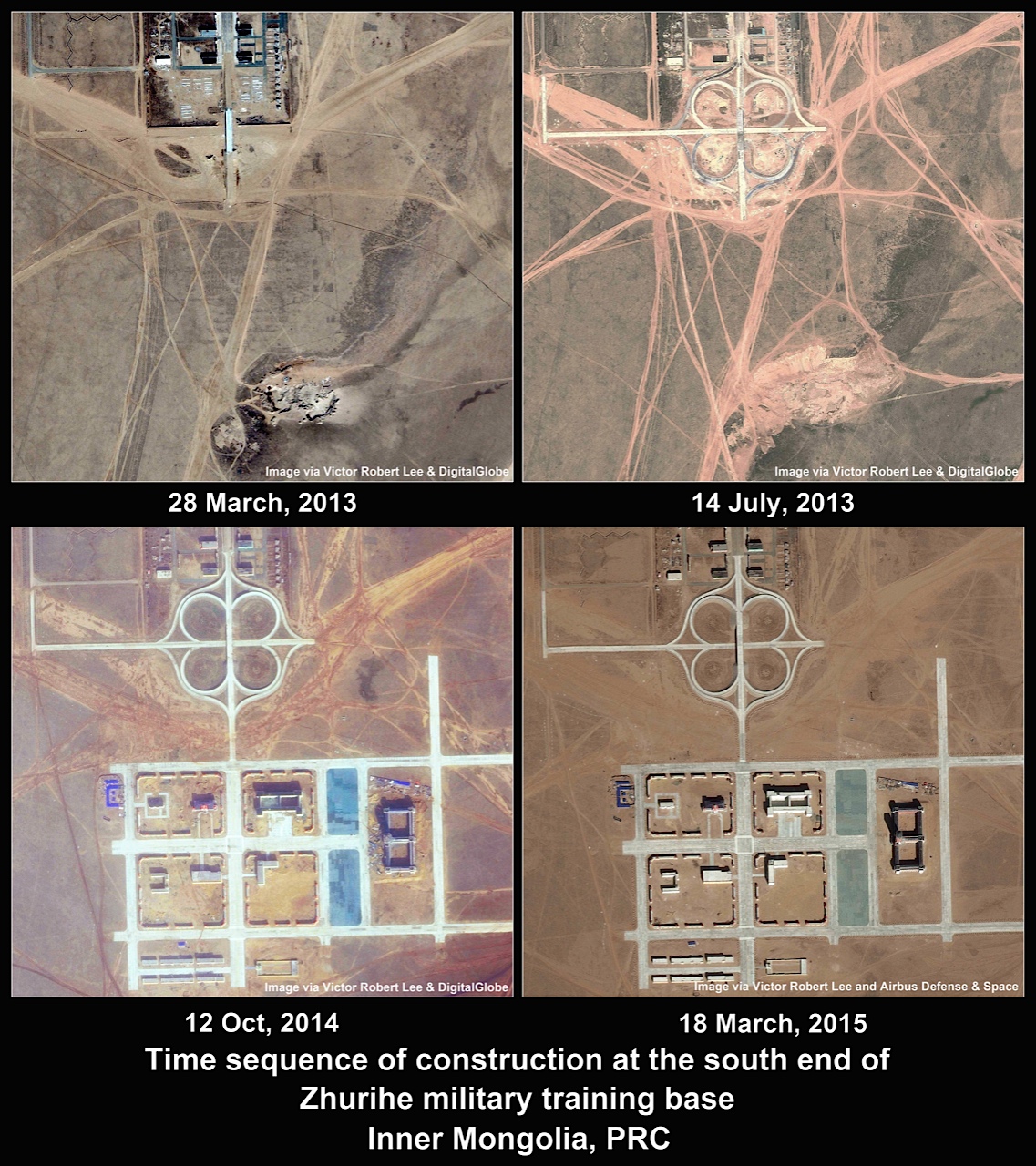
A time series of satellite images confirms that in 2014 and early 2015 China constructed for military training purposes a building that closely resembles Taiwan’s Presidential Office Building in Taipei. The new building, at the PLA’s expansive Zhurihe combat training base in Inner Mongolia, is situated on a newly constructed grid of streets and buildings that has similarities to the center of Taiwan’s capital city.


THE GOP DEBATE: SOUND AND FURY SIGNIFYING LITTLE

August 8, 2015 · in Commentary

Thursday night was the real beginning of the quadrennial presidential campaign season ― the opening part, the sound-and-fury part you get anytime there are more than three candidates, and anyone not on top shouts hard in order to attract attention and separate themselves from the pack. (In this case, admittedly, the one on top, who already had the attention, still shouted the loudest.)

The sound-and-fury part is also the part where nuance and common sense most frequently fall under the busses of the simplistic, the outraged, and the unrealistic. When it came to foreign and national security policy, Thursday night’s Fox debate pretty much checked all the boxes. Tear up the Iran agreement on my first day in the White House, no matter what the potential negative consequences for American security, the security of our regional allies, and the credibility of American leadership abroad ― no matter what the facts about monitoring and verification presented by respected, objective scientists and international organizations? Check. Someone with no military experience declaring as nonsense Chairman of the Joint Chiefs of Staff Martin Dempsey’s judgment there is no simple military solution to the ISIL threat? Check. Insist that Mexico’s “cunning” leaders are dumping criminals into the United States but will pay for a wall to stop it? Check. Insist that the key to effective military strategy for the 21st century isn’t smarter military spending, but more and more military spending? Check. Tie God to the myriad needs of America’s returning veterans and their families? Check.

5 Big Lessons from the First Gulf War

August 10, 2015

In the summer of 1990, U.S. forces began flooding into the Middle East. By the following February, they were on their way home.

The war over how to interpret the war seemed to break out before the troops had washed the sand off the tanks. Twenty-five years later, the squabbling over what history has to teach us continues.

Following the war, the Army appointed Brigadier General Bob Scales to direct the Desert Storm Special Study Group. Its assignment: to deconstruct the liberation of Kuwait and the roll-up of Saddam Hussein’s armed forces. Scales’ assessment appeared in the book Certain Victory. Not to be outdone, the Air Force commissioned the Gulf War Air Power Survey, a massive review edited by Tom Keaney and Eliot Cohen.

Others outside the Pentagon got into the act. Retired Colonel Harry Summers, who had written an influential analysis of the military failure in Vietnam, penned On Strategy II: A Critical Analysis of the Gulf War (1992). Unmatched in sheer volume is Anthony Cordesman’s Lessons in Modern War Vol. IV(1994).

This Is Not Your Parents' Caribbean

August 10, 2015

The Caribbean is restless. Change is coming from multiple directions, driven by a thawing of U.S.-Cuban relations, Puerto Rico’s debt crisis, and the decline of Venezuela’s regional influence related to a precipitous drop in global oil prices and a growing Chinese presence. Additionally, the pending rise in U.S. interest rates could squeeze a number of countries already struggling with high debt levels and large fiscal deficits, while the stronger U.S. dollar could erode competitiveness in tourism vis-Γ -vis Europe. Add to this local concerns over economic competitiveness, high levels of crime related to the international drug trade, and austerity measures in a number of countries, people in the Caribbean have a right to be restless and there is a likelihood that conditions are going to get worse before they get better.

The most significant geopolitical change for the Caribbean is the thaw between Washington and Havana. On July 20, 2015, Cuba and the United States reopened embassies in each other’s capitals for the first time in decades. Although considerable work needs to be done to fully normalize relations between the two countries, Cuba’s coming in from the cold represents considerable opportunities for U.S. corporations long prohibited from conducting business with the island-state. Where U.S. companies were not permitted to trod, Canadian, Asian and European firms were quite happy to take advantage. This is changing and that is for the better.

Here's a Tip: Don't Give North Korea More Aid

August 9, 2015

Shenyang, China: North Korea is a major topic of interest in this provincial capital in China’s northeast. The “Hermit Kingdom” is just a couple hours away by car. Pyongyang sends diplomats and students to Shenyang while attempting to stem the flow of refugees. Again the North’s harvest does not look good. Observers warn that another famine may be coming. The first reports of drought appeared earlier this year. The United Nations beganworrying about a “huge food deficit” in May. It warned that 70 percent of North Korea’s population faces a food shortage.

A month later the Democratic People’s Republic of Korea claimed that it wasexperiencing “the worst drought in 100 years.” Pyongyang has been known to exaggerate its problems to encourage outside assistance, but the Food and Agriculture Organization predicted that domestic production may run only half that of last year. UNICEF predicted a serious drought which would cause widespread malnutrition. Three years ago the group concluded that one-quarter of children already were malnourished. Thus, UNICEF argued, disaster threatened: “If we delay until we are certain of crop failures, it may well be too late to save the most vulnerable children.” Visitors affirm significant rural problems. American diplomats stationed in the region give credence to such reports.

Tech’s Enduring Great-Man Myth

August 4, 2015 

The idea that particular individuals drive history has long been discredited. Yet it persists in the tech industry, obscuring some of the fundamental factors in innovation. 

Since Steve Jobs’s death, in 2011, Elon Musk has emerged as the leading celebrity of Silicon Valley. Musk is the CEO of Tesla Motors, which produces electric cars; the CEO of SpaceX, which makes rockets; and the chairman of SolarCity, which provides solar power systems. A self-made billionaire, programmer, and engineer—as well as an inspiration for Robert Downey Jr.’s Tony Stark in the Iron Man movies—he has been on the cover ofFortune and Time. In 2013, he was first on the Atlantic’s list of “today’s greatest inventors,” nominated by leaders at Yahoo, Oracle, and Google. To believers, Musk is steering the history of technology. As one profile described his mystique, his “brilliance, his vision, and the breadth of his ambition make him theone-man embodiment of the future.” 

Musk’s companies have the potential to change their sectors in fundamental ways. Still, the stories around these advances—and around Musk’s role, in particular—can feel strangely outmoded. 

Moscow’s Info War in Sweden

6 August 2015 

Last week brought the news of a most alarming discovery off the Swedish coast: a sunken Russian submarine. Given the Swedish Navy’s unsuccessful hunt for a suspected Russian submarine last fall, it was perhaps inevitable that the discovery—made by a private diving company and first reported by the tabloid Expressen—should generate massive international headlines.
The Swedish Navy soon declared that the vessel was an imperial Russian submarine that had sunk off the Swedish coast in 1916, but by that time, Russian media had a field day with the discovery. “Sweden finally gets their Russian sub (but it’s 100 years old) [sic],” declared Sputnik. “Ghosts of Russian submarines continue to haunt Sweden,” reported RT.

Here’s the curious thing: the company behind the search, Ocean X Team, told Expressen that it simply happened upon the wreck, and its two divers even suggested that it may be a 1980s submarine. But one of the Ocean X Team drivers (and co-managers of the company) later told Swedish Radio he received the wreck’s coordinates, and indeed the task of finding the sub, from iXplorer, an Iceland-based company run by Russian diver Alexey “Max” Mikhaylov. As the extremely well-informed Swedish blogger and Navy captain Niklas Wiklund discovered, Mikhaylov is a former diver in the Soviet Red Fleet and the son of a Soviet Navy officer.

India’s future growth depends on affordable wireless spectrum

Jack Karsten and Darrell M. West
August 7, 2015 

Mobile devices are making a big difference in the lives of billions of people around the world who use them every day. Internet-enabled smartphones and tablets provide access to information and a channel of communication for users. Building wireless networks to support mobile devices requires large capital investments from wireless carriers who must purchase wireless spectrum and infrastructure. To ensure that mobile services are reliable and affordable, national governments must allocate enough wireless spectrum to commercial carriers to satisfy demand. This is the subject of a new paper from Shamika Ravi and Darrell M. West titled “Spectrum Policy in India."
A scarce resource

Mobile devices typically operate on frequencies from 30 kHz to 300 GHz on the radio spectrum. Unless spectrum is allocated efficiently, the scarcity of available frequencies leads to poor quality and high costs for mobile broadband. The growing demand for mobile service in India currently exceeds the amount of spectrum available to wireless carriers. The scarcity of wireless spectrum limits reliable Internet access for mobile subscribers who have no alternative point of access. According to the Cellular Operators Association of India, nearly 60 percent of Internet users only have access through their mobile phones.

Spectrum policy in India

Paper | August 7, 2015

In a new paper, Shamika Ravi and Darrell West examine mobile technology in India, particularly the crucial role spectrum policy plays in facilitating wireless growth. The availability of devices, high telecommunications costs, and taxes on mobile usage make it difficult for consumers and businesses to take full advantage of the mobile revolution. India has enormous potential for growth in mobile applications as is reflected in its massive number of mobile customers.

While smartphone use has risen in the developing world, increasing access and capacity in key areas like education, health care, transportation, and commerce, countries are finding increased wireless utilization running up against the constraints of radio spectrum available. The frequencies necessary to keep mobile devices connected represent for many countries a scarce natural resource often used for defined purposes that cannot be used for other purposes. Without adequate spectrum, consumers in developing countries in particular may face dropped calls, reduced wireless availability, or high prices, causing slower mobile growth in many countries.

Brian Terrell: US Drone Campaign Needs To Be Acknowledged A Failure – Interview

August 6th, 2015

The assassination drone campaign on the tribal areas of Pakistan, Somalia, Yemen and Afghanistan has been one of the controversial plans of the US government in the recent years.

The White House, State Department and Pentagon officials maintain that the drone attacks are aimed at targeting the Al-Qaeda terrorists in these countries and crushing their strongholds; however, figures indicate that the majority of the victims of the Unmanned Aerial Vehicles dispatched to the region are civilians. The Bureau of Investigative Journalism has recently revealed that between 2004 and 2015, there have been 418 drone strikes against Pakistan alone, resulting in the killing of 2,460 to 3,967 people, including at least 423 civilians. That’s while some sources put the number of civilian casualties in Pakistan during the 11-year period at 962.

An American peace activist and speaker tells Fars News Agency that the drone strategy was not a blunder which President Bush committed, rather it was a “crime” that he perpetrated and President Obama perpetuated.

CAN HISTORY SAVE THE WORLD?

August 10, 2015 
Perhaps the greatest contribution historians have made to humanity, at least as historians sometimes tell it, came during the Cuban Missile Crisis when Barbara Tuchman’s book, The Guns of August, saved the world from nuclear war. The book is Tuchman’s account of the origins of the First World War, an account that, in President John F. Kennedy’s reading, showed how miscalculation and inflexible military planning could force great powers into catastrophic conflicts against their leaders’ wishes. In trying to avoid a similar outcome in 1962, Kennedy told his brother, Robert Kennedy, “I am not going to follow a course which will allow anyone to write a comparable book about this time [and call it] The Missiles of October.”

For a long time, it seemed that Munich and Vietnam were the only historical reference points required for discussing U.S. foreign policy. As has often been noted, avoiding “another Munich” or “another Vietnam,” continue to serve as reliable stand-ins for the opposing dangers of cowardice and rash action.

POLITICAL SCIENTISTS AND THE MILITARY

August 10, 2015 · in The Schoolhouse

In a conversation a few years ago with one of us, a senior political scientist from a prominent Ivy League university asked for insights on how to offer defense policy advice on a contemporary Middle East security issue. It quickly became clear that this academic had no idea of the overall structure of the defense policy community, much less specific ideas about who to approach or how best to offer advice. Specifically, this individual wanted to approach the military leadership but did not know the difference between the service chiefs and the chairman of the Joint Chiefs of Staff, much less understand the unique roles of the Joint Staff, combatant commands, or Special Operations Command. Moreover, this person was uncertain what was actually under the purview of the military leadership when it came to selecting and implementing policy recommendations. As the conversation went on, it became clear that this expert lacked the most basic understanding of the defense policy world and especially of how the military fit into it. The academic’s opportunity to offer advice, unsurprisingly, never materialized.

China Just Doubled the Size of Its Amphibious Mechanized Infantry Divisions

January 09, 2015

According to media reports China will double the number of its Amphibious Mechanized Infantry Divisions (AMID) from two to four. Initially, the People’s Liberation Army (PLA) fielded two AMIDs, one stationed in Guangzhou, the other in the Nanjing Military Region, with a total number of about 30,000 men. Now total manpower in the AMIDs will be around 52,000 – 60,000. These new amphibious forces are meant to complement the roughly 20,000 strong elite PLA Marine Corps in future conflicts over the East and South China seas as well as Taiwan, although the PLA Marine Corps and the AMIDs still lack a joint command system.

In comparison to the PLA Marine Corps, the AMIDs are mostly suitable for conventional large-scale amphibious assaults, such as would occur in a full-scale invasion of Taiwan. However, as a report by the U.S. Department of Defense on military and security developments in China notes: “Large-scale amphibious invasion is one of the most complicated and difficult military operations the PLA might pursue in a cross Strait contingency. Success would depend upon air and sea superiority, rapid buildup and sustainment of supplies on shore, and uninterrupted support. An attempt to invade Taiwan would strain China’s armed forces and invite international intervention …. China does not appear to be building the conventional amphibious lift required to support such a campaign.”

The report continues:

Spy Sats and Subs: The U.S. Military's Secret Deep-Sea Operations

August 10, 2015
Seemingly ripped from the pages and screens of a geopolitical thriller, one of the Cold War's most incredible adventures stretched from outer space to the ocean floor, involved bus-sized satellites and deep-diving subs, and pulled together sailors, spooks and scientists into a secret new national capability.

On June 15, 1971, eleven years after the first spy satellite began taking its photos and the first submarine reached the bottom of Earth's oceans, a U.S. Air Force Titan III missile lofted a spacecraft the size of a Greyhound bus into orbit. The first of America's third-generation spysats, the KH-9 HEXAGONcarried 33 miles of film and four recovery capsules to return it all to Earth. Its cameras and film stock could count the slices of a pizza from 100 miles up.

In those pre-electronic-imaging days, large film cameras aboard the spysats recorded stereo photos on special film which then spooled into bucket-shaped reentry vehicles. On command, the satellite ejected a bucket which reentered the atmosphere over the North Pacific, where a special USAF squadron out of Hawaii snatched the falling capsules by their parachutes.

10 August 2015

Privacy, a non-negotiable right

August 10, 2015

The Hindu"A trade-off between Aadhaar and the right to privacy is incomprehensible." Picture shows biometric particulars being collected in Tamil Nadu. Photo: K. Ananthan

Whether it was required of the Attorney General to question the citizen’s right to privacy to defend the legality of Aadhaar is indeed questionable as the constitutional status of this right has been decisively answered in successive and lucidly articulated judgments

This piece seeks to contest the Attorney-General’s somewhat startling assertion before the Supreme Court that Indians do not have a constitutional right to privacy.

This is the background. Posed the question on whether making a citizen part with vital personal data under the Aadhaar scheme does not amount to intrusion of privacy, the Centre replied in the Supreme Court last month, on July 22, that privacy was not a fundamental right. Attorney-General Mukul Rohatgi said the right to privacy had been a “vague” concept all these years, a subject of varying conclusions from the Supreme Court. He told a three-judge Bench that the Constitution-makers had never intended to make it a fundamental right. He then quoted a majority 1962 judgment of the Supreme Court in the Kharak Singh case that held that privacy was not a “guaranteed right” under the Constitution. The submissions came during the hearing of a batch of petitions seeking to stop the implementation of the scheme. The government said it was too late to do that as Rs.5,000 crore had been spent on Aadhaar, which had accessed 80 crore people.

Interpretation of rights