8 July 2016

India’s entry to MTCR: A classic case of “Policy of Prestige”

By Rakesh Kr Sinha
06 Jul , 2016
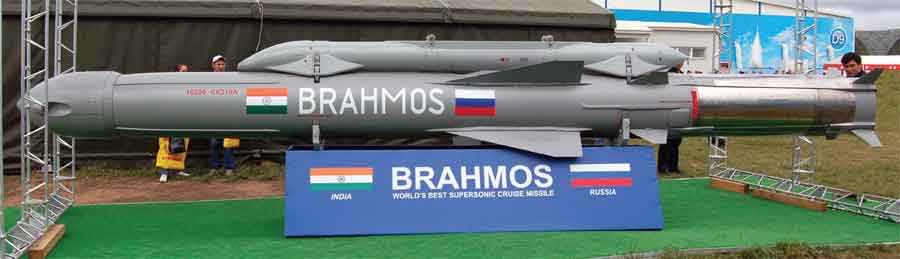
One of the cherished goals of any foreign policy is often to secure, maintain and enhance the prestige of the country. In the diplomatic parlance, it is called doctrine of ‘policy of prestige’. Morgenthau says, “the policy of prestige is the third of the basic manifestations of the struggle for power on the international scene.” A nation always seeks prestige in international relations.

India’s entry in to MTCR did not create any ripples in the media and the news went almost unnoticed in the wake of a much hyped news of India’s failure of getting entry into the elite NSG, the vanguard of non proliferation.

It is as an intrinsic element of the relations between nations as the desire for prestige is of the relation between individuals or groups. However, the policy of prestige characterises the foreign policy of a nation which seeks to secure its interest by the demonstration of power in international relations.

“The policy of prestige is the policy of demonstrating the power a nation has or thinks it has or wants other nations to believe it has.” The purpose of such a policy is “to impress other nations with the power one’s own nation actually possesses, or with the power it believe or wants the other nations to believe it possesses.”

HCL Infosystems Implements First-Ever Converged Communication Network Between Indian Army, Navy and Air Force

By IDR News Network
05 Jul , 2016

Made in India and dedicated to the nation 

HCL Infosystems, one of India’s premier IT Services, Distribution and Digital Solutions Company, has enabled the design, development and deployment of Defence Communication Network (DCN) – the first tri-Service communication and IT network of the Armed Forces.

The network has been fully designed and developed in India. The DCN was today dedicated to the nation by Manohar Parrikar, the Hon’ble Raksha Mantri, Government of India. 

Speaking on the occasion, Premkumar Seshadri, Executive Vice-chairman and Managing Director, HCL Infosystems Ltd. said:

“This is a moment of great honour for us. HCL Infosystems is proud to design, develop and deploy the first ever converged tri-service communication and IT network for the Indian Defence Forces. The network has been entirely designed and developed in India. We have made significant investments in creating defence communication technology practice, involving design of critical technology systems for military communication. HCL Infosystems is privileged to have the opportunity to successfully partner in yet another mission critical program of national importance – the Defence Communication Network.”

Rise of China’s Air-Defense Capabilities?

By Bharat Lather
06 Jul , 2016

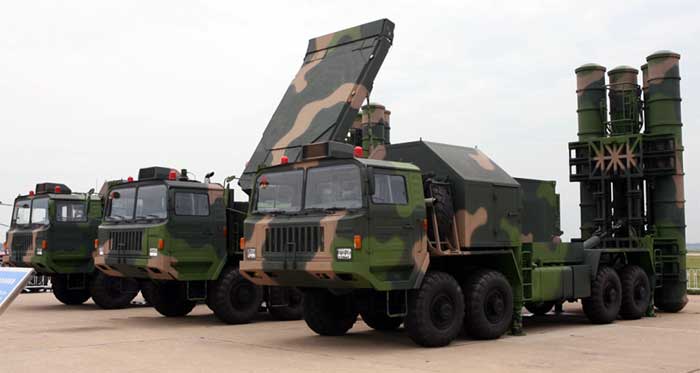
According to US Defense Department report, the size of the Chinese air forces (PLAAF and PLAN), have now approached 3,000 aircraft; out of which 700-800 are 4th and 4.5th Generation aircraft. While on the other hand, China continues to fly over 400 J-7s, an effective aircraft, but not competitive in any sense with the U.S. fleet; but by developing an integrated multi-layered air defense network, even J-7s (Mig-21) would pose a grave threat to U.S. fighter jets. Far more important than the size of China’s air force, thus, is Beijing’s effort to establish a territorial multi-layered air defense network (HQ-7B, HQ-16, HQ-9, S-300 PMU2 and S-400) that will allow Chinese aircraft to fight their U.S. counterparts under the circumstances of their choosing.

China attempted to acquire technology with military applications from Europe, but sanctions associated with the Tiananmen Square massacre hamstrung this effort.

In 1991, Chinese military officers watched as the United States dismantled the Iraqi Army, a force with more battle experience and somewhat greater technical sophistication than the People’s Liberation Army (PLA). The Americans won with casualties that were trivial by historical standards. Given the grim performance of the PLA in the 1979 Sino-Vietnamese War, as well as the collapse of the Soviet Union, 1991, something was bound to change. The Gulf War provided a catalyst and direction for that change.

America Has a Chance to Beat Back China's South China Sea Strategy

July 5, 2016

Ahead of the looming International Tribunal ruling on the Philippine-initiated arbitration case against China’s contested maritime sovereignty claims in the South China Sea (SCS), Chinese diplomats and government officials are conducting an aggressive PR campaign throughout the region and across the globe to influence world opinion and present China and its legal and political positions as correct, through the publication of various comments by sympathetic world leaders, legal scholars and international relations experts. They want to highlight the positive aspects of Beijing’s maritime security comportment and accentuate the benevolent features of its growing presence in the SCS, while peddling the same familiar public-diplomacy themes—the United States as the destabilizing aggressor; China as the virtuous but hapless victim; and the source of all regional trouble as Washington’s arm-twisting of its allies and partners in Manila, Hanoi and Kuala Lumpur—and steadily messaging that it does not recognize the jurisdiction and authority of the International Tribunal of the Permanent Court of Arbitration (PCA) at the Hague to rule in this case. All in all, this PR shift may be part of a larger adjustment by Beijing of its assertive actions in the SCS in response to the mounting unfavorable geopolitical conditions and regional trends. If so, what does the PR shift reveal about Beijing’s maritime strategy, and more importantly, what can Washington do to shape and influence that evolving strategy?

Why the PR Shift?

There are three possible motives why China may have taken a more forceful PR posture. First and foremost, anticipating an unfavorable PCA merits ruling, Beijing wants to occupy the moral high ground in support of its public-diplomacy stance, while portraying Washington as the destabilizing aggressor to uphold its maritime sovereignty claims, preserve its strategic positions and mitigate impact to its national interests.

South China Sea Showdown: America Must Step Up to Face Off with China

July 5, 2016

The United States faces a major challenge in Asia’s South China Sea. The UN’s Permanent Court of Arbitration (PCA) announced that they will hand down a decision on July 12 concerning a 2013 suit brought by the Philippines against China under the provisions of the UN Convention on the Law of the Sea (UNCLOS). Alarmed by China’s repeated territorial claims, massive land reclamation projects built upon coral mined from the seabed, mineral exploitation surveys and aggressive assertion of fishing rights regardless of Exclusive Economic Zone delineations, the Philippines seek a judgment from the ultimate multinational authority. This court is expected to determine the legal basis—or lack thereof—for China’s expansive territorial claims of indisputable historical sovereignty over 85 percent of the South China Sea enclosed within their ambiguous “nine-dash line”. The court will rule on the maritime entitlements of specific features in the South China Sea and on certain Chinese activities there. The court is expected to decide in favor of the Philippines and in favor of UNCLOS. China is not expected to agree, arguing that the South China Sea is sovereign Chinese territory, and that the court has no jurisdiction. China has in fact repeatedly announced that they will disregard the court’s decision. What is at stake is the access of Asian nations to the international waters and airspace of the South China Sea for transit and trade, and the access of that sea’s littoral nations to fishing areas and seabed minerals.

The United States is reportedly working on a strategy. What might this look like? While a complete analysis of all the conditions shaping any possible strategy is not possible here, we can look at some of the major governing factors.

Speak frankly with China Delhi needs a more agile — and more open — policy to engage with Beijing

July 5, 2016 

Any practical Indian policy towards China must begin with two propositions rooted in realism.

As it comes to terms with China’s unambiguous opposition to India’s membership of the Nuclear Suppliers Group (NSG), Delhi must brace for an extended period of structural tension with Beijing. Managing this tension and limiting the political fallout from it constitutes the single most important external challenge for India.

After the Seoul plenary of the NSG, Delhi signalled its displeasure at Beijing’s procedural tactics to block the consideration of Indian membership. At the same time, Delhi emphasised its commitment to continued engagement with Beijing. Adopting a measured tone towards Beijing in a TV interview last week, Prime Minister Narendra Modi noted the complex nature of India’s bilateral relationship with China and underlined the importance of accommodating each other’s interests, concerns and priorities.

This certainly is a sensible diplomatic approach. At the level of strategy, though, there is no escaping the growing contradictions with China that are sharpened by the huge gap in the material capabilities of the two Asian giants. China’s GDP right now is nearly five times larger than that of India. Its defence spending is four times more. Even if China’s economy slows down and India grows a little faster in the coming years, the strategic gap will remain very large for the foreseeable future.

Any practical Indian policy towards China must begin with two propositions rooted in realism. First, the idea of “strategic parity” between Delhi and Beijing that has long animated India’s view of China is no longer sustainable. The second, growing Chinese power capabilities have a significant impact on India’s room for regional and global manoeuvre.

What Is The Future Of India In The Shanghai Cooperation Organisation?

July 4, 2016

Membership of India to the Shanghai Cooperation Organisation (SCO) will add significant heft and muscle to the organisation, particularly in the backdrop of the anaemic international economy

The ball for expansion of the Shanghai Cooperation Organisation (SCO), since its establishment in 2001, was set rolling at its Summit in Ufa, Russia in July 2015 with acceptance of applications by India (and Pakistan) to join its fold. The process was taken forward at the recent Summit in Tashkent, Uzbekistan between 23-24 June 2016 with the signature of ‘’Memorandum of Obligations’’ by the two countries. Over the coming year, India will sign around 30 documents and join as a full Member at the next Summit in Astana, Kazakhstan in June 2017.

Since its establishment, the SCO has concluded several wide-ranging agreements on security, trade and investment, connectivity, energy, the SCO Bank, culture, etc. Their implementation, however, has remained uninspiring. This is partly because the SCO lacks coherence. Having been created at China’s behest with Russian support, the SCO is still grappling to evolve as a well-knit entity. Nevertheless, the significance of the SCO cannot be underestimated because it straddles large territorial, geopolitical, strategic and economic space and strength.

Challenges And Opportunities

US-Backed Syrian Rebel Force Does Not Perform Well In First Campaign Against ISIS

July 5, 2016

Syria’s New US-backed Force Stumbles in First Test

BEIRUT – The call came around noon, about four hours after U.S.-backed Syrian fighters announced they had taken over an air base outside a town held by the Islamic State group near the Iraqi border. “We are trapped. Pray for us,” a commander called into the operation room.

Then communication was cut. Six hours later, the exhausted fighters from the group, known as the New Syrian Army, returned to their base in Tanf, nearly 150 miles (240 kilometers) across the desert to the west, having lost four fighters, four vehicles and ammunition.

The swift, humiliating defeat last Wednesday marked the end of a widely advertised offensive launched less than 24 hours earlier with intense U.S.-led air cover. The fighters had hoped to capture Boukamal, a prize possession of IS and the extremist group’s last border crossing between Iraq and Syria.

The Boukamal offensive was the first serious attempt to take on IS in the northeastern province of Deir el-Zour, and the first major test for the nascent force of some 1,000 fighters, formed in November from a coalition of Syrian army defectors, local militias and Islamist fighting groups, many of them from the area.

The quick collapse of the offensive reflects the difficulties the U.S. faces in creating an effective Syrian force against IS, given the complex terrain, competing personal and tribal loyalties – and the extremists’ continued ability to fight on multiple fronts.

NATO Going to Use AWACS Aircraft to Monitor ISIS

July 5, 2016

NATO chief: Surveillance planes to aid anti-IS operations

BRUSSELS (AP) — NATO leaders will approve the use of AWACS surveillance aircraft to assist the U.S.-led coalition fighting the Islamic State extremist group, the alliance’s secretary-general said Monday.

Jens Stoltenberg said he expects the alliance summit in Warsaw also to agree on a new role for NATO in the Central Mediterranean, where the European Union has deployed ships to halt human trafficking.

At a news conference at NATO headquarters, Stoltenberg outlined the ambitious agenda of the two-day summit, which opens Friday in the Polish capital.

NATO officials have said the AWACS planes would fly in Turkish or international airspace, but be capable of peering electronically into areas of Syria and Iraq now in the hands of Islamic State to help the U.S.-led forces that are fighting the group.

Stoltenberg said NATO leaders this week will also agree to begin training and capacity-building measures for the Iraqi military inside Iraq, expanding an alliance program that has been training Iraqi officers in Jordan.

Since the alliance’s last summit in September 2014 in Wales, NATO has embarked on the biggest reinforcement of its collective defense capabilities since the Cold War, spurred by a resurgent and unfriendly Russia, as well as the spread of Islamic extremism.

Wolf-Pack Terrorism: Inspired By Islamic State, Made In Bangladesh – Analysis

By Saroj Kumar Rath* 
JULY 6, 2016

ISIS reverses course: Jihadists leave Syria, putting countries like Bangladesh under siege and driving wedges amid political squabbling.

For three years Bangladesh had witnessed sporadic killing of minorities, free- thinking bloggers and members of LGBT community amid signs of a growing ISIS presence. With the brutal murder of 22 diners, workers and police at the upscale Holey Artisan Bakery, Dhaka now joins Paris, Brussels, Orlando and Istanbul on the global map for terrorism. Distinguishing the Dhaka suspects from others is that they belong to the country’s western-educated elite including a senior member of the ruling party. The homegrown bunch made sure their crime got international airing, using the restaurant’s wifi to post ghastly images on the Islamic State website. As Bruce Riedel, a leading expert on terrorism, has noted, Bangladeshi terrorists have graduated from lone-wolf to wolf-pack attacks in extending the ISIS ideological footprint into South Asia.

The massacre carried out by a group of suicidal young men who had every reason to live not only raises questions about the appeal of extremist ideology on an unlikely cohort – it also exposes the hollowness of Bangladesh’s vaunted fight against terrorism, protecting the perpetrators while targeting political opponents. Sheikh Hasina government’s dismal failure in containing the spread of radical poison threatens to destabilize the country and the fragile region.

Middle East Terrorist Attacks Highlight Need To Pressure Islamic State, DoD Official Says

By Cheryl Pellerin 
JULY 6, 2016

US Defense Secretary Ash Carter is closely monitoring the aftermath of brutal terrorist attacks over the past few days in Turkey, Bangladesh, Iraq and Saudi Arabia, Pentagon Press Secretary Peter Cook told reporters Tuesday.

Responsibility for attacks that according to media reports killed 42 people in Turkey, at least 200 in Baghdad, nearly 30 in Bangladesh and four in Saudi Arabia has not been established in all cases, but Cook said speculation has centered on the Islamic State of Iraq and the Levant.

“These tragic events once again highlight why it’s so important to accelerate the coalition campaign to deliver ISIL a lasting defeat in Iraq and Syria, to further limit the group’s ability to carry out attacks in other parts of the world and to do all we can to prevent the spread of its hateful ideology,” the spokesman said.

The attacks occur as support for local forces from the counter-ISIL coalition erodes ISIL’s self-styled caliphate, recapturing key terrain that includes major cities, infrastructure and economic nodes finance ISIL activity and fuel its claims of legitimacy, Cook said.
Making Progress Against ISIL

Today, he added, ISIL has lost Fallujah, the city from which they controlled much of western Iraq and launched attacks into Baghdad, and Iraqi security forces are clearing key terrain on the way to Mosul.

When Gutsy Israeli Commandos Terrorized the Terrorists


July 4, 1976, was a special day for America, Israel and international terrorism.

In America, it was the bicentennial, the two hundredth anniversary of the Declaration of Independence. For Israel, it was a day of redemption, after its commandos had rescued 102 hostages from pro-Palestinian hijackers at Entebbe airport, Uganda.

Alas for terrorists, July 4 was a black day. Now it was their turn to be terrorized. Every time they hijacked a plane, they would have to ask themselves: was there a commando team lurking in the darkness, waiting to storm the aircraft in a blaze of gunfire?

But on that Fourth of July in 1976, there was nothing for the terrorists to fear. Looking back forty years, it’s depressing how little things have changed. Today it is suicide bombers, but in the 1970s, the terror spectaculars were airliner hijackings. Wikipedia lists forty-four hijackings during that decade, committed by an assortment of Palestinians, European and Japanese radicals, African-American militants, Croatians, Kashmiris, Lithuanians, criminals, lunatics, and anyone else with a grievance, gun or grenade. Some hijackers surrendered; others found sanctuary in places like Cuba and Algeria. But rarely did police or soldiers attempt to storm the aircraft and rescue the hostages.

So when four terrorists—two Palestinians and two German leftists—hijacked Air France Flight 139 as it departed Athens on June 27, 1976, they had every reason to feel the odds were in their favor. First, they successfully took over the Airbus A300, which carried 246 passengers, many of them Israeli and non-Israeli Jews. The aircraft first landed in Libya, and then flew to to Entebbe airport in Uganda.

The Decapitation Will Not Be Televised

JULY 3, 2016

The Islamic State has taken its propaganda cues from modern dystopian fiction. It should have paid closer attention.

One of the most popular tropes in dystopian fiction is the “violent spectacle.” Immortalized in recent years by The Hunger Gamesseries, the concept is simple: A corrupt society uses some public display or broadcast of violence to manipulate the masses.

But it’s never been purely fiction. The concept of providing the masses with an experience of intentionally shared violence has, from time to time, also surfaced in the real world. In its heyday, the Roman Colosseum hosted mock battles and public executions that drew massive crowds. And during France’s Reign of Terror, tens of thousands were executed, many in public, with the clear intent to intimidate.
Trending Articles

But only recently have we seen a quantum leap toward what fiction writers, since at least the 1960s, have been imagining in the “not-too-distant future”: broadcast technologies that allow violent spectacle to be commoditized and streamed directly into people’s homes.

The Islamic State, with its executions packaged as entertainment and available from any smartphone (and, on occasion, even performed before local populations in actual Roman amphitheaters), has turned the concept into reality. On June 14, Islamic State achieved a new milestone when a terrorist who pledged allegiance to the group live-streamed his confession from the home of a French police captain and his family, after killing both of the adults in the house. Before too long, we will almost certainly see a live-streamed terrorist attack, complete with graphic violence.

Brexit Doesn't Actually Help Putin

July 5, 2016

Will Britain’s vote to leave the European Union be a boon for Putin’s Russia? This claim was often repeated during the run-up to the vote and trotted out again in the aftermath of Thursday’s referendum. But it deserves a skeptical eye.

First and foremost, it is NATO and U.S. forces on the ground in Europe that forged peace and continue to guarantee security, not the EU. Neither NATO nor the U.S. in Europe are going anywhere anytime soon.

Yet we’re told that Putin will now run roughshod over Europe following Brexit. This is pure nonsense. A European Union complete with the United Kingdom didn’t stop Putin from attacking Georgia in 2008 or Ukraine in 2014.

It is American and allied military power stationed in Europe and an ironclad collective security guarantee that keep Europe secure, not the bureaucracy of Brussels.

In fact, a United Kingdom free from the European Union should, if anything, be an even stronger security partner for the United States on the world stage. The UK has the world’s fifth-largest military budget, is a founding member of NATO, is a member of the Five Eyes intelligence-sharing community and retains strong bilateral security ties with the United States.

The EU’s drive towards creation of duplicative military capabilities and structures has only detracted from the NATO alliance by siphoning off scarce funds for defense. The EU will no longer be a competitor in the UK for pounds and capabilities best reserved for NATO.

Russia’s New Missile Tracking Ship

July 5, 2016

I Spy with My Big Eye: How Will Russia’s New Missile-Tracking Ship Look?

LAST WEEK, A REPORT BY THE ICEBERG CENTRAL DESIGN BUREAU CONFIRMED THAT RUSSIAN ENGINEERS ARE DEVELOPING A NEW SHIP TASKED WITH DETECTING AND TRACKING MISSILE LAUNCHES. MILITARY ANALYSTS KONSTANTIN SIVKOV AND ALEXANDER SHIROKORAD SPOKE TO ONE OF RUSSIA’S LEADING INDEPENDENT ONLINE NEWSPAPERS ABOUT THE PROSPECTS FOR THE NEW VESSEL.

© Wikipedia/ Alex omen
Russia Developing New Military Ship to Track Ballistic Missiles LaunchesLast week, JSC Iceberg issued its annual report, which confirmed that “starting in October 2015, work began on the technical design of the measuring complex ship Project 18290." 

Earlier, bmpd, a military blog run by experts from the Center for Analysis of Strategies and Technologies, reported that the development of a new tracking ship (otherwise known as a missile range instrumentation ship), is being conducted in collaboration with others, including the St. Petersburg-based Krylov State Research Center, which will assist the ship’s propulsion system.

At present, the Russian Navy only has one tracking ship – the Marshal Krylov, launched in 1990 and currently undergoing renovations in Russia’s Far Eastern city of Vladivostok.

Obama’s Drone Strike Statistics Leave a Lot of Important Questions Unanswered

Scott Shane
July 5, 2016

Drone Strike Statistics Answer Few Questions, and Raise Many

WASHINGTON — The promise of the armed drone has always been precision: The United States could kill just the small number of dangerous terrorists it wanted to kill, leaving nearby civilians unharmed.

But the Obama administration’s unprecedented release last week of statistics on counterterrorism strikes underscored how much more complicated the results of the drone program have been.

It showed that even inside the government, there is no certainty about whom it has killed. And it highlighted the skepticism with which official American claims on targeted killing are viewed by human rights groups and independent experts, including those who believe the strikes have eliminated some very dangerous people.

“It’s an important step — it’s an acknowledgment that transparency is needed,” said Rachel Stohl, an author of two studies of the drone program and a senior associate at the Stimson Center, a research group in Washington. “But I don’t feel like we have enough information to analyze whether this tactic is working and helping us achieve larger strategic aims.”

More broadly, President Obama’s move to open a window on the secret counterterrorism program takes place against a background of escalating jihadist violence that can be called up by a list of cities that includes Paris; San Bernardino, Calif.; Brussels; Orlando, Fla.; Kabul, Afghanistan; Istanbul; Baghdad; and now Dhaka, Bangladesh.

“Questioning the Alliance on Syria”: International Coalition and the Inconvenient Truth

By Anant Mishra
06 Jul , 2016

Introduction

Along the parameters of the coalition forces formed in the second Gulf War of 1991, Washington reached out to its NATO allies and power nations to fight against the terrorist organization “Daesh” also known as ISIL in Iraq and Syria. In hope to eliminate Daesh and bring peace and security in the region, italso stretched the importance of destroying other active militant groups such as “jabhat Al-Nusra” and “Ahrar al-Sham” and their militant allies, with this, Washington wanted to bring peace and security, resolving the crisis further with a political approach.

Undoubtedly, the coalition is the largest group of nations formed after the second Gulf War, as 32 nations were then led by the United States to repel Iraqi forces from occupying Kuwait, whereas today, the coalition comprised of large number of European and Arab and Middle Eastern countries totally accounting over fifty, a number that clearly exceeds the coalition then in 1991. In both the cases, the US were called to lead the coalition, however, the circumstances and the situations are very different, then the goal of the war very clear (liberate an Arab country from the occupied Arab nation). So, the battle didn’t take long and Kuwait was liberated and its sovereignty was reestablished, where as in the situation today, there is heavy dispute in deciding the goals.

It is important to note that, a terrorist organization, which has now become a nation within Syria, cannot be stopped with a meagre aerial attacks, but without a concrete plan, no combat effective measures can be taken.

Netanyahu vs. the Generals

By AMIR TIBON 
July 03, 2016 

Israel’s prime minister is fighting hard to weaken the most important moderate force in his country. Which is why he’s going to be a big problem for the next U.S. president. 

Ehud Barak hadn’t given a speech in months, and speculation was rife about what he was going to say when he took the stage at a prestigious policy conference in Herzliya, an affluent suburb of Tel Aviv, two weeks ago. Barak was one of Israel’s leading political figures for two decades, having served as the country's prime minister in the late 1990s and later as defense minister under Benjamin Netanyahu from 2009 to 2012. Was he about to announce a political comeback?

It turned out that Barak, a former special ops commando officer, had one last mission in mind: To take out his former boss and partner.

In his speech, Barak accused Netanyahu of cowardice, opportunism and fear-mongering. He warned that Israel's current government, arguably the most right wing in its history, was showing “signs of fascism,” and that if Netanyahu wasn’t stopped, Israel was on course to become an apartheid state. “The entire Zionist project is in grave danger,” he proclaimed. And the main source of that danger wasn't Israel’s external enemies, but rather its own democratically elected leader.

Barak hasn’t let up since. “Netanyahu,” he said in a televised interview broadcast a day after his angry speech, “has gone off the rails. He needs to go.”

The Bloody Battle of the Somme: Worst Military Disaster in British History

July 4, 2016 

The recent commemoration ceremonies in Britain and France on 1 July marked the 100th anniversary of the worst military disaster in British history. On that day in 1916, a large force of 13 British divisions and 5 French divisions launched a combined assault against fortified German trenches in the Somme region of France. From early morning, waves of British troops left their trenches and advanced across no man’s land, in many places directly into heavy German machine-gun fire. By the day’s end, the British had suffered over 57,000 casualties, including almost 20,000 dead, all for little measurable gain. The shock of this tragic loss is still felt today; the causes of the disaster and those accountable continue to be debated.

The British commander-in-chief General Sir Douglas Haig generally receives most of the opprobrium. Haig had conceived the plan for a large-scale attack by British and French forces across a wide front to capture the German trench system and breach the defenses which had long deadlocked the trench warfare on the Western Front into a stalemate. But from February, when the French came under increasing pressure from a relentless German attack on the fortress city of Verdun, the main responsibility for the Somme offensive shifted to the British. The attack proceeded, but with fewer troops and hasty preparation. These deficiencies were compounded by failures of weapons systems, tactics, and intelligence about the state of the enemy.

Tools and Strategies to Prevent Mass Atrocities Committed by Violent Extremist

July 1, 2016 

The international architecture around the Responsibility to Protect (R2P) was established to prevent four mass atrocities: genocide, war crimes, ethnic cleansing, and crimes against humanity. R2P doctrine reinforces the obligation of every state to protect its citizens from mass atrocities and prevent incitement to such violence, as well as the responsibility of the international community to take collective (and potentially coercive) action when a state manifestly fails to protect its population. 

By definition, the emphasis of R2P has been on the responsibility of states to prevent mass atrocities and protect their populations from heinous crimes. The initial R2P paradigm was borne out of concerns about repressive governments committing atrocities against innocent civilians. [1] Yet, states do not have a monopoly on such violence. Increasingly, violent extremist organizations (VEOs) such as ISIL and Boko Haram have carried out mass atrocities as a central element—not just an unintended consequence—of their strategy and vision of an ideal society. 

ISIL’s systematic human rights abuses and violations of international law are widely documented by multilateral institutions, civil society, and governmental observers. In August 2014, the Office of the UN High Commissioner for Human Rights condemned the human rights situation in ISIL-controlled areas of Iraq and Syria, pointing to the group’s actions “targeting men, women and children based on their ethnic, religious or sectarian affiliation” and “ruthlessly carrying out widespread ethnic and religious cleansing in the areas under their control.” [2] Almost two years since the High Commissioner’s statement, ISIL has continued on the path of destruction and wanton violence—massacring Yazidis, Christians, Turkmen, Shia, and other ethnic and religious minorities; enslaving women and girls; abducting children; indiscriminately killing journalists; and persecuting the LGBTI community—in what has been officially designated by the United States as genocide, crimes against humanity, and ethnic cleansing. [3] Likewise, in Northern Nigeria, Boko Haram has executed thousands of innocent civilians, indiscriminately detained and persecuted non-Muslims, destroyed schools and hospitals, and abducted women and girls to be used in suicide missions. The most notorious instance was the April 14, 2014, abduction of 276 girls from the Government Girls Secondary School in the Borno State. [4] With nearly 11,000 deaths attributed to Boko Haram in 2015 alone, this militant group has eclipsed ISIL as the world’s deadliest terrorist organization. 

Challenges of Applying a State-Centric Model to VEOs 

10 Rules of Writing

AMITAVA KUMAR 
http://indianquarterly.com/10-rules-of-writing/

When I was promoted to the rank of professor, the library at the university where I was then employed asked me to send them the name of a book that had been useful to me in my career. I chose VS Naipaul’s Finding the Center. The library then purchased a copy, which was duly displayed in one of its rooms, with a statement I had written about the book:

This was one of the first literary autobiographies that I read. Its very first sentence established in my mind the idea of writing as an opening in time or a beginning; it conveyed to me, with its movement and rhythm, a history of repeated striving, and of things coming together, at last, in the achievement of the printed word: “It is now nearly thirty years since, in a BBC room in London, on an old BBC typewriter, and on smooth, ‘non-rustle’ BBC script paper, I wrote the first sentence of my first publishable book.”

This first sentence—about a first sentence—created an echo in my head. It has lasted through the twenty years of my writing life. The ambition and the anxiety of the beginner is there at the beginning of each book. Every time I start to write, I am reminded of Naipaul’s book.

But that wasn’t the whole truth, neither about Naipaul, nor about beginnings. The sentence I had quoted had mattered to me, yes, and so had the book, but what had really helped was Naipaul’s telling an interviewer that in an effort to write clearly, he had turned himself into a beginner: “It took a lot of work to do it. In the beginning I had to forget everything I had written by the age of 22. I abandoned everything and began to write like a child at school. Almost writing ‘the cat sat on the mat’. I almost began like that.”

America's 'Third Offset' Isn't Enough to Stop a Future Major War

July 5, 2016

U.S. defense planners hope that the Pentagon’s “Third Offset” will deter nations like China and Russia from risking war with the United States by expanding our narrowing technological lead. Superficially, the United States’ pursuit of a decisive technological advantage sends a signal to the world: America will remain ready to deter aggression abroad, now and in the future. Unfortunately, the weakness of the U.S. fiscal situation, loss of national manufacturing capacity and vulnerable global supply chains make this advantage hard to achieve and difficult to maintain during a conflict. Even worse, China and Russia may see the United States’ pursuit of a decisive technological advantage and acquisition of smaller numbers of expensive weapon systems as evidence of U.S. willingness and ability to fight a short, clean war—but not a long one.

A Different Kind of War Than Desert Storm

Many defense professionals cite Desert Storm as an example of a victory won by technology, but technological superiority had less to do with victorythan the weakness of the Iraqi military. When coalition forces crossed into Iraq in 1991, they invaded a country with a GDP of $50 billion (2016 dollars), an economy roughly the size of Montana. The Iraqi paper tiger fielded a poorly trained and unmotivated army, outclassed in every aspect by the U.S.-led coalition.

Why Are American Jews Abandoning Israel?

July 5, 2016

ON APRIL 19, three days before this year’s start of Passover, the Jewish holiday celebrating the Israelites’ exodus from bondage in ancient Egypt, six protestors were arrested at the Boston office of AIPAC, “America’s pro-Israel lobby.” They had chained themselves to a mock Seder table. Their group, IfNotNow, claims to “seek an American Jewish community that stands for freedom and dignity for all Israelis and Palestinians by ending its support for the occupation.” Fittingly, it was cofounded in 2014 by Simone Zimmerman, the former J Street campus activist hired as national Jewish outreach coordinator by the Bernie Sanders campaign on April 12 and—after a March 2015 Facebook post authored by her quickly surfaced—suspended two days later on April 14. “Bibi Netanyahu is an arrogant, deceptive, cynical, manipulative asshole,” Zimmerman bellowed on the social media platform.

What transpired in Boston distressed the American Jewish community. Yet it didn’t come as a total surprise. The controversial nature of AIPAC is well known, and the unique ideological proclivities of younger American Jews are rapidly becoming better known. What went down the next day in Manhattan, nevertheless, did shock the community—or rather the vast majority of it. On April 20, IfNotNow marched into the lobby of the building that houses the Anti-Defamation League (ADL). Around one hundred activists donned shirts reading, “No liberation with occupation,” and belted out songs in Hebrew. This was an arrow straight through the heart, for the ADL is possibly the most cherished institution of “mainstream” American Jewry. Established in 1913 in response to Eastern European pogroms, its slogan is “Imagine a World Without Hate” and its agenda involves advocating not just for a two-state solution of the Israeli-Palestinian conflict, but also for LGBT rights, voting rights, disability rights, immigrants’ rights and women’s reproductive rights.

Meet the Neocons' Apologist in Chief

July 5, 2016

IN 1996, Michael Mandelbaum, who teaches international relations at Johns Hopkins University, published an essay entitled “Foreign Policy As Social Work” in Foreign Affairs. In it, he decried the Clinton administration’s interventions in Bosnia, Somalia and Haiti. “These failed interventions,” he wrote, “expressed the view of the worldwide role of the United States that the members of the Clinton foreign policy team brought to office.” A decade later, he published The Case for Goliath: How America Acts as the World’s Government in the Twenty-First Century. It formed an eloquent statement of “liberal hegemony theory,” the contention that the role of the post–Cold War United States as the sole hegemon has enabled both great-power peace and the benefits of economic globalization.

In Mission Failure: America and the World in the Post–Cold War Era, Mandelbaum blends these themes in a sweeping narrative history from the end of the Cold War until the present that seeks to diagnose where America has gone astray. Mandelbaum advances four major arguments. The first one essentially restates the thesis of The Case for Goliath that America’s overwhelming military superiority following the Cold War suppressed traditional great-power rivalries. The second is that the absence of great-power conflict made possible an era of economic globalization from which all sides benefited. The third argument holds that the relaxation of traditional great-power rivalries enabled the Clinton, Bush and Obama administrations to seek to effect the liberalization and democratization of foreign societies out of idealism, rather than on the basis of traditional strategic calculations—in other words, as “social work.” And the fourth thesis maintains that most of these projects of democratic transformation abroad were doomed from the outset because of the inherent difficulties in implanting Western values in backward, authoritarian societies.

IN DEFENSE OF DEFENSE MANAGEMENT


We have a problem. A deep, cultural bias against management is crippling the Department of Defense.

Think of the word leader. Who comes to mind? Powerful national figures like Ronald Reagan or Winston Churchill? Change makers like Martin Luther King, Jr., and Mahatma Ghandhi? When we think of leadership, we think of epoch-making people doing epic things, and the exceptional qualities and actions of these men and women.

Now think of the word manager. Who comes to mind? Perhaps someone sitting behind a desk, moving pieces of paper from the inbox to the outbox. Or an uncaring or uninterested supervisor, inflicting mediocrity upon subordinates. “Manager” evokes caricatures like the mug-wielding “yeaaaah” guy from the movie Office Space, or the rotund, cluelessboss from Dilbert. Even the term great manager seems like an oxymoron. Indeed, manager is almost interchangeable with bureaucrat, a four-letter word of organizational life. We think of managers as impediments, barriers, gatekeepers, and naysayers. And what about the role of managers: the exercise of management? If we think positively about it at all, we probably sort them into the same bucket as necessary evils like regular dental check-ups and airport security. Management is perceived as an evil necessitated by the complexities of modern life, with its labyrinthine organizations and innumerable, mind-numbing processes and procedures. There may be no greater symbol of this than the Pentagon, where 23,000 military and civilian personnel work, often for no other reason than because they were unable to avoid being assigned there.

Consider the ways the leaders and managers are characterized:

We lead people, we manage things.”

Getting Rid of Generals Won't Save Much Money, But It's Still a Good Idea

July 4, 2016 

A bloated command structure, with four-stars reporting to four-stars, needs a trim.

Proposed reforms to the U.S. military command structure designed to save money likely won't save enough to matter. They could, however, be a good idea anyway.

Six years ago, then-Secretary of Defense Robert Gates announced plans to, among other things, shut down Joint Forces Command (JFCOM) and move to cut at least fifty generals and admirals and 150 Senior Executive Service positions over the next two years. This was in reaction to the new “austerity” facing the Department of Defense and was ostensibly going to provide cost savings that could be “reinvested” in the warfighting forces. JFCOM was ultimately absorbed into the Joint Staff and the personnel cuts never came.

Gates' successor, Chuck Hagel, ordered a 20 percent cut in his own staff at the Pentagon as a “first step.” His uniformed counterpart, then-Chairman of the Joint Chiefs of Staff Martin Dempsey, made vague promises of similar cuts in his staff as well as those of the Combatant Commands and the service component staffs that support them. Thus far, little has happened to implement these plans.

Now, Congress is getting involved.

Drone Strikes: Complicated but Necessary

July 5, 2016

The recent release of data on U.S. drone strikes has led to well-intentioned but misinformed criticism of the use of drones. In part, this is because we are the captives of our own rhetoric. When we call our opponents terrorists, this obscures their true intent. Our opponents are better understood as insurgents, seeking to overthrow existing governments and replace them with states governed by sharia law. Terror is one tactic they use in this effort. A powerful ideology motivates them to strike civilian targets in the states they regard as opponents or as vulnerable, to punish and to destabilize.

Insurgents need sanctuaries, places where they can train, equip, plan, and rest without fear of attack. Sanctuaries are an important factor for a successful insurgency. Sanctuaries are places where the defending forces cannot go, either because they have lost control of the territory or because those places are in another country. When insurgents locate sanctuaries in other countries, it may mean that the hosting state supports the insurgents or is indifferent to them. Other times, it is too weak to enforce its own laws.

If a sanctuary is located in another nation’s territory, the hosting state has, of course, failed to meet its obligations under international law to prevent its lands from being used for attacks on its neighbors. This failure must be part of any discussion of the legality of drone strikes (putting aside the question of whether the host state is complicit in privately sanctioning drone use), along with a recognition of the right (not unlimited) to self-defense.

‘Star Wars’ and the Fantasy of American Violence

By ROY SCRANTON 
JULY 2, 2016 

FOR a long time after I came home from the war, fireworks made me jumpy. They sounded like what they are, shrieking rockets and exploding gunpowder, and every Fourth of July set off Alert Level Yellow. I’d crack another beer and try to laugh it off even as the friends I was with turned into ghosts of the soldiers I once knew.

Thirteen years ago, I spent the Fourth of July on the roof of a building in Baghdad that had once belonged to Saddam Hussein’s secret police. Our command had suspended missions for the day, set up a grill and organized a “Star Wars” marathon — the three good ones — in an old auditorium. But George Lucas’s lasers couldn’t compete with the light show playing out across Baghdad, and watching a film about the warriors of an ancient religion rising up from the desert to fight a faceless empire seemed, under the circumstances, perverse.

So instead of “A New Hope,” I watched scenes from Operation Iraqi Freedom: tracers, helicopters, distant explosions in a modern city under an increasingly senseless occupation. I could see the United Nations compound that would get bombed later that summer. I could see the memorial to the soldiers who had died in the Iran-Iraq war of the 1980s, a giant turquoise teardrop sliced in two. I could see Sadr City, the wire-crossed slum that would give birth to Shiite death squads, and the Green Zone, where American proconsuls forged a new Iraq.