9 July 2016

UK feared India-Pak nuclear war in 2001: Iraq war inquiry

July 06, 2016 
Source Link


The United Kingdom feared an India-Pakistan nuclear war in the wake of the terror attack on the Indian Parliament in 2001 and tried to "persuade and cajole" the two countries to pull back from a military confrontation, according to evidence presented to an inquiry into the 2003 Iraq war made public on Wednesday.

The then UK foreign secretary Jack Straw made the revelations during his depositions before the Chilcot Inquiry, which declared today that the Iraq invasion in 2003 had been based on "flawed intelligence".

In an attempt to highlight other pressing matters at the time, Straw said he had been preoccupied with the India-Pakistan issue on an "hour by hour" basis which formed the grounds for his close relationship with his US counterpart at the time Colin Powell.

In a memo to the inquiry committee dating back to January 2010 Straw said, "Immediately after 9/11 the foreign policy priority for the UK was Afghanistan. Towards the close of the year, following the terrorist attack on the Indian Parliament on December 13, 2001, the possibility -- verging it appeared at times on the probability -- of a military engagement between India and Pakistan became an added preoccupation for the UK government and the US.

The attack on Parliament in New Delhi by lashkar-e-Tayiba and Jaish-e-Mohammad militants killed 9 people.

Lessons For India From The Dhaka Terror Attack

July 6, 2016

Last Friday’s terror strike in Dhaka throws up important lessons not only for Bangladesh but India as well
Last Friday’s (1 July 2016) terror strike in Dhaka has thrown up a couple of important lessons not only for Bangladesh but India as well. While it has come as a shock to many that at least four of the terrorists hailed from well-to-do families and studied in elite schools, what cannot be ignored is that their families had reported to the police that they were missing over the last three to six months. But no efforts were made to trace them.

Also, their families now say that there were some signs of their radicalisation. The father of one of the young men, Meer Mubasher, told the media that his son had stopped sketching and playing the guitar a few months before he disappeared, saying that those were un-Islamic. The others also had displayed signs of their radicalisation.

Had the police and intelligence agencies in Bangladesh investigated the sudden disappearances of the four youngsters, the terror plot could perhaps have been uncovered. It would not have been a tough task to monitor the disappearances.

Some of the young men, according to some reports, had travelled abroad in the recent past to get indoctrinated and perhaps even for arms training. They would have used their passports and, had look-out notices been issued against them after they were reported missing by their families, they could have been easily apprehended.

Bangladesh: Islamist Militancy, Democracy Deficit and Where to Next?

South China Sea Spat a Symptom of U.S.-China Jockeying for Advantage


The aircraft carrier USS John C. Stennis approaches the fast combat support ship USNS Rainier during a replenishment at sea, South China Sea, March 4, 2016

A spate of high-profile diplomatic feuds and military actions related to the South China Sea has raised concern about the direction of U.S.-China relations. At the Shangri La Dialogue held in Singapore from June 3-5, U.S. Secretary of Defense Ash Carter charged that China risked “self isolation” through its behavior in the South China Sea. For their part, Chinese officials and media have dismissed such criticisms. President Xi Jinping has firmly defended Chinese actions in the South China Sea, warning that “China will not accept freedom of navigation as an excuse to undermine China's sovereignty and national security interests.” One Xinhua commentary accused the United States of “building a Great Wall of containment and encirclement by gathering allies and instigating conflicts.”

On the water, a series of near-incidents have further added to the tensions. On May 10, a U.S. destroyer sailed close by a Chinese artificial island in the South China Sea. China responded by sending three combatant vessels and two fighter planes to ward off the U.S. ship. In June, U.S. authorities accused the Chinese of conducting a dangerous, high-speed intercept of a U.S. reconnaissance airplane operating in the South China Sea.

The maritime tensions stand out as the most prominent of a set of disputes between China and the United States. The two countries continue to argue over cyber espionage, trade and U.S. alliance activities in the Asia-Pacific, among other topics. Underpinning these various issues lays an intensifying strategic competition, driven largely by the rapid gains in Chinese national power relative to the United States. Although its growth is slowing, China's economy will very likely continue to expand at a higher rate than that of the United States, which could result in greater parity in GDP (PDF) between the two countries. China's military, while still inferior, has considerably reduced the gap in capability, especially in potential contingencies along its maritime border. Further investments could narrow the divide even more in coming years.

THE UNITED STATES AND CHINA CAN GET ALONG IN THE SOUTH CHINA SEA

JULY 6, 2016

Contrary to popular belief, U.S.-China maritime cooperation has more potential than ever.

To many observers, China and the United States appear to be irreconcilably butting heads in the maritime domain, especially in the South China Sea. This was recently illustrated at the 2016 Shangri-la Dialogue in Singapore when China’s representative, Admiral Sun Jianguo, the Deputy Chief of the Joint Staff, and the U.S. representative, Secretary of Defense Ashton Carter, provided vastly different portrayals of what was needed to promote stability and security in the South China Sea. Differences are also likely to surface in the upcoming weeks as The Hague-based Permanent Court of Arbitration renders its verdict on the case between China and the Philippines. Despite these recent differences between the two countries, it may come as a surprise to learn that the maritime arena holds the most promise for China and the United States to cooperate.

Compared to other strategic domains in which the two major powers interact, such as space and cyber, both countries are well aware of the specifics of their respective national maritime interests. While this clarifies areas of agreement and disagreement, the enormous interests involved and the potential for the two powers to confound one another make the task of arriving at cooperative measures daunting.

Becoming a Great “Maritime Power”: A Chinese Dream Rear Admiral Michael McDevitt, USN (retired)

Becoming a Great “Maritime Power”: A Chinese Dream Rear Admiral Michael McDevitt, USN (retired)

https://www.cna.org/CNA_files/PDF/IRM-2016-U-013646.pdf

3 Cyberwarfare Issues NATO Should Address at the Warsaw Summit

https://www.inverse.com/article/17808-3-cyberwarfare-issues-nato-warsaw-summit-russia-usa-isis-anonymous
No one really knows what the future of cyberwarfare looks like. 
July 7, 2016
This week, the 28 member states of the North Atlantic Treaty Oganization will meet in Warsaw, Poland, to discuss the future of the world’s largest military alliance. At the Warsaw Summit, NATO is expected to classify cyperspace as “Operational Territory,” making the online and digital property of member states equivalent to their geographic territory. In other words, if a foreign state messes with a NATO country’s computers, it might as well have just rolled a tank over their border. While NATO’s proclamation shows that the battlefield of the future is changing rapidly, it also proves that no one is completely sure how to conduct cyberwarfare yet.
“When I read this [proclamation], I read it like the Nigerian constitution being hard on corruption — it’s aspirational. It’s not in and of itself something that will lead to a huge outcome of change,” Josef Ansorge, author of Identify & Sort, a book which examines the role of information technology in international relations, tells Inverse.
NATO’s operates as a “collective defense” organization. Under Article Five of the official treaty, an attack on any member nation constitutes an attack on the whole alliance, who will respond in kind. The new rule technically means a cyber attack on any NATO member state would also trigger Article 5, but Ansorge says digital attacks often aren’t as clear cut as physical violence, nor is retaliating to them. Ansorge says the digital battlefield raises three crucial conundrums to world leaders: how to legally classify digital attacks, establish the perpetrators of the attack, and how to respond proportionally. In short, cyberwarfare gets very complicated, very quickly.

The Report of the Iraq Inquiry


The Report of the Iraq Inquiry was published on Wednesday 6 July 2016. Sir John Chilcot's public statement can be read here

Below you can find links to the Executive Summary and the individual Sections of the Report. 

The Report of the Iraq Inquiry 
Volume 1 


Volume 2 


Volume 3 

Fighting ISIS as It Shifts Tactics

JULY 5, 2016

The Islamic State extended its bloody rampage with a suicide bombing in Baghdad on Sunday that killed more than 200 people, the deadliest attack on the city since the 2003 American-led invasion. On Monday, three smaller attacks on the Saudi Arabian cities of Jidda, Medina and Qatif were also linked to the terrorist group. The recent violence, including in Turkey and possibly in Bangladesh, may indicate some adjustment in the group’s tactics as its fortunes decline on the battlefields.

The multipronged assault reflects the Islamic State’s growing desperation as it loses the territory it seized in Iraq and Syria. An American-led coalition has recaptured 20 percent of the ISIS-held land in Syria and 47 percent inIraq, including Falluja, which was taken back by Iraq’s beleaguered government last month.

After the Baghdad attack, the government’s response was not encouraging. Prime Minister Haider al-Abadi announced plans to speed up the execution of ISIS members and some weak security measures. If Mr. Abadi cannot find ways to secure Baghdad, pressure may grow to move army units to the capital from the battlefield, where they are fighting ISIS. This would undercut plans by the American-led coalition, including the Iraqi Army, to intensify efforts to retake Mosul, a major city in the north that has been in ISIS’ hands for two years.

Every weekday, get thought-provoking commentary from Op-Ed columnists, The Times editorial board and contributing writers from around the world.

WAS THE RUSSIAN MILITARY A STEAMROLLER? FROM WORLD WAR II TO TODAY

JULY 6, 2016

Joseph Stalin supposedly claimed that “quantity has a quality all its own,” justifying a cannon-fodder mentality and immense casualties. The problem is, Stalin never actually said that, but it fits our stereotype about the Russian military so neatly that everyone believes he did.

When it comes to war, Russia is commonly perceived as favoring quantity over quality and winning mainly by overwhelming its opponents with hordes of poorly trained soldiers. You can hardly find any account of Russia’s wars that does not use terms like “hordes,” “masses,” and even “Neolithic swarms.” Quantity, it is believed, made quality almost irrelevant.


German generals propagated the myth of a Red Army comprised of faceless masses of troops, motivated only by NKVD rifles at their backs and winning only through sheer force of numbers. Many Western histories accept this view, and it is standard fare in Hollywood, notably in the 2001 Enemy at the Gates. The story was also standard fare during the Cold War, when the intelligence community frequently overestimated the quantitative side of Soviet capabilities while belittling its quality.

True, some analysts argued for a more nuanced approach. For instance, Michael Handel in 1981 wrote that “To claim that the USSR is emphasizing quantity over quality in military equipment is to foster a dangerous misconception” [emphasis in the original]. We also know that the “missile gap” and “bomber gap” were artifacts of faulty intelligence analysis.

Is peak oil demand in sight?

By Occo Roelofsen, Namit Sharma, Rembrandt Sutorius, and Christer Tryggestad

Our latest research suggests lower long-term growth in demand for oil than previously forecast. This warrants a fresh, critical look at energy investments. 
Energy outlook: Key insights 

Our business-as-usual case integrates the latest McKinsey view on economic-growth fundamentals and granular sector and regional insights. Six key points have emerged: 
Growth in global energy demand will decelerate to 0.7 percent per year through 2050, a rate 30 percent slower than we had previously forecast. 
Emerging and developing countries1will drive all growth in energy demand, while European and North American demand will decline. 
Chemicals will grow at more than double the rate of total energy demand, while light-vehicle demand will peak around 2023. 
Demand for electricity will outpace demand for other energy sources by more than two to one. Solar and wind will represent almost 80 percent of net added capacity and 34 percent of generation by 2050. 
Fossil fuels will dominate the total energy mix through 2050, but their share of total energy will decline to 74 percent from 82 percent. While gas is a relative winner (growing at almost twice the rate of total energy demand), coal will peak by 2025, and oil demand growth will flatten to 0.4 percent. 
Energy-related carbon dioxide emissions will flatten and start to decline around 2035 as a result of the transformation of light vehicles (more-efficient combustion engines and more electric vehicles on the roads) and the strong shift to wind and solar in power generation. 
Could peak oil demand be in sight? 

WANTED: AFFORDABLE AND SUSTAINABLE DETERRENCE IN EUROPE

JULY 6, 2016

At this week’s NATO Summit in Warsaw, President Obama and the other 27 allied heads of state and government are expected to approve a number of measures to shore up NATO defenses along its eastern flank — what Secretary General Jens Stoltenberg calls the biggest reinforcement of collective defense since the end of the Cold War, anchored by a 3 percent growth in 2016 defense spending by the United States’ NATO allies. The anticipated headline achievement will be the deployment of four NATO battalions to Poland and the Baltic States; with three of those battalions provided by the UK, Germany, and Canada, this shows that Washington’s allies are doing more to share the burden within NATO. Since 2014, the Obama administration has spent approximately $1.8 billion on similar assurance efforts meant to comfort nervous allies and bolster NATO’s deterrence against Russia, with a further $3.4 billion in the pipeline for 2017. As a result of this investment, the downward trend in the size of U.S. forces in Europe has been reversed for the first time in a quarter century. The summit will likewise celebrate last year’s modest but hard-won reversal of NATO’s years-long downward trend in defense spending. Things are looking up. However, the real test will be sustaining this positive momentum in a Europe that faces not only threats from Russia but the centrifugal forces of Brexit, a persistent migration crisis, and an unresolved Eurozone debt challenge.

Alex Ryabchyn: ​Brexit lessons and conclusions for Ukrainian authorities

Author:Alex Ryabchyn
Jul. 06, 2016


Oleksiy (Alex) Mykhailovych Ryabchyn is a Ukrainian politician from Donetsk Oblast. In October 2014, he was elected to the Verkhovna Rada on the party list of Batkivshchyna, led by former Prime Minister Yulia Tymoshenko. He heads the subcommittee on energy saving and energy efficiency of the Committee on Fuel and Energy Complex, Nuclear Policy and...More about Alex Ryabchyn

Members of the European Parliament raise their hands as they take part in a voting session at the European Parliament in Strasbourg, on July 5. European Commission head Jean-Claude Juncker sharply criticised politicians Nigel Farage and Boris Johnson as the "sad heroes" of Brexit who backed out of leading Britain through the EU exit they had campaigned for. "Patriots don't resign when things get difficult, they stay," he added.

After the shock of the news that the United Kingdom has voted to leave the European Union subsides, we can soberly analyze this new reality facing Europe. But while one can ruminate over the motives, beliefs or even the age of those who voted for Brexit, it won’t change the result: Britain is leaving the EU.

So we'd do better to look at some of the lessons Brexit teaches Ukraine, as there's much to learn. First, some background.

Serious discussion of the possibility of Britain leaving the EU first emerged after the 2008 economic crisis, which dealt a heavy blow to Europe.

The World’s Rising Powers Have Fallen

JULY 6, 2016

There will be no bloc of “emerging economies” rising up to challenge the Western order. But what comes next may be more chaotic and dangerous.

As analysts and scholars compose their first drafts of the history of the Obama administration’s foreign policy, a chapter will surely address what were once dubbed “rising powers,” a group that included Brazil, Russia, India, China, South Africa, and others. But the optimism of 2008 — when the so-called “BRICS” were ascendant, ready to reshape global economics and politics — has turned to doubt. The impeachment trial of Brazilian President Dilma Rousseff and a Russian doping scandal that only a Soviet could be proud of are just the latest unmistakable signs that a surge of newly powerful nations collectively remaking the world stage is hardly a sure thing. A few years ago, a mortal rupture in Europe would have invited crowing over “the demise of the West and the rise of the Rest.” Now, the picture is more complicated: Europe is in disarray, as are several of the might-have-been beneficiaries of the continent’s turmoil.

And as the United States looks ahead to a new administration come January, its approach to shifting global power relations will be ripe for a rethink. Amounting to neither a freshly minted set of trusty democratic allies nor a cohesive counterweight to the Western order, newly powerful nations are proving to be less predictable, more fragmented, and ultimately more reinforcing of U.S. power than even Washington’s own intelligence establishment predicted a decade ago.
Trending Articles

Boarding Schools Are a National Security Threat
Britain and the United States rely on elite, private academies to mold their future leaders. Instead of cultivating statesmen, they're producing…

Commentary: Risk of war returns to Europe


A century ago this weekend, my great-grandfather – a corporal in the Liverpool-recruited King’s Regiment – was waiting to go “over-the-top” at the Somme.

Sent to pick up the company rum ration before the assault, he wound up drinking it and woke up after the action – or at least, that’s the story he told the family after World War One was over.

Perhaps his superiors were in an unusually forgiving mood. Or perhaps, like many others, he was just looking for a way to avoid retelling his experiences. By the end of the first day, the Allies had suffered almost 60,000 casualties for precious little ground. By the time the offensive was canceled later in the year, there were more than 800,000, over half of them fatalities.

With the two world wars increasingly passing from living memory, it’s becoming easier to forget just how much they dominated the lives of almost every family on the continent.

Quietly, though, that is changing. When NATO states meet in Warsaw at the end of the week for the annual heads of government meeting of the alliance, they will be doing so amid the most serious tensions with Moscow since 1989.

The Debate Over Brexit

Author: James McBride, Online Writer/Editor, Economics

June 30, 2016

Introduction

For decades, the United Kingdom has had an ambivalent and sometimes contentious relationship with the European Union. London has kept its distance from Brussels' authority by negotiating opt-outs from some of the EU's central policies, including the common euro currency and the border-free Schengen area. Even still, the EU's faltering response to recent crises has fueled a renewed euroskepticism. Advocates for a British exit, or Brexit, from the union argued that by reclaiming its national sovereignty, the UK would be better able to manage immigration, free itself from onerous regulations, and spark more dynamic growth.

After the victory of the Leave campaign in a June 2016 referendum on the UK's future in the bloc, the risks of separating from the EU became clearer. With financial markets in tumult and the resignation of Prime Minister David Cameron, the UK now faces the possibility of losing preferential access to its largest trading partner, the disruption of its large financial sector, a protracted period of political uncertainty, and the breakup of the UK itself. Meanwhile, Brexit could accelerate nationalist movements across the continent, from Scotland to Hungary, with unpredictable consequences for the European project.
What is the history of the UK's membership in the EU?

A Model for Preventing and Countering Violent Extremism

Y UTH INNOVATION LABS Dr. Erin Marie Saltman Moli Dow www.youthcan.net Kelsey Bjornsgaard

http://www.strategicdialogue.org/wp-content/uploads/2016/06/YouthCAN-Labs.pdf

Tools and Strategies to Prevent Mass Atrocities Committed by Violent Extremist Organizations

Asia's Urban Environmental Crisis

Asia's unique urbanization

Urbanization is a key feature of Asia's development, as it was in Europe and North America in earlier times. But in Asia it is also very different, argues the Asian Development Bank (ADB).

Asia's urbanization is much more rapid. Asia's transition from having 10% of its population living in urban areas to 50% (in 2025) will take only 95 years. This compares with 210 years in the case of Latin America, 150 years in Europe, and 105 years in North America. China made this urban transition in just 61 years. Overall, from 1980 to 2010, Asia added more than one billion people to its cities, with a further billion set to become city dwellers by 2040.

Urban Asia has much higher population density. Eight of the world's most densely populated cities are in Asia -- Mumbai, Kolkata, Karachi, Shenzhen, Seoul, Taipei, Chennai, and Shanghai. Such high density makes their populations highly vulnerable to natural disasters.

Asia also leads the world for megacities, cities with populations over 10 million. Eight of the world's ten biggest megacities are in Asia -- Tokyo, Shanghai, Jakarta, Seoul, Beijing, Guangzhou, Karachi, and Delhi (New York City and Mexico City are the only non-Asian cities in the top ten).

And despite these mind-boggling statistics, we are little more than half way through Asia's potential urbanization process. About 46% of Asia's population are now urban-dwellers, compared with 89% for Australia and 93% for Japan. In other words, Asia's urbanization path still has a long way to go.
A green urbanization for Asia?

Weekly Graphic: The Rise of Nationalism


The most striking images are often those that take something we think we know well and turn it on its head. This map is one of those images. The borders of Europe have changed over time, but since national self-determination became the most important organizing principle for European states in the 19th century, there have been some relatively constant entities: France, the United Kingdom, Germany, Italy and Spain.

We tend to think of these as coherent nation-states. But even these countries contain groups that don’t identify with their national identity as French, British, German, Italian or Spanish.

We have said many times before, and will say many times again, that nationalism is rising throughout the world. And nowhere is that more apparent than in Europe. It is important to remember that this nationalism is not something caused by the British vote to leave the European Union last week. The rise of nationalism was already underway, and many of the political developments emerging from Europe in the past few weeks are direct manifestations of its resurgence.

A Rapidly Changing Urban Environment How Commercial Technologies Can Affect Military Intelligence Operations


A Rapidly Changing Urban Environment
How Commercial Technologies Can Affect Military Intelligence Operations

Commonplace commercial technologies can be combined and used in unique ways to reshape an urban environment and disrupt how we live and work, in the United States and abroad. The technologies are not new but are becoming ubiquitous and are being used in new ways. The technologies highlight a democratizing trend that gives more people the freedom and power to use any number of new, commercially available technologies to innovate and to challenge existing government rules and community practices. This democratizing trend, however, comes at a cost to privacy, security, and secrecy and is changing the way people interact socially and politically. It is changing the way we conduct business, diplomacy, intelligence operations, and war, the future of which is likely to be increasingly urban in nature.

1st Installment of Arrears upto Feb 2016 will be 10.68 x Difference in Old & new Basic Pension

http://orop.indiensoft.com/pbor.php

1st Installment of Arrears upto Feb 2016 will be
10.68 x Difference in Old & new Basic Pension

Select Rank:


U.S. Department of Defense Experiences with Substituting Government Employees for Military Personnel Challenges and Opportunities


DOWNLOAD EBOOK FOR FREE
PDF file 0.6 MB 
Technical Details »

Research Questions

Which statutes and policies govern performance of work by military service members, government civilian employees, and contractors? What guidance do they provide?

What patterns, if any, characterize the most recent wave of military-to-civilian conversions, which occurred between fiscal years 2004 and 2012?

What were the primary impediments to converting military positions to government civilian positions? Why were so few military-to-civilian conversions undertaken?
What lessons from past experience with converting military positions can inform future efforts to employ this force management tool?
What changes to statutes, policies, and/or business practices would facilitate military-to-civilian conversions?

This report examines recent patterns in military-to-civilian conversion — that is, converting military positions to government civilian positions — to identify the primary impediments to such conversions. While Section 129(a) of Title 10 of the United States Code directs the Secretary of Defense to determine the "most appropriate and cost efficient mix" of personnel required to accomplish the U.S. Department of Defense's (DoD's) mission, a variety of constraints make it difficult to achieve that goal. RAND's assessment drew on three lines of analysis: (1) a review of statutes and policies governing performance of work by military service members, government civilian employees, and contractors; (2) an analysis of administrative data on DoD military and civilian personnel covering the most recent wave of military-to-civilian conversions (fiscal years 2004–2012); and (3) discussions with subject matter experts across DoD. The RAND team concluded that there is considerable opportunity to identify positions suitable for military-to-civilian conversion. However, there are also numerous impediments to authorizing and executing these conversions. The report offers recommendations for changes to statutes, policies, and business practices that would facilitate military-to-civilian conversions and motivate greater use of this force management tool, should that be DoD's goal.

Key Findings

8 July 2016

*** PAKISTANI MILITANTS AND THE STATE: FRIENDS, FOES, AND FRENEMIES

JULY 5, 2016

Last month marked the two-year anniversary of Pakistan’s long-awaited military incursion into the North Waziristan tribal agency. The operation, named Zarb-e-Azb, is still ongoing, and many assessments are mixed. Pakistan’s civilian and military officials promised they would no longer differentiate between “good” militants and “bad” ones and Pakistani officials claim they have not. In reality, the Pakistan military remained selective in its approach. The Haqqani network, which pledges allegiance to the Afghan Taliban and was headquartered in North Waziristan, is still off-limits. Haqqani militants were tipped off before Zarb-e-Azb began and conveniently relocated once the operation got underway.

Many analysts assert that operations like Zarb-e-Azb will never succeed until the Pakistani security establishmentstops making a distinction between good and bad militants. Others have observed that the military has at least begun to target some groups that previously received a pass, which is progress. Could this translate into a more consequential shift down the road? In “Beyond the Double Game: Lessons from Pakistan’s Approach to Islamist Militancy,” which the Journal of Strategic Studies recently published, I argue that interpreting Pakistan’s actions vis-ร -vis the militants on its soil requires doing away with the binary concept of “good” and “bad” militants.

*** How to Keep the Bangladesh Powder Keg from Exploding

July 4, 2016 

The terrorist attack in Dhaka highlights the need for more security measures and stronger counterterrorism.

On the evening of July 1, seven young men, heavily armed with guns, bombs and machetes, stormed the Holey Artisan Bakery cafรฉ in Gulshan, an affluent neighborhood in Dhaka, Bangladesh. They held several dozen people hostage, many of them foreigners, and sought to separate out, and spare, the Muslims among them. Unlucky hostages were hacked to death. Eventually, early the next morning, Bangladeshi commandos raided the restaurant, killing all but one of the attackers. The death toll currently stands at 28—20 hostages, 2 police officers, and 6 of the attackers.

One brave hostage who died, 20-year-old Faraaz Ayaaz Hossain, had been given the opportunity to leave the cafรฉ during the siege, but he declined, preferring to remain with his two friends, who also died. One of us (Atif) is friends with Faraaz’s brother, who is of course absolutely heartbroken.

All in all, it was the deadliest single terrorist attack in Bangladesh’s 44-year history.

It was also utterly unsurprising.

And that’s because, in recent weeks and months, the news from Bangladesh has been one terrorist horror show after another.

On June 10, a Hindu holy man named Nitya Ranjan Pandey was hacked to death while taking an early morning walk. Several days earlier, in separate incidents, assailants killed a Hindu priest and a Christian grocer. These atrocities came just weeks after attackers murdered Xulhaz Mannan, a USAID worker who wrote about progressive causes, outside his home, and targeted an English professor, Rezaul Karim Siddique, while on his way to work. Meanwhile, a long-standing campaign of terror against secular bloggers has continued apace. In these brutal attacks and in so many similar ones that have convulsed Bangladesh over the last few years, Islamist extremists are the likely perpetrators. And many of the targets, including on July 1, have been non-Muslims and foreigners (Shia Muslims, a religious minority in Bangladesh, have also been among the victims during this extended period of extremist violence).

*** IF TERRORISTS GOT HOLD OF A NUCLEAR WEAPON THE STUFF OF NIGHTMARES

Jul 4th 2016

Three scenarios illustrate the threat of a nuclear device in rogue hands

TO SEE a nuclear horror story unfold, look no further than YouTube. In “My Nuclear Nightmare”, a five-minute graphic film, Bill Perry, a former American defence secretary, describes how a breakaway faction of a rogue state’s security forces enriches 40 kilograms of weapons-grade uranium in a secret facility and then constructs what appears to be a crude bomb, similar in design and yield to the kind that obliterated Hiroshima. It then transports the bomb in a box labelled “agricultural equipment” by civilian cargo aircraft to Dubai and on to Washington, DC. It is soon loaded onto a delivery truck and driven to Pennsylvania Avenue, where it is detonated at the halfway point between the White House and the Capitol building. 

What follows is excruciating. More than 80,000 people are instantly killed, including the president, the vice-president and every member of Congress present. Another 100,000 are severely injured. Phones are down. A little later, it gets even worse: TV news stations have received a message that there are five more such bombs hidden in five more American cities. One bomb will be triggered each week unless all American troops serving abroad are immediately sent home. Panic ensues as people stream out of cities, and with the administration wiped out by the blast there is a constitutional crisis. Martial law is declared as looting and rioting spread; military detention centres spring up across the country. 

How plausible is Mr Perry’s gut-churning scenario? Even pariah regimes care a lot about nuclear security. The idea that a breakaway group would manage to set up a clandestine enrichment facility in a place like Iran or even North Korea thankfully stretches credulity. Regimes that invest in a nuclear-weapons capability, despite all the political and economic costs associated with such programmes, do so for one reason only: their own survival. They do not do it to empower terrorist groups, even those they might sympathise with. Attribution would be inevitable, as would retribution once it had been established. 

Can the Great America-India Team-Up Survive Past Obama?

July 5, 2016

After years of vocal geopolitical neutrality, India has in recent weeks seen firsthand the shortcomings of such neutrality and the promise held by warmer ties between the world’s two largest and loudly pluralist democracies. The traditionally nonaligned South Asian country seems to have been blocked from the Nuclear Suppliers Group by those, like China, who did not want to see India’s status mainstreamed as a responsible nuclear power. In contrast, defense diplomacy and top-level leadership ties between the United States and India have been surging, including a landmark visit by Indian prime minister Narendra Modi earlier this month. This historic warming, and the resulting declaration of a “Major Defense Partnership,” are a moment worth seizing.

Growing interest in shared security is increasingly driving a conversation about cooperation forward. Indeed, Modi’s trip came just under two months after Secretary of Defense Ash Carter’s own visit to the subcontinent, where he pronounced the two nations “destined to be strategic partners in this century.” Now that the pomp and circumstance of Modi’s visit are over, however, the real work must begin to lock in the gains of recent months for the next administration.

While ambitious, the two nations’ declared plan for closer ties is—perhaps for the first time in the history of U.S.-Indian relations—an attainable one. Since independence, India’s defense and foreign policy has been governed by an official stance ofnonalignment, but unofficially, trend lines are moving in directions encouraging to American policymakers. Though India has long preserved its geopolitical neutrality and insular economic policy (due in part to difficult neighbors like Pakistan and China) despite U.S. entreaties, this time does appear to be different. Modi and his BJP government are meaningfully changing the tone and scope of Indian debates over global engagement. In recent interviews the prime minister has signaled a growing openness to global defense engagement, aligned with U.S. priorities, stating “today, unlike before, India is not standing in a corner. It is the world’s largest democracy and fastest growing economy. We are acutely conscious of our responsibilities both in the region and internationally.”

India’s entry to MTCR: A classic case of “Policy of Prestige”

By Rakesh Kr Sinha
06 Jul , 2016

One of the cherished goals of any foreign policy is often to secure, maintain and enhance the prestige of the country. In the diplomatic parlance, it is called doctrine of ‘policy of prestige’. Morgenthau says, “the policy of prestige is the third of the basic manifestations of the struggle for power on the international scene.” A nation always seeks prestige in international relations.

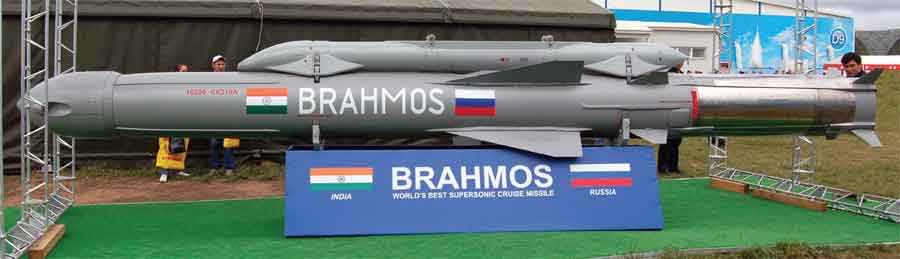
India’s entry in to MTCR did not create any ripples in the media and the news went almost unnoticed in the wake of a much hyped news of India’s failure of getting entry into the elite NSG, the vanguard of non proliferation.

It is as an intrinsic element of the relations between nations as the desire for prestige is of the relation between individuals or groups. However, the policy of prestige characterises the foreign policy of a nation which seeks to secure its interest by the demonstration of power in international relations.

“The policy of prestige is the policy of demonstrating the power a nation has or thinks it has or wants other nations to believe it has.” The purpose of such a policy is “to impress other nations with the power one’s own nation actually possesses, or with the power it believe or wants the other nations to believe it possesses.”

HCL Infosystems Implements First-Ever Converged Communication Network Between Indian Army, Navy and Air Force

By IDR News Network
05 Jul , 2016

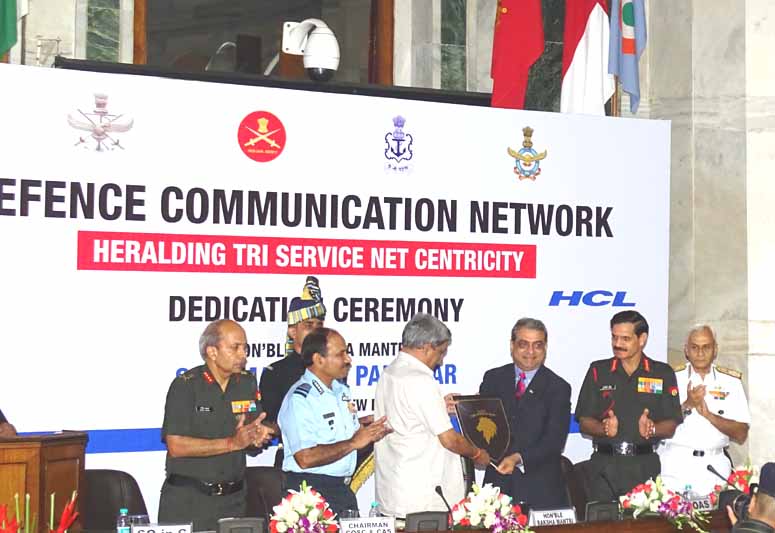
Made in India and dedicated to the nation 

HCL Infosystems, one of India’s premier IT Services, Distribution and Digital Solutions Company, has enabled the design, development and deployment of Defence Communication Network (DCN) – the first tri-Service communication and IT network of the Armed Forces.

The network has been fully designed and developed in India. The DCN was today dedicated to the nation by Manohar Parrikar, the Hon’ble Raksha Mantri, Government of India. 

Speaking on the occasion, Premkumar Seshadri, Executive Vice-chairman and Managing Director, HCL Infosystems Ltd. said:

“This is a moment of great honour for us. HCL Infosystems is proud to design, develop and deploy the first ever converged tri-service communication and IT network for the Indian Defence Forces. The network has been entirely designed and developed in India. We have made significant investments in creating defence communication technology practice, involving design of critical technology systems for military communication. HCL Infosystems is privileged to have the opportunity to successfully partner in yet another mission critical program of national importance – the Defence Communication Network.”

Rise of China’s Air-Defense Capabilities?

By Bharat Lather
06 Jul , 2016

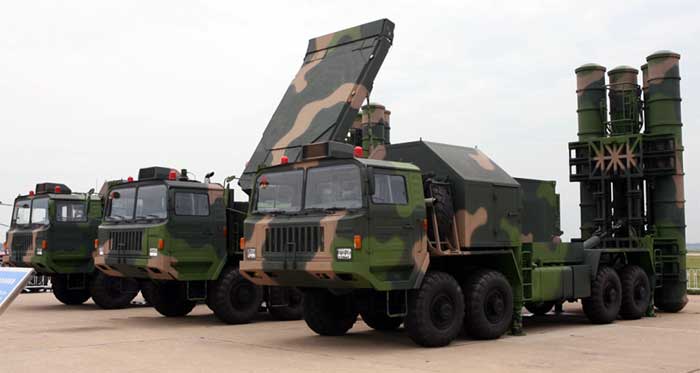
According to US Defense Department report, the size of the Chinese air forces (PLAAF and PLAN), have now approached 3,000 aircraft; out of which 700-800 are 4th and 4.5th Generation aircraft. While on the other hand, China continues to fly over 400 J-7s, an effective aircraft, but not competitive in any sense with the U.S. fleet; but by developing an integrated multi-layered air defense network, even J-7s (Mig-21) would pose a grave threat to U.S. fighter jets. Far more important than the size of China’s air force, thus, is Beijing’s effort to establish a territorial multi-layered air defense network (HQ-7B, HQ-16, HQ-9, S-300 PMU2 and S-400) that will allow Chinese aircraft to fight their U.S. counterparts under the circumstances of their choosing.

China attempted to acquire technology with military applications from Europe, but sanctions associated with the Tiananmen Square massacre hamstrung this effort.

In 1991, Chinese military officers watched as the United States dismantled the Iraqi Army, a force with more battle experience and somewhat greater technical sophistication than the People’s Liberation Army (PLA). The Americans won with casualties that were trivial by historical standards. Given the grim performance of the PLA in the 1979 Sino-Vietnamese War, as well as the collapse of the Soviet Union, 1991, something was bound to change. The Gulf War provided a catalyst and direction for that change.

America Has a Chance to Beat Back China's South China Sea Strategy

July 5, 2016

Ahead of the looming International Tribunal ruling on the Philippine-initiated arbitration case against China’s contested maritime sovereignty claims in the South China Sea (SCS), Chinese diplomats and government officials are conducting an aggressive PR campaign throughout the region and across the globe to influence world opinion and present China and its legal and political positions as correct, through the publication of various comments by sympathetic world leaders, legal scholars and international relations experts. They want to highlight the positive aspects of Beijing’s maritime security comportment and accentuate the benevolent features of its growing presence in the SCS, while peddling the same familiar public-diplomacy themes—the United States as the destabilizing aggressor; China as the virtuous but hapless victim; and the source of all regional trouble as Washington’s arm-twisting of its allies and partners in Manila, Hanoi and Kuala Lumpur—and steadily messaging that it does not recognize the jurisdiction and authority of the International Tribunal of the Permanent Court of Arbitration (PCA) at the Hague to rule in this case. All in all, this PR shift may be part of a larger adjustment by Beijing of its assertive actions in the SCS in response to the mounting unfavorable geopolitical conditions and regional trends. If so, what does the PR shift reveal about Beijing’s maritime strategy, and more importantly, what can Washington do to shape and influence that evolving strategy?

Why the PR Shift?

There are three possible motives why China may have taken a more forceful PR posture. First and foremost, anticipating an unfavorable PCA merits ruling, Beijing wants to occupy the moral high ground in support of its public-diplomacy stance, while portraying Washington as the destabilizing aggressor to uphold its maritime sovereignty claims, preserve its strategic positions and mitigate impact to its national interests.