25 November 2016

* India-Nepal Relations

By Sumit Kumar
24 Nov , 2016
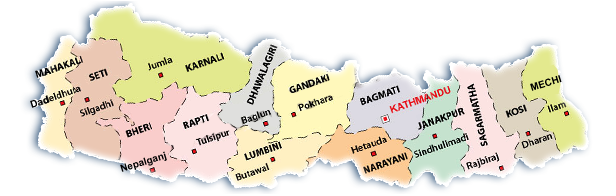
President Pranab Mukherjee’s three day visit to Nepal in November 2016 was historic. He became the first Indian President in the last 18 years to visit Nepal. Nepalese President Bidhya Devi Bhandari received and saw President Mukherjee off at the Tribhuvan international airport and the Nepal government announced a holiday on 02 November for President Pranab Mukherjee’s visit. President Mukherjee held a wide range of discussions across the Nepal’s political class, sending a clear and strong message to the people of Nepal that “India will support Nepal in its pursuit of peace, stability and development.” President Mukherjee’s message reaffirming India’s desire to strength the relationship with Nepal has assumed huge significance in light of the fact that relations between the two countries have been tense in the recent past.

Soon after coming into power in May 2014, Prime Minister Narendra Modi showed an ardent desire to reinvigorate the engagement with Kathmandu under his government’s “first neighbourhood policy. However, Modi’s initiative of inviting Prime Minister Khadga Prasad Sharma Oli of Nepal for the swearing-in ceremony of his government as a member of the South Asia Association of Regional Cooperation (SAARC) and his visits to Nepal in August and November 2014 did not produce the expected results. This became evident when despite India’s proactive efforts to help Nepal in the aftermath of the earthquake in April 2015, Nepalese recoiled at the presence of Indian media on their soil, charging the Indian government with indulging in a cheap public relations exercise. In September 2015, Nepal accused India of supporting the Madhesi people, who began protesting against the new constitution adopted by the Constituent Assembly (CA) II and blocked all the entry points with India, leading to the huge shortage of essential items including medicines, petroleum products and others. Nepal’s media claimed that India had an invisible hand in the blockade. Oli himself accused India of carrying out an “unofficial blockade” in Nepal and raised the issue with UN Secretary General Ban Kimoon.

NSG’s Consultative Group And Need For Evolving New Process – OpEd

NOVEMBER 23, 2016

India’s application could not acknowledge a confirmatory response from a few members of the Group, yet it leaves the impression that New Delhi is determined for the full membership of NSG. Like the Seoul plenary meeting of June 23-24, 2016 failed to reach a consensus in 48 members of NSG cartel, the recent consultative group’s meeting also could not reach to any consensus with regards to India’s bit for NSG.

It is evident that both India and Pakistan are consistently encountering tough resistance in getting the membership of NSG in the near future. Many members of the Group seem determined to thwart non-NPT members attempt to join the Group without a criteria-based approach. Nevertheless, New Delhi has robustly been lobbying with the intense support of Washington and its like-minded countries since 2010 to get a ‘special treatment’ by the NSG members. Simultaneously, Islamabad is equally determined to join the NSG.

Even though Pakistan wishes to be included in the NSG cartel on the basis of merit, it also wants to draw attention to the issue of discrimination in the group’s membership.

India is being treated on favorable terms, with laws amended and waivers granted to accommodate it. This despite the fact that India’s diversion of nuclear material and equipment for the so-called peaceful explosion of 1974 was the prime reason behind the creation of the NSG. It was created to prevent the diversion of nuclear material from civilian trade to military purposes, with seven suppliers of advanced nuclear technology, i.e. United States, United Kingdom, Canada, France, Japan, West Germany, and Soviet Union, getting together to form a cartel to control nuclear technology supplied for peaceful uses. India violated its obligations with Canada, diverting plutonium from the Canadian-Indian reactor that was being run by U.S. heavy-water, which was provided purely for peaceful purposes.

Can India Deny Power Of Technology To Bring Educational Reforms? – Analysis

NOVEMBER 23, 2016
Digital India has been envisioned as an ambitious program to transform India into a digitally empowered society and a knowledge economy. The young population in India in the last decade has become increasingly technology-driven, revealing considerable potential and readiness to imbibe and learn using digital media.

Also there have been unprecedented reforms in the education system in India at all levels, where much effort and commitment has been directed at improving the quality of education at all levels, especially at the schools.

One of the important debates in the Indian education policy has been how to improve the educational outcomes within schools. In this context increasing the quality of teachers and thereby the student outcome, is one such issue that is discussed by policy makers time and again. Digital education today is no longer limited to the four walls of a classroom. It has paved way for virtual classrooms, making learning attainable and providing easy access everywhere and every time.

The latest trends in digital education space also include adaptive and collaborative learning where a student is engaged by practicing, experiencing, sharing things and gaining knowledge in a collaborative environment. The fourth generation of communication technology is speculated to revolutionize the digital education space by providing cutting-edge user experience. Thus, the government’s focus is to integrate technology in digital learning for both urban and rural India. It is also looking at public-private-partnerships to enhance reach to rural and remote areas.

India's Chaotic Cash Crackdown

By Patrick Watson
22nd November 2016

Two weeks ago, millions of Americans voted against Hillary Clinton because, among other reasons, we thought she would raise taxes or otherwise take our money.

Most of us didn’t notice what happened on the other side of the world that very same day. Indian Prime Minister Narendra Modi really did take everyone’s money.

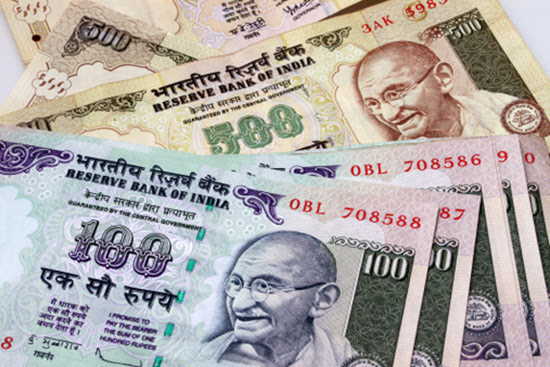
Citizens of India learned, with only a few hours’ notice, that their 500 and 1,000-rupee notes were no longer legal tender. Those are—or were—the country’s largest-denomination bills and the foundation of a huge underground economy. Now they’re just paper.

The results were what you would expect: confusion, chaos, and fear. Nevertheless, you can bet other governments watched closely. India could be just the first cash domino to fall.

Modi’s “Demonetization” Turned into a Mess

I must confess to not knowing much about India—the closest I’ve ever been is hearing some Sanskrit words in yoga class. I hope to visit someday, though. When I do, I’ll have to bring my Visa card because my cash may not work there.

The Reserve Bank of India posted this notice on November 8:

Government of India vide their Notification no. 2652 dated November 8, 2016 have withdrawn the Legal Tender status of ₹ 500 and ₹ 1,000 denominations of banknotes of the Mahatma Gandhi Series issued by the Reserve Bank of India till November 8, 2016.

This is necessitated to tackle counterfeiting Indian banknotes, to effectively nullify black money hoarded in cash and curb funding of terrorism with fake notes.

Change Of Guard In Pakistan: Change Of Policy As Well? – OpEd

NOVEMBER 24, 2016

General Raheel Sharif, the present Pakistan Army Chief is likely to retire on 29th November this year. By all accounts, General Sharif does not seem to be seeking an extension of his term. The sitting incumbent usually has a say in the extension of tenure, which cannot be refused by the political dispensation owing the stranglehold of the military over all affairs in the country. Given that, it appears pretty surprising that the present Chief does not want one. What then does that reveal about the state of affairs in Pakistan?

General Sharif became Chief with the tacit backing of former Chief and President of Pakistan, General Musharraf. Pervez Musharraf continues to maintain his command over the way the Pakistan Army, and therefore the civilian government functions. Ostensibly, there are a number of cases being contested in courts against Musharraf but these should be taken with a handful of salt considering the record of justice disbursement in an almost ‘banana republic’. Further, what is happening behind the screens will never be available for public consumption, and it may well be wheels within wheels in the warped politics of Pakistan that are propelling these eyewashes. In either case, it remains irrefutable that Musharraf continues to be an active and assertive voice in their domestic politics and foreign policy.

Foreign policy in Pakistan has two important tenets namely its relations with the United States (for what it can extract) and its historical conflict with India (which remains its bete-noire). Both these play an important role in what decisions are taken in its domestic sphere. In the present instance, with the confusion prevalent following Trump’s victory in the US Presidential elections, it may not be entirely clear to policy makers in Pakistan what to expect in the months to come. However, with Trump announcing General Flynn as the National Security Advisor in the transition team, it is evident that he intends to follow his rhetoric about Muslims (during campaigning) even after he takes oath. That may well be a cause of worry to the Pakistani establishment, both military and civilian, as they may not be able to continue sucking the American funds that they have been so used to in the past. It may also be wise to portray normalcy to the world, with the semblance of civilian control over the military establishment. To that end, a smooth transition of the Chief of Army will serve their interests in this projection to the US government.

To Get Back to Normal, Afghanistan Needs Private Security

November 22, 2016 

Otherwise, the country will remain in chaos indefinitely.

A report on the August 24, 2016 terrorist attack on the American University of Afghanistan (AUAF) highlighted critical security problems. Terrorists easily forced their way into the school, killing twelve people and injuring forty-four others. The attack was another catastrophic incident for the country. Despite ongoing risks, AUAF is reopening, but only after receiving special permissionto hire its own security instead of relying on the government’s mandated security organization. AUAF learned a costly lesson about the value of quality security. Unfortunately, international investors evaluating Afghanistan look elsewhere, as they do not have the option to hire professional private security.

In global conflicts, the stabilizing rule of thumb is that security is 90 percent of the problem, and 10 percent of the solution. Development, investment, reconciliation and other crucial undertakings are not possible without adequate security. A rethinking of the way private security is regulated in Afghanistan would spur enormous international investment.

In recent years, Afghanistan has had enormous achievements in finalizing regional trade and energy agreements, such as the Turkmenistan, Afghanistan, Pakistan and India (TAPI) pipeline, CASA-1000 (the Central Asia–South Asia power project), and the Chabahar Port. However, implementation has been slow, due to security concerns over protection of the routes through Afghanistan. The TAPI gas pipeline, a $10 billion regional project, for instance, has been delayed due to security concerns in Afghanistan.

Security in Afghanistan is particularly weak today, especially for the commercial sector. Foreign investors will not consider Afghanistan until there is effective security available for employees and facilities. The Afghan army and police are impressively capable, but face enormous demands, from battling insurgents to protecting politicians and conducting basic traffic duties. Ultimately, international investors require reliable, professional private security. We have seen this model enable investment in places like Colombia, Angola and elsewhere, where economies grew despite ongoing conflicts. Afghanistan is held back by self-inflicted regulations.

Questions And Answers About Some Of Raging Events In Middle East – OpEd

By Dr. Alon Ben-Meir*
NOVEMBER 24, 2016

In a recent conversation I had with students, faculty, and alumni at New York University just before the start of my program “Global Leaders: Conversations with Alon Ben-Meir” on November 3, I had the opportunity to answer some questions concerning the turmoil in the Middle East and America’s role in the world. The following is my take on some of these events and how they might further evolve over time; questions and answers have been edited and condensed for clarity.

Q: What’s your take on the status at this point of the Iranian nuclear deal?

ABM: I remember when the deal was first sealed, I wrote a piece called “The Good, The Bad, and the Ugly About the Iran Deal.” There were elements that are good in the deal, some were really bad, and some others I called ugly, in a sense that we didn’t know how the deal would eventually unfold. Although the deal may delay Iran from acquiring a nuclear weapon, say for the next 10 years, I believe that Iran is still committed to acquiring such weapons, under almost any circumstances.

Iran is not seeking such weapons in order to use them—not against Israel or against any other country. The Iranians feel they have legitimate national security concerns. With nuclear weapons Iran would inhibit any outside power from trying to effect regime change. It will be in a position to neutralize both Israel’s and Pakistan’s nuclear arsenals, and prevent any enemy from attacking it. I can cite several other reasons, including its concern over instability in Afghanistan and Pakistan, and its desire to consolidate its national identity as a superpower under the aegis of the Shiite Islamic regime. It has also ambitions to become the region’s hegemon. With nuclear weapons, it would be in a position to intimidate its neighbors and enjoy greater leverage to advance its own regional political agenda.

Benefitting from China’s Belt and Road Initiative

November 22, 2016

The Belt and Road Initiative (BRI), China’s gargantuan cross-continental infrastructure project, launched by President Xi Jinping in September 2013, is not only a foreign policy initiative, but an idea linked to saving the life of Communist Party of China (CPC) which could otherwise tumble like the Communist Party of the Soviet Union did after 74 years of its birth, bringing down the Soviet Union in its wake. 

The corridor project has singularly focussed attention within China and outside and aims to improve cross-regional and international connectivity infrastructure to bolster China’s outbound investment and trade. It is essentially about creating a belt of new networks; roads, highways, railways, ports, logistics zones, and economic zones that will begin and end in China. 
Internal Factors

For China, after lifting over 600 million of its people out of poverty, sustaining standards of living for people adapted to consumerism is becoming the biggest challenge. Over the years, China has witnessed massive slowing down of economy, mangled by excessive internal debt and surplus industrial output. In fact, some of the traditional easing measures, including numerous stimulus measures (rate cuts, credit backing and currency devaluation) to get the slumping economy moving again, seem to be giving diminishing returns. The massive stimulus package of the past may have spurred debt build-up.

The country has been struggling over how to restructure the massive underperforming state-owned enterprises (SOEs) that are carrying a ton of debt. Most are identified as suffering from overcapacity or marked for clean-up. The task will not be easy; recently, the State Council issued new guidelines to classify SOEs into — strategic, innovative, merger, clean-up - by 2020. Xi has launched a drive to “clean up” these corruption-ridden SOEs –realising that their continuation could bring China’s financial system to its knees and risk hundreds of thousands of workers losing jobs. 

Downsizing the PLA, Part 2: Military Discharge and Resettlement Policy, Past and Present


By: John Chen
November 11, 2016 

Note that this is Part 2 of a two-part series on the PLA’s planned personnel cuts. Part 1 can be found here.

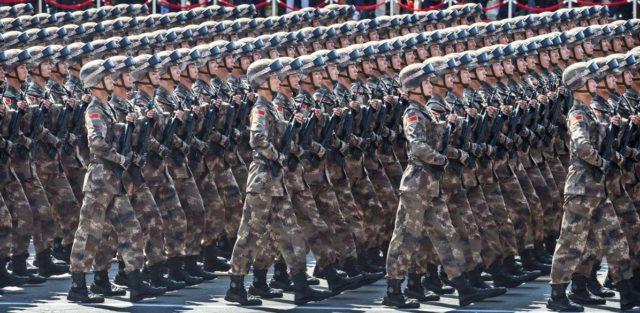
Part 1 of this series examined the mechanisms for downsizing the PLA by 300,000 personnel, including two-year enlistees, noncommissioned officers (NCOs), and officers before they meet their mandatory retirement age. The article described what benefits each officer and enlisted member is entitled to based on their grade and years of service. Part 2 assesses the PLA’s ability to carry out the force reduction from 2.3 to 2.0 million (about 11 percent of total PLA strength) by the end of 2017. Can national level or local governments and state-owned enterprises (SOEs) find jobs for all the downsized personnel entitled to an equivalent civilian government or SOE position? Has the central government allocated enough resources to pay legally mandated benefits and pensions? Most importantly, will sending a large percentage of downsized personnel back to their home provinces have a negative impact on social stability?

Current conditions in China exacerbate the challenges of executing the force reduction. After decades of rapid growth, China’s economy is slowing to a “new normal” of 6–7 percent growth (The World Bank, August 11). The government is embarking on “structural reforms” to reduce overcapacity in the steel and coal sectors, potentially shedding millions of jobs, many in the economically depressed Northeastern rust belt (Xinhua, July 11). These circumstances will complicate efforts to implement the current and any future PLA force reductions, and the contours of the actual downsizing could aggravate tensions between local governments and the PLA. However, the troop reduction is unlikely to generate a “perfect storm” of social instability that could immediately threaten Communist Party rule.

Does China Have Enough Resettlement Capacity?

Who Will Lead In A World On Fire? – Analysis

By Todd Royal 
NOVEMBER 24, 2016

The state of global affairs hasn’t been this poor in over seven decades. Russia blatantly affected US presidential credibility in many ways by overtly and covertly meddling in the process. And they still keep amassing troops in Belarus and the border with Ukraine. Putin, for good reason, seems to believe the Europeans will do nothing to stop him from causing utter disarray on Europe’s eastern flank. Meanwhile, President Obama continues an apology tour in Europe by encouraginganti-Trump protesters. Putin has wagered correctly that the West is weak and vulnerable.

Iran continues breaking the so-called peace deal they made with the P5 + 1. Not only have they recently hijacked an American boat and buzzed US warships, but have made frequent promises to destroy Israel and America. Was this the peace deal western powers had in mind when they supposedly reigned in Iran’s nuclear weapons program?

The United Nations International Atomic Energy Agency signaled recently the Iranians again broke the spirit of the agreement, by creating excess heavy water; a material used to cool reactors that produce plutonium. Anyone who actually believes this agreement did anything to stop the Iranian hegemonic march in the Middle East and other parts of the world is delusional at best, and dangerously naรฏve at worst.

North Korea is delusional, but as long as China has their proxy’s back in manufacturing chaos to allay the world’s interest away from them grabbing the South China Sea then Kim Jong-un may actually believe he could win a war with Japan, South Korea and the U.S. North Korea is testing ballistic missiles that could reach the western U.S. Imagine California seceding from the U.S., striking a peace deal to avoid imminent nuclear destruction. They already moved politically away from the U.S. as a reaction to Trump’s election by unanimously electing liberal Democrats over Republicans.

On the ground in Mosul: why the worst-case scenarios are coming true

by Jane Ferguson 
Nov 22, 2016
Source Link


MOSUL, Iraq — The rip of machine gun fire disturbed the quiet on the second floor of a mosque in Mosul’s Zahra district. Lying on their bellies across the room, three Iraqi soldiers peered over the guns they’d pointed through smashed windows, anxiously scanning for ISIS fighters. A few feet away, their commander, Major Ziad al-Gubere, paced up and down, radio in hand, talking to other Iraqi Army units in the area.

Beyond the mosque was ISIS territory, and Gubere was trying to make sure his men killed the enemy fighters hoping to breach this front line. Outside in the street, a pile of tangled metal and rubble was stacked up on the road like a barricade from the French Revolution. “You see these guys?” Gubere asked in disgust, pointing over the pile. “One of them blew himself up over there.” Gubere is middle-aged and in constant motion: He always seemed to be marching somewhere, with others behind trying to catch up.

These dozen or so special forces soldiers from Iraq’s US-trained Golden Brigade have fought a series of grinding battles to make it to this point. Gubere’s men are part of the broad military push to take back Mosul, once Iraq’s second-biggest city, from the ISIS militants who have held it for more than two years. Reconquering the city is the biggest test to date of the Obama administration’s preferred strategy for defeating the group: using American airpower to pound the group from the air while helping to arm and train the loose alliance of Iraqi soldiers, Kurdish peshmerga forces, Shia paramilitaries, and Sunni tribal fighters battling ISIS on the ground.

The offensive began just over a month ago with a quick series of successful efforts to flush ISIS fighters out of villages on the outskirts of the sprawling city. Iraqi forces have retaken a third of the city east of the Tigris river, but the assault has slowed in recent days as the Iraqi forces entered Mosul’s densely packed streets. The fighting has morphed into bloody street-by-street, building-by-building urban warfare. Baghdad doesn’t release official casualty figures, but some medics estimate that it is at least in the low dozens. As of late October, US officials said ISIS had lost roughly 900 fighters.

A Fight for the Soul of the French Right

November 22, 2016

On Sunday night, as the returns were being counted in the first round of the French presidential primary for the conservative Les Rรฉpublicains party, the nation’s political landscape shuddered not once but twice. Taking by surprise commentators and pollsters, former Prime Minister Franรงois Fillon came in first with 44 percent of the vote, outdistancing the favorite, former Prime Minister Alain Juppรฉ. But -- and here the earth shifted a second time -- he also doubled the score of his onetime boss, former President Nicolas Sarkozy, who finished a distant third.

Overnight, Nicolas Sarkozy -- who for better and worse had dominated the French political scene for nearly two decades -- became history, while the man he condescendingly referred to as his “collaborator” became France’s future.

During the five years he served as prime minister, Fillon was widely seen as the brake to the bling-blinging of his boss. Stolid, steady, and sturdy, Fillon offered a soothing contrast to the sharp elbows and jutting jaws that marked Sarkozy’s confrontational approach to politics. Either unable or unwilling to turn politics into performance, governance into spectacle, Fillon at times was dismissed as “Mister Nobody.”

But, of course, only a Mister Somebody can win, as did Fillon, nearly half of the four million votes cast in the conservative primary. (Intriguingly, about 15 percent of those who voted in the open primary situate themselves on the political left.) Moreover, he is a somebody who in less contentious and more constant fashion embraces many of the policies on which Sarkozy had campaigned. The chance to have someone with Sarkozy’s values, without having to deal with Sarkozy himself in the Elysรฉe, proved irresistible. As the political commentator Jรฉrรฉmy Collado remarked: “Franรงois Fillon was the alternative for those who wanted to avoid Nicolas Sarkozy, all the while remaining firmly on the right.”

Asian Security’s Complex Strategic Quadrilateral – Analysis

By Dr Subhash Kapila 
NOVEMBER 24, 2016

Asian security in 2016 stands dominated by the geopolitical dynamics that are at play in the complex ‘Strategic Quadrilateral’ comprising the United States, China, Japan and India.

Of the above named countries, the United States is undoubtedly the sole Superpower with complex global predominance in all domains. This predominance has virtually remained intact when the global unipolar moment emerged in 1991 with the disintegration of the former Soviet Union. Many today would like to contest that the United States power and predominance is on the decline. This position is not debatable as none of the major powers enumerated above neither are within closing distance to US predominance nor do they have global power-projection capabilities to carve out their respective spheres of influence at the expense of the United States.

China exhibits the pretensions of emerging as the rival Superpower to the United States, a burning Chinese national aspiration. China no doubt has made exponential progress economically and militarily to reduce the strategic asymmetries in power in relation to the United States. But this is far from done and that makes China a dissatisfied ‘revisionist power’ out to challenge United States predominance. Regrettably for China, repeated by me for over a decade now, is that China has no ‘Natural Allies’ with national aspirations synchronous with China in dethroning the United States. Nor even Russia would fully subscribe to the Chinese aim and in any case Russia is not considered included in the Asian Strategic Quadrilateral as in Asian power dynamics Russia has yet to assert itself independently of China.

What Trump’s Win Means for Eastern Europe

NOV 18, 2016 17

WARSAW – The rule of economic liberalism in the West is leading to the demise of political liberalism. A growing number of key countries are experiencing not elections, but plebiscites on liberal democracy – plebiscites decided by the votes of those who have lost out from liberal democracy. In the United States, Donald Trump’s election as president is a punishment to an establishment that disregarded the demands of the 2011 Occupy Wall Street protests.

The establishment’s next challenge will be to hold on in Italy, where a December 4 constitutional referendum could decide Italian Prime Minister Matteo Renzi’s fate. That vote will be a prelude to France’s presidential election in the spring, where a victory for the far-right National Front’s Marine Le Pen would almost certainly bring about the definitive collapse of the European Union, if not of the entire geopolitical West.

However those votes turn out, Brexit and Trump prove that liberal democracy has ceased to be the canon of Western politics. And that has far-reaching implications. How can “swing states” like Poland achieve liberal democracy now that the Western point of reference has disappeared? Eastern Europe has never benefited when political conditions in the West have deteriorated.

Trump is not just an ill-tempered child playing with nuclear matches; he is also dangerously ambitious, and his foreign-policy proposals could unravel crucial alliances and destabilize the international order. Of course, nobody – not even Trump himself – knows if he will keep his campaign promises. But that is precisely the point: unpredictable governments are bad for global geopolitics. For Poland and other Eastern European countries, whose independence and democracy are based on the current global status quo, this can be a matter of life or death.

Russia adjusts Syria plan as Obama’s term nears end


President Barack Obama and his Russian counterpart, Vladimir Putin, met Nov. 20 on the margins of the Asia-Pacific Economic Summit in Peru. Thefour-minute conversation is most likely to be the last meeting between Putin and Obama in Obama's capacity as president of the United States, though Putin invited Obama to visit Russia “any time at his convenience.” The brief encounter focused on the two issues that have been shaping the overall agenda for US-Russia relations in the last couple of years — Ukraine and Syria. While both lamented “the absence of progress” on the Ukrainian track, statements on Syria signaled the goals and expectation each party had vis-a-vis the other.
Summary⎙ Print Russia is trying to figure out all the Middle East scenarios that might affect it under a Donald Trump presidency.

Author Maxim A. SuchkovPosted November 21, 2016

As Obama emphasized the need for Secretary of State John Kerry and Foreign Minister Sergey Lavrov to “continue pursuing initiatives together with the broader international community to diminish the violence and alleviate the suffering of the Syrian people," Putin pointed out that the "remaining two months of [Obama's presidency] should be used for the continuation of the search for a Syrian settlement." The dialectic of the statements was: Although the parties perceive each other as untrustworthy, both share a need to preserve a political will to selectively cooperate.

Military Reform


The military Reform Movement of the 1980s, in which I participated, at one point included the Congressional Military Reform Caucus with more than 100 Members of Congress from both parties. Unusually, it was made up of both liberals and conservatives; in its early years, its two most active members were Senator Gary Hart of Colorado and Congressman Newt Gingrich of Georgia. The focus of military reform was improving our armed forces’ ability to win, i.e., effectiveness, not efficiency. But military reform had and still has the potential to save many billions of dollars as well.

The reform movement’s most basic message was that, if we want to have a winning military, people are most important, ideas come second, and hardware is only third. That is a reversal of current priorities. In personnel policy, the reformers promoted three major changes with regard to the officer corps. First, they recommended ending the up-or-out policy which forces officers to continually rise in rank or leave the service. Up-or-out rewards toadyism and careerism and penalizes combat leaders who show strong character. Related to ending up-or-out were reforms to end all-or-nothing retirement after twenty years, replacing it with vesting after twelve years, and cutting the size of the officer corps above the company grades by at least fifty percent. An over-sized officer corps robs field commanders of authority and initiative by centralizing and bureaucratizing decision-making. 

Two other personnel reforms, reaching beyond the officer corps, were important components of the reform agenda. The first was strengthening unit cohesion by stabilizing personnel for three-year intervals. The present policy of having individuals constantly arriving or leaving a unit undermines cohesion, which is the basis of why men fight. It also makes advanced training impossible and costs a great deal of money. The second personnel reform affecting a whole service was greatly raising the ratio of “teeth”, men who fight, to “tail”, people in support functions. At present, we use a large majority of our very expensive military manpower in jobs with no contact with the enemy and, often, little apparent role in giving our few fighters what they need.

Stealth, GPS, 'Smart Bombs' and More: How Desert Storm Changed Warfare Forever

November 21, 2016 

As laser-guided bombs incinerated Iraqi tanks from the sky, surveillance aircraft monitored enemy troop movements and stealth bombers eluded radar tracking from air defenses in the opening days of Operation Desert Strom decades ago – very few of those involved were likely considering how their attacks signified a new era in modern warfare.

Earlier this year, when veterans, historians and analysts commemorated the 25th anniversary of the first Gulf War in the early 90s, many regard the military effort as a substantial turning point in the trajectory or evolution of modern warfare.

Operation Desert Storm involved the combat debut of stealth technology, GPS for navigation, missile warning systems, more advanced surveillance plane radar, and large amounts of precision-focused laser-guided bombs, Maj. Gen. Paul Johnson, Director of Requirements for the Deputy Chief of Staff for Strategic Plans and Requirements, told Scout Warrior in a special interview earlier this year. 

“We saw the first glimpses in Desert Storm of what would become the transformation of air power,” he said.

The five-to-six-week air war, designed to clear the way for what ultimately became a 100-hour ground invasion, began with cruise missiles and Air Force and Army helicopters launching a high-risk mission behind enemy lines to knock out Iraqi early warning radar sites. Two Air Force MH-53 Pave Low helicopters led AH-64 Apache Attack helicopter into Iraqi territory, Johnson explained.

The Master Strategist, Clausewitzian Genius


In the complex environment of conflict and decision making the modern world finds itself facing continuously today, how do non-democratic (or less democratic) systems compared to their Western democratic counterparts perform in developing and producing master strategists in leadership positions? Do the leaders of more authoritarian systems have a bigger and better chance of emulating their genius ancestors? It is a hard and extremely subjective endeavor to name anyone living today (or in recent times) as a “master strategist," a task history (and its lessons) finds more willing to undertake. In the modern world there is less room for the growth of master strategists in the form of legendary historic figures. The nature of non-democratic systems provide more space to its leaders to potentially reach such a status.

To address these questions, we should first define what a master strategist is and some of the limits the modern world places on the emergence of a master strategist in general. We must also understand that the makeup of a modern master strategist is quite different than his/her historical counterpart.

"Aristotle Tutoring Alexander" by J.L.G. Ferris (Wikimedia)

Alexander the Great was the embodiment of the strategic man. His genius as a strategist went far beyond the ancient battlefields, as “Alexander displayed not only tactical ingenuity and ferocity, but also political sagacity and magnanimity.” Essentially, he resembled a one-man strategy bridge, connecting the gap between the political and military himself. For Clausewitz, the genius is the individual who displays “outstanding gifts of intellect and temperament,” which are revealed in exceptional achievements.[1] At the U.S. Army War College, three roles for strategists are considered: the leader, practitioner, and the theorist. Harry Yarger states that a master of strategic art is expert in all three capacities.[2] On the other hand, Sir Lawrence Freedman argues that strategies are rarely developed by professional strategists but by leaders who impose their will on events without understanding the consequences of their actions. Freedman goes on to say that good strategy does not necessarily come from experts in the field but can be generated by imperfect human beings who work in imperfect organizations under conditions of great ambiguity.

How to Write Email with Military Precision

NOVEMBER 22, 2016

In the military, a poorly formatted email may be the difference between mission accomplished and mission failure. During my active duty service, I learned how to structure emails to maximize a mission’s chances for success. Since returning from duty, I have applied these lessons to emails that I write for my corporate job, and my missives have consequently become crisper and cleaner, eliciting quicker and higher-quality responses from colleagues and clients. Here are three of the main tips I learned on how to format your emails with military precision:

1. Subjects with keywords. The first thing that your email recipient sees is your name and subject line, so it’s critical that the subject clearly states the purpose of the email, and specifically, what you want them to do with your note. Military personnel use keywords that characterize the nature of the email in the subject. Some of these keywords include: 

ACTION – Compulsory for the recipient to take some action 
SIGN – Requires the signature of the recipient 
INFO – For informational purposes only, and there is no response or action required 
DECISION – Requires a decision by the recipient 
REQUEST – Seeks permission or approval by the recipient 
COORD – Coordination by or with the recipient is needed 

Taiwan's "Cyber Army" Plan


Taiwan’s new Minister of National Defense Feng Shih-kuan (้ฆฎไธ–ๅฏฌ) recently confirmed the intention of the new government to create a “Cyber Army” (็ถฒ่ป) as the fourth branch of Taiwan’s armed forces. The announcement followed the plan outlined in the Defense Policy Blue Papers published earlier by the Democratic Progressive Party (DPP), which specifically called for the “[Integration of] existing military units and capacities of IT, communications, and electronics to establish an independent fourth service branch alongside the current Armed Forces consisting of the Army, Navy, and Air Force.”[1] Looking ahead, it will be fruitful to observe what the new Cyber Army can add on top of Taiwan’s existing cybersecurity and cyberwarfare structure.

It is easy to see where the impetus for establishing a Cyber Army came from; for many years Taiwan has been on the frontlines of the battle against the ever-intensifying cyber attacks from China. This has reached such an extent that observers and even Taiwanese officials acknowledged Taiwan as a “testing ground” for China’s cyber army and state-sponsored hackers. The case of the 2015 hacking of the U.S. Office of Personnel Management (OPM) further illustrates the ambitions and capabilities on the part of the Chinese hackers and the dear consequences of failing to stop such an attack. 

Similar organizations dedicated to cybersecurity and combined defensive and offensive cyberwarfare capabilities have been established in other countries, such as the United States Cyber Command (USCYBERCOM) and South Korea’s National Cyber Command (NCC). Moreover, President Obama ordered the creation of the Commission on Enhancing National Cybersecurity earlier this year. Though the Commission serves only as an advisory role, it is yet another move by the administration to address the ever-more prominent issue of cybersecurity. Taiwan’s plan for a Cyber Army however, will make it the first country to assign equal importance to cybersecurity as to the other branches of the armed forces. 

ALLYN: ‘VEXING SET OF CHALLENGES’ IN CYBER DOMAIN


The ability to dominate cyberspace operations is “inextricably linked to Army readiness,” says Gen. Daniel B. Allyn, the U.S. Army vice chief of staff. But the cyber domain, “the only man-made one that exists, creates a vexing set of challenges.”

Allyn was the keynote speaker at the Nov. 3 Hot Topics forum “Cyber and Future Readiness,” sponsored by the Association of the U.S. Army’s Institute of Land Warfare. The event was held at AUSA’s Conference and Event Center in Arlington, Va.

“The most seasoned strategists have struggled with how to tackle this emerging battleground,” Allyn said. “For starters, it’s difficult to describe, let alone conceptualize.”

Allyn said cyber threats and vulnerabilities “impact everything we do, from communications and logistics to operations and Mission Command. This is our new normal and to adjust, we must act quickly, leveraging agile personnel, training and acquisition processes to adjust to new circumstances.”

“Our future readiness demands both understanding and most importantly, action, to succeed,” he said.

Allyn said historically, cyberspace operations “have been the domain of a small group of technical professionals.” Going forward, however, soldiers must understand that protecting the service’s digital infrastructure and wartime equipment is “everyone’s business, leaders and soldiers alike. It is incumbent on all of us to protect citizens and ourselves against the persistent cyber threats we face on a daily basis.”

STAFF COLONELS ARE ARMY’S INNOVATION ENGINES

November 13, 2016

The Army is at an inflection point, where the rate of technological and geopolitical change is outstripping our capacity to anticipate, adapt and then implement transformative institutional processes to gain and maintain competitive advantage. We are combating information and knowledge-age challenges with industrial-age solutions. Few would call our acquisition and personnel management processes nimble and responsive enough to address the complex challenges of the contemporary operating environment.

After more than 25 years of unprecedented conventional combat power overmatch with long and troubled flirtations with peacekeeping, nation-building and counterinsurgency operations, we have awakened to near-peer adversaries with sophisticated anti-submarine, cyberwarfare, electronic warfare, and other anti-access/area denial capabilities. We have access to ideas and inventions that can be leveraged to gain competitive advantage in these areas if we have the will to develop, select and empower staff colonels, the innovation engines of our Army.

If the Army wants to foster a culture of innovation as senior leaders profess and doctrine proclaims, then we must innovate to create that culture. We must break from our current command-centric leader development model to build the military’s finest senior staff officers, making strategic-level staff positions sought after and progressive assignments for the best and brightest officers. Staff colonels and the talented teams that support them are the engines of the institutional Army and essential components of an innovation chain converting ideas to competitive advantage for our joint force. In short, staff colonels are key to Army innovation.

Innovation is not synonymous with invention. Instead, innovation is a process or chain of activities that starts with an idea and ends with an advantage. More precisely, innovation is the process of creating decisive value from change to gain competitive advantage.

Innovation is differentiated from other forms of change such as improvisation and adaptation by the scale, scope and impact of that value creation. Innovation is not about a new widget or process, but the decisive value created and the competitive advantage gained when that new widget or process is applied throughout the Army or joint force.

U.S. Army Builds Cyber Branch One Step at a Time


Maj. Gen. LaWarren Patterson, USA, the U.S. Army Cyber Center of Excellence and Fort Gordon commander, and Col. Jennifer Buckner, USA, Army Cyber School commandant, unveil a sign during a ribbon-cutting ceremony for the school. 

The U.S. Army’s newly created cyber school is prepared to accept its first class of second lieutenants this summer followed by enlisted personnel and warrant officers. The historic first class signifies a significant first step toward building the service’s new cyber branch.

Army Secretary John McHugh and Chief of Staff Gen. Raymond Odierno approved the creation of the cyber branch in September 2014 as one of the first official steps in establishing a 17-series career field dedicated to managing the careers and professional development of officers. The remainder of the 17-series career field management program is expected to be implemented by October, with both enlisted and warrant officer career paths.

The Army established cyber as a basic branch on par with infantry and armor. This is the first new branch since Special Forces about 28 years ago, points out Col. Jennifer Buckner, USA, commandant, U.S. Army Cyber School, Fort Gordon, Georgia. “Our vision for the cyber school is really to provide the Army with a highly skilled, agile and innovative cyberforce. Obviously, we want them trained to Army and joint standards. We want them to be able to support commanders at strategic, operational and tactical levels, and we really want to make sure our force can conduct defensive cyber operations, offensive cyber operations and electronic warfare and that we can synchronize all of those capabilities to support commanders,” Col. Buckner says.

Red Electrons: Army Rapid Capabilities Office Fights Russian GPS Jamming, Cyber, EW

November 22, 2016 

Army Maj. Gen. Walter Piatt during his time as Deputy Commander of US Army Europe.

WASHINGTON: The Army’s new Rapid Capabilities Office is focused like a laser on Russian threats to Army networks: both cyber attack (hacking) and electronic warfare (jamming), in particular against the GPS signal on which US forces rely.


I’ve written before that a $100 million boost to electronic warfare might be an early priority for the new RCO, whose charter is to speed new equipment into service over a one to five-year time-frame, and whose agenda is personally set by Army Secretary Eric Fanning and the Chief of Staff, Gen. Mark Milley. What I did not realize until I sat down with Maj. Gen. Walter Piatt, the RCO operations director, was how thoroughly EW, cyber, and GPS — three closely related fields — dominate that agenda.

An Army soldier sets up a highband antenna.

Indeed, they dominate it to the exclusion of other high-profile Army projects. Air defense against small drones? “That’s not being run by our office, but we’re certainly watching the progress of that,” Piatt told me. The anti-ship variant of the ATACMSartillery missile? We’re “not in charge of that one, (but) certainly a supporting effort.”

Likewise, I hadn’t realized how closely the RCO was focused on Russia, as opposed to, say, China, North Korea, Iran, or the Islamic State. While Gen. Milley has explicitly said Russia is the most dangerous of the big five threats, it’s a fraught question whether that focus will survive the rise of Donald Trump. The President-Elect has expressed his admiration for Vladimir Putin and appointed a National Security Advisor, retired Army Lt. Gen. Mike Flynn, who says we should collaborate with Russia against the Islamic State, which they see as the real No. 1 threat.

Fake News Is A Real Problem

by Felix Richter, Statista.com

-- this post authored by Martin Armstrong

Fake news has been hitting the genuine headlines since the US election and, as the infographic below shows, it's a real problem.

As research by Buzzfeed using Buzzsumo shows, from August until election day, fake news stories had more engagement on Facebook than mainstream stories did. The most 'popular' story falsely stated that Pope Francis had endorsed Donald Trump for the presidency - receiving almost one million engagements (shares, reactions and comments). In a time of 'post-truth' though, these revelations are unlikely to sway the opinions of those that cast their vote for the now president elect.

This chart shows the Facebook engagement of fake news stories on the US election 2016.


You will find more statistics at Statista.

Fake News, Hate Speech and Social Media Abuse: What’s the Solution?

Nov 21, 2016 

Fake News, Hate Speech and Social Media Abuse: What’s the Solution? 

Jennifer Golbeck of the University of Maryland and Northeastern University's Andrea Matwyshyn discuss social media sites' crackdown on 'fake news.'

Google, Facebook and Twitter last week vowed to fight fake news, hate speech and abuse in their own ways amid the backlash over how such content may have influenced voting in the U.S. presidential election. Those actions could have come sooner, and many troubling issues persist, according to experts.

Google has said it would prevent websites carrying fake news from accessing its AdSense advertising platform that helps such sites share in advertising revenues. Facebook said it would not integrate or display ads in apps or sites that have illegal, misleading or deceptive content, including “fake” news — news that is deliberately factually incorrect. Twitter said in a statement that it would remove accounts of people posting offensive content, building on earlier measures that help users “mute” such content and report abuse. That builds on its existing policy on hate speech and other offensive content.

Following the money is the right strategy to prevent such abuses, according to Jennifer Golbeck, director of the Social Intelligence Lab and professor of information studies at the University of Maryland, and author of the book Social Media Investigation: A Hands-on Approach. The new measures by these companies have “really taken away the main source of income for those sites, which is what drives them to exist in the first place,” she said. She noted that many of the individuals and organizations posting fake news, including during the recent elections, are not in the U.S. and don’t care about the ideologies behind the content. “They just care about making money, and they figured out ways to create click feeds that will get it.”