By Sumit Kumar
24 Nov , 2016
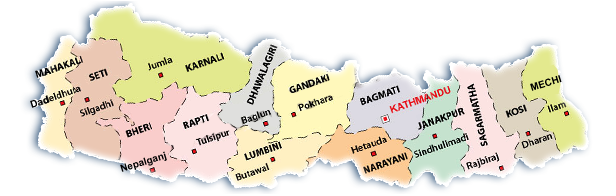 President Pranab Mukherjee’s three day visit to Nepal in November 2016 was historic. He became the first Indian President in the last 18 years to visit Nepal. Nepalese President Bidhya Devi Bhandari received and saw President Mukherjee off at the Tribhuvan international airport and the Nepal government announced a holiday on 02 November for President Pranab Mukherjee’s visit. President Mukherjee held a wide range of discussions across the Nepal’s political class, sending a clear and strong message to the people of Nepal that “India will support Nepal in its pursuit of peace, stability and development.” President Mukherjee’s message reaffirming India’s desire to strength the relationship with Nepal has assumed huge significance in light of the fact that relations between the two countries have been tense in the recent past.
Soon after coming into power in May 2014, Prime Minister Narendra Modi showed an ardent desire to reinvigorate the engagement with Kathmandu under his government’s “first neighbourhood policy. However, Modi’s initiative of inviting Prime Minister Khadga Prasad Sharma Oli of Nepal for the swearing-in ceremony of his government as a member of the South Asia Association of Regional Cooperation (SAARC) and his visits to Nepal in August and November 2014 did not produce the expected results. This became evident when despite India’s proactive efforts to help Nepal in the aftermath of the earthquake in April 2015, Nepalese recoiled at the presence of Indian media on their soil, charging the Indian government with indulging in a cheap public relations exercise. In September 2015, Nepal accused India of supporting the Madhesi people, who began protesting against the new constitution adopted by the Constituent Assembly (CA) II and blocked all the entry points with India, leading to the huge shortage of essential items including medicines, petroleum products and others. Nepal’s media claimed that India had an invisible hand in the blockade. Oli himself accused India of carrying out an “unofficial blockade” in Nepal and raised the issue with UN Secretary General Ban Kimoon.