Kelly Jackson Higgins posted an August 9, 2018 article on the security and technology website DarkReading.com, with the title above. For those of you not familiar, the most elite and talented cyber hackers and security sleuths have been gathering every year since 1997, in Las Vegas, Nevada, to discuss the latest cyber security threat landscape, as well as the latest technology designed to ferret out, mitigate, and prevent hacks, as well as how to quickly reconstitute networks, restore trust, reverse engineer, and build resiliency. This year’s 2018 Black Hat, which will conclude this weekend, has already revealed how DeepLocker, artificially-enhanced malware, can change its signature and pattern, hides and/or goes dormant when it believes it may be under surveillance, and is essentially a digital version of a chameleon. I posted an article yesterday on this blog on DeepLocker, if you want additional detail.
16 August 2018
DeepLocker: Artificially Enhanced Malware Is Coming; And, It Is The Equivalent Of A Digital…Weapon Of Mass Disruption
I have written several articles in the past year on artificially-enhanced (AI) malware and the profound threat it will pose as we move deeper into late 2018 and into 2019. We are already seeing artificially-enhanced malware for sale on the Dark Web, though as of now it isn’t cheap to purchase — for the really special ‘stuff,’ around $25K per copy, in the digital underbelly of the Dark Web. Charlie Osborne posted an August 8, 2018 article on the security and technology website, ZeroDay, warning that some day soon, a visual image of our face, could become the trigger to launch artificially enhanced malware.”
Think Space Force is a joke? Here are four major space threats to take seriously
By: Joe Gould
/arc-anglerfish-arc2-prod-mco.s3.amazonaws.com/public/YYEYULOJIZCXTGD7UCROSVKL7U.jpg) WASHINGTON — Vice President Mike Pence on Thursday announced the Trump administration is laying the groundwork a new Space Force and eventually a separate military branch, dedicated to space. While the merits of a new organization are debatable, U.S. national security space systems are vulnerable to a wide array of threats, ranging from cyberattacks and jamming to anti-satellite missiles, according to a Center for Strategic and International Studies report published earlier this year. Russia and China, and to a lesser degree North Korea and Iran, are all threatening America’s military through its dependence on space. “Given our dependence and that of our allies and partners on space, the loss of critical assets today could prove decisive to our ability to monitor critical events like missile launches or nuclear tests, or to successfully prosecute a military campaign,” retired Air Force Gen. Robert Kehler, the former chief of U.S. Strategic Command, said in the forward to the report. “Urgent action is needed.”
WASHINGTON — Vice President Mike Pence on Thursday announced the Trump administration is laying the groundwork a new Space Force and eventually a separate military branch, dedicated to space. While the merits of a new organization are debatable, U.S. national security space systems are vulnerable to a wide array of threats, ranging from cyberattacks and jamming to anti-satellite missiles, according to a Center for Strategic and International Studies report published earlier this year. Russia and China, and to a lesser degree North Korea and Iran, are all threatening America’s military through its dependence on space. “Given our dependence and that of our allies and partners on space, the loss of critical assets today could prove decisive to our ability to monitor critical events like missile launches or nuclear tests, or to successfully prosecute a military campaign,” retired Air Force Gen. Robert Kehler, the former chief of U.S. Strategic Command, said in the forward to the report. “Urgent action is needed.”Rapid Equipping Force to deliver new electronic warfare platforms
By: Mark Pomerleau
/arc-anglerfish-arc2-prod-mco.s3.amazonaws.com/public/6UYPIHVSWNGWVHUOEBWZLSNFJA.jpg) Sgt. Jessie Albert, an electronic warfare specialist assigned to 2nd Battalion, 35th Infantry Regiment, 3rd Brigade Combat Team, 25th Infantry Division, trains on the Wolfhound Radio Direction Finding System at Schofield Barracks, Hawaii, on April 11, 2018. The electronic warfare specialists use direction finding to gain a line-of-bearing to the target. (U.S. Army photo by Staff Sgt. Armando R. Limon, 3rd Brigade Combat Team, 25th Infantry Division) Army Forces Command will receive a new fleet of tactical vehicles specifically outfitted for electronic warfare this fall. As part of the Army’s efforts to restore electronic warfare capability and respond to capability gaps, the service’s Rapid Equipping Force will provide Army Forces Command with what’s known as Electronic Warfare Tactical Vehicles. The vehicles will be self-contained and independent, a notice from the REF stated. Soldiers inside the vehicle would operate the advanced EW system, which was developed in response to a battlefield need to sense and jam enemy communications and networks.
Sgt. Jessie Albert, an electronic warfare specialist assigned to 2nd Battalion, 35th Infantry Regiment, 3rd Brigade Combat Team, 25th Infantry Division, trains on the Wolfhound Radio Direction Finding System at Schofield Barracks, Hawaii, on April 11, 2018. The electronic warfare specialists use direction finding to gain a line-of-bearing to the target. (U.S. Army photo by Staff Sgt. Armando R. Limon, 3rd Brigade Combat Team, 25th Infantry Division) Army Forces Command will receive a new fleet of tactical vehicles specifically outfitted for electronic warfare this fall. As part of the Army’s efforts to restore electronic warfare capability and respond to capability gaps, the service’s Rapid Equipping Force will provide Army Forces Command with what’s known as Electronic Warfare Tactical Vehicles. The vehicles will be self-contained and independent, a notice from the REF stated. Soldiers inside the vehicle would operate the advanced EW system, which was developed in response to a battlefield need to sense and jam enemy communications and networks.The Great War’s greatest killer
Nurses care for victims of the Spanish Flu in tents at Lawrence, Massachusetts, in 1918
A hundred years ago, at the tail end of the First World War, a deadly new strain of influenza emerged that would infect one in three people. The ensuing pandemic cut short the lives of between 50 million and 100 million human beings. It was the greatest tidal wave of death since the Black Death of the 14th century, and possibly in the whole of human history. The 1918 flu pandemic has been studied ever since it receded in the 1920s, leaving untold misery in its wake, and though scientists know a lot more about it than they did 100 years ago, many questions remain unanswered. Why was it so lethal? Why did it attack those in the prime of life – robbing families of their breadwinners and communities of their pillars? And could such a thing happen again?
The British special operators who terrorized Japanese forces
 In 1943 and 1944, specially chosen units of the British Empire were sent into the jungles of Burma on “Chindit” expeditions that went deep behind Japanese lines and assaulted railways, logistic hubs, and bridges to cripple Japanese forces and force them to redirect forces from other fronts. Most soldiers sent into the jungle were wounded, killed, or fell ill, but they made the Japanese pay. British officers Brig. Gen. Mike Calvert, Lt. Col. Shaw, and Maj James Lumley discuss tactics after the capture of Mogaung in Burma in June 1944 during the second Chindit expedition. The first Chindit expedition, Operation Longcloth, was effected by the 77th Indian Infantry Brigade when they marched into Japanese-occupied Burma in 1943. They attacked Japanese supply depots as well as rail and communication lines.
The Battle of 73 Easting: The True Story Behind Desert Storm’s Most Intense Tank Battle
by Daniel L. Davis
 When Army Lt. Gen. H. R. McMaster was elevated to become PresidentTrump’s national security advisor in 2017, the media was awash with references to his role in the biggest tank fight of Desert Storm, the Battle of 73 Easting. While these stories conveyed the basic outcome of the fight, they did little to illuminate how the battle unfolded or what set the stage before the first cannon shot screamed out of his tank. What turned out to be an amazing and thrilling victory, could easily have been the biggest disaster of Desert Storm. Twenty-eight years ago this month I was at the Grafenwoehr training center in Germany where my unit, Eagle Troop of the 2nd Squadron, 2nd Armored Cavalry Regiment (2nd ACR), was conducting a series of field maneuvers and live fire exercises. The 2nd ACR was one of three cavalry regiments then providing frontline defense against the Warsaw Pact,patrolling the borders between West and East Germany in the north and West Germany and Czechoslovakia in the south.
15 August 2018
India's Missile Defenses Can Now Take On Decoys. That's a Really Big Deal.
by Zachary Keck
India’s efforts to build a homegrown ballistic missile defense system achieved a major success. On August 2nd, India tested its Advanced Area Defence (AAD)/Ashvin Advanced Defense interceptor missile against decoy targets for the first time. “One target among simultaneously incoming multiple targets was selected on [sic] real time, the weapon system radars tracked the target and the missile locked on to it and intercepted the target with a high degree of accuracy,” India’s government announced in a press release . The test was against a medium-range ballistic missile with a range of 1,500 kilometers. Franz-Stefan Gady of The Diplomat speculates that this was the first test of the new indigenous imaging infrared (IIR) seeker, which was developed to help the interceptors distinguish warheads from decoy/dummies.
China-India 'Cooperative Competition' In Iran Beijing needs Tehran for its Belt and Road Initiative, whereas New Delhi needs Tehran for its International North-South Transportation Corridor.
by Zoe Leung
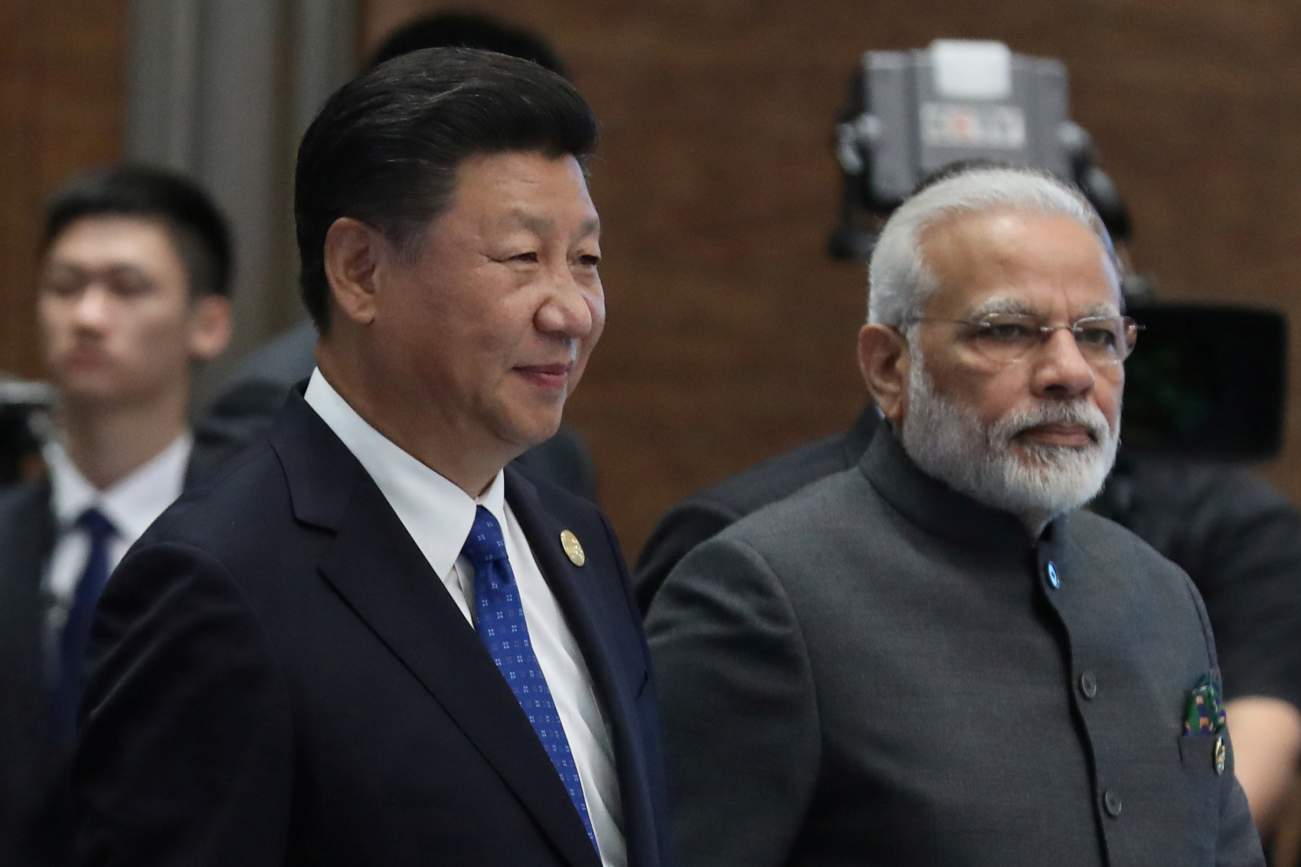 Making inroads into Iran has become a priority for both China and India, with both nations seeking to expand influence in their respective regions. Located at a critical juncture, Iran links Central Asia, the Caucasus and the Middle East. Furthermore, Iran’s abundant resources provide a significant amount of energy to China and India. These factors have always influenced Tehran’s relationships with Beijing and New Delhi, which have always fallen somewhere in between transactional and strategic. While the Sino-Indian relationship has been fraught with various challenges, the manner in which the two nations manage their differences in Iran—employing a mix of cooperation and competition—sheds light on their relative power and underlies the changing nature of their relations. Unlike traditional, binary inter-state strategic competition, the China-India rivalry in a sanctioned Iran likely will evolve into a long-term coexistence indicative of what may lie ahead for their strategic relationship in other, non-neighboring countries.
AFGHAN TROOPS, TALIBAN BOTH CLAIM ADVANTAGE IN MAJOR FIGHTING
KABUL - Afghan troops and Taliban fighters clashed across an eastern Afghan city on Saturday, as each side claimed the upper hand in the latest major confrontation in the 17-year war between U.S.-backed government forces and the country’s largest, most powerful insurgency. Fighting flared in seven neighborhoods of Ghazni, including three pockets within a half-mile of the governor’s residence, said Nasir Faqiri, a member of the provincial council. The most intense fighting, he said, was under way near a prison holding Taliban fighters on the southeastern edge of the city, 80 miles southeast of the capital Kabul. Nearly two days after Taliban fighters struck the city in a multipronged, nighttime attack that left many of its 143,000 residents cowering in fear, gloom was setting in, despite official assurances that the situation was under control. “Morale is sinking. There aren’t enough soldiers and police in the city right now to resist,” Mr. Faqiri said.
The Taliban Has Used Islam as a Weapon of War. This Is How Afghanistan Can Use It for Peace
By TARIQ ALI BAKHIET
 Ambassador Tariq Ali Bakhiet is the Director General of Political Affairs for the Organization of Islamic Cooperation, the second-largest intergovernmental body in the world; he was previously a diplomat at the Sudanese Mission to the United Nations and at the Sudanese Ministry of Foreign Affairs. At last week’s NATO Summit, world leaders discussed the country in which the alliance has had its longest-running military operation: Afghanistan. In Brussels, the country was seen as a global security challenge; Britain announced it would double its troops there. But away from the cameras, 4,000 miles away, in Mecca, a town that unites Muslims across the world, something unprecedented was happening in Afghanistan’s four decades of near-constant war. One hundred religious scholars, or ulema, from across political parties, sects and ethnicities — from those hailing from the hinterlands often controlled by the Taliban to non-Pashtu minorities — met in a safe location to discuss one thing: peace.
It’s Trump-Taliban Decision Time in Afghanistan: How To End America’s Longest War?
Donald Bolduc
In recent weeks, reports have surfaced in The Wall Street Journal and elsewherethat a senior State Department official, Deputy Assistant Secretary Alice Wells, has engaged in direct talks with Taliban representatives in Qatar. The State Department has confirmed only that she met in Doha with officials of the Qatar government. The Daily Beast also has reported on the months-long unofficial initiatives of retired U.S. Army Col. Chris Kolenda and Robin Raphel, a former U.S. ambassador, that helped open the way for these conversations. But talks need to be based on a plan and lead to a conclusion, and it is far from clear that any firm decision has been made by the United States government about what that should be, and how it might be reached. The missteps in Afghanistan have been significant and while we tread water trying to figure out what happened, or where to go, we are wasting precious resources: 2018 must be the year of change in our policy, strategy, leadership, and approach or we will never get off this road we have been on for the past 17-plus years.
France's Navy: Political Messengers in the South China Sea
Mathieu Duchatel
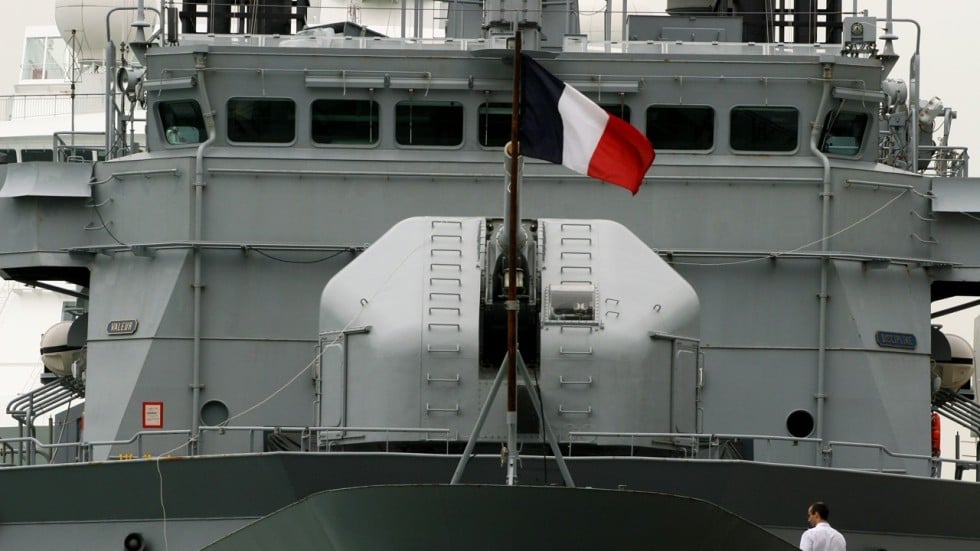 The deployment is part of Pitch Black, an annual multilateral joint exercise described by the Australian host as “pivotal to ensuring [the] air force remains ready to respond whenever the Australian government requires”. It will be followed by Mission Pegase in August, when a French Air Force contingent is to visit Indonesia, Malaysia, Singapore and India. The French Ministry of Armed Forces describes that mission as helping to “deepen our relations with our main partner countries”, “maintain operational condition so that the air force can be deployed anywhere in the world and showcase France’s power projection capacities and defence aeronautics industry”.
5 PLA Navy Projects to Watch in the Next 5 Years
By Rick Joe
 Much has been reported on the Chinese navy’s recent milestones in surface warship procurement, from the recent dual launch of two 055 destroyers, to advancements in the carrier program and the winding down of 054A frigate production. Production of Y-8Q/KQ-200 ASW patrol aircraft, 052D destroyers, 056 corvettes, and 071 amphibious assault ships have also continued. These projects were verified through “evidence” in the form of undeniable photos or video, often taken in early stages of construction, launch, or maiden flights. Furthermore, a crescendo of speculation for new People’s Liberation Army (PLA) projects often precede their photographic confirmation, and as of mid-2018 there are a number of projects that are likely to definitively emerge and become “confirmed” within the next few years.
How Xi Jinping is Shaping China’s Universities
By Nick Taber
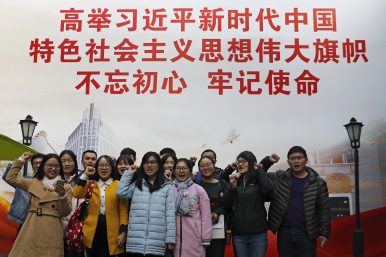 In this Nov. 19, 2017, photo, a group of university students raise their fists to take the oath in front of a giant propaganda billboard on display near the museum of the first National Congress of the Communist Party of China in Shanghai, China. The words on the billboard reads "Hold high Xi Jinping's new era and the great banner of socialism with Chinese characteristics, don't forget to remember the mission." Xi Jinping is one of the few Chinese leaders whose name appears alongside his own doctrine in China’s constitution. But supremacy in the legislative and political spheres is only the beginning of Xi’s influence. His government is poised to shape many areas of society. Giant billboards, once the domain of businesses vying for the attention of a spirited middle class, are now commonly found propagating Xi’s slogans. They are a ubiquitous symbol of the growing entrenchment of the state in Chinese daily life.
Can China Fix Its Propaganda Problem?
By Charlotte Gao
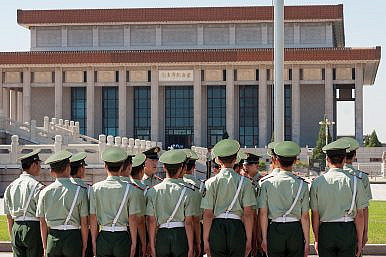 As The Diplomat reported earlier, China has been reshuffling its propaganda and censorship chiefs recently. Multiple non-Chinese mainland media outlets, including the South China Morning Post, cited anonymous sources explaining that the top authority’s motive for the reshuffle is to “improve the country’s image abroad and ensure online views toe the Communist Party’s line.” Chen Daoyin, a political analyst in Shanghai, told the SCMP that China’s propaganda work, which “overhyped China’s rise,” is “a strategic mistake or failure.” “Someone has to be responsible [for this mistake], and changes needed to be made,” Chen added.
What Are China’s Military Recruitment Priorities?
By Adam Ni
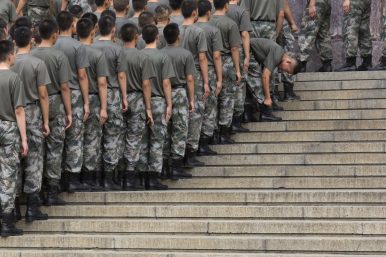 China’s military, the People’s Liberation Army (PLA), is aiming to improve the quality of its recruits in the 2018 conscription season (from August 1 to September 30). While conscription still technically exists under China’s Military Service Law, it has been rarely enforced by the authorities because China’s vast population produces more than enough volunteers for its military needs. On June 27, the annual National Conscription Work Video Conference was held. It set three priorities for this year’s conscription work. One priority is to increase recruits for the navy and the air force relative to the army. This is not surprising given that the PLA is currently in the process of rebalancing its force composition by downsizing its army and boosting its air, naval, and missile forces. To illustrate, since July last year, the PLA has cut around 300,000 troops, with the bulk coming from its ground forces.
China: We Might Help Assad with the War in Syria
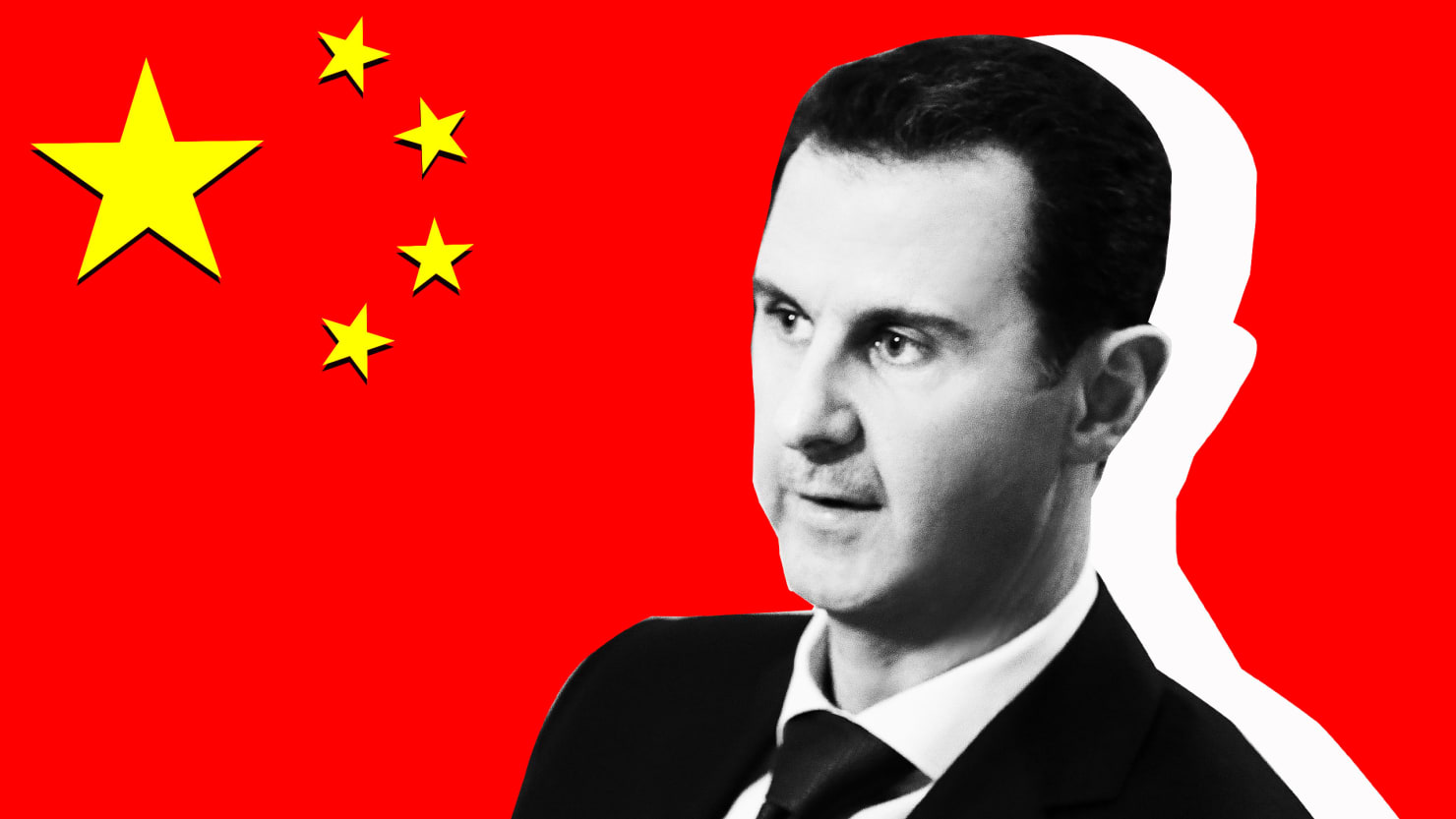 China has long avoided entangling itself in direct military conflict abroad. But the Chinese ambassador to Syria last week suggested that China is considering doing just that — in Syria. On August 1, Ambassador Qi Qianjin told the Syrian pro-regime news outlet Al-Watan that China’s “military is willing to participate in some way alongside the Syrian army that's fighting the terrorists in Idlib and in any other part of Syria.” Qi praised the China-Syria military cooperation. The Chinese military attache in Syria, Wong Roy Chang, said that cooperation between the Syrian and Chinese militaries was “ongoing,” adding, “We – China and its military – wish to develop our relations with the Syrian army. As for participating in the Idlib operation, it requires a political decision.”
Xi Jinping's Path for China
 Since assuming power, Chinese President Xi Jinping has taken many steps to reshape his country, de-emphasizing growth to build a more sustainable economy and engaging in more proactive diplomacy. He has also been rewriting political rules to establish himself as a strongman. But as China's economy slows while the United States escalates its trade attacks, policy debates inside the country are intensifying and testing core pillars of Xi's economic and foreign policies — as well as his own political strength. Despite the challenges, China cannot afford to dial back its progress in economic development and global involvement, especially considering its growing strategic competition with the United States.
Why Uighur Muslims Across China Are Living in Fear
Gene Bunin
It was about a year ago that I first walked into Karim's restaurant, intending to write about it as part of the food guide I was putting together about ethnic Uighur restaurants in the traditionally Chinese “inner China” of the country's east and south. Having already spent a decade researching the Uighurs – a largely Muslim ethnic minority group based mainly in the westernmost Xinjiang region, outside inner China – this food-guide project was intended as a fun spin-off from my usual linguistic studies. Or even a “treasure hunt”, you might say, given the rarity of Uighur restaurants in such major inner-China cities as Shanghai, Beijing and Guangzhou, where the Uighurs are migrants and where the Han Chinese, the dominant ethnic group that account for more than 90% of China's population, are the great majority.
SYRIA’S WAR COULD BE ENTERING ITS LAST AND MOST DANGEROUS PHASE
BEIRUT - As Syria’s war enters what could be its last and most dangerous stretch, the Syrian government and its allies will have to contend for the first time with the presence of foreign troops in the quest to bring the rest of the country back under President Bashar al-Assad’s control. The government’s recent defeat of rebels in the southwest of Syria has put Assad unassailably in control of a majority of the country, his hold on power now facing no discernible military or diplomatic threat. But at least a third of Syria remains outside government control, and those areas are occupied both by Turkish and American troops. Turkey has deployed soldiers in the northwest, in parts of the rebel-held province of Aleppo and in Idlib, which Assad has identified as the next target of an offensive. About 2,000 U.S. Special Operations forces hold sway in the northeast, in support of their Kurdish allies fighting the Islamic State.
THE FUTURE OF STABILITY OPERATIONS: CAN THE U.S. DO BETTER?
Over the past two decades, the U.S. has led or participated in an array of civilian and military efforts in unstable and conflict-ridden nations around the world, to rectify human rights abuses, restore peace, security, governance, and stability. The U.S. has been officially involved in Somalia, Haiti, Bosnia, Kosovo, East Timor, Afghanistan, and Iraq.[i] However, deeply rooted strategic and operational issues surround the U.S. approach to stabilization, which, if not addressed promptly, could undermine the sustained success of future stability operations. While there has already been a response to some of these issues in an inter-agency report released on June 19, 2018, the “Stabilization Assistance Review” (SAR), it has been met with some resistance in the National Defense Strategy (NDS). The new report may not be enough for the U.S. government to see a return of investment and success in future stability operations.
CFR BACKGROUNDER: NIGERIA’S BATTLE WITH BOKO HARAM
Boko Haram is a top-tier threat to Africa’s most populous country. An insurgency led by the Islamist group has claimed tens of thousands of lives and displaced millions more in recent years. At times, the violence has spilled over Nigeria’s borders into other countries in the Lake Chad Basin. Some experts say Boko Haram’s brutal campaign, which has included attacks on schools, the burning of villages, and hundreds of abductions, is a response to longstanding religious tensions, political corruption, and widening economic disparity in Nigeria. The government’s heavy-handed police and counterterrorism tactics are also fuel for the group’s flame, analysts say…
A ‘WEAKNESS OF THE WEST’? U.K. DEFENSE MINISTER WARNS OF LACK OF GRAND STRATEGY
WASHINGTON - In an era where talking about great power competition is all the rage, the U.K.’s top defense official has a stark warning: Western nations need to start thinking about the big picture. Speaking in Washington on Aug. 7, Gavin Williamson, the U.K. defense minister, warned that not enough is being done to plan for long-term efforts by Western nations to counter the potential threats from Russiaand China. “The debates about grand strategy among NATO partners, among the West, among our friends and allies, there’s not enough talk about it,” Williamson said during a visit to the Atlantic Council. “You want to be having that conversation because if we do not have that conversation, if we do not start planning for it, we will be ill-prepared for it.
Why countries still must prioritize action to curb nuclear terrorism
By Sara Z. Kutchesfahani, Kelsey Davenport
 When a Superman-shaped drone crashed into a French nuclear plant on July 3 of this year, officials were lucky it was just Greenpeace demonstrating vulnerabilities at the facility, and not a terrorist group intent on attacking the site. This incident highlights why the 2010 Nuclear Posture Review’s assessment that nuclear terrorism is “today’s most immediate and extreme danger” remains relevant: It underscores the importance of the sustained and persistent six-year effort from 2010 to 2016 to reduce the threat posed by nuclear terrorism, far from the headline nuclear issues of Iran, North Korea, and arms control with Russia.
The Long Shadow of 9/11
By Robert Malley and Jon Finer
When it comes to political orientation, worldview, life experience, and temperament, the past three presidents of the United States could hardly be more different. Yet each ended up devoting much of his tenure to the same goal: countering terrorism. Upon entering office, President George W. Bush initially downplayed the terrorist threat, casting aside warnings from the outgoing administration about al Qaeda plots. But in the wake of the 9/11 attacks, his presidency came to be defined by what his administration termed “the global war on terrorism,” an undertaking that involved the torture of detainees, the incarceration of suspects in “black sites” and at a prison camp in Guantánamo Bay, the warrantless surveillance of U.S. citizens, and prolonged and costly military campaigns in Afghanistan and Iraq.
DHS’ Big Data Integration Challenge
FRANCIS X. TAYLOR
Department of Homeland Security Secretary Kirstjen Nielsen recently traveled from Washington D.C. to New York with her senior team in tow, to announce the creation of the National Risk Management Center. It is intended to be DHS’ tip of the spear when it comes to information sharing between the public and private sectors about emerging and sometimes urgent, cyber security threats. In an opinion piece posted on CNBC, Nielsen said that the U.S. is not “connecting the dots” quickly enough and said “Between government and the private sector, we have the data needed to disrupt, prevent and mitigate cyberattacks. But we aren’t sharing fast enough or collaborating deeply enough to keep cyberattacks from spreading or to prevent them in the first place.” As DHS takes on a new collective defense strategy by putting a premium on public-private information sharing efforts, The Cipher Brief wanted to know a little more about how DHS itself stores and accesses the vast amounts of data it holds.
Preparing for Free-Play Field Exercises: The Case for Decision-Forcing Cases
 The pseudonymous ‘Steve B’ hits three nails squarely on their heads. In ‘A New Approach to Command Post Training,’ (Wavell Room, 10 July 2018) he provides us with a report on the current condition of battalion-level command post exercises in the British Army, a diagnosis of the malady that plagues such undertakings, and a promising prescription for a cure for that particular ailment. To be more specific, ‘Steve B’ describes ‘overly scripted’ events ‘with limited scope for free play or imagination from either side, argues that these fail ‘adequately simulate the mental and physical strain of combat’, and proposes that they be replaced with a smaller number of exercises in which complete brigades engage each other in full-scale, free-play field exercises.
JAIC: Pentagon debuts artificial intelligence hub
By Jade Leung
 In October 2016, the newly formed Defense Innovation Board released its first set of recommendations. (The board, an advisory body to senior leadership in the US Defense Department, contains representatives from the private sector, academia, and nonprofits.) One recommendation that stood out was the establishment of “a centralized, focused, well-resourced organization” within the Defense Department “to propel applied research in artificial intelligence (AI) and machine learning.”
The Web is still a DARPA weapon.
Stephen J. Lukasik
The goal was to exploit new computer technologies to meet the needs of military command and control against nuclear threats, achieve survivable control of US nuclear forces, and improve military tactical and management decision making. If you know the history of that period, with the ongoing Cold War, you know that the Internet has been a great geopolitical success, beyond any hope. The International Network became more than a medium, it is a message in itself, a message of friendship and cultural collaboration between Nations.A message against the internationalism of Communism that back then was fighting for the “abolition of the state”. All this might seem weird or even incredible to young programmers born after 1989, but back then, if you were not from USA or USSR, it was very hard to understand who was your enemy and who was your friend.
An Open Secret: British Open Source Intelligence during the Second World War
DR BEN WHEATLEY
 Ben Wheatley is a Honorary Research Fellow in the School of History, University of East Anglia and a former Teaching Fellow at the Defence Studies Department, King’s College London. His 2017 book, British Intelligence and Hitler’s Empire in the Soviet Union, 1941-1945 published by Bloomsbury Academic will be available in paperback from August 2018. You can follow him on Twitter at @DrBenWheatley. Today we live in a networked world. Our reliance on the internet and social media has made open source intelligence (OSINT) a key resource for intelligence and security agencies across the world. However, the importance of OSINT is far from a modern development. The British government, for example, has placed the serious study of OSINT at the centre of its intelligence arsenal for the last 100 years (2018 being the centenary), but until now, to little fanfare.
New Navy Boards Will Send Underperforming Officers to Early Retiremen
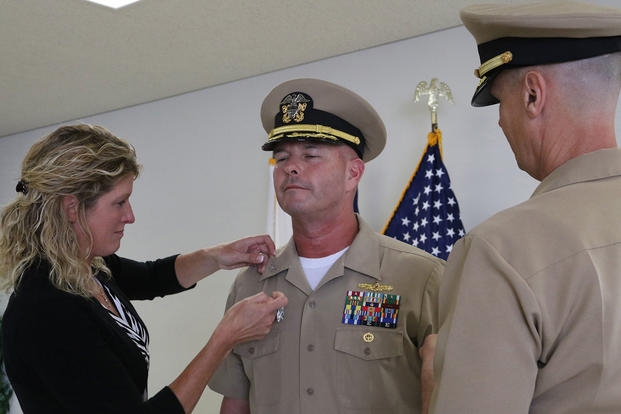 The Navy as a whole is poised to grow in coming years -- but top brass say there's still no room for senior officers who don't carry their weight. In a new move aimed at rooting out officers who are underperforming or causing problems at their units, the Navy on Thursday announced the creation of a new Selective Early Retirement Board, set to convene this fall. The move was made possible by a provision in the Fiscal 2018 National Defense Authorization Act that gives military service secretaries the ability to look within subsets of paygrades to find officers who aren't making the cut, Chief of Naval Personnel Vice Adm. Robert Burke told reporters this week.
14 August 2018
India's Strategic Roadmap
by T. V. Paul
In recent years, India has developed multiple strategies to deal with China’s rise and threatening postures on both its land border and in the Indian Ocean. They include limited balancing based on asymmetrical arms buildups and informal coalitions with like-minded states and regular diplomatic engagement with Beijing both bilaterally and through multilateral forums. But the most significant non-traditional soft balancing efforts have been in building limited strategic partnerships with the United States and Japan as well as participation in ASEAN Forums, along with other regional groupings such as the Shanghai Cooperation Organization (SCO). The strategy is also based on institutional denial by not agreeing to China’s membership in the South Asian Association for Regional Cooperation and, most prominently, refusing to join the Belt and Road Initiative (BRI). There have been some efforts at creating counter economic cooperation initiatives with regional states as alternatives to BRI. The Africa Growth Corridor with Japan was planned in 2017 as a limited alternative to BRI, although it is yet to take full shape.
How the River Ganges can really be rejuvenated
By HIMANSHU THAKKAR
The Ganges remains one of the most polluted rivers in the world, despite being a key lifeline for half a billion people in the South Asian subcontinent. In India, pollution in the river and problems with year-around flow have persisted despite decades of government initiatives. In 2014, the newly elected government of Prime Minister Narendra Modi launched a massive 200 billion rupee (US$2.9 billion) Namami Gange Program for “integrated conservation” of the river, also known as Ganga, with two main objectives: cleaning the river and ensuring year-around flow. Four years down the road, however, there has been little success in rejuvenating the ailing river.
Brazen Taliban attack raises pressure on Afghan forces

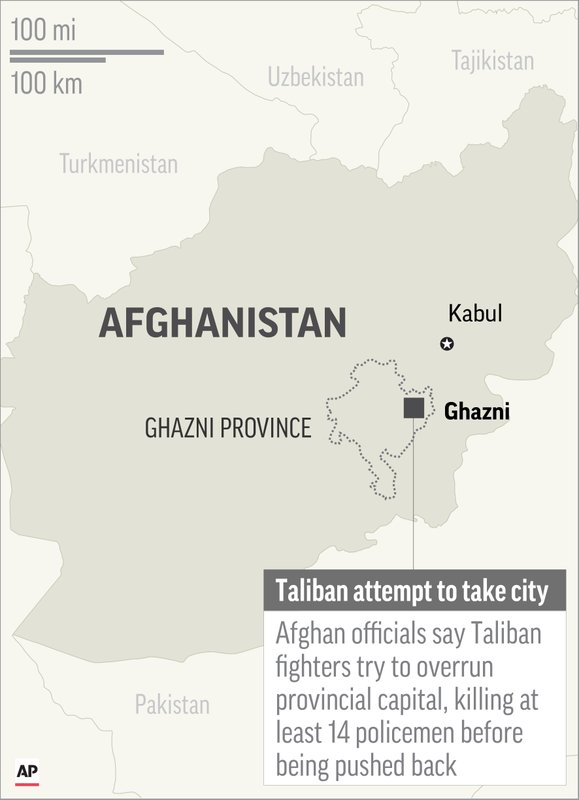
KABUL, Afghanistan (AP) — A brazen and bloody overnight assault Friday by the Taliban on a key provincial capital in central Afghanistan has increased pressure on U.S.-backed Afghan forces that are withering under relentless attacks, prompting President Ashraf Ghani to call an emergency meeting of his security officials.
Subscribe to:
Posts (Atom)