4 April 2021

How Europe has mishandled the pandemic


Look around the world at the devastation wrought by the covid-19 pandemic and something odd stands out. The European Union is rich, scientifically advanced and endowed with excellent health-care and welfare systems and a political consensus tilted strongly towards looking after its citizens. Yet during the pandemic it has stumbled.

In the brutal and blunt league table of fatalities, the eu as a whole has done less badly than Britain or America, with 138 recorded deaths per 100,000, compared with 187 and 166 respectively—though Hungary, the Czech Republic and Belgium have all fared worse than either. However, it is in the grip of a vicious surge fuelled by a deadly variant. That underlines the peril of Europe’s low rate of vaccination. According to our tracker, 58% of British adults have had a jab, compared with 38% of Americans and just 14% of eu citizens. European countries are also behind on the other criterion of a covid-19 scorecard, the economy. In the last quarter of 2020 America was growing at an annualised rate of 4.1%. In China, which suppressed the virus with totalitarian rigour, growth was 6.5%. In the euro area the economy was still shrinking. A year ago Pedro SΓ‘nchez, Spain’s prime minister, called covid-19 the worst crisis to afflict the eu since the second world war. How has its response gone so wrong?

Focus on Influence, Not Power, in the Middle East


Among the most enduring of Joe Nye’s contributions to strategy is one he popularized 30 years ago: his concept of “soft power.” Power was about countries’ ability to “do things and control others,” Nye wrote, and so called “hard power” instruments such as military strength were of diminishing importance. The role of “soft power” instruments such as technological, economic, and educational strength were rising.

The U.S. experience in the Middle East for the last two decades presents a checkered record for hard and soft power alike, and part of the problem is focusing too narrowly on the issue of “power” itself.

People speak about U.S. power and influence in the Middle East as if they’re the same thing, but in fact, they’re not. Because the U.S. government has seen them as synonymous, two decades of U.S. government efforts to project power in order to build influence has diminished both. The United States still retains tremendous influence in the Middle East, and a greater focus on building influence rather than preserving power would do more than merely bolster U.S. interests there. It would also benefit the United States in a world of rising great power tensions.

Artificial intelligence in the Russian army

BY PAVEL LUZIN 

Pavel Luzin on the challenges and idiosyncrasies of the development of advanced military command-and-control systems in Russia

The use of artificial intelligence (AI) is expanding in commercial, scientific and military fields. AI technologies cover the analysis of large volumes of varied visual and speech data, machine learning and the autonomous operation of unmanned aerial vehicles (UAVs) and unmanned ground vehicles (UGVs), among other things. AI is indispensable because of the complexity of modern arms systems, the exponentially expanding amount of information on troop status (in peacetime and on the battlefield) and enemy actions, and, in general, due to the advancement of the network-centric concept of warfare. The latter involves the integration of information on all combat forces and assets, enabling them to operate as a single system that exchanges real-time data.

Frankly speaking, both excessive optimism and pessimism should be avoided when it comes to the prospects of the development of these technologies; AI is neither a panacea nor a magic wand. AI solutions are simply technologies. When used properly, they assist weapons system operators, commanders as well as military and political leadership with the complex and time-consuming calculation of all available quantitative information in the decision-making process. However, they cannot improve military and state governance, nor can they devise political aspects of military campaigns, nor can they substitute the thinking and actions of officers and soldiers on the battlefield.

Lithium battery costs have fallen by 98% in three decades


BATTERIES HAVE come a long way in 30 years. In the early 1990s the storage capacity needed to power a house for a day would have cost about $75,000. The cells themselves would have weighed 113kg (250lbs) and taken up as much space as a beer keg. Today the same amount of power can be delivered at a cost of less than $2,000, from a 40kg package roughly the size of a small backpack.

Such technological progress is crucial for decarbonising the global economy. One of the shortcomings of renewable energy sources is their inconsistency: the sun does not always shine and the wind does not always blow. Batteries can help solve this problem by storing up surplus power when supply is high, for use when it is low. A steadier supply of electricity could eliminate the need for “peakers”—generation plants powered by fossil fuels that utilities bring online only when demand rises sharply, for example on hot days when air-conditioners are cranked up. Such carbon-belching facilities, which run only for a few hours each year, are expensive to build and run, raising costs for consumers.

Infographic Of The Day: The Worlds Key Maritime Choke Points


Today's infographic looks at the world's most vulnerable maritime bottlenecks - also known as choke points - as identified by GIS.


Digital supply chain can have a sting in the tail

Jonathan Porter

A company can have the best cyber security money can buy, but there is still one insidious danger lurking in the digital landscape that many business owners and CTOs can overlook – the threat from the electronic supply chain.

The danger, says Kieran Deale, senior strategic consultant for cyber security firm Mandiant, is that all companies have a digital supply chain these days, whether they know it or not. This means attackers can develop other ways of compromising a company, without directly attacking it.

A number of high-profile attacks have targeted third-party vendors to hurt companies. Getty.

“Really, it’s exploiting trust between people and companies,” says Deale, whose career has spanned professional services, law enforcement, critical infrastructure security advisory and security operations.

“A lot of companies do blindly trust their vendors without having assurance layers. That’s where the damage comes from.”

Protecting Australian firms’ long digital logistics chain is complex, says Deale, and relies on boosting threat awareness, helping the client manage their cyber defence programs and improving technology.

“No two companies are the same,” he says. “What we do is to make them realise that it’s not just one solution, it’s not just a piece of technology that can suddenly be deployed inside a company to fix the problem.

Is Cyberwar War?

By Steven Cherry

At a conference of chief technology officers in 2016, General Michael Hayden, former head of, at different times, both the NSA and the CIA, told the audience, “Cyberwar isn’t exactly war, but it’s not not-war, either.”

Cyberattacks, at the nation-state level, were already almost a decade old at that point. In 2007, over the course of 22 days a Russian attack on Estonia took out commercial and government servers with distributed denial of service attacks; not just public websites but also what one report called “more vital targets, such as online banking and the Domain Name System,” without which people can’t find or look up websites and online servers.

The attack carried into the cyber realm an already heated political conflict between the two nations, and Estonia’s economy was as much under attack as its information infrastructure.

In 2009, China stole plans for an advanced U.S. fighter jet, and Chinese hackers have subsequently attacked Google, Intel, Adobe, Morgan Stanley, the Wall Street Journal, and the Army Corps of Engineers.

In 2010, we learned of the U.S.–Israeli attack on Iran and its uranium centrifuges, known as Stuxnet.

In 2015, a concerted attack, believed to have been Russian, on the power grid of another east European nation, Ukraine, left more than 200,000 people without electricity for at least several hours. It was the first attack on a grid, and perhaps the first large-scale SCADA attack—that is, on the control systems of critical infrastructure. Follow-up attacks struck the railway, television, and mining sectors.

In 2016, right around the time General Hayden was warning American audiences of the dangers of cyberwar, Russia, in conjunction with a private firm, Cambridge Analytica, and elements of the U.S. Republican party, crafted a disinformation campaign to influence the presidential election that year. Russia and Cambridge Analytica also undermined the Brexit referendum in the U.K. earlier that year.

Since then, we’ve seen entire families of malware appear, such as Trickbot. Arguably even worse was the recent SolarWinds hack, which in effect was an attack on what we might call the software supply chain. As many as 18 000 different organizations using SolarWinds may have been affected. Worse, the effects of the hack may have been reached out into other networks and therefore been exponential. For example, both Microsoft and security firm FireEye were affected, and they each have many enterprise customers.

The Entrepreneurs Chalking Up A Winning Score In The War Against Cyber Crime

Alison Coleman

Companies spend millions fighting cyberattacks, yet many of them still fall victim. The reason? They are not continuously monitoring their systems to spot vulnerabilities, but relying instead on point-in-time snapshots that become outdated very quickly in the digital age. It was this situation that led Aleksandr Yampolskiy and Sam Kassoumeh to launch SecurityScorecard, a company that takes an external view of security threats and provides daily security ratings similar to a credit score.

The pair met while working at e-commerce firm Gilt Groupe, where they realized they shared a vision for a better approach to cybersecurity. They also recognized that in their corporate roles, the negligence of others could cost them their jobs.

“We had various tools at our disposal to help us do our jobs, however, our marketing team would sign contracts with vendors that we didn’t think we had enough visibility around,” says Yampolskiy. “How could we understand how working with them would put our data at risk if there was no way to really measure or even understand how secure they were?”

They started looking for a way of computing a security score and having a holistic understanding of cyber risk, similar to how credit scores help financial institutions understand the risk of individuals.

3 April 2021

Defining China’s Intelligentized Warfare and Role of Artificial Intelligence

 Maj Gen P K Mallick, VSM (Retd), Consultant, VIF

China feels that U.S. is its main adversary ... China is trying to match U.S. technological capabilities with its own strength in AI as a leap frog technology and a new concept of war ... But there will be lot of problems in implementing this concept of Intelligentization Warfare to reality. However, President Xi Jinping has thrown the gauntlet, and it is up to the U.S. the other adversaries and the rest of the world to follow this concept keenly.


Armenian-Azerbaijani Conflict over Nagorno-Karabakh: Geopolitical Implications

 Maj Gen P K Mallick, VSM (Retd), Consultant, VIF


The geostrategic sensitive region of region of Nagorno-Karabakh lies at an intersection of political, ethnic and religious borders of Iran, Turkey, Russia and Georgia. On September 27, 2020 the war broke out with Azerbaijan launching an offensive retake Nagorno-Karabakh and surrounding previously Azerbaijani-populated regions. The war was won by Azerbaijan.

Russia brokered a peace deal with Armenia and Azerbaijan agreeing to a Russian-mediated settlement to end the six-week war. The cease-fire is seen as a victory in Azerbaijan and as a capitulation in Armenia. Russia’s leading role in stopping the fighting also shows that Moscow continues to be the most influential player in the southern Caucasus.

This monograph provides the background of the conflict, its geopolitical dimensions, details of the cease fire deal and the role of different stakeholders in this conflict.

Unresolved questions in US-India relations

ANITA INDER SINGH

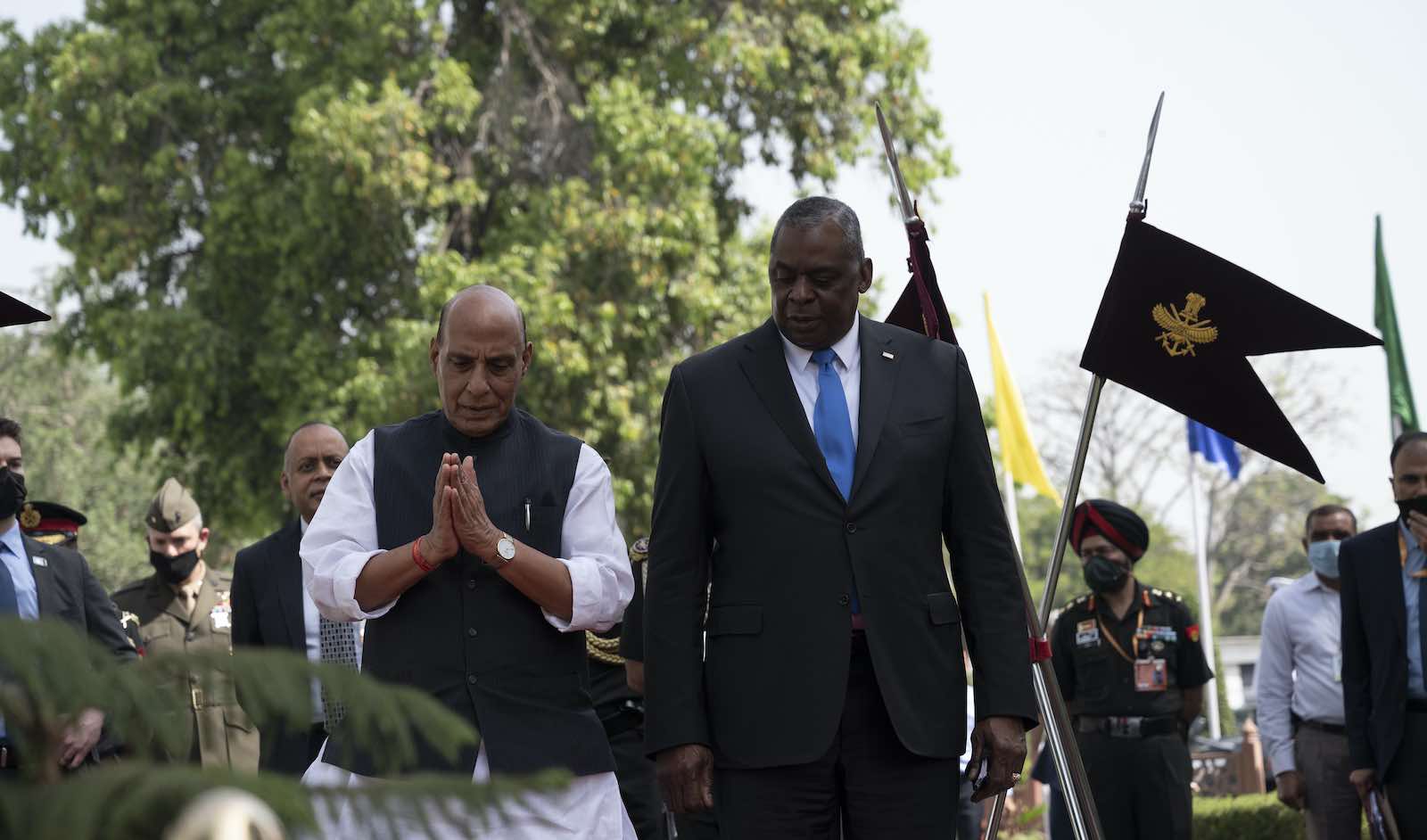
US Defense Secretary Lloyd Austin’s recent visit to New Delhi was a chance for the United States and India to discuss the nature and depth of their strategic partnership – particularly against the backdrop of tensions with an aggressive China.

Austin visited New Delhi soon after leaders of the “Quad” – the Quadrilateral Security Dialogue involving Australia, India, Japan and the US – pledged to promote a “free, open, rules-based order, rooted in international law to advance security and prosperity and counter threats to both in the Indo-Pacific and beyond”. An editorial in China’s state-steered Global Times scoffed at the intentions of the Quad. Yet Austin’s official travels clearly reflected the Biden administration’s wish to strengthen ties with America’s partners and allies, having arrived in New Delhi via the US Indo-Pacific Command headquarters in Hawaii and a trip to treaty allies Japan and South Korea.

Austin’s trip to India did leave unanswered several big questions about the closeness of US-India ties. The US sees India as a major defence partner, thanks to converging strategic interests, and Washington wants to “encourage India’s leading role” in the Indo-Pacific region. In New Delhi, Prime Minister Narendra Modi stressed the importance of bilateral defence cooperation.

Some of Austin’s statements in India did appear surprising. If, as he said at a press conference, India and China were “never” on the verge of war during the violent stand-off in eastern Ladakh last year, why did former president Donald Trump offer to mediate between the two countries? And why has China’s aggressiveness in South and Southeast Asia helped drive India towards closer strategic collaboration with other Quad member states? Was Austin downplaying the seriousness of the confrontation with China, or does he not fully grasp the challenge?

India’s Space Cooperation With the US – and the Quad – Intensifies

By Rajeswari Pillai Rajagopalan

As the United States and India get closer, they appear to be taking their space cooperation to a higher orbit. India is also increasing its collaboration in space with the other two members of the Quad, Japan and Australia.

The joint statement from the third iteration of the India-U.S .2+2 strategic dialogue held in October 2020 included some consequential cooperation in space. The decision to start working together on issues such as space situational awareness (SSA) is important in ensuring safe, secure, and sustainable use of outer space. In 2019, the Indian Space Research Organization (ISRO) set up its own SSA and management directorate at its headquarters in Bengaluru. In addition to the India-U.S. civil space dialogue, the four ministers who were part of the 2+2 dialogue agreed to also discuss potential areas of cooperation in space from a defense and security perspective. India and the United States are already engaged in a space security dialogue, which began in 2015. This was a first for India with another country.

In March this year, ISRO finished work on a synthetic aperture radar (SAR) that can capture high-resolution images of the Earth. According to an ISRO statement, on March 4, the S-band SAR payload was shipped from ISRO’s Ahmedabad-based Space Applications Center (SAC) to NASA’s Jet Propulsion Laboratory (JPL) in Pasadena, California for integration with the latter’s L-band SAR payload. In a recent interview, ISRO Chairman Dr. K. Sivan said that once the two radars are integrated and ready, NASA would send it back to India and “it will be entirely assembled as a satellite at the UR Rao Space Center in Bengaluru.”

The Misunderstood History of Pakistan-US Relations

By Touqir Hussain

Writing about Pakistan-U.S. relations is like composing a piece of literary criticism of Shakespeare’s “Hamlet,” always looking for new answers to old nagging questions, and falling short. Nevertheless, a serious inquiry into the history of the bilateral relationship may help our quest for answers. The fact is that the history of Pakistan-U.S. relations is much misunderstood.

At present, Pakistan-U.S. relations are very much on Islamabad’s mind as it increasingly fears being caught in the crossfire between the United States and China, while having to cope with the impact of deepening India-U.S. relations, already reaffirmed by the Biden administration, and the looming crisis of potential civil conflict in Afghanistan following an American withdrawal.

Yet there is also Pakistan’s hope for a U.S. role in the improvement of India-Pakistan relations and for the revival of ties with Washington. Those hopes may have partly inspired the Kashmir ceasefire deal and the peace overtures pitched by the leadership at the recent Islamabad Security Dialogue. And now comes a deal between Iran and China, opening up the possibility that the United States has lost Iran to China and may not like Pakistan to be swept away into Beijing’s strategic orbit, too. These may arguably be the worst of times, and the best of times, for Islamabad.

Probing the history of Pakistan-U.S. relations will not resolve Pakistan’s policy dilemmas or realize its hopes. But it may help to understand the reality of shifting U.S. interests in the region and why Pakistan has sometimes been important and sometimes not, and what to expect from Washington, and what not to expect, as the Biden administration concludes its review of foreign policy, including the relationship with Pakistan.

Neither Strategic Nor Transactional

Sticky Bombs Latest Weapon in Afghanistan’s Arsenal of War

By Kathy Gannon

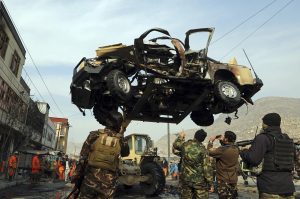
Sticky bombs slapped onto cars trapped in Kabul’s chaotic traffic are the newest weapons terrorizing Afghans in the increasingly lawless nation, as Washington searches for a responsible exit after decades of war.

The primitive devices, sometimes made in mechanics’ workshops for little money, are used by militants, criminals or those trying to settle personal scores. Over the past year, one or more cars have been exploding in Kabul almost every day and residents are terrified.

The administration of President Joe Biden has alternated between coaxing and sharp words — even offering a ready-made peace proposal — to hurry the Taliban and the Afghan government toward an end to the conflict. In the Afghan capital last weekend, U.S. Secretary of Defense Lloyd Austin said America wanted a “responsible end” to Afghanistan’s relentless war. But in the meantime violence is escalating and taking the occasional new twist, such as the sticky bombs.

Kabul, a city traumatized by war, has been the scene of many suicide bombings and shooting attacks. But the heavy use of sticky bombs is relatively new, said former interior minister Masoud Andarabi. “What is new is that they (attackers) have created a simple model,” he said, noting that sticky bombs are easy to make for about $25 and easy to carry.

Some victims are targeted, while others appear to have been chosen at random, with the aim of terrorizing an entire population, Andarabi said. One motive appears to be to undermine faith in peace efforts among ordinary Afghans, with the Taliban and the government blaming each other for the chaos.

The Taliban Think They Have Already Won, Peace Deal or Not

By Adam Nossiter

KABUL, Afghanistan — The Taliban’s swagger is unmistakable. From the recent bellicose speech of their deputy leader, boasting of “conquests,” to sneering references to the “foreign masters” of the “illegitimate” Kabul government, to the Taliban’s own website tally of “puppets” killed — Afghan soldiers — they are promoting a bold message:

We have already won the war.

And that belief, grounded in military and political reality, is shaping Afghanistan’s volatile present. On the eve of talks in Turkey next month over the country’s future, it is the elephant in the room: the half-acknowledged truth that the Taliban have the upper hand and are thus showing little outward interest in compromise, or of going along with the dominant American idea, power-sharing.

While the Taliban’s current rhetoric is also propaganda, the grim sense of Taliban supremacy is dictating the response of a desperate Afghan government and influencing Afghanistan’s anxious foreign interlocutors. It contributes to the abandonment of dozens of checkpoints and falling morale among the Afghan security forces, already hammered by a “not sustainable” casualty rate of perhaps 3,000 a month, a senior Western diplomat in Kabul said.

The group doesn’t hide its pride at having compelled its principal adversary for 20 years, the United States, to negotiate with the Taliban and, last year, to sign an agreement to completely withdraw U.S. troops from Afghanistan by May 1, 2021. In exchange, the Taliban agreed to stop attacking foreign forces and to sever ties with international terrorist groups such as Al Qaeda.

The Biden administration has yet to definitively say whether it will meet that deadline, just weeks away.

China and Iran: A Major Chinese Gain in “White Area Warfare” in the Gulf


The most important news this weekend may have had nothing to do with Covid-19 or most media headlines. China may well have made a major new strategic gain in the Gulf on Saturday, and one that gives it great influence in the MENA region as well as major new leverage in competing with the United States. The New York Times reported on March 27, 2021, that China’s Foreign Minister Wang Yi and Iran’s Foreign Minister Javad Zarif signed the investment agreement with Iran.1

The terms of the agreement were not made public, but it seems to be largely economic.2 It seems to call for Chinese investment of $400 billon in Iran over a 25 year period in return for lower Iranian petroleum export prices. An earlier draft called for Chinese investment akin to some 100 projects, and the New York Times reported that they would include key infrastructure programs like airports, high-speed railways and subways, free-trade zones in Maku in northwestern Iran; projects in Abadan, where the Shatt al-Arab river flows into the Gulf, and on the island Qeshm in the Gulf. The agreement also may lead to a major Chinese investment in Iran’s petroleum sector, both to modernize existing facilities and to expend oil and gas production.

Even if the agreement has no immediate military impact, it represents a major shift in strategic attitudes and lays the groundwork for such cooperation in the future. Foreign Minister Wang made it clear during his meeting with Iran’s President Hassan Rouhani that, “China firmly supports Iran in safeguarding its state sovereignty and national dignity.” He also called for the U.S. to remove all sanctions on Iran, as well as to “remove its long arm of jurisdictional measures that have been aimed at China, among others.” Zarif, in turn, described Chia as a “friend for hard times.”

China Wants a ‘Rules-Based International Order,’ Too


BY STEPHEN M. WALT 

A ready ability to use the phrase “rules-based international order” seems to have become a job requirement for a top position in the U.S. foreign-policy apparatus. One need look no further than Secretary of State Antony Blinken’s opening statement during his recent meeting with top Chinese officials. “Our administration is committed to leading with diplomacy to advance the interests of the United States and to strengthen the rules-based international order,” he said. The alternative, he continued, “is a world in which might makes right and winners take all, and that would be a far more violent and unstable world for all of us.” China, he seemed to be saying, is not only out to dismantle the U.S.-led order but also out to bring back the days of “might makes right.”

But the distinction between the United States’ supposed commitment to a system of rules and China’s alleged lack thereof is misleading in at least three ways. First, it overlooks the United States’ own willingness to ignore, evade, or rewrite the rules whenever they seem inconvenient. If we are honest with ourselves, we have to acknowledge that Washington sometimes thinks it is perfectly okay for might to make right and for winners to take all. The collapse of the Soviet Union, when the United States took full advantage of a weakened post-Soviet Russia, is a perfect example.

Second, as Harvard University’s Alastair Iain Johnston has shown, China accepts and even defends many principles of the existing order, although of course not all of them. That situation may change in the future, of course, but even a vastly more powerful China would undoubtedly seek to retain whatever features of the present order serve its interests.

Beijing Is Getting Better at Disinformation on Global Social Media

By Sarah Cook

When China-linked networks of social media bots and trolls appeared on the global disinformation scene in 2019, most analysts concluded that their impact and reach were fairly limited, particularly in terms of engagement by real users and relative to more sophisticated actors in this realm, like the Russian regime. As many China watchers anticipated, that assessment now seems to be changing.

Several in-depth investigations published over the past two months by academic researchers, think tanks, news outlets, and cybersecurity companies have shed light on the evolution of disinformation campaigns originating in China. Some offer new insights on campaigns that peaked last spring, while others analyze more recent messaging, tactics, and accounts that have emerged since October 2020.

A close reading of these investigations points to several emergent features of China-linked disinformation campaigns – meaning the purposeful dissemination of misleading content, including via inauthentic activity on global social media platforms.

Collectively, the studies indicate that significant human and financial resources are being devoted to the disinformation effort; the overall sophistication and impact have increased; and linkages between official accounts and fake accounts are more evident, rendering plausible deniability by the Chinese government more difficult.

THE SHAPE OF THINGS TO COME: WHY THE PENTAGON MUST EMBRACE SOFT POWER TO COMPETE WITH CHINA

Kyle J. Wolfley

Last March, the same week that the World Health Organization declared Covid-19 a global pandemic, three thousand Chinese and Cambodian troops began Exercise Golden Dragon, a series of military drills focused on “counterterrorism and humanitarianism.” The exercises marked an expansion over those in 2019, and they came three years after Cambodia abruptly canceled its annual exercises with the United States. “What we are doing here is all about our cooperation and relationship,” declared Cambodia’s defense minister. “I can tell you that the Chinese military is helping our troops to build up their capacity.” As the pandemic forced the United States to scale down its massive Defender exercise in Europe, the Chinese military continued its multinational exercise programs with Russia and Pakistan as well, despite China’s strict domestic lockdowns.

These examples highlight how China is wielding a form of military power commonly overlooked in assessments of its rise. Today, states leverage their armed forces not only for warfighting or coercion, but also to manage international relationships. Military power includes not only the capacity to conquer and compel, but also the ability to create advantage through attraction and persuasion—a concept I call “shaping.” Unlike military strategies of warfighting or coercion, shaping relies less on force and more on the use of persuasion to change the characteristics of other militaries, build closer ties with other states, and influence the behavior of allies.

Kyrgyzstan-Uzbekistan Border: ‘Resolved 100 Percent’

By Catherine Putz

Kyrgyzstan and Uzbekistan’s long-running border dispute has been, according to Kyrgyz authorities, finally put to rest.

Late last week, chairman of Kyrgyzstan’s State Committee for National Security (SCNS or GKNB) Kamchybek Tashiev said, “Issues around the Kyrgyz-Uzbek border have been resolved 100 percent. We have tackled this difficult task. There is not a single patch of disputed territory left.”

He’d just returned to Bishkek after leading a delegation for talks in Tashkent on March 24-25. That delegation came close on the heels of Kyrgyz President Sadyr Japarov’s March 11-12 state visit to Uzbekistan. The border matter was raised during Japarov’s visit with Uzbek President Shavkat Mirziyoyev and progress was reportedly made during Tashiev’s visit, during which he met with a group of Uzbek officials led by Prime Minister Abdulla Aripov.

The two sides signed a protocol on the final delimitation and demarcation of the Kyrgyz-Uzbek border. The agreement contains a number of land swaps, with Kyrgyzstan coming out with more territory, offset by continued Uzbek use of reservoirs on Kyrgyz land.

One reservoir in particular, the Orto-Tokoi (Kasan-Sai) reservoir, has been at the center of heated debate for decades. As Eurasianet explained back in 2016, as a flash of tensions in the area abated:

Why the EU is still wary of America


Romantic gestures are difficult in a pandemic. But America and the European Union are trying to rekindle their old passion. Like many people struggling to maintain a long-distance relationship in lockdown, Joe Biden was planning to settle for a video call with eu leaders on March 25th to lay out his vision of their life together. It was intended as a make-up session after what has been a tricky patch. The Biden camp had naively thought not being Donald Trump would make European leaders swoon. Instead, Mr Biden’s election in November was swiftly followed by the eu signing an investment agreement with China, a move America saw as neither friendly nor helpful. Things started to improve only a few days ago, after the eu joined forces with America to launch sanctions against Chinese figures involved in persecuting Uyghurs.

Teaming up to confront China is likely to be more effective than doing so separately. It might also be safer, if China’s retaliation is diluted. Indeed, the episode has reminded America and the eu why they work together in the first place. The brief period of history in which America was unchallenged is over. Mr Biden is on the hunt for allies because he needs them. For its part, the eu’s geopolitical power depends on its economic size. Its market of 450m rich people is enough to dictate standards for such things as cars and phones; companies sometimes make all their products to Europe’s high standards to avoid the cost of having different versions for different regions. But this so-called “Brussels effect” will fade as the eu’s share of the global economy declines. A strong bond between America and the eu would help both.

Does America Still Need to Worry So Much About Europe?

by Nikolas K. Gvosdev

During his March 2021 visit to Europe—the first major trans-Atlantic dialogue since the Biden administration was inaugurated, Secretary of State Tony Blinken re-emphasized (in his bilateral with European Commission President Ursula von der Leyen) that Europe is America’s “partner of first resort.” After concluding his meeting with the EU High Representative for Foreign Affairs Josep Borrell, he again stressed that Europe and the United States “are the closest of partners, including on issues beyond our borders.”

Blinken’s reaffirmation of the priority of Europe in American national strategy and the pre-eminence of the Euro-Atlantic community, even at a time when growing attention is being focused on the challenge posed by China and the importance of the Indo-Pacific basin, seems to replicate, in 2021, what academic Joseph Roucek, in a series of 1955 essays in the American Journal of Economics and Sociology, defined as the American understanding of geopolitics:

“American foreign policy since World War II has viewed the Far East as a secondary theatre of action. The Western European area is considered the main region for the concentration of American efforts . . . This decision is due to the reasoning that the power potential of Western Europe, at least now, is far greater than that of East Asia and that the degree of stability and the community of interests in Western Europe and the North Atlantic outweigh those of the Far East.”

But is this a fixed constant for American national security?

Global Networks 2030: Developing Economies and Emerging Technologies


U.S.-China technology competition is set to intensify in third markets as developing countries decide which communications systems to adopt. China is already advancing its own vision—the Digital Silk Road—and positioning itself to benefit commercially and strategically as populations grow and more of the world comes online. This report identifies key economic trends, emerging technologies, and strategic options for defending global networks through 2030.

This report was made possible by support from Japan’s Ministry of Internal Affairs and Communications and Mitsubishi UFJ Research & Consulting Co., Ltd. DOWNLOAD THE REPORT

U.S. Climate Leadership at the G20: A Strategy for Investment, Debt Relief, and Industrial Policy


Economic and geopolitical turmoil has created near-term opportunities for plurilateral climate action at the nexus of economic policy, development, and trade.

This report proposes three G20 initiatives to help the Biden administration meet its goals: the mobilization of green investment, the enablement of green debt relief, and the promotion of green industrial policy. Each proposal would deliver tangible progress toward shared climate and development goals, moving beyond empty promises and unaccountable targets and toward concrete reforms.DOWNLOAD THE REPORT

This report is made possible by support from the Hewlett Foundation.

Climate Change Migration: Developing a Security Strategy for All

by Jeannette Gaudry Haynie, Jay Balagna, Aaron Clark-Ginsberg

Over the past decade, an average of 21.5 million people annually have been forced to move due to the impacts of extreme weather. That's three times as many people as have been affected by conflict, and almost nine times as many as those who have fled persecution. These numbers are expected to increase even more as the impacts of climate change grow and intersect with the effects of conflict, governance challenges, resource deprivation, and other manifestations of instability and insecurity.

Recognizing the gravity of the situation, President Joe Biden’s new executive order on Rebuilding and Enhancing Programs to Resettle Refugees and Planning for the Impact of Climate Change on Migration calls for examination of the international security implications of climate-related migration. Building an understanding of the intersection between climate change, migration, and security is crucial since the security implications of a changing climate remain highly uncertain. In building this understanding and developing an appropriate national strategy in response, though, one must be careful to recognize that many who face the most direct impacts of climate change—and those who will be forced into migration because of it—are already among the most vulnerable in communities and around the world.

How to Operationalize the Quad

By Jeffrey T. Vanak, Jack Souders, and Kenneth del Mazo

In his Interim National Security Strategic Guidance, U.S. President Joe Biden states, “When we strengthen our alliances, we amplify our power as well as our ability to disrupt threats before they reach our shores.” The word “shores” denotes the historical importance of the maritime environment to the United States’ national security. Within this domain, alliances and partnerships, spanning from the support of the French fleet at Yorktown during the Revolutionary War to modern-day counterpiracy task forces, have served to defend the United States and its interests.

Today, cooperation in the maritime domain carries increased importance given the security situation in the Indo-Pacific. Over the past two decades, China has built the world’s largest navy, coast guard, and maritime militia, a combined force of over 700 ships. It has used this force to illegally expand its territory and increasingly threaten a free and open Indo-Pacific. Lack of U.S. shipbuilding capacity, budget constraints, and wide-ranging global security responsibilities have and will continue to prevent the United States from preserving freedom of the seas on its own. The vastness of the Indo-Pacific, an area encompassing over half of the globe, exacerbates these shortfalls.

The solution to these challenges lies hidden within Advantage at Sea, the latest tri-service maritime strategy (TSMS) published by the U.S. naval services – the Navy, Marine Corps, and Coast Guard. The strategy declares allies and partners “an enduring asymmetric advantage over our rivals.” Additionally, it advances the idea that, when “acting with unity of effort, like-minded nations generate enormous power to modify” and “deter malign behavior in the maritime domain.” There is a maturing partnership within the Indo-Pacific that has the capacity to achieve this goal. While not explicitly mentioned in the TSMS, operationalizing the Quadrilateral Security Dialogue, better known as the Quad, is critical to ensuring maritime security in the Indo-Pacific, and the naval services must act now to advance this partnership.

The Future of Sino-U.S. Proxy War


Strategic thought in both the United States and China has focused on the potential for a Sino-U.S. interstate war and downplayed the odds of a clash in a foreign internal conflict. However, great-power military competition is likely to take the form of proxy war in which Washington and Beijing aid rival actors in an intrastate conflict. The battlefield of Sino-U.S. military competition is more likely to be Venezuela or Myanmar than the South China Sea. Proxy war could escalate in unexpected and costly ways as Washington and Beijing try to manipulate civil wars in far-flung lands they do not understand, ratchet up their commitment to avoid the defeat of a favored actor, and respond to local surrogates that pursue their own agendas.

In the 2017 movie Wolf Warrior II — the highest-grossing Chinese film of all time — the hero, a veteran of Chinese special operations forces, rescues civilians in Africa who are being held by rebels fighting in a civil war. The nefarious puppet masters, however, are the U.S. mercenaries who control the rebels. The movie ends with the hero defeating his American nemesis and the Chinese Navy obliterating the rebel forces. The scenario may be outlandish, but the idea that foreign civil wars will become an arena for Sino-American competition is highly plausible.

Biden Revives the Truman Doctrine

David Adesnik

On March 12, 1947, in a special address to a joint session of the U.S. Congress, President Harry Truman laid to rest any hopes that the Allies’ victory in World War II would usher in a new era of international cooperation. Instead, Truman told the assembled lawmakers: “At the present moment in world history nearly every nation must choose between alternative ways of life … One way of life is based upon the will of the majority [and] guarantees of individual liberty.” The other, he warned, “relies upon terror and oppression, a controlled press and radio, fixed elections, and the suppression of personal freedoms.” The United States, therefore, would “support free people resisting attempted subjugation.” That, in a nutshell, is what every student of international relations knows as the Truman Doctrine.

As a candidate, President Joe Biden gave the impression that he would be a kinder and gentler commander-in-chief. He would stop insulting allies and rejoin multilateral accords like the Paris Agreement and the Iran nuclear deal. As he liked to say on the campaign trail: “We lead not by the example of our power, but by the power of our example.” He would be a healer and uniter at home and abroad.

But if we are now seeing a harder-edged Biden take an increasingly clear line on the challenge posed by a totalitarian China, it should not come as a surprise. There was always another thread running through his candidacy—one that sees the world divided between democratic nations and the aggressive dictatorships working to undermine them. Only the United States could lead the democratic coalition to victory. This worldview was not something Biden inherited from his tenure as President Barack Obama’s vice president. Rather, it grew out of Russia’s intervention in the 2016 presidential election and the deepening polarization of American domestic politics. It also drew on the emerging consensus that China’s rulers were determined to exploit the West while committing atrocities against dissenters at home.

The U.S. Doesn’t Know How to Treat Its Allies

BY KORI SCHAKE

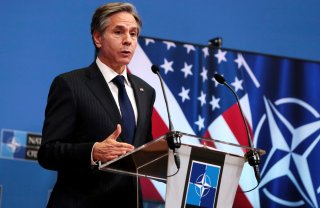
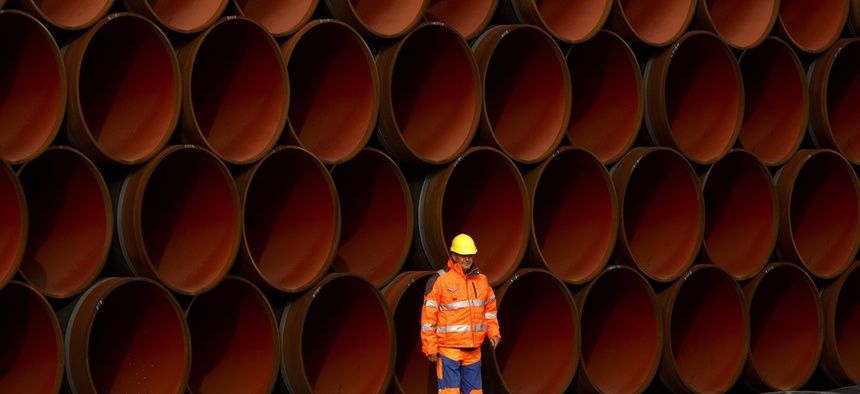
President Joe Biden is promising the world that “America is back,” but his effort to reclaim global leadership shouldn’t come at the expense of the country’s closest friends. At a NATO foreign ministers’ meeting last week, Secretary of State Antony Blinken sharply criticized Germany’s efforts to get more natural gas from Russia through a pipeline project known as Nord Stream 2. The president, Blinken warned, “believes the pipeline is a bad idea, bad for Europe, bad for the United States. Ultimately it is in contradiction to the EU’s own security goals.” Not only is the Biden administration continuing former President Donald Trump’s punitive policy against an important ally, but it’s considering further strictures.

Blinken’s statement also reflected a major defect in Obama-era foreign policy: the condescending assumption that other countries don’t understand their own interests. But the U.S. focus on stopping an energy project domestically important for Germany is all the more misguided when the administration’s strategy for managing America’s top security concern—the rise of China—is utterly dependent on a dramatic deepening of allied cooperation. Biden has a choice: Should he prioritize concern about Russia, a nettlesome but less important rival power, or should he consolidate support among America’s allies? And the administration is on the verge of choosing the wrong option.

European reliance on Russian energy resources is significant: EU countries import 30 percent of their crude oil, 40 percent of their natural gas, and 42 percent of their coal from Russia. But the U.S. opposition to Nord Stream 2 nevertheless feels atavistic, because European gas-market integration has defanged much of Russia’s ability to strong-arm other countries by threatening to cut off energy supplies.

WHO report: COVID likely 1st jumped into humans from animals

By JAMEY KEATEN and KEN MORITSUGU

GENEVA (AP) — A joint World Health Organization-China study on the origins of COVID-19 says that transmission of the virus from bats to humans through another animal is the most likely scenario and that a lab leak is “extremely unlikely,” according to a draft copy obtained by The Associated Press.

The findings offer little new insight into how the virus first emerged and leave many questions unanswered. But the report does provide more detail on the reasoning behind the researchers’ conclusions.

The team proposed further research in every area except the lab leak hypothesis — a speculative theory that was promoted by former U.S. President Donald Trump among others. It also said the role played by a seafood market where human cases were first identified was uncertain.

Dr. Anthony Fauci, the top U.S. infectious diseases expert, said he would like to see the report’s raw information first before deciding about its credibility.

“I’d also would like to inquire as to the extent in which the people who were on that group had access directly to the data that they would need to make a determination,” he said. “I want to read the report first and then get a feel for what they really had access to -- or did not have access to.”

The infinite game: How the US Army plans to operate in great power competition

By: Jen Judson

WASHINGTON — The Army has outlined, in a recent white paper obtained by Defense News, its “critical” role in great power competition to include deterring conflict, upholding U.S. interests and forging and strengthening relationships with allies and partners.

Army Chief of Staff Gen. James McConville writes in the preface of the document that military competition is “an infinite game;” a scenario that will likely continuously play out to different degrees at all times.

“We can define winning in competition in many ways: deterring conflict, upholding our interests, remaining the security partner of choice, keeping allies and partners free from coercion and subversion, and discouraging adversaries from malign actions because they know that these acts will not succeed,” McConville writes. “What we must remember is a win today is an opening for new competition activities tomorrow.”


The Army is in the process of taking its Multidomain Operations warfighting concept and turning it into doctrine. That transition is expected to take place in roughly one year.

e service has identified MDO operational phases as competition, crisis and conflict. A white paper released earlier this month, “Army Multi-Domain Transformation: Ready to Win in Competition and Conflict. outlines the Army’s plans to transform the force to align with its operational concept,

In the competition phase, which is below the level of conflict, the Army plans to maintain forward presence while building and keeping relationships with allies and partners around the world.

AP sources: SolarWinds hack got emails of top DHS officials

By ALAN SUDERMAN

Suspected Russian hackers gained access to email accounts belonging to the Trump administration’s head of the Department of Homeland Security and members of the department’s cybersecurity staff whose jobs included hunting threats from foreign countries, The Associated Press has learned.

The intelligence value of the hacking of then-acting Secretary Chad Wolf and his staff is not publicly known, but the symbolism is stark. Their accounts were accessed as part of what’s known as the SolarWinds intrusion, and it throws into question how the U.S. government can protect individuals, companies and institutions across the country if it can’t protect itself.

The short answer for many security experts and federal officials is that it can’t — at least not without some significant changes.

“The SolarWinds hack was a victory for our foreign adversaries, and a failure for DHS,” said Sen. Rob Portman of Ohio, top Republican on the Senate’s Homeland Security and Governmental Affairs Committee. “We are talking about DHS’s crown jewels.”

The Biden administration has tried to keep a tight lid on the scope of the SolarWinds attack as it weighs retaliatory measures against Russia. But an inquiry by the AP found new details about the breach at DHS and other agencies, including the Energy Department, where hackers accessed top officials’ schedules.

Updating Personnel Vetting and Security Clearance Guidelines for Future Generations

by Marek N. Posard, Emily Ellinger, Jamie Ryan, Richard S. Girven

Research Question

What are the new or emerging areas of risk related to potential personnel vetting improvements?

The United States could face challenges in the near future with recruiting and retaining younger generations into both public trust positions and, specifically, sensitive positions that require more in-depth personnel vetting for the purposes of receiving a security clearance. For one, there is some evidence that expectations by younger adults for these positions — particularly in the government sector — may differ from those of older age groups. Furthermore, several factors that traditionally and historically have been used to gauge an individual's eligibility for a security clearance (e.g., lifestyle choices and behaviors, personal and professional associations, financial circumstances) no longer may be feasible or applicable to younger age cohorts in the same manner they were applied to earlier generations. The authors identified select trends, including age-based factors, among younger adults to understand broader social changes that may affect current security clearance adjudication guidelines for positions in the U.S. government.

Key Findings

AUTHORITIES AND LEGAL CONSIDERATIONS FOR US CYBER AND INFORMATION OPERATIONS IN A CONTESTED ENVIRONMENT

Gary Corn 

Editor’s note: This article is the third in a series, “Full-Spectrum: Capabilities and Authorities in Cyber and the Information Environment.” The series endeavors to present expert commentary on diverse issues surrounding US competition with peer and near-peer competitors in the cyber and information spaces. Read the first two articles in the series here and here.

Special thanks to series editors Capt. Maggie Smith, PhD of the Army Cyber Institute and MWI fellow Dr. Barnett S. Koven.

Perhaps taking cues from Russia, it appears China is upping the ante on its use of cyber as an aggressive tool of statecraft. Just as Russia has used Ukraine and Georgia as testbeds for its offensive cyber capabilities, reports are emerging that China may have used cyber tools to turn the lights out in India in response to violent border clashes in the Himalayas. Framed within the context of the so-called return of great power competition, this is a predictable but concerning development that puts increased pressure on the United States to proactively engage the evolving gray-zone national security threats posed by its adversaries—chiefly, China and Russia. How the United States navigates the amorphous threat environment raises difficult legal and policy questions that demand principled but practical responses. Ambiguity can be disorienting, but compensating through overreliance on legal, policy, and doctrinal constructs developed for traditional warfare should be approached with caution.

Army’s network equipment tested for first time with full brigade

Mark Pomerleau

FORT POLK, La. — Marking a paradigm shift in how the Army procures, fields and updates equipment, a full brigade for the first time is testing modernized radios, tactical cell phones and network gear this month in the one of service’s most operationally realistic environments.

The exercise is a culmination of three years of work to build a baseline for a modernized network, while incorporating more soldier feedback on communications equipment and speed up fielding.

Soldiers of the 1st Brigade Combat Team, 82nd Airborne division now have the most advanced networking and communications gear in the Army, and they are putting it through the paces during their rotation at the Joint Readiness Training Center at Fort Polk.

The site and its companion National Training Center at Fort Irwin provide a dedicated opposing force with tailored scenarios based upon a particular region of the world. Units battle over a two-week simulated campaign facing a raft of attacks from kinetic to electronic.

The gear is part of the Army’s Integrated Tactical Network (ITN). Specifically, the soldiers tested equipment as part of the network’s Capability Set ’21, a combination of radios, new waveforms and tactical cell phones that pinpoint troops’ location, along with network extension equipment and cross-domain technologies that allow communication with units and coalition partners.