Ester Faia, Gianmarco Ottaviano, Saverio Spinella
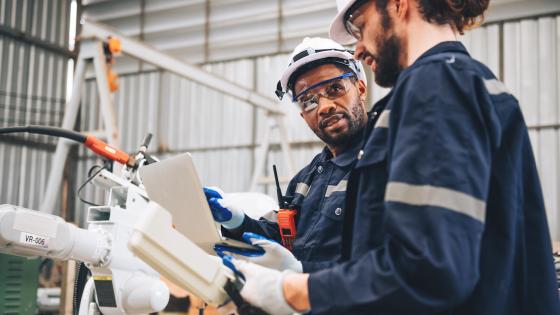 Technological progress has contributed to rising wage inequality in recent decades. This column argues that automation and digitalisation increasingly require workers with specialised knowledge for specific tasks. In this setting, automation can enhance complementarities between workers’ specialised skills and firms’ specific tasks. Using administrative data from Italy, the authors show that automation increases worker-firm sorting and increased sorting contributes to rising wage dispersion. The welfare consequences and growth prospects stemming from this mechanism remain open questions for study.
Wage inequality is on the rise as much as wealth inequality. There is consensus that part of this rise is due to technological progress. The exact mechanism by which modern technology adoption affects inequality, however, is still open to debate. Katz and Murphy (1982) have popularised the view that, by assigning large premia to education, ‘skill-biased technological change’ (SBTC) raises wage inequality via vertical skill acquisition. Previous waves of technology improvements, however, did not produce the same effects, prompting researchers to ask what is special about the most recent waves. Recent studies indicate that the premium is not so much related to skill per se, but to the task content of each occupation. Certain tasks, particularly non-routine ones, are in high demand and earn extra premia, a view that has been labelled routine-task-biased technological change. While with skill-biased technological change new technology complements workers with high skills, with ‘routine-biased technological change’ (RBTC) new technology decreases demand for workers in traditional routine tasks while creating additional demand for workers in new complex tasks.
We push those ideas a step further by arguing that modern technologies such as automation and digitalisation increasingly require human operators with specialised knowledge of automated systems involving specific algorithms, software, and machines. The associated growing demand for specialised knowledge is conducive to a form of workers’ specialisation that increasingly matters above and beyond what would be needed by the high skill content of tasks or their routine intensity. This view implies that wage differentiation is due not only to vertical specialisation (higher knowledge more generally), but to horizontal specialisation (knowledge specialised to the task, no matter whether the latter is routine or complex). The underlying mechanism relies on the concept of positive assortativity of workers and firms/tasks: match surplus is the highest when the firm adopting the technology hires the worker specialised in that technology. If so, specialised workers’ wage also rise due to rent sharing arguments and so will wage dispersion (see also Benzell and Yifan Ye 2021 for the impact of automation on wage inequality).


















:quality(100):focal(1718x656:1728x666)/cloudfront-us-east-1.images.arcpublishing.com/thesummit/7LWOGIHXMVFGFGJEAAPM7SY3UE.jpg)

:quality(100)/cloudfront-us-east-1.images.arcpublishing.com/thesummit/WMXWQKNBFFGN7G6K4RZGNQBYAY.jpg)