1 January 2016

** RECENTLY BOUGHT A WINDOWS COMPUTER? MICROSOFT PROBABLY HAS YOUR ENCRYPTION KEY


Dec. 28 2015

ONE OF THE EXCELLENT FEATURES of new Windows devices is thatdisk encryption is built-in and turned on by default, protecting your data in case your device is lost or stolen. But what is less well-known is that, if you are like most users and login to Windows 10 using your Microsoft account, your computer automatically uploaded a copy of your recovery key — which can be used to unlock your encrypted disk — to Microsoft’s servers, probably without your knowledge and without an option to opt out.

During the “crypto wars” of the ’90s, the National Security Agency developed an encryption backdoor technology — endorsed and promoted by the Clinton administration — called the Clipper chip, which it hoped telecom companies would use to sell backdoored crypto phones. Essentially, every phone with a Clipper chip would come with an encryption key, but the government would also get a copy of that key — this is known as key escrow — with the promise to only use it in response to a valid warrant. But due to public outcry and the availability of encryption tools like PGP, which the government didn’t control, the Clipper chip program ceased to be relevant by 1996. (Today, most phone calls still aren’t encrypted. You can use the free, open source, backdoorlessSignal app to make encrypted calls.)

The fact that new Windows devices require users to backup their recovery key on Microsoft’s servers is remarkably similar to a key escrow system, but with an important difference. Users can choose to delete recovery keys from their Microsoft accounts (you can skip to the bottom of this article to learn how) — something that people never had the option to do with the Clipper chip system. But they can only delete it after they’ve already uploaded it to the cloud.

16 Predictions for 2016

DECEMBER 27, 2015 / BY DAN LOHRMANN
The Top 16 Security Predictions for 2016
More security predictions than ever before. As I examined hundreds of expert forecasts for 2016 and beyond, with cyber trends and predicted technology events from top companies, it is hard to be optimistic about our online situation. And yet, the combined predictions tell us an important story about online life. So where is cyberspace heading? What surprises await us? Here's your annual one-stop roundup of what security experts are telling us will happen next.
As top security companies, technology magazines, cyber experts and security bloggers came out with their predictions for 2016, it is clear that the global cybersecurity industry continues to lose ground to the bad guys online.

For reminders and those who like to keep score, here is a list of the top security predictions that were made last December regarding the 2015 year that is ending this week.
Also, in this 2015 year-end summary, I explain how 2015 was the year that data breaches became much more personal — even intimate.

So what can possibly get worse (and hopefully better) in 2016? Only time will tell for sure — but thousands of security gurus give it their best shot each year. In order to help, I compile their wisdom into one place for easy access.
Therefore, here’s my “Guide to 2016 Security Predictions,” for readers who want to see the specific company prediction details as we head toward New Year’s Day 2016. If you want to jump to conclusions, my cyber prediction award-winners follow at the end.

The Top 16 Security Predictions by Company or Magazine

1) Symantec: Symantec leads with attacks on the Internet of Things (IoT) and Apple iOS attacks growing dramatically. An impressive Symantec list of 2016 security predictions overall.

2) Last December, Raytheon/Websense successfully predicted 2015 health-care concerns in their security predictions overview. This year,Raytheon/Websense leads with predictions about attacker trends (increased abuse of newly created infrastructure), end-user behavior in a post-privacy society and evolving business behaviors as a result of cyberattacks and data breaches — including a surge in cyber insurance.

3) McAfee (Intel Security): McAfee Labs offer a five-year cybersecurity look ahead in infographic form. They predict a growing attack surface, difficult-to-detect cyberattacks, new device types and much more. They also cover growth in “integrity attacks” where hackers change the data to do harm.

4) FireEye: FireEye offers a free prediction report on their 2016 webcastwhich leads with security concerns with Apple devices in 2016 as well as IoT security problems.

More sophisticated forms of ransomware attacks.

Also, there will be “Increased Attacks on Industrial Control Systems.”

Nothing free or basic about it

http://www.thehindu.com/opinion/op-ed/nothing-free-or-basic-about-it/article8042334.ece?homepage=true
December 30, 2015, PRABIR PURKAYASTHA
“The danger of privileging a private platform such as Free Basics over a public Internet is that it introduces a new kind of digital divide among the people.” Picture shows protests in Hyderabad against Facebook’s campaign.— We need to provide full Internet at prices people can afford, not privilege private platforms. This is where India’s regulatory system has to step in

The airwaves, the newspapers and even the online space are now saturated with a Rs. 100 crore campaign proclaiming that Internet connectivity for the Indian poor is a gift from Facebook which a few churlish net neutrality fundamentalists are opposing. In its campaign, Facebook is also using the generic phrase “free, basic Internet” interchangeably with “Free Basics”, the name it has given its private, proprietary platform. This is in blatant violation of Indian rules on advertising, which forbid generic words being used for brands and products. This is from a company which, in spite of having 125 million Indian subscribers, refuses to be sued in India, claiming to be an American company and therefore outside the purview of Indian law. Nor does it pay any tax in India.

The Free Basics platform is a mildly tweaked rehash of the controversial internet.org that Facebook had floated earlier. Facebook and Reliance, the sixth-largest mobile service provider in the country, have joined hands to offer it as a platform for free data services restricted to a few websites. The Telecom Regulatory Authority of India (TRAI) has stopped this service for now, pending its public consultation on the subject. Facebook’s campaign is essentially to influence the outcome of such a consultation.

Cybersecurity: A look back on 2015

http://www.c4isrnet.com/story/military-tech/blog/net-defense/2015/12/28/cybersecurity-look-back-2015/77985804/
Kevin G. Coleman, SilverRhino,December 28, 2015
With 2015 in our rearview mirror, it is time apply what we learned in cybersecurity to the challenges we will face in 2016.

First let’s talk about concerns in 2015:
We saw records repeatedly broken for new releases of malicious software.
We saw some cybersecurity budgets trimmed in 2015 despite the growing threat.
We saw the most concerning breach in history: The Office of Personnel Management's collection of personal information for those with security clearances (past and present).
We saw shocking new forecasts for the Internet of Things market that suggest more than 200 billion devices will connect to the Internet in the next several years, most without firewalls or anti-virus protection.
We saw additional warnings about the shortage of cybersecurity people and increased concerns about the overall shortage of science, technology, engineering and math majors. All those fields are badly needed for military and intelligence services.

Now let’s look at some of the pleasant surprises that we saw in 2015:
We saw surveys that indicate cybersecurity issues will be a major — if not the top concern — for boards of directors.
Some point to the passage of the controversial Cybersecurity Information Sharing Act.
A few industries saw some decrease in the cost per record breached due to insurance and technology/resource investment.

While the negatives outnumber the positives, we are at least taking steps in some direction. Perhaps the steps could have been bigger, bolder and they could have gone further, but for the most part, they are better than nothing. Let’s hope we all have a better and more peaceful 2016.

How Your Clamour For Net Neutrality Actually Helps Facebook

http://swarajyamag.com/biz/how-your-clamour-for-net-neutrality-actually-helps-facebook/
Ravi Kiran, 30 Dec, 2015 5

Net Neutrality enthusiasts are clamouring for government intervention to regulate the internet. This will surely kill innovation in the sector, not Free Basics.
The romantic idea of trade unions bringing down ‘evil’ industrialists, which used to be a constant theme in movies of the 70s and 80s, is now making a comeback. It is this idea, and not some ‘noble’ Net Neutrality (NN) principle, as its advocates would like us to believe, that underlies the campaign against Facebook. Otherwise, how else can one explain this sustained attack on Facebook, without even a fraction of that outrage against other popular NN violations?

Telcos sell separate social media internet packs that go against the NN principle. But we don’t see any relentless campaigns demanding the scrapping of these plans. The reason is that these packs are quite popular and the activists know that going against them will antagonise the public at large and make them question the basis of NN. They also know that if the Free Basics campaign catches on, it will be difficult to justify their position.
So to gain traction, they try to pitch themselves as Davids taking on a giant Goliath. They have been largely successful in this exercise, but there is a twist in this story. It is all fine when they use their own slingshots to take aim at Goliath, where each critic voluntarily takes a pledge not to deal with Facebook. But what these people are demanding is the help of a gigantic rock called ‘Government’ to crush Goliath. Little do these little Davids realise that such an overpowering object will be too big for them to handle, and it will only end up quashing their own spirits. Moreover, far from being a crushing force, the rock will act as a protective shield for Goliath from competitive challenges. This is not fiction. History is rife with such examples. When government intervenes it only helps existing players. Government should be at the periphery of overseeing transactions, not in the middle, dictating terms. Once you let it in, you lose the autonomy to trade voluntarily.
Understanding Competition

Most people mistake competition as the basis for free markets. But competition is a byproduct, a very good consequence of free markets, not its foundation. This lack of crucial understanding is the reason why we hear cries of “unfair competition” and governments legislating ‘anti-competition’ regulations.

** The Changing Face of Warfare in the 21st Century


http://www.realcleardefense.com/articles/2015/12/27/the_changing_face_of_warfare_in_the_21st_century_108838.html

Warfare is changing, and not just in the most obvious and visible ways. Yes, there are new technologies, newly assertive foes, and new ideologies. But to fully understand how it’s evolving, you must examine the broader context in which we are fighting.
There are tectonic shifts underway, gradual yet persistent, that we rarely think about as being a part of war. Yet they directly affect what our armed forces face on the battlefield, now and into the future. Here are two underappreciated dimensions of change.

First, mobilisation. There’s been a transformation in the means and ends of mobilisation—i.e., how we tap into the popular passion that is the engine of war. This point isn’t new: I first wrote about it ten years ago, calling it ‘cybermobilisation.’
To see the contrast, it helps to look at the late 18th century, when Carl von Clausewitz was writing On War. Shortly before the French Revolution, the printing press was deregulated. As a result, there was a vast increase in popular access to information, facilitating the mass uprising that drove conscription, fed the armies of Napoleon, and helped him to win. Armies ballooned by four or five times. Watching his side lose, young Clausewitz was keenly aware of the role of primordial violence, part of war’s paradoxical trinity whose effects were unfolding before him.

A similar dynamic has been underway for years now. There’s been a dramatic shift in access to information, including an increase in public access, a sharp reduction in cost, a growth in frequency of messages, and an exploitation of images on the Internet. As a result, tapping into today’s popular passions has become easier: many types of actors, state and nonstate, can build a mobilising argument that manipulates diaspora communities and shapes an identity.

When I first wrote about it, I was unsure whether the positive or negative aspects of access to information would prevail. Unfortunately for the West, the consequences have been disheartening. The initial spread of democratic ideals, spurring democratic uprisings such as the Color Revolutions and the ‘Arab Spring,’ has been replaced by a manipulation of messages by nonstate actors and states that suppress free speech.

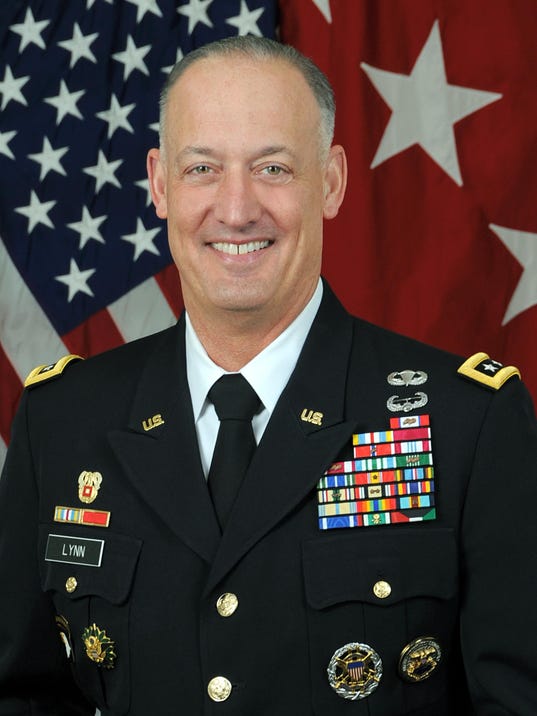
LTG Alan Lynn on DISA's role in securing DoD networks

http://www.c4isrnet.com/story/military-tech/omr/disa-vision-guide/2015/11/23/ltg-alan-lynn-disas-role-securing-dod-networks/76007290/
November 23, 2015
Army LTG Alan Lynn was named has been director of the Defense Information Systems Agency and commander of the Joint Force Headquarters-Department of Defense Information Networks (JFHQ-DODIN) in July 2015 for three months, and as such he leads an organization and activities focused on organizing, training and equipping military and civilian personnel that secure, operate and defend the government’s crucial information networks. Overseeing a host of innovative security engineering and efficiency initiatives, he shared his thoughts and plans for the future in these written responses to questions provided by C4ISR & Networks.

C4ISRNET: What do you want to achieve in your tenure at DISA?
LTG ALAN LYNN: I’d like to increase the value of DISA and there are a number of ways we can do that. One is through reducing costs to our mission partners. We’ve been successful in doing that in the past year by reducing our costs by about 9.3 percent. I expect to get down by at least another 7 percent in the next year. But we’ve got to get more efficient.
I would also like to increase our partnerships with other agencies and industry to increase innovation. I have some ideas on that; for example, I’d like to build more resilient infrastructure to defend against cyberattacks.
I have a lot more energy and ideas than that, but my tenure here is short, so I want to get the biggest bang for the buck for the Department of Defense.

C4ISRNET: You have talked about two initiatives: resilient networks and 100-percent assured identity on wireless networks. Can you tell us more about that?
LYNN: This gets into the increased partnerships with other agencies and industry. We’ve been in contact with Defense Advanced Research Projects Agency and with the National Security Agency Commercial Solutions for Classified program and also our good partners in industry that we work with all the time on cyber protection. I think now is the time when industry is starting to think about how to better defend themselves from cyberattacks. Obviously, in the Department of Defense we’ve been ground zero for a lot of the attacks over many years and we’ve gotten very good at defending our networks from cyberattacks. We all are at a point where we can share new capabilities and innovate better network protection together.

Fighting While Friending: The Grey War Advantage of ISIS, Russia, and China

http://www.defenseone.com/ideas/2015/12/fighting-while-friending-grey-war-advantage-isis-russia-and-china/124787/?oref=site-defenseone-flyin-sailthru
December 29, 2015 By Peter Pomerantsev The Atlantic
Can democracies compete 'where powers can be fighting each other with one hand and shaking hands with the other?'
From China in Asia to Russia in Europe and the Middle East, and ISIS just about everywhere, 2015 has seen the flourishing of conflicts that exist in a gray zone, one which is not quite open war but more than regular competition, which is attuned to globalization, which liberal democracies are ill-equipped to deal with, and which may well be the way power is exercised and conflict conducted in the foreseeable future.
Described by scholars as “hybrid,” “full-spectrum,” “non-linear,” “next-generation,” or “ambiguous”—the variations in the description indicate the slipperiness of the subject—these conflicts mix psychological, media, economic, cyber, and military operations without requiring a declaration of war.

In the case of Russia’s ongoing campaign in Ukraine, for example, hyper-intense Russian propaganda has cultivated unrest inside the country by sowing enmity among segments of Ukrainian society and confusing the West with waves of disinformation, while Russian proxy forces and covert troops launch just enough military offensives to ensure that the Ukrainian government looks weak. The point is not to occupy territory—Russia could easily annex rebel-held eastern Ukraine—but to destabilize Ukraine psychologically and advance a narrative of the country as a “failed state,” thus destroying the will and support inside Ukraine and internationally for reforms that would make Kiev more independent from Moscow and might, in the longer term, create hope for democratic reform inside Russia.

China’s doctrine of the Three Warfares pushes these non-physical aspects even further, using “legal,” “psychological,” and “media” warfare to, in the words of the analyst Laura Jackson, who directed a Cambridge University and U.S. Defense Department research project on the subject, “undermine international institutions, change borders, and subvert global media, all without firing a shot. The Western, and especially American, concept of war emphasises the kinetic and the tangible—infrastructure, arms, and personnel—whereas China is asking fundamental questions: ‘What is war?’ And, in today’s world: ‘Is winning without fighting possible?’”

31 December 2015

OPEN LETTER Full text: Facebook's Free Basics will limit internet freedom, say 50 faculty of IITs and IISc

http://scroll.in/article/778805/full-text-facebooks-free-basics-will-limit-internet-freedom-say-50-faculty-of-iits-and-iisc
The service isn't really free and violates user privacy, the scientists say.
Scroll Staff ·
Close to 50 faculty members of the Indian Institutes of Technology and Indian Institute of Science on Tuesday released a statement highlighting flaws in Facebook's controversial Free Basics programme.
Free Basics is a subsidised internet platform that gives users Facebook and a few other services for free. Facebook says this will help connect India’s poor people to the internet. However, critics claim that it works against the rules of net neutrality, according to which all material on the Internet should be treated equally by internet service providers. Only a few products and websites, including Facebook, can be accessed through Free Basics.

The debate about the platform has been especially heated over the past few days because the Telecom Regulatory Authority of India set Wednesday as a deadline for the public to submit their opinions about whether the service should be allowed.
On Tuesday, a group of academics weighed in, claiming that Free Basics will limit the freedom with which Indians can use their own public utility, the internet.

Here is the full statement:
Allowing a private entity
- to define for Indian Internet users what is “basic”,
- to control what content costs how much, and
- to have access to the personal content created and used by millions of Indians
is a lethal combination which will lead to total lack of freedom on how Indians can use their own public utility, the Internet. Facebook's “free basics” proposal is such a lethal combination, having several deep flaws, beneath the veil of altruism wrapped around it in TV and other media advertisements, as detailed below.

Flaw 1: Facebook defines what is “basic”.
The first obvious flaw in the proposal is that Facebook assumes control of defining what a “basic” service is. They have in fact set up an interface for services to “submit” themselves to Facebook for approval to be a “basic” service. This means: what are the “basic” digital services Indians will access using their own air waves will be decided by a private corporation, and that too one based on foreign soil. The sheer absurdity of this is too obvious to point out.

2015: A Year of Work-in-Progress for Defence

http://idsa.in/idsacomments/2015-work-in-progress-for-defence_acowshish_291215
Amit Cowshish, December 29, 2015

One does not know what the Ministry of Defence (MoD) set out to achieve in the calendar year 2015 or the current financial year that will draw to a close in another three months. But if one were to hazard a guess, the objective would have been to take steps, if not to completely resolve, at least address the issues that kept the MoD in the news throughout the year. A quick survey of where we stand on those issues at the end of the year would be instructive.

To cut to the chase, the issues confronting the defence establishment at the beginning of the year broadly related to defence policy, human resource management and operational preparedness, though not necessarily in that order.
The policy-related issues are not new. Questions about India’s national security objectives and defence strategy, in all their manifestations, have persisted for long. To be fair, these larger issues were not in the forefront at the beginning of the year but a related issue was. It concerned the appointment of a Chief of Defence Staff (CDS) or Permanent Chief of the Chiefs of Staff Committee (PC COSC). The year has gone by without one being appointed. If anything, the excitement seems to have somewhat ebbed over the past few months.

It will take some doing to create this institution with clearly defined responsibilities and an appropriate support structure. Assuming that the present system of three-tiered defence planning will continue and, among other things, the CDS/PC COSC will be responsible for defence planning, it is time the issue is taken up on priority as the 13th Defence Five-year Plan is to commence from April 1, 2017.

Arunachal Pradesh is no ordinary state, it is a hyper-sensitive bone of diplomatic contention with China and with the winds of local insurgency sweeping the Northeast, it is also susceptible to

http://wwv.asianage.com/columnists/lessons-itanagar-956
Bhopinder Singh
Arunachal Pradesh is no ordinary state, it is a hyper-sensitive bone of diplomatic contention with China and with the winds of local insurgency sweeping the Northeast, it is also susceptible to errors of omission and commission on the free-flowing democratic and constitutional impulses of the border state. History is replete with unfortunate instances of playing partisan politics and compromising on constitutional freedom (e.g. Jammu and Kashmir in the ’80s and ’90s) that had triggered local separatist tendencies in the veritable tinderbox of any border state. Therefore, it is even more important to demonstrate our finest constitutional commitment and guarantees as a nation to ward of any external and internal questions on the correctness of all political and executive actions.

The gubernatorial disquiet in Arunachal Pradesh begets a more profound inquiry than the one that often gets mired in the legalities and technicalities of constitutional articles and clauses. J.P. Rajkhowa was the preferred choice of the prevailing political dispensation at the Centre and, therefore, chosen to replace the incumbent midterm as the 19th governor of Arunachal Pradesh. Questions were raised at the time about an Assamese in the Itanagar Raj Bhawan, given the fractious sentiment and scepticism of the Arunachalese with regard to Assam and its unresolved border disputes that are felt locally to be even more important, than the ones with China on the McMahon Line.

But every Central government is in its democratic right to select and appoint the person it deems most appropriate to uphold the tenets and spirit of the Indian Constitution and rise beyond partisan politics, thus, the filter of not selecting an incumbent from the state, or one who has participated in active politics recently, has ideally detached him/herself from local politics of the state.

PSU beats Anil's Defence

http://www.telegraphindia.com/1151230/jsp/frontpage/story_61130.jsp#.VoQug7YrLIU
SUJAN DUTTA
New Delhi, Dec. 29: In Prime Minister Narendra Modi's showpiece "Make in India" project to be opened this Sunday, a public sector firm has beaten Anil Ambani's Reliance Defence that was lobbying to make Russian helicopters.
Moscow announced last night that the Russian state arms export agency, Rosoboronexport, and the chopper-maker, Rostec, have chosen the Indian defence undertaking Hindustan Aeronautics Ltd (HAL) to make the Kamov 226t "Sergei" light utility helicopters for the military.

India's army and air force have a requirement of 200 such reconnaissance and surveillance helicopters immediately to replace the Cheetah and Chetak machines that currently undertake the task. The initial order is estimated to be worth $1 billion.
Most of the Cheetah and Chetak helicopters are more than 40 years old and have a high rate of accidents. Earlier this year, the wives and widows of military officers who fly/have flown the Cheetahs and Chetaks urged the government to replace them.

The total order for Sergeis could go up to 400 with the navy also projecting the requirement.
The process of replacement has taken more than 10 years. The Prime Minister, who returned from Russia last week, is scheduled to lay the foundation stone of a HAL facility to make helicopters at Tumkur, 100km from Bangalore, this Sunday.

*** Brave New War A new form of conflict emerged in 2015—from the Islamic State to the South China Sea.

http://www.theatlantic.com/international/archive/2015/12/war-2015-china-russia-isis/422085/
Peter Pomerantsev, Dec 29, 2015

From China in Asia to Russia in Europe and the Middle East, and ISIS just about everywhere, 2015 has seen the flourishing of conflicts that exist in a gray zone, one which is not quite open war but more than regular competition, which is attuned to globalization, which liberal democracies are ill-equipped to deal with, and which may well be the way power is exercised and conflict conducted in the foreseeable future.

Described by scholars as “hybrid,” “full-spectrum,” “non-linear,” “next-generation,” or “ambiguous”—the variations in the description indicate the slipperiness of the subject—these conflicts mix psychological, media, economic, cyber, and military operations without requiring a declaration of war.
In the case of Russia’s ongoing campaign in Ukraine, for example, hyper-intense Russian propaganda has cultivated unrest inside the country by sowing enmity among segments of Ukrainian society and confusing the West with waves of disinformation, while Russian proxy forces and covert troops launch just enough military offensives to ensure that the Ukrainian government looks weak. The point is not to occupy territory—Russia could easily annex rebel-held eastern Ukraine—but to destabilize Ukraine psychologically and advance a narrative of the country as a “failed state,” thus destroying the will and support inside Ukraine and internationally for reforms that would make Kiev more independent from Moscow and might, in the longer term, create hope for democratic reform inside Russia.

China’s doctrine of the Three Warfares pushes these non-physical aspects even further, using “legal,” “psychological,” and “media” warfare to, in the words of the analyst Laura Jackson, who directed a Cambridge University and U.S. Defense Department research project on the subject, “undermine international institutions, change borders, and subvert global media, all without firing a shot. The Western, and especially American, concept of war emphasises the kinetic and the tangible—infrastructure, arms, and personnel—whereas China is asking fundamental questions: ‘What is war?’ And, in today’s world: ‘Is winning without fighting possible?’”

An immediate aim of the Three Warfares is to spread China’s dominion over the South China Sea, extending the country’s maritime borders beyond boundaries recognized by the UN Convention on the Law of the Sea in order to control massive energy reserves and strategic sea-lanes worth $5 trillion dollars; ultimately, the hope is to supplant the United States as the security guarantor in the region. The military strategy was first adopted in 2003, but many of its consequences only became apparent to the media in 2015.

First China has ramped up the construction of artificial islands in contested waters. Then it has used “lawfare” to claim that since these islands are now its territory, it owns the surrounding seaways under maritime law. This claim is reinforced by “psychological” warfare, which involves threatening economic sanctions against states that protest China’s moves and intimidating anyone who strays into the area. Recently, a BBC reporter who flew in international airspace near a Chinese military airstrip constructed off the coast of the Philippines was bombarded by calls over the airwaves stating: “Foreign military aircraft in northwest of Meiji Reef, this is the Chinese Navy, you are threatening the security of our station.” And then there’s “media warfare”: Developments such as Japan beefing up its military, or the U.S. insisting on sailing its ships through waters the UN considers neutral, are depicted in China’s ever-expanding international news networks as examples of the aggression of China’s rivals, rather than a response to Chinese expansion.

Beijing, Xinjiang and the Press China shows its lack of confidence by expelling a foreign journalist.

http://www.wsj.com/articles/beijing-xinjiang-and-the-press-1451430039
Dec. 29, 2015
The Chinese Foreign Ministry’s Dec. 26 decision not to renew the credentials of French journalist Ursula Gauthier, the first such expulsion in three years, suggests that Beijing is escalating pressure on foreign journalists. It also shows how sensitive the Communist Party is to criticism of its harsh policies against ethnic minorities.

Under Party General Secretary Xi Jinping, plainclothes police increasingly manhandle foreign reporters, and the Foreign Ministry holds up visa applications for publications that have reported on the wealth of top leaders. Ms. Gauthier’s offense was writing, five days after the Nov. 13 Paris terrorist attacks, about the Chinese government’s attempt to draw a parallel to violence in the Muslim-majority region of Xinjiang. The Beijing correspondent for the newspaper L’Obs questioned China’s claim that a Sept. 18 incident that claimed 50 lives in the town of Baicheng was comparable to Paris massacre.

Beijing wants to justify its human-rights abuses in Xinjiang as a necessary response to the rise of Islamic fundamentalism and separatism. But as Ms. Gauthier pointed out, central-government policies are driving the native Uighur population, which practices a moderate form of Islam, to desperate acts of violence. The state tightly restricts Uighurs’ practice of religion, freedom of movement and even the use of their own language.
While some Uighur violence against Han Chinese is terrorism, the attacks have little in common with those carried out by fanatical jihadists elsewhere. As Ms. Gauthier told the Guardian newspaper, “Nobody is saying there is no terrorism in Xinjiang. But they want us to say there is only terrorism in Xinjiang. This is the problem.”

* New Year’s Resolutions on Terrorism: Panic, Politics, and the Prospects for Honesty in 2016

https://csis.org/publication/new-years-resolutions-terrorism-panic-politics-and-prospects-honesty-2016
By Anthony H. Cordesman, Dec 28, 2015
Broken resolutions are one of the key features of every American New Year’s celebration, and calling for integrity in an election year may be a particularly good way to ensure that any resolutions that follow will be broken early and often. Ever since the ISIS attacks in Paris, however, politics, the struggle for media visibility, and the business side of “selling” counterterrorism have all combined to turn a real but limited threat from terrorism into a form of panic.

Worse, they have combined to turn some aspects of counterterrorism into prejudice and bigotry against Muslims and Arabs. The end result has been calls for new measures that will actually serve the key objectives that movements like ISIS and Al Qaeda have in launching such attacks on the West. They will divide the West from the Muslim world and key Arab and Muslim partners in the fight against terrorism, and alienate the Muslim minorities in the United States and other Western and secular states.
This kind of opportunism not only mischaracterizes and exaggerates the threat, it aids terrorists and extremists, and this is one case where the United States and other Western states need to take the following four New Year’s resolutions seriously:

Stop exaggerating the threat: Terrorism is all too real and no one can deny that it repeatedly ends in tragedy. At the same time, it needs to be kept in proportion. The real world risks of terrorism in the United States fall short of virtually any other common cause of injury, death, and economic loss. To put these risks in perspective, the number of deaths from terrorism in the United States since 9/11 have been so low that Americans may well face a higher cumulative probability of dying from traffic accidents, food poisoning, crime and other causes if they celebrate a single New Year’s Eve than they do from terrorism over an entire year.

Kurdistan: The Permanent Solution to Daesh

http://smallwarsjournal.com/jrnl/art/kurdistan-the-permanent-solution-to-daesh
Journal Article | December 27, 2015 - 10:57pm
Introduction

History has taught us that when an armed conflict arises between two belligerents, countries with interests in the outcome of that conflict either need to pick a winner, a loser, or stay out of the conflict. If containment or maintaining the status quo is chosen it naturally results in perpetual conflicts, e.g., Israel and the Palestinian Liberation Organization (PLO) /Hezbollah. In this scenario, the weaker belligerent is never defeated through armed conflict or forced to recognize that eventuality. They are allowed to carry on in the conflict. The weaker belligerent never has reason to seek peace terms as a part of their surrender, and is free to continue to harass its opponent because a state or non-state actor, like the United Nations, maintains the status quo regardless of how chaotic that is for regional or international stability. The best choice a state can make is to decide which side it supports and give war a chance, in order to remove the other belligerent so that true stability can be achieved.[1]

The United States (U.S.) is currently seeking a solution to the problem ‘ad-Dawlah al-Islamiyah fi ‘I-‘Iraq wa-sh-Sham’ (Daesh; aka ISIS, ISIL, the Islamic State) poses to U.S. security, its allies, and civilization in general. The answer: recognize and support the state of ‘Kurdistan’. Pick a winner, Kurdistan, and a loser, Daesh, and give war a chance. This decision has two affects. In the short-term, this solution halts Daesh’s growth and freedom of movement in the region, thus ending their threat to regional stability. In the long-term, it thwarts Russia’s influence in the region. In the absence of this support for Kurdistan, Russia will be the victor. Russia will expand its sphere of influence over the entire Middle East because they have chosen a winner in Syria. It is clear that Putin’s final goal is not just to save the Assad regime, but “He [Putin] also means to forge a counter-alliance [against the U.S] consisting of Russia, Iran, Iraq, Syria, and Lebanese Hezbollah and demonstrate that his coalition is more effective than the West’s.”[2]

Why Kurdistan?

As political commentator David Webb noted, “If we [the U.S.] take out ISIS, we have Assad. If we take out Assad, we have ISIS. If we take out both, we have a vacuum.”[3] It’s clear from U.S. leaders, whether they be executive, congressional, or presidential hopefuls, that U.S. troops on the ground are not the solution the U.S. is seeking. Senator Rand Paul speaking more broadly on terrorism said, “If we want to defeat terrorism…the boots on the ground need to be Arab boots on the ground.”[4] NATO General Secretary Jens Stoltenberg revealed to Reuters that NATO will not send any ground troops to combat Daesh.[5] As a result, if the U.S. wants to defeat Daesh, the boots on the ground need to be Kurdish boots, a viable ally for the U.S. to support. There is no need for the U.S. to roll the dice on supporting “moderate” jihadist groups when it has a known partner it has been working with for over a decade in Iraq. This paper discusses Kurdistan’s demographics, economy, and, most importantly, its military capabilities which will demonstrate Kurdistan’s viability as a permanent regional partner. It also examines the effects recognizing Kurdistan as an independent state to defeat Daesh will have on Turkey, Iraq, other regional allies, and Russia’s burgeoning Shia alliance.

The Islamic State: Why It Is Staying, Why It Is Expanding, and Why No

One Is Really Fighting It
By Ammar Abdulhamid Monday, December 28, 2015,
Why do all the powers supposedly arrayed against the terrorist organization calling itself the Islamic State (IS) seem incapable to date of effectively hitting its strongholds in Syria?

Is it fear of civilian casualties, which are unavoidable in any large-scale military operation? This might indeed be a factor in the case of the United States, France and the UK, which have scrupulous legal rules and militaries that actually care about such things. But this cannot explain the behavior of Russia and the Assad regime which, it should be clear by now, care not a whit for such “modern” and “Western,” not to mention “impractical,” concerns. Indeed, the willingness of both to inflict such casualties, often intentionally, is on display every day and is well-documented.

I do not believe that fear of civilian casualties fully explains Western behavior either. After all, there are quite a few installations where IS maintains a presence that are located outside densely populated areas and that could, I suspect, be targeted with minimal human collateral damage. But striking these installations carries risks and costs far beyond any immediate loss to IS.

So, what is it that lurks behind the near universal decision to avoid bombing these installations and IS strongholds, except on a minimalist basis? The short answer, I suspect, is something quite sinister that is worth airing openly: the Islamic State has a kind of doomsday threat that has all of the intervening powers over a barrel.

China Commissions New Spy Ship

December 29, 2015, China commissions three vessels into South Sea Fleet
Ridzwan Rahmat
IHS Jane’s Navy International, December 29, 2015


China’s third Dongdiao-class intelligence gathering vessel, Neptune (852), was commissioned into the PLAN’s South Sea Fleet on 26 December 2015. Source: via PLA Daily
Key Points
China has commissioned its third Dongdiao-class general intelligence vessel
The vessel will bolster the service’s intelligence gathering and surveillance capabilities

The People’s Liberation Army Navy (PLAN) has commissioned three vessels, including a Dongdiao-class (Type 815) auxiliary general intelligence (AGI) ship, into its South Sea Fleet, the semi-official PLA Daily reported on 28 December.

The vessels were commissioned in a ceremony held at an unspecified naval port, said to be in the South China Sea, on 26 December.

The Dongdiao-class vessel (which PLA Daily refers to as the ‘Type 815G’) has been named Neptune and given the pennant number 852. IHS Jane’s reported in April 2014 that the vessel was launched at the Hudong Zhonghua Shipbuilding Group’s yard in Shanghai in March the same year.

Neptune is the third known Dongdiao-class vessel in service with the PLAN. First-of-class Beijixing (851) is based in the service’s East Sea Fleet while second ship Tianwangxing (853) is also based in the South Sea Fleet.

According to IHS Jane’s Fighting Ships , the 6,096-tonne platform has an overall length of 130 m, an overall beam of 16.4 m, and a hull draught of 6.5 m. The ship has a top speed of 20 kt and can carry a crew of 250 and one medium helicopter. The Dongdiao-class is armed with one 37 mm and two 14.5 mm guns.

ISIS is Not a Terrorist Organization by Ajit Maan

Journal Article | December 29, 2015 
Ajit Maan
Given the climate of U.S. public opinion about U.S. intervention in the Middle East it is not surprising that the current administration has focused its foreign policy objectives on counter-terrorism.
But that priority limits our position to a defensive one. Further, the term “terrorist organization” offers little insight and limits our understanding and approach. ISIS is an insurgent organization using terrorism as a tactic.

The American public is wary of getting into what it views as quagmires, particularly in the Middle East, but is less hesitant when it comes to fighting terrorists who we view as a direct threat to the US. As a result, we have intervened in Syria to fight ISIS but not Assad.
While ISIS certainly employs terrorism as a tactic, and the label is one that de-legitimizes an opponent, the label also obscures the facts. To call it a terrorist organization is to mislabel it.

Traditionally, groups were identified as terrorist groups if their goal was ultimately to effect policy through intimidation. The policies in question were regionally specific: Ireland, Israel, even as specific as the green line separating Muslims and Christians in Beirut. What we are witnessing now is something closer to criminal psychopathology than terrorism. And the aims of these groups are not regionally specific but often international in scope. Moreover, the tactics have gone beyond intimidation to affect policy.

A CONFLICT OF INTEREST IN CONFLICT COVERAGE

http://www.dailypioneer.com/columnists/oped/a-conflict-of-interest-in-conflict-coverage.html
Wednesday, 30 December 2015 | Finian Cunningham | in Oped 

To understand Western media’s near-blackout of the war in Yemen, see its major advertisers: Etihad, the Emirates, Qatar Airways, Turkish Airlines and Bahrain Government
Multi-million-dollar advertising money has long been suspected as an unspoken filter for Western news media coverage. If the news conflicts with advertising interests then it is simply dropped. An example of this is coverage of the conflict in Yemen. Take three major Western media outlets BBC, CNN, France 24. All are notable for their dearth of news coverage on the bloody conflict in Yemen. It also turns out not coincidently that major advertisers on these same news channels include Qatar Airways, Emirates and Etihad. The latter two feature celebrities Jennifer Aniston and Nicole Kidman, posing as satisfied customers of these Gulf state-owned companies. Other prominent advertisers on BBC, CNN and France 24are Turkish Airlines and the Government of Bahrain’s Business Friendly Bahrain campaign.

This advertising complex has a direct bearing on why the three mentioned Western news channels do not give any meaningful coverage of Yemen. The poorest country in the Arab region is being bombed by a coalition of states that include Saudi Arabia, Qatar, the United Arab Emirates and Bahrain and is backed by the US and Britain. Thousands of Yemeni civilians have been killed, half of the population is in dire humanitarian conditions from lack of food, water and medicine, according to the United Nations. Due to Western involvement in the humanitarian disaster unfolding in Yemen, one might think that Western media would cover the conflict extensively but not if you watch BBC, CNN or France 24.

There are reliable reports that ground forces fighting against the rebels in Yemen are comprised of Western mercenaries in addition to troops from Saudi Arabia, Bahrain and the UAE. According to Lebanon's Al Manar news outlet, foreign mercenaries from France, the UK, Australia, Colombia and some Latin American countries have been killed. The mercenaries are first sent to the UAE for training before dispatch to Yemen.

Italy’s Shaky Financial Future

Stratfor, 18 December 2015
Summary
As with many aspects of modern banking, the word “bankrupt” has its roots in Renaissance Italy. The original banks were Florentine merchants who would sit in the open street behind benches (bancas in Italian) upon which their money would be stacked. If trading went against them and their capital was reduced to nothing, their bench would be said to be broken, or banca rotta. It is fitting then that, 500 years later, the European country with the most worrying debt problem is Italy.
Analysis

This may be surprising to some, since Italy does not top the tables as worst offender by any of the usual metrics. It does not have the highest levels of debt to gross domestic product in Europe: That dubious honor belongs to Greece, whose debt to GDP ratio rests more than 40 points higher than Italy’s 132%. Nor are Italian banks afflicted with the highest quantities of nonperforming loans as a percentage of GDP. Cyprus wins that contest easily; at a staggering 137%, it relegates Ireland (23%) to a distant second place and far exceeds Italy at 17%.

But though Italy is not the worst offender, its size still makes it the most potentially problematic. Italy has the third largest economy in the eurozone after Germany and France, and it is 1.5 times bigger than fourth-ranked Spain. So even without having the highest ratios, in actual numbers Italy has the biggest debt mountain: 2.3 trillion euros (roughly $2.4 trillion) of government debt compared with Greece’s 392 billion euros. Thus the three recent Greek bailouts, though giant in relation to the Greek economy, were just a sliver of the European economy as a whole, and in their wake the eurozone carried on more or less unaffected. The same would not be true of Italy. A bailout would be a massive undertaking that would greatly stretch the union’s finances.

Of course, this is not an altogether new phenomenon. Italy’s debt to GDP ratio has been over 100% since the early 1990s, and GDP growth since then has been fairly stagnant. But the fact that Italy’s debt has been large for a long time does not mean it is not dangerous. It was the threat of Italy defaulting that drove much of the market panic during the sovereign debt crisis in 2011 and 2012, when weakness in Europe’s banks had prompted bailouts from their national governments, calling into question the solvency of the governments themselves.

Prospects for the Global Economy in 2016

http://www.cfr.org/global/prospects-global-economy-2016/p37400
Authors: Kenneth S. Rogoff, Senior Fellow for Economics, Council on Foreign Relations Barry J. Eichengreen, George & Helen Pardee Professor of Economics & Political Science, University of California, Berkeley Varun Sivaram, Douglas Dillon Fellow, Council on Foreign Relations James Pethokoukis, Dewitt Wallace Fellow, American Enterprise Institute Robert Kahn, Steven A. Tananbaum Senior Fellow for International Economics, Council on Foreign Relations 
Interviewer(s): James McBride, Online Writer/Editor, Economics 
December 28, 2015

The world will face economic challenges on multiple fronts in 2016. As the U.S. Federal Reserve begins its monetary tightening, Europe is struggling to manage migrant and debt crises, China's financial stability is in doubt, and emerging economies are increasingly fragile.

The global economy "could be doing much worse," writes CFR Senior Fellow and Harvard economist Kenneth Rogoff. Low oil prices and weak currencies are keeping the European and Japanese economies afloat, but Rogoff warns of "a slowing Chinese economy, collapsing commodity prices, and the beginning of the U.S. Federal Reserve's rate-hiking cycle."

Emerging economies like Brazil, South Africa, Thailand, and Turkey, rather than China, will be the real sources of concern in 2016, argues U.C. Berkeley's Barry Eichengreen. With their high levels of short-term debt, these countries are vulnerable to currency crisis, "potentially leading to economic collapse."
Greece's Prime Minister Alexis Tsipras faces major challenges in 2016. (Photo: Francois Lenoir/Reuters)

For CFR's Varun Sivaram, new investments announced at the Paris climate talks are reason for optimism in the energy sector. In particular, the $20 billion earmarked for clean energy research and development "could make it more likely for breakthrough technologies to emerge."

In the United States, meanwhile, steady GDP and job growth has been constrained by weak productivity gains, writes American Enterprise Institute's James Pethokoukis. Without increased productivity delivering higher living standards, the United States could face decades of "unhealthy economic populism."

Europe continues to face the risk of debt crises, writes CFR's Robert Kahn, but the most dangerous economic risk for the continent in 2016 is "a growing populist challenge from both the Left and Right," which could create economic policy uncertainty and constrain policymakers.

2015 was a tipping point for six technologies that will change the world

https://www.washingtonpost.com/news/innovations/wp/2015/12/28/2015-was-a-tipping-point-for-six-technologies-which-will-change-the-world/
By Vivek Wadhwa December 28 

To the average person, it may seem that the biggest technology advances of 2015 were the larger smartphone screens and small app updates. But a lot more happened than that. A broad range of technologies reached a tipping point, from cool science projects or objects of convenience for the rich, to inventions that will transform humanity. We haven’t seen anything of this magnitude since the invention of the printing press in the 1400s. Here are the six:


(Atta Kenare/AFP/Getty Images) 1. The Internet and knowledge
In the developed world, we have become used to having devices that connect and inform us and provide services on demand, and the developing world has largely been in the dark. As of 2015, however, nearly half of China’s population and a fifth of India’s population have gained Internet connectivity. India now has more Internet users than does the U.S., and China has twice as many.
Smartphones with the capabilities of today’s iPhone will cost less than $50 by 2020. By then, the efforts of Facebook, Google, OneWeb, and SpaceX to blanket the Earth with inexpensive Internet access through drones, balloons, and microsatellites will surely bear fruit. This means that we will see another three billion people come on line. Never before has all of humanity been connected in this way.
This will be particularly transformative for the developing world. Knowledge has always been a privilege of the rich; tyrants rule by keeping their populations ignorant. Soon, everyone, everywhere, will have access to the ocean of knowledge on the Internet. They will be able to learn about scientific advances as they happen. Social media will enable billions of people to share their experiences and help one another. Workers in the remotest villages of Africa will be able to offer digital services to the elite in Silicon Valley. Farmers will be able learn how to improve crop yields; artisans will gain access to global markets; and economies based on smartphone apps will flourish everywhere.


(iStock) 2. Doctors in our pockets
All of this has been made possible by advances in computing and networks. In a progression called Moore’s Law, computers continually get faster, cheaper, and smaller, doubling in speed every 18 months. Our $100 smartphones are more powerful than the supercomputers of the 1970s—which cost millions of dollars. With faster computers, it becomes possible to design more powerful sensors and artificial-intelligence (A.I.) systems. With better sensors, we can develop sophisticated medical devices, drone-based delivery systems, and smart cities; and, with A.I., we can develop self-driving cars, voice-recognition systems, and digital doctors. Yes, I am talking about applications that can diagnose our medical condition and prescribe remedies.
In 2015, smartphone-connected medical devices came into the mainstream. Most notably, Apple released a watch that, using a heart-rate sensor and accelerometer, can keep track of vital signs, activity, and lifestyles. Through its free Research Kit app, Apple provided the ability to monitor, on a global scale, the use of medicines and their efficacy. Microsoft, IBM, Samsung, and Google too, as well as a host of startups, are developing sensors and A.I.-based tools to do the work of doctors. These technologies are expensive and geared for the developed world; but companies in China, India, and Africa are working on inexpensive versions. The sensors that these devices use, and the computing and storage that A.I. systems need cost very little. Previous generations of medical advances were for the rich; now all can benefit.

Mobile mashup: The military's proliferating mix of smartphones and tablets

https://defensesystems.com/Articles/2015/03/23/Military-unconventional-mix-smartphone-tablets.aspx?p=1
By Terry Costlow , Mar 23, 2015 
The Air Force is using tablets as electronic flight bags to replace bulky paper-based maintenance and flight manuals.
Smartphones and tablets are rapidly making their way into military operations, trimming costs and giving warfighters tightly focused capabilities. But these benefits raise a host of challenges, ranging from security and the need for ruggedization, to requirements for peripherals that link to devices designed for consumers, not soldiers. 
Military leaders are endorsing the role of these handheld systems, though their implementation may evolve slowly, as technical specialists grapple with myriad issues. Military electronics have always been designed for specific roles and given to select personnel. Now, technology experts must grapple with the emerging bring your own device (BYOD) movement, in which rapidly-changing equipment from Apple and a range of Android suppliers must all be connected in compatible networks. 

The spectrum of challenges is as varied as the systems themselves. Security and reliability are foremost among them. These traits span many fields, from supplying peripherals such as secure GPS receivers to securing equipment and managing apps developed by suppliers and warfighters.
Tablets and smartphones are self-contained devices that can be operated without additional hardware, but many military users will need peripherals that augment built-in equipment. For example, commercial equipment suppliers don’t worry much about security when they incorporate GPS receivers. But military users need GPS data that’s accurate and reliable. 

Moving Internet of Things to the tactical edge

http://www.c4isrnet.com/story/military-tech/blog/net-defense/2015/12/29/internet-of-things-tactical-edge/78014856/
MG Dennis Moran, Harris December 29, 2015

If the defense marketplace operated like the commercial world, everyone from the acquisition experts to troops on the ground could expect to be wowed with nearly every new procurement of technology and equipment. Given the unique requirements for tactical products, however, things tend to move more incrementally. New technology capabilities developed for commercial purposes are consistently being implemented in areas such as location-based services, imagery analysis, logistics and mobile computing. This is often occurring on a more ad hoc basis or through pilots that aren't tied to an overall strategy designed to meet the military’s stringent requirements for security, reliability, connectivity and interoperability.

With rapid advancements in technology, there is a renewed opportunity to increase the pace of adoption and push for continued innovation. Now is the time for the Department of Defense to develop a more holistic plan to accelerate the move of commercial technologies to the tactical edge. Providing a strategic vision across the services can accelerate the efficient integration of commercial off-the-shelf (COTS) equipment into existing systems and help industry partners understand where research and development investments are needed.

For example, take the multitude of connected technologies that are creating the Internet of Things (IoT). Many benefits of IoT networks are self-evident, appearing all around us in the commercial world for personal or industrial use: connected home security, personal health, mobile sensors for remote monitoring of equipment, automated communication between vehicles, and even environmental monitoring.
Some of these offer substantial benefits to military missions in terms of both capabilities and cost effectiveness. And certainly, there is an increase in military units training and deploying with COTS equipment and systems.

Here's why some people believe Mark Zuckerberg's plan to bring cheap internet to the world is deeply flawed

http://www.techinsider.io/internet-org-free-basics-2015-12
Dave Smith, Dec. 28, 2015,

Not everyone is a fan of Internet.org, Facebook's non-profit that aims to introduce cheap internet access to "the most disadvantaged" parts of the world.
Since its February rollout in India, several big companies from that country, including a giant media firm and a major travel portal, have withdrawn from the service, claiming it conflicts with the spirit of net neutrality. 
According to the BBC, “the issue has certainly galvanized the Indian public — more than 800,000 people have sent emails to India’s telecom regulator demanding a free and fair internet.”

Responding to the backlash in India, Zuckerberg has defended Internet.org and its Free Basics internet service numerous times — once in an April article for the Hindustan Times (and in a Facebook post with the same text), and later again in a November post on Facebook. He says "net neutrality and universal connectivity must co-exist."

On Monday, Zuckerberg penned a blog post for the Times of India, declaring "Free Basics protects net neutrality."
"In every society, there are certain basic services that are so important for people’s wellbeing that we expect everyone to be able to access them freely," Zuckerberg said. "We have collections of free basic books. They’re called libraries. They don’t contain every book, but they still provide a world of good... That’s why everyone also deserves access to free basic internet services."

*** Congress Has Embraced Unconventional Warfare: Will the US Military and The Rest of the US Government?

Journal Article | December 29, 2015 

With the passage of the National Defense Authorization Act of 2016 the United States Congress has embraced what Russia, Iran, China, Al Qaeda and even ISIS have long known and that is unconventional warfare (UW) is a form of warfare that is optimized for achieving national objectives in the space between peace and war. Congress, in Section 1097, has directed the Secretary of Defense to develop a strategy to counter unconventional warfare being conducted by adversaries of the US. Congress recognizes the US has a strategy gap between peace and war and the directive to the SECDEF is the forcing function necessary to develop a strategy and to bring new and creative thinking to the national security challenges we face.

What is Unconventional Warfare?
In Section 1097 and in joint US military doctrine it is defined as “activities conducted to enable a resistance movement or insurgency to coerce, disrupt, or overthrow a government or occupying power by operating through or with an underground, auxiliary, or guerrilla force in a denied area.”

However, our adversaries employ their own unique forms of unconventional warfare by effectively integrating conventional and special operations forces, all elements of their national power, and in particular psychological warfare, while exploiting conditions, to include resistance, in countries and regions around the world to counter the west and often the US directly in order to achieve their political and security objectives. They take a more holistic approach to unconventional warfare and are willing to employ it as a matter of course. In contrast the US has long viewed unconventional warfare as something only Special Forces conduct and then only to be used in very rare situations when there are no other alternatives. In short, in the past the US has shown it does not have the stomach for unconventional warfare. Fortunately, Congress has recognized this shortfall in US security strategy.

Directive from Congress
DOD has 180 days to provide to Congress a strategy to counter unconventional warfare. The clock is ticking. It will be interesting to read the response to Section 1097. One possible bureaucratic course of action would consist of reviewing what the Department is already doing and showing the metrics of terrorists removed from the battlefield and listing all the capabilities the Department has that are and can be used to counter-unconventional warfare. The Department will even tout the new joint unconventional warfare doctrine from the United States Special Operations Command (USSOCOM) the Joint Chiefs of Staff approved in September 2015. The purpose of this course of action would be to meet the Congressional requirement with minimal disruption to the department and thus get Congress off its back. Another course of action would be to view this as an opportunity for Congressional support of a new strategy that would be based on a thorough understanding of our adversaries’ strategies and how they are employing unconventional warfare. The question is how with the department respond?