Tigran Terpandjian
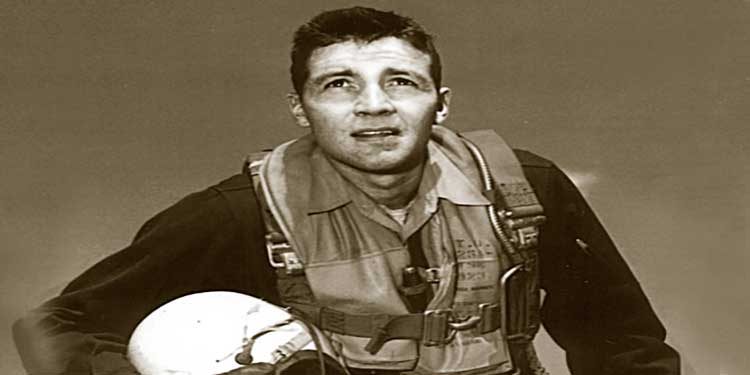
“Boyd: The Fighter Pilot Who Changed the Art of War,” is a captivating and informative biography of Colonel John Boyd, a brilliant and innovative military strategist who made a significant impact on modern warfare. A brilliant jet fighter pilot, forward-thinking academic, and a creative military strategist, he was a talented but wildly eccentric individual. Boyd was a leading figure in the post-Vietnam War military reform movement, the author of the first manual on jet aerial combat, the primary designer of the F-15 and the F-16 jet fighters, and the architect of the wildly successful American military strategy in the Persian Gulf War, among other accomplishments. Robert Coram does a fantastic job of bringing Boyd’s complex and multifaceted personality to life, highlighting his brilliant mind, his fierce determination, and his unwavering commitment to his principles. The book delves into Boyd’s unconventional approach to military strategy, which emphasized speed, agility, and adaptability over brute force, and how he used his ideas to revolutionize the way the United States military fights wars.
The three sections in Coram’s book are: Fighter Pilot, Engineer, and Scholar. Coram lets the reader know in the prologue that, like Boyd, he won’t cater to imagery. Coram writes that Boyd was more than just a run-of-the-mill fighter ace, he was an exception-to-the rule: an asymmetric-thinking fighter pilot. Those familiar with U.S. Air Force culture may confidently state the following two fights: First, fighter pilots are recognized for their testosterone, not their brains, and second, those with stars dictate military policy. But in 1959, when he was just a young Captain, Boyd was the first to define the elusive and enigmatic methodologies of air-to-air combat. His “Aerial Attack Study,” which he produced, became official Air Force doctrine and the benchmark for air combat, first in the United States and later, once declassified, for air forces globally.