


COL. VINAYAK BHAT (RETD)
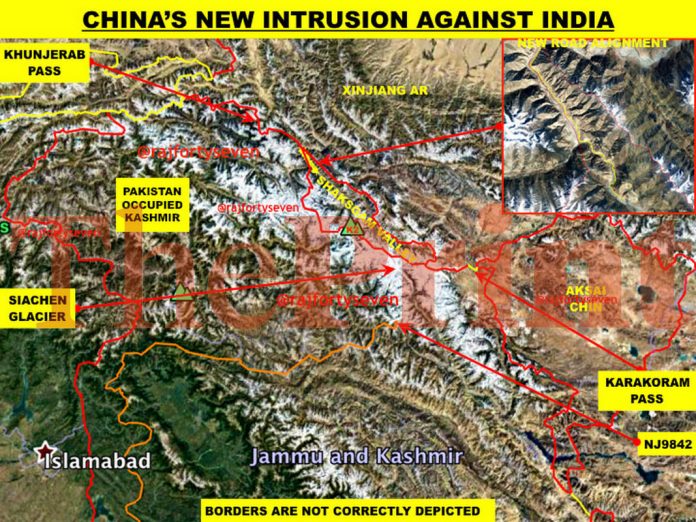
New Threat Spotted: China’s 36-km road, troop locations in PoK’s Saksham valley “gifted” by Pakistan. Gives Chinese Army access to Line of Actual Control near Siachen.
 A meditation pod atop an ashram in Rishikesh, India, where the Beatles went to study with the Maharishi Mahesh Yogi in 1968. The mural by Miles Toland complements a planned new museum on the grounds dedicated to the band’s tenure there. In 1968, the Beatles and a crew of hangers-on traded hip London threads for kurtas and wreaths of marigold, trudging through dense forest to an ashram in Rishikesh, India, where they spent weeks writing songs. There was George Harrison, a devoted follower of Transcendental Meditation; John Lennon and Paul McCartney, who had started to feud over the band’s direction; and Ringo Starr, the band’s drummer, who was so perturbed by India’s famously spicy food that he packed a reserve of beans for his stay at the ashram. He lasted 10 days.
 Israeli Prime Minister Benjamin Netanyahu is currently in India on a five-day visit, the first by an Israeli prime minister since Ariel Sharon’s 2003 visit and the second Israeli prime ministerial visit to India overall. While the bilateral agenda between the two countries continues to grow broader than ever, defense ties are particularly in the spotlight given India’s recent decision to cancel a $500 million deal with Israel’s Rafael Advanced Defense Systems Ltd. for Spike anti-tank guided missiles (ATGM). The Indian decision was announced days into the new year and cast a bit of a pall over Netanyahu’s then-upcoming visit.
 Faced with uncertainty, the once-sunshine telecom sector will continue to witness decline in headcounts for the next six-nine months taking the total number of job losses to 80,000-90,000. The report is based on a survey among around 100 senior and mid-level employees of 65 telco and software and hardware service providers to telecom companies. Faced with uncertainty, the once-sunshine telecom sector will continue to witness decline in headcounts for the next six-nine months taking the total number of job losses to 80,000-90,000, says a report.
 The United States is once again ratcheting up the pressure on Pakistan to fall in line with U.S. policy in Afghanistan by ending the Afghan Taliban’s enjoyment of safe haven. Unsurprisingly, Pakistan is once again pushing back. Amid the mistrust, mutual recrimination, and stale narratives that have increasingly characterized the U.S.-Pakistan relationship in recent years, there is one Pakistani talking point I have heard routinely from officials that should be taken at face value: Pakistan does not intend to fight the Afghan war on Pakistani soil. Although the reality of the situation is dissatisfying, the United States needs a strategy in Afghanistan and policy toward Pakistan based on the best Pakistani behavior it can have, not the Pakistani behavior it wants to have.
 Max Boot, a highly regarded military historian and foreign-policy analyst who is also a fierce critic of President Trump, is out with a new book: “The Road Not Taken: Edward Lansdale and the American Tragedy in Vietnam.” Lansdale(whose name is mentioned as Daniel Ellsberg’s boss in the opening scene of “The Post”) was a Vietnam analyst who correctly saw that our strategy was going in the wrong direction. As Boot said in a recent interview at the Council on Foreign Relations, “Lansdale tried to make [Defense Secretary Robert] McNamara and the other policymakers in the Kennedy administration realize the true nature of the war and to understand that we were not going to win just through superior firepower. And unfortunately, that message would be vindicated in the years ahead. But it was not something that McNamara was willing to believe in the beginning.”
 It was inevitable, a young lawyer in Tunisia told me, that the first attempts at a modern Islamic state would flounder. Young Muslims had grown up under the paradigms of nationalism, European racism and harsh police states, he said. They carried these inherited behaviors into the caliphate formed by the Islamic State, a place that was supposed to be just and colorblind but instead reveled in violence and was studded with mini neocolonial enclaves, where British Pakistanis lorded over local Syrians, and Saudis lorded over everyone. It would take one or two generations to unlearn these tendencies and deconstruct what had gone so wrong, he said. But he remained loyal to the idea — partly because the alternative he currently lives under is worse. “When the police become the state itself,” he said, “it is truly terrifying.”
 The United States must accept the truth that China is now its first superpower rival since the USSR. Xi’s New Year Speech fittingly revives a Cold War Communist tradition: using the New Year as a platform for a counterpoint to an American-led world. Recent Chinese presidents would have ended with statements on development and prosperity. Xi has gone farther. From commemorating China’s space and military achievements in 2017, to highlighting China’s new international initiatives, Xi has set the stage for a China that is becoming ever more comfortable voicing global ambitions. More importantly, the subtext of a series of new Xi speeches is that China is in direct competition with the United States.
 As part of a broad effort to interfere in U.S. institutions, China tries to shape the discussion at American universities, stifle criticism and influence academic activity by offering funding, often through front organizations closely linked to Beijing. Now that aspect of Beijing’s foreign influence campaign is beginning to face resistance from academics and lawmakers. A major battle in this nascent campus war played out over the past six months at the University of Texas in Austin. After a long internal dispute, a high-level investigation and an intervention by Sen. Ted Cruz (R-Tex.), the university last week rejected a proposal by the leader of its new China center to accept money from the China United States Exchange Foundation (CUSEF). The Hong Kong-based foundation and its leader, Tung Chee-hwa, are closely linked to the branch of the Chinese Communist Party that manages influence operations abroad.
 There is greater recognition today in India of the growing power disparity with China and its impact on Indian security and interests. While this much-delayed recognition is welcome, there is still insufficient appreciation of the full effects of China’s power. Far too often, this disparity is seen only in the context of military security. Though the military power China can bring to bear on India is considerable and it is a real threat to the security of India’s borders, the international political consequences of China’s growing power is less often recognised.
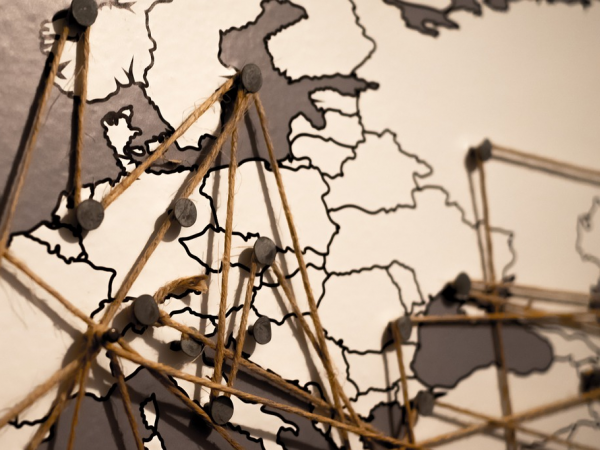 A renewed sense of urgency over European defence has come only after a cumulative series of strategic shocks. The European powers have long resisted supranational defence institutions, instead depending heavily on NATO and the US. Prior to 1989, Western European and US strategic interests converged as the trans-Atlantic powers faced a hostile Soviet Union. After the Cold War, the Europeans failed to assume responsibility for the peace and security of their own continent. Can they now?
 The Donald Trump administration’s flip-flop over H-1B visas has the Indian IT sector on edge. India’s largest software exporter Tata Consultancy Services, for instance, is more worried about the lack of clarity over the policy than the possibility of tougher norms itself. “The immediate concern of H-1B is that there are a few more bills that are being talked about, but none of that has played out as of now,” TCS human resources head Ajoyendra Mukherjee told reporters after the company announced its earnings for the October-December 2017 quarter.
 CAPE TOWN - US lawmakers last week introduced a bill, aimed at banning government agencies from using phones and equipment from Chinese multinationals, Huawei and ZTE. This comes after growing security concern surfaced between Huawei, ZTE and the U.S government. The US government says that these mobile technology brands pose a security threat to their country. As a result, Texas Representative, Mike Conaway introduced a bill last week, Defending U. S Government Communications Act. The bill aims to ban US government agencies from utilising phones and equipment from the companies. In a statement on his site, Conaway says that technology coming from the country poses a threat to national security and that by using the company’s equipment, “would be inviting Chinese surveillance into all aspects of our lives,”
 A United States Air Force plane, right, intercepting a Soviet aircraft in 1982. Both countries were on high alert for nuclear launches throughout the Cold War. CreditUnited States Air Force As strange, serious and scary as the erroneous emergency notification Saturday about a missile attack against Hawaii may have been, it was far from the first such false alarm the country has faced. Every decade since the dawn of the nuclear age has seen its share of close calls, experts said. During the Cold War, the government routinely dealt with hundreds of anomalies that could have led to a nuclear launch.
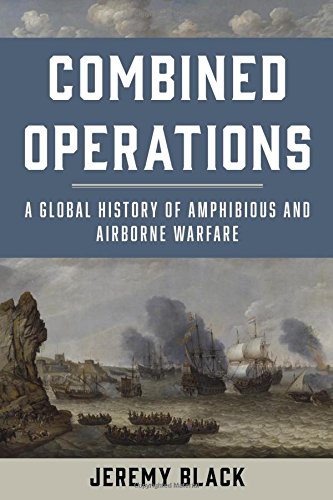 A major power confronts another across a wide expanse of ocean. Neither opponent is able to significantly threaten the other’s mainland without mastering and crossing the waves. But the vast distances involved are daunting even for the opposing navies. One side then executes an east-to-west island hopping campaign, using the possession of islands to control the sea and project force far beyond the capacities of lesser powers. Two campaigns fitting the above description act as bookends to Western naval history: the Persian invasions of Greece from 492-479 BC and World War II from 1941-1945. Everything before the Persian invasions is lost to the sands of time. Everything after the world-spanning amphibious campaigns of World War II is judged in their shadow.