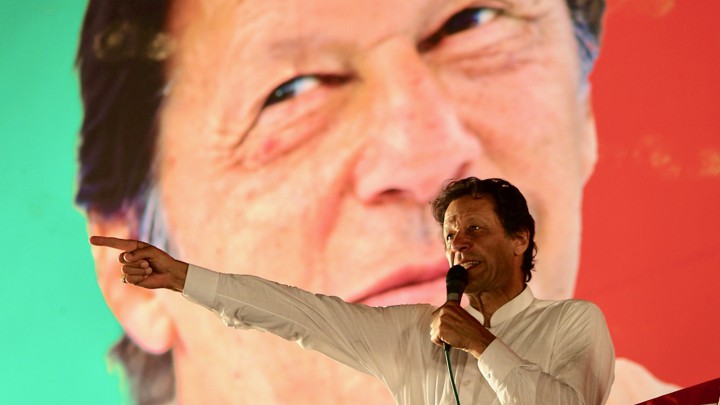
ISLAMABAD, Pakistan—At long last, Imran Khan is the prime minister of Pakistan. After winning the highest number of seats in parliament in this week’s election, the former cricket legend and philanthropist is now set to form a national government and possibly rule two of Pakistan’s four provinces, making him the country’s most powerful civilian leader in decades. It’s a remarkable reversal of fortunes for Khan, who for decades was mocked by his opponents as a naรฏve, inexperienced celebrity keen to perpetuate his own fame. Khan, however, remained determined. “I always fight till the last ball,” he told me a few years ago. The Profession of Arms: A Guide for Young Army Officers
It takes courage, especially for a young officer, to check a man met on the road for not saluting properly or for slovenly appearance, but, every time he does, it adds to his stock of moral courage, and whatever the soldier may say, he has respect for the officer who does pull him up.
Read Document →The Dragon's Teeth: Assessing China's Military Modernization
PLA has focused on modernising its capabilities across all warfare domains to achieve these goals. This includes land, air, and maritime operations, nuclear, space, counter-space, electronic warfare and cyberspace operations, aiming to become a fully integrated joint force.
Read Document →Transforming the PLA: A Decade of reorganisation from SSF to ISF
PRC has engaged in a sustained and broad effort to transform the PLA from an infantry-heavy, low-technology, ground forces-centric military into a high-technology, networked force with an increasing emphasis on joint operations and naval and air power projection.
Read Document →Eyes without Borders: Exploring the World of Open Source Intelligence (OSINT) in the Digital Age
Open Source Intelligence (OSINT) is gaining prominence with the rise of social media, the digital society and the vast growth of publicly and commercially available information (PAI and CAI).
Read Document →
The PLA’s Developing Cyber Warfare Capabilities and India's Options
Informationised warfare blurs the lines between peacetime and wartime. A nation in the information age cannot wait for the hostilities to break out to collect intelligence, carryout influence operations, develop antisatellite systems or design computer software weapons.
Read Document →
Galwan and After
Why did China did this when he is under tremendous pressure in all fronts, is this China's salami slice tactics being progressed rigorously, what will be new Rules of Engagement, what will be escalatory control mechanism, who has taken this decision, will there be some pressure put by China in India's North-East through insurgency.
Read Document →
India’s Joint Doctrine for Cyberspace Operations: A Critical Review
Chief of Defence Staff (CDS) General Anil Chauhan and Secretary, Department of Military Affairs, formally released declassified versions of the Joint Doctrines for Cyberspace Operations during the Chiefs of Staff Committee meeting in New Delhi.
Read Document →
Know your Enemy General(now Field Marshal) Syed Aseem Munir
Gen SA Munir's position in the hierarchy of Pakistan was not very comfortable. The state of economy, insurgency in Pakhtoonistan and Balochistan, attack on the Jaffar Express, constant protests by supporters of Imran Khan's supporters inside and outside of parliament.
Read Document →
Decoding Operation SINDOOR: Key Aspects and Implications
Precision strikes were carried out on nine sites—four in Pakistan and five in PoK—linked to anti-India terrorist groups such as the LeT, JeM and the Hizbul Mujahideen. The targeted sites included Muridke (LeT headquarters) and Bahawalpur (JeM headquarters).
Read Document →
Chinese Cyber Exploitation in India's Power Grid - Is There a linkage to Mumbai Power Outage?
The New York Times (NYT), based on analysis by a U.S. based private intelligence firm Recorded Future, reported that a Chinese entity penetrated India’s power grid at multiple load dispatch points. Chinese malware intruded into the control systems that manage electric supply across India, along with a high-voltage transmission substation and a coal-fired power plant
Read Document →30 July 2018
Pakistan’s Populist Triumph
ISLAMABAD, Pakistan—At long last, Imran Khan is the prime minister of Pakistan. After winning the highest number of seats in parliament in this week’s election, the former cricket legend and philanthropist is now set to form a national government and possibly rule two of Pakistan’s four provinces, making him the country’s most powerful civilian leader in decades. It’s a remarkable reversal of fortunes for Khan, who for decades was mocked by his opponents as a naรฏve, inexperienced celebrity keen to perpetuate his own fame. Khan, however, remained determined. “I always fight till the last ball,” he told me a few years ago. Pakistan General Elections- Sobering Thoughts the day After
Pakistan's Sham Election
Can Imran Khan be the new face of Pakistan?
Hard days ahead
Trump Provides China an Opening in Europe
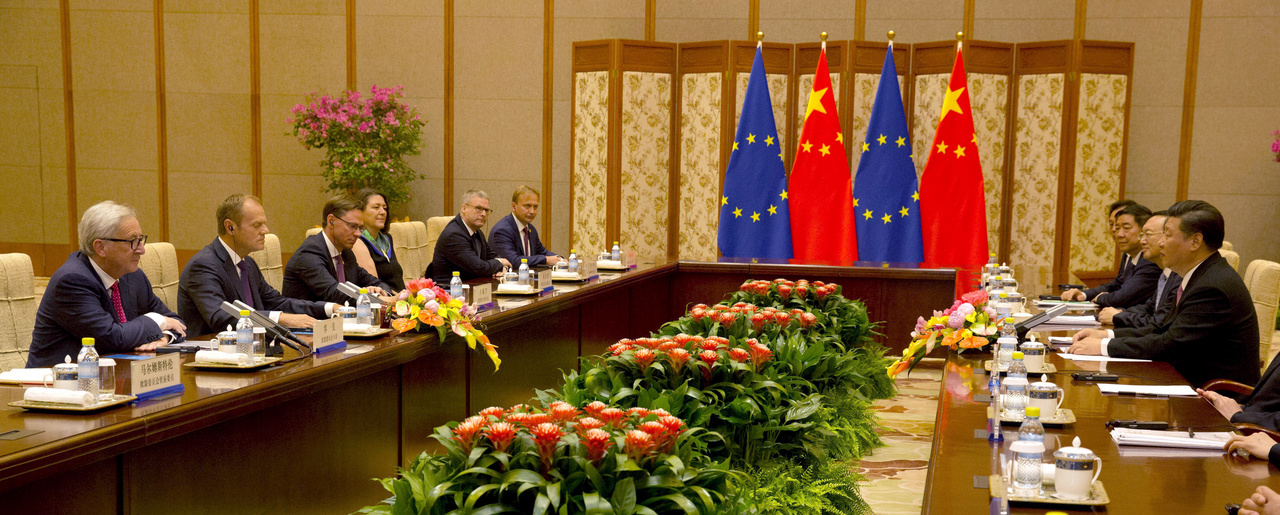
While Donald Trump and his Russian counterpart Vladimir Putin were busy gathering for a high-profile summit in Helsinki on Monday, a far less publicized meeting between two other world powers was simultaneously held in Beijing. The twentieth EU-China summit was maybe less attention grabbing but is still significant in its own right. Although the EU-China relationship is becoming more fraught, both sides shared an interest in a summit marked by more positive tone this time around.A bitter Beijing is ready to fight Washington and win the trade war.
On Wednesday, Qualcomm Inc., the world’s leader in mobile-phone chips,announced the abandonment of its bid to buy Dutch-based NXP Semiconductors. The $44 billion deal, which would have been the semiconductor sector’s biggest takeover ever, had to be scrapped because Beijing, escalating the so-called “trade war” with the United States, withheld approval. In withholding approval, Chinese leader Xi Jinping made clear that it’s not possible to bargain with his country at this time. America now has no choice but to fight Beijing to the end.RIP Taiwan?
WHAT ARE the implications for Taiwan of China’s continued rise? Not today. Not next year. No, the real dilemma Taiwan will confront looms in the decades ahead, when China, whose continued economic growth seems likely although not a sure thing, is far more powerful than it is today. Contemporary China does not possess significant military power; its military forces are inferior, and not by a small margin, to those of the United States. Beijing would be making a huge mistake to pick a fight with the American military nowadays. China, in other words, is constrained by the present global balance of power, which is clearly stacked in America’s favor.China and Africa: the Zimbabwe file
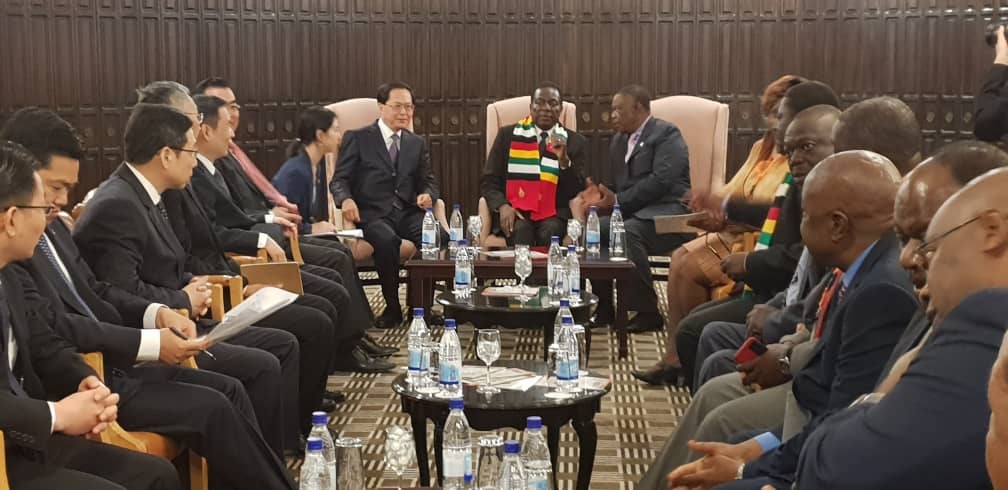
The Chinese link with Zimbabwe’s ruling party, Zanu-PF, goes back to 1963—as does, notably, China’s association with new president Emmerson Mnangagwa. For the first decade and a half, the connection was military, with the Chinese providing training and materiel in the fight against white rule. Mnangagwa was part of the first group of guerrillas sent by Robert Mugabe to a military academy in Nanjing. Yet the cynical and tactically agile Mugabe also ensured that independence in 1980 did not bring with it much reward for the Chinese. Speaking privately to a colleague (who happened to be a spy of apartheid South Africa), Mugabe described a celebratory state visit to China and North Korea as ‘a lot of bull’. It had been a necessary obligation, but the offer of aid by these allies was, in his view, just an attempt to establish a fifth column in Zimbabwe—a posse of ‘Marxists who will start a process of undermining’. If the relationship could be described as manipulative during the early years, it was Mugabe pulling the strings.Daily Memo: Turkish Military Matters, US Energy Supplies
Counterterrorism: Taking Down the Big Man
US is ‘outgunned’ in electronic warfare, says cyber commander
Two military leaders admitted at the TechNet Augusta conference this week that the United States is falling behind in its electronic warfare capability. “When it comes to electronic warfare, we are outgunned,” Maj. Gen. John Morrison, the commander of Fort Gordon and the Army Cyber Center of Excellence, said during a Tuesday presentation at the conference held in Augusta, Georgia. “We are plain outgunned by peer and near-peer competitors.” This sentiment was seconded by Lt. Gen. Paul Funk II, the commanding general of III Corps, who addressed the TechNet audience via video teleconference, adding that the U.S. is also outranged in EW.Strategic Command will now oversee nuclear communications
The communication system which keeps the president in touch with the nuclear triad during a crisis will now be the responsibility of the head of U.S. Strategic Command. The change came about from concerns that the nuclear command, control and communications systems, or NC3, lacked a clear chain of command under the current structure. The system is comprised of satellites, radars and fixed or mobile command posts. “The Chairman of the Joint Chiefs of Staff has appointed the commander of U.S. Strategic Command to be the NC3 enterprise lead, with increased responsibilities for operations, requirements, and systems engineering and integration,” a U.S. STRATCOM spokeswoman told SpaceNews.Daily Memo: The Middle East Makes Waves, North Korea Walks Back, the US Talks Trade Truce
Hundreds storm border fence into Spain's north Africa enclave of Ceuta
About 800 people have tried to enter Europe by storming a border fence that separates Morocco from Spain’s north African enclave of Ceuta, according to Spanish police. The incident on Thursday morning followed renewed warnings about Spain’s ability to cope with the rising number of migrants and refugees who have been arriving on its southern coast. It also came just hours before the Spanish prime minister, Pedro Sรกnchez, was to meet the French president, Emmanuel Macron, to discuss the EU’s response to the migration crisis.The View From Olympus: Paradigm Shifts
How Russia Is Taking Over the Middle East, One Country at a Time
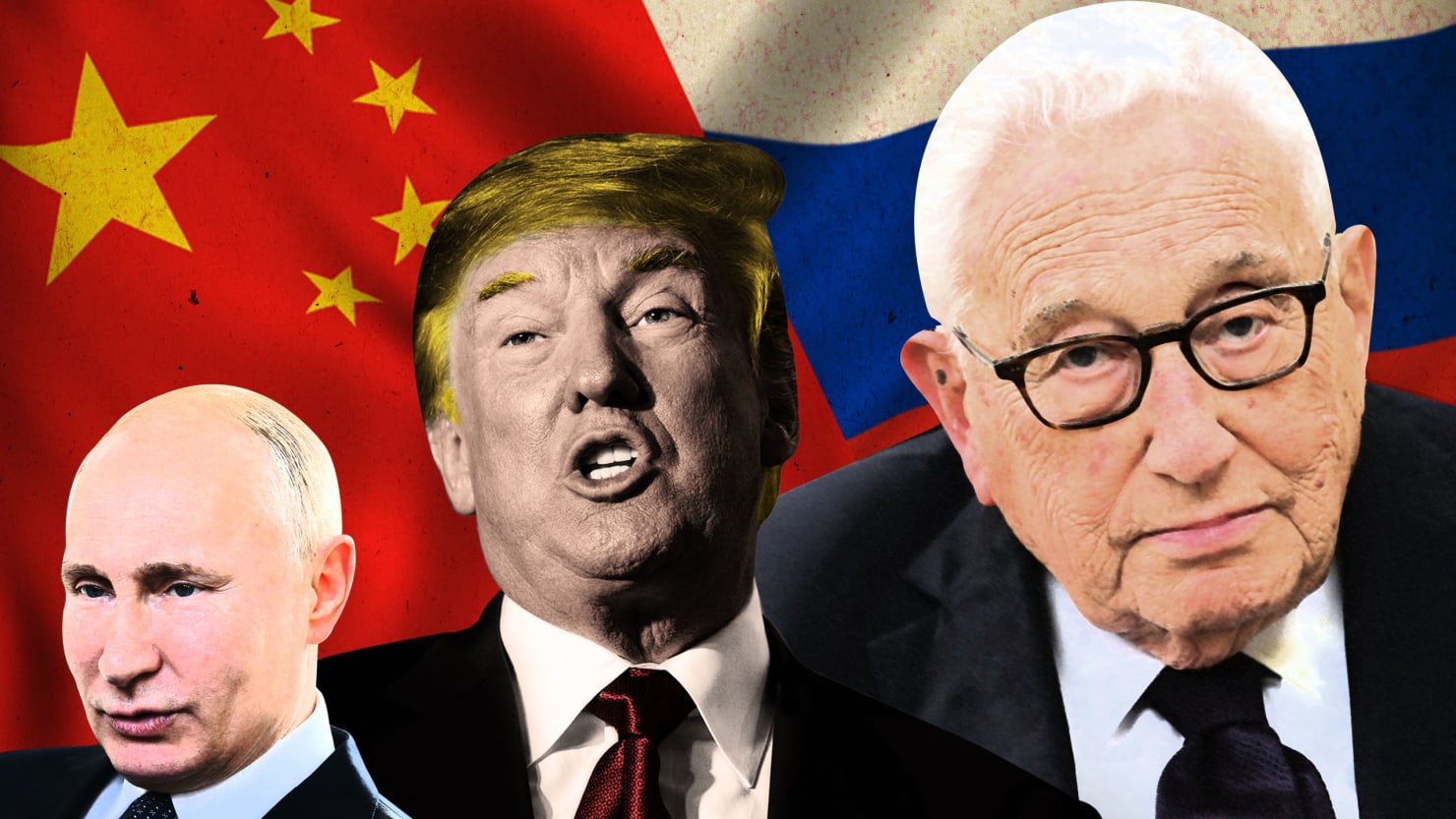
In recent years Russia has staged a comeback in the Mideast, big time, to the extent that it may replace the United States as the leading foreign power in the region. Russia's success has been a combination of both deft diplomacy as well as weapons and nuclear reactor sales to states throughout the region, from Iran to Morocco. The weakness of U.S. regional policy under the Obama administration, followed by the total chaos under Trump, have further contributed to Russia's success. Russian policy has been sophisticated, but has also benefited from the void left by the United States.Henry Kissinger Pushed Trump to Work With Russia to Box In China
How to Stop Losing the Information War
No one is in charge of messaging, counter-messaging, and coordinating America’s instruments of information power. Here’s a way to change that. Russia “is waging the most amazing information-warfare blitzkrieg in the history of information warfare,” Gen. Philip Breedlove told NATO leaders at their 2014 summit. There’s no evidence that Moscow’s efforts have since slackened—nor that the United States is institutionally equipped to develop an effective response. This was not always the case. During and just after the Cold War, the U.S. more than held its own in the sphere of information operations. And though the internet — and particularly social media — have greatly increased the speed and scale (and decreased the cost) of such operations, the experience of those years suggests a way to build and run an IO organization to lead them successfully.How the U.S. is Preparing for a Quantum Future
For my previous column, I talked about the threat that future quantum computers pose for today’s government data, and how the United States is risking falling behind other countries in the development of quantum science. In turn, I received more comments via tweets, email and other social media platforms than with any other column I’ve written recently. This is clearly a topic that is on people’s minds, which is a good thing because we need to be aware of both the advantages of this emerging technology and also the potential pitfalls.'Information' is playing outsize role in warfare
More so now than ever, information is playing an outsize role in military capabilities and being rolled into conventional elements. In 21st century warfare, war is cognitive as much as it’s kinetic, Lt. Gen. Vincent Stewart, director of the Defense Intelligence Agency, told a small group of reporters in his office this week. Top competitors, Stewart said, are organizing their forces in this new information space and have developed doctrine to fight and win in the information age. Russia views many facets of the information space — to include information operations, space/counterspace, cyber, cyber-enabled psychological operations and electronic warfare, to name a few — as critical to fighting and winning future conflicts, especially against the U.S., according to a recent and unclassified report on Russia’s military published by DIA.Where do information operations fit in the DoD cyber enterprise?
Events such as interference in the 2016 election are demonstrating how the internet has amplified the reach and impact of age-old military tactics such as information or influence operations. These new cyber-enabled information operations have many in the U.S. government and thought leadership community concerned both about the United States' ability to counter and coordinate similar activities, especially given the the Department of Defense divested a lot of its information-related capability at the conclusion of the Cold War. Many in Congress and in the academic community, as such, have called upon U.S. Cyber Command as the likely organization to orchestrate these types of activities.Facebook and Google's race to connect the world is heating up
Big tech firms are battling to connect the half of the world's population who don't have internet access, but their solutions might not be best for the people that they're trying to help. For some villagers living in Mwandi District in rural Zambia, the only way to get online is to pay a visit to the MTN tree. Every day a constant stream of people stand under its branches, phones aloft, hoping to catch a data connection to the tree’s namesake, the telecoms company MTN Zambia. Dotted throughout Sub-Saharan Africa you’ll find countless similar landmarks. Sometimes it's a conveniently-placed rock that marks a place with a decent data connection. At other times getting online means queuing to walk up a termite mound. But with with only 22 per cent of people in Sub-Saharan Africa online, it remains a place where the internet isn’t within easy reach – it’s something that people have to actively hunt down, if they can afford a device in the first place.The View From Olympus: The Real Cost of NATO
Cyber Conflict: The Evolution of Warfare
Defence companies target the cyber-security market
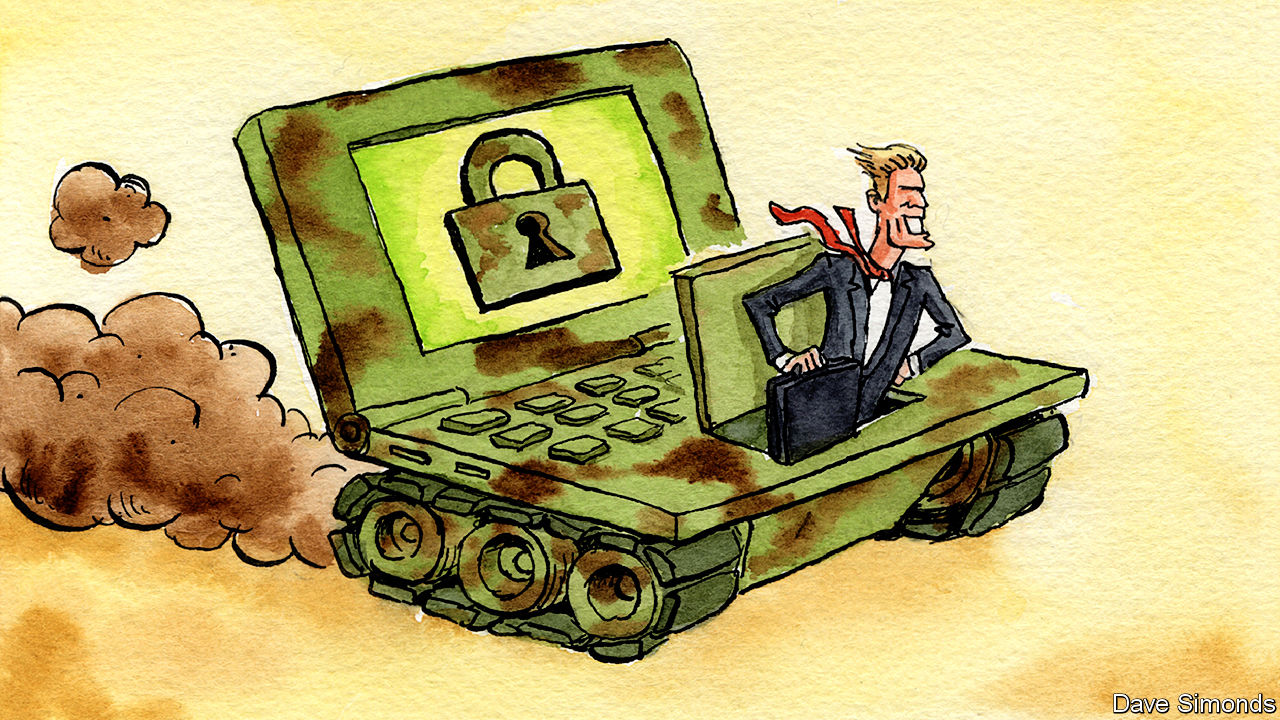
AIR shows are where the world’s defence giants show off. This year’s Farnborough Air Show, which ended on July 22nd, was no exception. The roar of the engines on Lockheed Martin’s F-35 stealth fighters overhead drowned out many a sales pitch on the ground. But pride of place at Raytheon’s display area went not to a weapon but to a “cyber dome”—a slick 3D cinema showing how hacking works. Its message was clear: governments and firms cannot afford to ignore cyber-attacks. Nor, indeed, can defence firms themselves.Is America ready for Russian cyberattack on our election?
This Former British Spy Exposed the Russian Hackers
Rebuilding America’s Military: Thinking About the Future
THIS TASK FORCE COULD BE KEY TO WINNING IN THE INFORMATION ENVIRONMENT
Army Chief of Staff Gen. Mark Milley announced the creation of an innovative Multi-Domain Task Force (MDTF) in 2017. According to the Army Chief, this new unit’s 1,500-plus troops and capabilities to create effects in space, cyber, maritime, air, and ground warfare—the assemblage of which is not found in any other brigade-sized element—are the key to contesting adversaries’ anti-access/area denial (A2/AD) systems. Currently, the MDTF’s primary role centers on “long-range artillery and air and missile defense capabilities,” which, in light of evolving A2/AD threats, will be crucial for the joint force’s ability to maneuver and fight.